



The daily brief · September 24, 2026

An HIV drug reversed MS damage in mice, and bats finally got their real family tree

A lot of today's discoveries are about undoing damage everyone assumed was permanent, from a paralyzed mouse walking again to a dinosaur rib caught mid-heal.

  • 7 Discoveries
  • 246 Articles read
  • 46 Sources
  • 10 Min read

Today’s discoveries

Everything this morning found, in the order we would read it.

7 stories
  1. 01 Life Sciences An old HIV drug reversed paralysis and blindness in mice with MS Researchers at the University of Virginia took an HIV drug, stripped out everything that made it work against HIV, and kept only the part that blocks the inflammasome, the cell-killing… Source: NIH News Releases 1 min read
  2. 02 Natural Sci. Scotty the T. rex broke a rib, and the healing was still happening when he died Scotty, the biggest T. Source: ScienceDaily 1 min read
  3. 03 Natural Sci. A 200-year mystery about tropical trees that breathe at night finally got solved In 1800, Alexander von Humboldt dunked a leaf from a tropical tree in water and noticed something strange: even in full sun, it made no oxygen bubbles. Source: ScienceDaily 1 min read
  4. 04 Natural Sci. A century-long argument about where bats came from is over A team of 137 scientists spent years building the largest bat genome and fossil dataset ever assembled: 103 full genomes, 41 of them newly sequenced from scratch, plus 44 fossils… Source: Live Science 1 min read
  5. 05 Natural Sci. A cat Bolivian villagers already had a name for turned out to be new to science For years, biologists working in Bolivia's Yungas cloud forest logged a small spotted cat as a tiger cat and moved on, the same species found across Brazil. Source: The Optimist Daily 1 min read
  6. 06 Technology An AI agent spotted a hidden CRISPR-like system that no human had noticed Anthropic set about 950 Claude agents loose on public genomic databases for 21 hours, searching through more than 200,000 reverse transcriptase enzymes found in bacteriophages, the… Source: Interesting Engineering 1 min read
  7. 07 Good News South Korea took food waste recycling from 3% to 97%, and New York is copying the model In 1996, South Korea recycled 2.6 percent of its food waste. Source: The Optimist Daily 1 min read

The feel-good story of the day

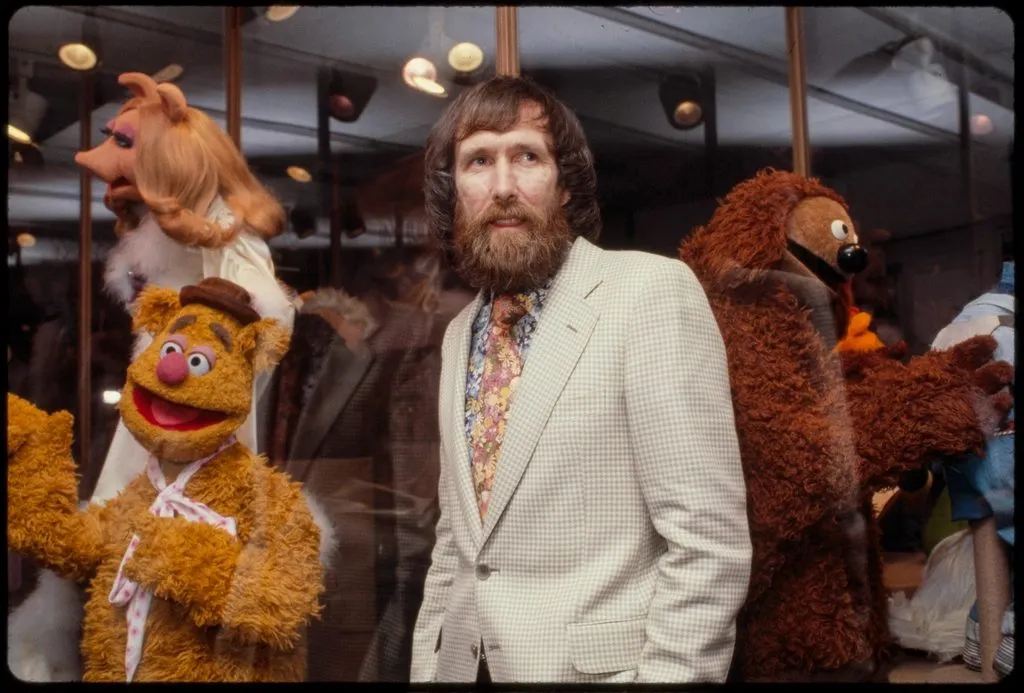
Jim Henson libraryofcongress (via rawpixel)
Pictured Jim Henson

The man who taught a sock how to feel

Jim Henson was born on September 24, 1936, in Greenville, Mississippi, and grew up tinkering with puppets on a black-and-white television set that couldn't afford fancy costumes or elaborate sets, only clever ideas. That constraint shaped everything he built next. Working with felt, ping-pong balls, and his mother's old coat, he invented a puppet built to move like a face on camera rather than a stage, and gave it a name borrowed from nowhere in particular: Muppet.

By the time Sesame Street launched in 1969, Henson wasn't just making children laugh. He was building characters, a grouch who lived in a trash can, a big yellow bird who asked the questions kids were too shy to ask, that let millions of preschoolers see kindness, curiosity, and difference modeled back at them in a form they trusted completely. The Muppet Show that followed made room for genuine warmth on prime-time television at a moment when little of it existed.

Henson died in 1990 at 53, far too soon, but the workshop he built kept training puppeteers, writers, and builders long after. What he left behind wasn't just a cast of felt characters. It was proof that something built from scraps, aimed at children, and made with real care could outlast almost everything else on the shelf next to it.

Today’s complete edition

The discoveries, in full

Read the evidence, what it changes, and the reporting behind each of today’s 7 discoveries.

01/07 Life Sciences

An old HIV drug reversed paralysis and blindness in mice with MS

Researchers at the University of Virginia took an HIV drug, stripped out everything that made it work against HIV, and kept only the part that blocks the inflammasome, the cell-killing alarm system that runs amok in multiple sclerosis.
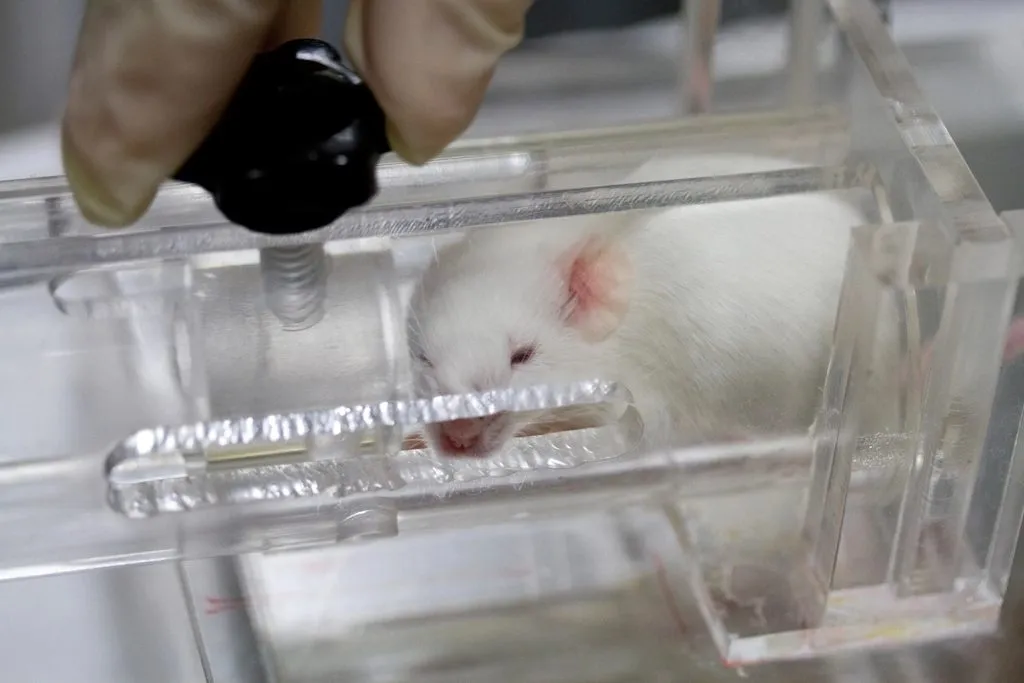
a laboratory mouse
Pictured a laboratory mouse · Unknown (via rawpixel)

They gave the resulting drug, kamuvudine-9, to mice with MS-like disease, but not right away: they waited until the mice were already paralyzed and losing their sight, the way a real MS patient would be diagnosed 69. Over the next two weeks, those mice didn't just stop getting worse. They got their eyesight and their mobility back, something no mouse on a standard MS drug managed. A separate look at more than 3 million patient records found the same pattern in people: those already taking antiviral drugs related to K-9 had fewer MS relapses.

02/07 Natural Sci.

Scotty the T. rex broke a rib, and the healing was still happening when he died

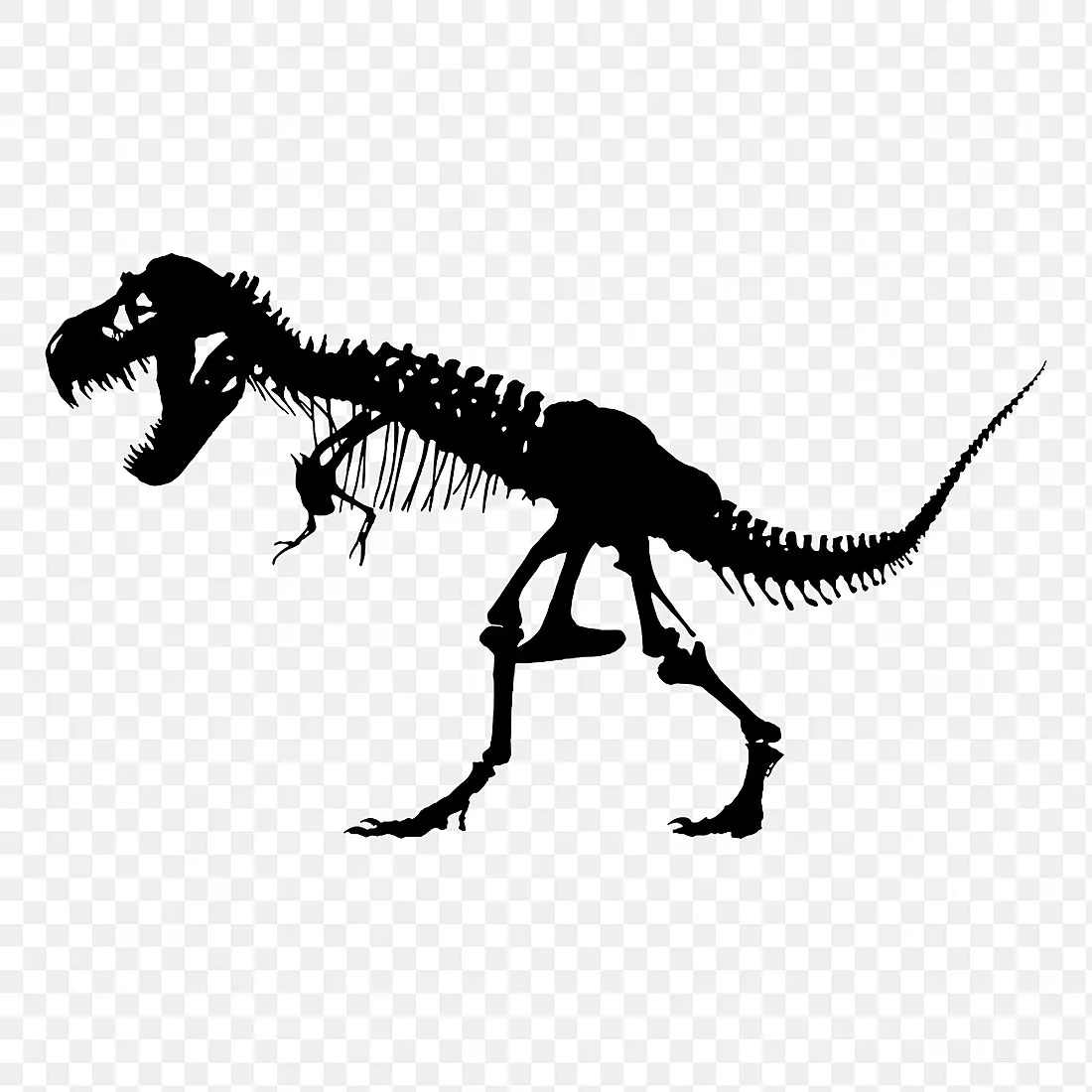
Scotty, the biggest T. rex skeleton ever found, carries a rib that broke sometime before he died, 66 million years ago. Scientists at Oak Ridge National Laboratory scanned it with neutrons, a technique that sees straight through fossilized bone without cutting into it, and found something almost never preserved: a whole mineralized network of blood vessels that had grown in while the fracture was healing 10.

a Tyrannosaurus rex skeleton
Pictured a Tyrannosaurus rex skeleton · Unknown (via rawpixel)

"It's like winning the lottery," said physicist Mauricio Barbi. Iron-rich blood had flooded the injury site, new vessels had formed to knit it back together, and then Scotty died in a salty marsh, the one kind of environment slow enough to let soft tissue like that survive 66 million years instead of rotting away in weeks.

03/07 Natural Sci.

A 200-year mystery about tropical trees that breathe at night finally got solved

In 1800, Alexander von Humboldt dunked a leaf from a tropical tree in water and noticed something strange: even in full sun, it made no oxygen bubbles. The explanation turned out to be that the tree keeps its pores shut all day to save water, then opens them at night instead, absorbing carbon dioxide in the dark and storing it as acid until sunrise.

a tropical rainforest canopy
Pictured a tropical rainforest canopy · Unknown (via rawpixel)

Researchers at the University of Vienna have now traced how that trick, called CAM photosynthesis, evolved inside the genus Clusia by comparing the genomes of three tropical tree species 9. It didn't happen through one clean genetic switch. Ancient genome duplications, followed by millions of years of shuffling the copies around, produced at least three different versions of the same water-saving strategy in close relatives.

04/07 Natural Sci.

A century-long argument about where bats came from is over

A team of 137 scientists spent years building the largest bat genome and fossil dataset ever assembled: 103 full genomes, 41 of them newly sequenced from scratch, plus 44 fossils spanning all 21 recognized bat families 15.

a bumblebee bat (Kitti's hog-nosed bat)
Pictured a bumblebee bat (Kitti's hog-nosed bat) · Clescision (Wikimedia Commons)

The result, published in Nature, overturns decades of guessing. Bats arose in Europe around 65 million years ago, not Asia, Africa, or North America 50 million years ago as earlier theories held, and both echolocation and true powered flight evolved early and just once, rather than popping up independently in different bat lineages later on. The dataset includes the bumblebee bat, at about an inch long the smallest mammal on Earth, and Madagascar's sucker-footed bat, which clings to smooth leaves with suction cups on its wrists and ankles.

05/07 Natural Sci.

A cat Bolivian villagers already had a name for turned out to be new to science

For years, biologists working in Bolivia's Yungas cloud forest logged a small spotted cat as a tiger cat and moved on, the same species found across Brazil. Local communities had always called it something else: tilcayo.

A cat Bolivian villagers already had a name for turned out to be new to science
Unknown (via rawpixel)

A DNA study of 38 cats across South America, published in Current Biology, backed the locals up 222. The tilcayo is now formally named Leopardus tilcayo, the first new living feline species named in more than a century, and it split off from other tiger cat lineages about 1.4 million years ago. It's tiny, about 18 inches long and lighter than most housecats, and researchers have examined exactly two live individuals, one a former pet now living at a Bolivian wildlife sanctuary.

06/07 Technology

An AI agent spotted a hidden CRISPR-like system that no human had noticed

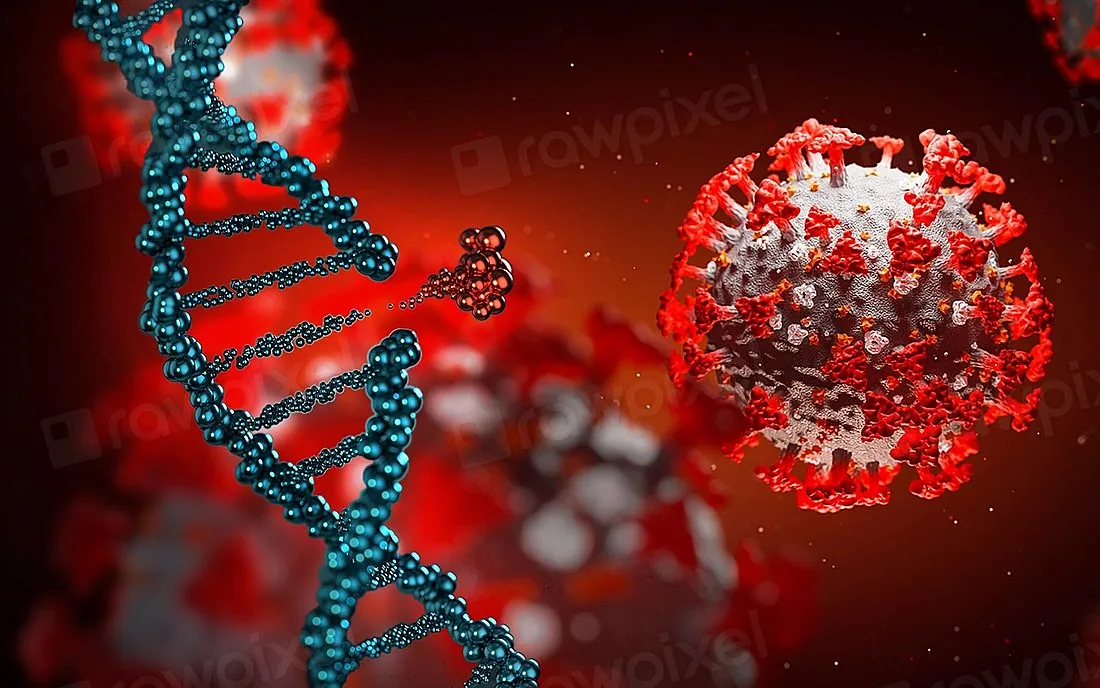
Anthropic set about 950 Claude agents loose on public genomic databases for 21 hours, searching through more than 200,000 reverse transcriptase enzymes found in bacteriophages, the viruses that infect bacteria 172.

a genetics research laboratory
Pictured a genetics research laboratory · U.S. Department of Energy (via rawpixel)

One agent noticed something odd sitting next to an otherwise unremarkable reverse transcriptase gene: a long, evenly spaced array of DNA repeats, the same architecture CRISPR systems use. It counted the repeats, measured the spacing, cross-checked the literature, and flagged it as a possible new biological system. Early lab work confirmed the repeat array does what CRISPR arrays do: it gets copied into multiple short RNAs. Feng Zhang, one of the scientists who helped turn CRISPR into a gene-editing tool, called it worth pursuing further.

07/07 Good News

South Korea took food waste recycling from 3% to 97%, and New York is copying the model

In 1996, South Korea recycled 2.6 percent of its food waste. By 2023, that number was nearly 97 percent 221.

a food waste recycling bin
Pictured a food waste recycling bin · Solomon203 (Wikimedia Commons)

It took thirty years of escalating policy, not a single fix: pay-as-you-throw fees starting in 1995, mandatory separation in 1997, a landfill ban in 2005, and RFID smart bins from 2010 that weigh what each household throws away and bill them for it. Today more than 340 facilities convert that waste into energy, and Seoul's Daejeon Bio Energy Centre alone powers roughly 6,000 households a day. New York City made food waste separation mandatory in October 2024, citing South Korea explicitly as its model, and is already managing about 140,000 metric tons of residential organic waste a year across 3.4 million households.

Quick notes

Shorter discoveries from this morning, worth knowing but not a full story.

Watch and Learn: Footage Captures Chimps Teaching Youngsters by Example In Senegal, a mother chimp named Soukki poked a stick into an ant nest, then pulled her daughter over to watch. Eight years of camera-trap footage caught 33 such lessons, and in 12 percent of cases, it was the younger chimps teaching the grown-ups 207. Nice News
Bikes Outnumbered Cars on Scottish Rush Hour Route for the First Time Ever During the 8 to 9 a.m. rush on Edinburgh's Leith Walk, bikes outnumbered cars for the first time on record, with an e-bike rental scheme that's logged 1.46 million rides since launching last September 203. Good News Network
Long-Lost Gertrude Abercrombie Painting Bought by a Bargain Hunter for $30 A Michigan estate-sale shopper paid $30 for a small painting of seashells, then spotted it days later in a museum exhibition catalogue for the surrealist painter who signed it. Opening bid at auction: $75,000 204. Good News Network
Scientists Pioneer Chemical Bath Method to Restore Aging EV Batteries Without Breaking Them Down Cornell researchers found that dunking worn electric-vehicle battery electrodes in a chemical bath restores up to 95 percent of their original charge capacity, at nearly half the cost of shredding batteries down for parts 205. Good News Network
Flagship Restoration Project in Brazil's Cerrado Savannah Working to Restore 4.4 Million Acres More than 180 organizations are restoring 4.4 million acres of the Cerrado, the most species-rich savanna on Earth, using seeds collected from over 150 native plants. The UN just named it a World Restoration Flagship 206. Good News Network
How to Build a Habit by Starting Ridiculously Small After years of elaborate training plans that fizzled within weeks, one writer built a running habit that stuck by committing to nothing harder than walking to the mailbox. Research backs her up: repetition beats ambition 86. Greater Good
Impossible Just Launched Chicken Fries, Beef Kofta, and More Four years after its UK restaurant debut, Impossible Foods finally hit British supermarket shelves, with four new products landing at Tesco, including a burger patty built specifically for European palates 195. VegNews
Can You Grow Vegetables Without Soil? Here's the Simple Science Behind Hydroponics Farming Facing a water shortage, Gujarat farmer Yash Vora switched to hydroponics and now grows cucumbers, tomatoes, and colored capsicums with roots dangling straight into nutrient-rich water instead of soil 211. The Better India
2 Engineers Turn College Cleanup Into a Startup Collecting, Sorting & Recycling Waste in 36 Cities What started as a campus cleanup drive ahead of India's 2014 Swachh Bharat Mission is now WeVOIS Labs, reaching 46 lakh citizens every day and supporting the livelihoods of more than 2,000 sanitation workers and field staff 218. The Better India
'It Was All Cacti': Ex-Army Officer & His Wife Turn Barren Udaipur Land Into Flourishing Homestay In 1994, a retired Indian Army major and his wife bought 2.5 acres of cactus-covered land outside Udaipur on impulse. A failed flower business and a decade later, it's Devra, a homestay built with local craftsmen that's still welcoming guests 220. The Better India
Life after... a diagnosis for panic disorder After years of silent, internal OCD compulsions that left her "petrified to be alive," 23-year-old Molly Lambert finally got diagnosed in 2025. One video about it went viral, and she's since spoken to Parliament and helped start support groups for others with the same little-understood form of the condition 208. Positive News
Quantum computer chip crams more info into less volume by vibrating ETH Zurich engineers built quantum memory out of sound instead of microwaves, shrinking each memory cell from a centimeter-scale metal box down to a few micrometers, which could let far more quantum memory fit inside the same cramped refrigerator 183. New Atlas
Meta unveils 100g VR glasses... and FDA-cleared hearing aids Some of Meta's smart glasses can now double as FDA-cleared over-the-counter hearing aids, using a guided phone test to build a personal hearing profile and machine learning to amplify speech while filtering out background noise 166. Interesting Engineering
HHS unveils new initiatives on animal testing Starting next February, drugmakers can use non-animal methods, organs-on-a-chip, cell-based assays, computer models, instead of animal testing when appropriate, as the FDA and NIH both push to speed up the shift away from lab animals 84. STAT

Our process. Your trust.

Every discovery above traces back to an article we read in full. This is the whole corpus behind this morning, and what it was made of.

  • 46 Sources scanned
  • 246 Articles read
  • 8 Fields covered
  • 7 Discoveries

The sources that carried this morning

  1. 1 PLOS One 20 articles
  2. 2 Psychology Today: The Latest 20 articles
  3. 3 Nature 19 articles
  4. 4 Ars Technica - All content 16 articles
  5. 5 STAT 14 articles
  6. 6 Latest Science News -- ScienceDaily 12 articles
  7. 7 The Conversation Articles 11 articles
  8. 8 Interesting Engineering 10 articles
How an edition is made

Everything we read today

Natural Sciences 68 articles
PLOS One
Life Sciences & Medicine 17 articles
Psychology & Behavioral Science 30 articles
Social Sciences 24 articles
Future Perfect | Vox
Works in Progress RSS Feed
Technology & Innovation 47 articles
Plant-Based & Vegan 15 articles
Solutions & Good News 32 articles
Human Stories & Ideas 13 articles
The long view · not today’s news, the story behind it

Today’s discoveries didn’t come from nowhere. Here’s the older, ongoing story they belong to, a moment from this day in history, and a question to test what stuck.

Where the story stands

On this day in science

1852 The first powered flight takes to the air Henri Giffard flew a steam-powered airship 17 miles from Paris to Élancourt, the first powered and controlled flight in history. His craft was slow, but for the first time a machine carried a person through the air under its own power. It was an early step toward the age of flight. More from the Almanac →

Before you go: today’s quiz

The daily quiz

Who developed the first measles vaccine, licensed in 1963?

Reveal the answer

John Enders and Thomas Peebles

John Enders and Thomas Peebles isolated the measles virus and developed the first vaccine, licensed in 1963. Enders had earlier won a Nobel Prize for work that also enabled the polio vaccine.

See the Lifesaver →

Previous editions

Every morning we have published, newest first. Nothing expires.

View the full archive

Get this every morning.

Liked today’s? Tomorrow’s reaches your inbox before breakfast.

  • One email each morning, never more
  • The day’s real discoveries across 8 fields
  • One calm read with your coffee

The full letter, every morning, free for good.

Same free letter, plus the reason it stays that way: no ads, no investors, no agenda but the good news itself.

A single gift of any amount. No account, never a recurring charge.