

The daily brief · September 27, 2026

A leg squeeze protects the brain, and ancient scrolls start talking

Today's discoveries kept finding hidden lines of communication: between a shinbone and a brain, between an old scroll and the X-ray that can finally read it, between a Brazilian fish and the humans who just met it in time to try to save it.

  • 8 Discoveries
  • 96 Articles read
  • 22 Sources
  • 12 Min read

Today’s discoveries

Everything this morning found, in the order we would read it.

8 stories
  1. 01 Natural Sci. A squeeze to the shinbone that protects the brain Doctors have long noticed that some people with severe brain injuries heal fractures unusually fast, even growing bone in places it doesn't belong, as if an injured brain sends chemical… Source: ScienceAlert 1 min read
  2. 02 Natural Sci. A trace of lead that could unlock 2,000-year-old scrolls When Mount Vesuvius erupted in 79 C.E., it carbonized more than a thousand papyrus scrolls in a library in Herculaneum, the only intact library known to survive from antiquity, too… Source: ScienceDaily 1 min read
  3. 03 Psychology A countertop garden that helped cancer patients feel better About one in four cancer patients in the US experiences depression, and outdoor gardening, which reliably lowers stress, requires a yard, stamina, and good weather that chemotherapy… Source: PsyPost 1 min read
  4. 04 Technology An exoskeleton that lets spinal-cord patients stand again The FDA has cleared Eve, a personal exoskeleton from the French company Wandercraft, for commercial sale to adults with spinal cord injuries. Source: New Atlas 1 min read
  5. 05 Technology A water-based battery built to outlast the buildings around it A California company called EnerVenue has started the first high-volume production line in the world for what it calls the Aqueous Metal Cell, a water-based battery built on… Source: Interesting Engineering 1 min read
  6. 06 Natural Sci. Mammograms may cause far less overdiagnosis than believed For decades, one of the biggest arguments against breast cancer screening has been overdiagnosis, catching cancers that would never have caused symptoms in a woman's lifetime, with some… Source: ScienceDaily 1 min read
  7. 07 Human Stories A fish the size of a fingertip, found and already flagged to protect While cataloging freshwater fish in Brazil's Rio Cajari region, researcher Yuri Abrantes and his team found a killifish they'd never seen before, its males banded in bold orange chevrons… Source: Nautilus 1 min read
  8. 08 Good News A machine shop that turns felony records into machinist certifications In a converted machine shop in southeastern San Diego, Rise Up Industries runs a paid apprenticeship that teaches formerly incarcerated men to become certified machinists, with therapy… Source: Good News Network 1 min read

The feel-good story of the day

a young fast-food employee behind a counter Candace McDaniel (via stocksnap)
Pictured a young fast-food employee behind a counter

The teenager who covered a stranger's dinner

At a McDonald's in Rexburg, Idaho, a customer got to the register one Friday evening and realized his wallet was missing. He tried paying with his phone, couldn't make it work, and started to cancel his order, a hamburger and a shake, when a teenage employee named Matthew stepped in and quietly paid for it himself.

The customer tried to pay him back the next morning but couldn't reach him, so instead he emailed the local news station, East Idaho News, just to make sure someone knew what Matthew had done. The station tracked Matthew down at work for its Feel Good Friday segment and surprised him with gift cards from several local partners.

It cost Matthew the price of a hamburger and a shake. What he actually gave a stranger was one less bad night, and enough faith in people that the man went out of his way to make sure Matthew got something back for it.

Today’s complete edition

The discoveries, in full

Read the evidence, what it changes, and the reporting behind each of today’s 8 discoveries.

01/08 Natural Sci.

A squeeze to the shinbone that protects the brain

Doctors have long noticed that some people with severe brain injuries heal fractures unusually fast, even growing bone in places it doesn't belong, as if an injured brain sends chemical messages that change bone elsewhere in the body.
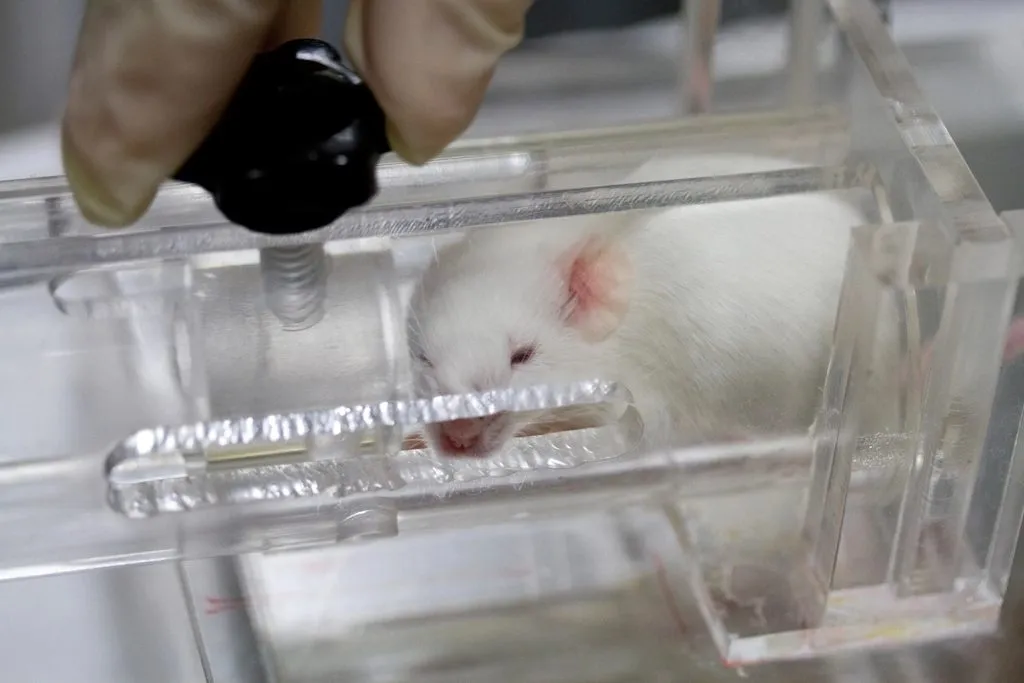
a laboratory mouse
Pictured a laboratory mouse · Unknown (via rawpixel)

A team in China decided to test the question in reverse: could bone send something back? They built a device that compressed the shinbones of mice and pigs 300 times, twice a second, five days a week 12. Mice treated after brain injury survived more often, kept more nerve cells alive, and did better on movement tests and a water maze that required remembering a hidden platform. When the researchers disabled PIEZO1, a pressure sensor inside bone cells, the benefit disappeared, so they knew the bone itself had to detect the squeeze. Then they drew blood serum from compressed mice and injected it into untreated, brain-injured mice, and those mice lost fewer neurons too. Whatever the bone was making, it was traveling through the bloodstream to reach the brain. The team then repeated the compression in four-month-old miniature pigs, whose brains are closer in scale to ours.

02/08 Natural Sci.

A trace of lead that could unlock 2,000-year-old scrolls

When Mount Vesuvius erupted in 79 C.E., it carbonized more than a thousand papyrus scrolls in a library in Herculaneum, the only intact library known to survive from antiquity, too fragile to unroll without crumbling into dust.

A trace of lead that could unlock 2,000-year-old scrolls
Unknown (via rawpixel)

Douglas Seiler, an affiliate of Berkeley SETI, wanted to know if hidden ink could be read without ever opening them. He had high school students write passages from Star Wars, the Bible, and The Outer Limits onto papyrus using traditional lampblack ink, then rolled it up, sealed it, and burned it in a furnace until it matched the Herculaneum scrolls 7. His hunch was about the ink's chemistry: if it contained lead, that metal would absorb far more X-rays than the surrounding carbonized paper. It worked. In the September 16 paper in PLOS ONE, lead in the ink absorbed up to 25 times more X-rays than the burned papyrus around it, making the writing stand out clearly enough for a computer to virtually unroll the scroll and reveal the text.

03/08 Psychology

A countertop garden that helped cancer patients feel better

About one in four cancer patients in the US experiences depression, and outdoor gardening, which reliably lowers stress, requires a yard, stamina, and good weather that chemotherapy often takes away.

Today Got Better

Researchers at Texas A&M and Houston Methodist Hospital gave 36 adult cancer patients, average age 57, a countertop hydroponic system called an AeroGarden and had them grow heirloom salad greens indoors under an LED light 23. Using a design where each patient served as their own before-and-after comparison, the team, led by Taehyun Roh, found improvements in mental health and overall quality of life over the course of the study, published in Frontiers in Public Health.

04/08 Technology

An exoskeleton that lets spinal-cord patients stand again

The FDA has cleared Eve, a personal exoskeleton from the French company Wandercraft, for commercial sale to adults with spinal cord injuries 62. It's not meant to replace a wheelchair; it's for the moments when standing matters more than rolling, a conversation at eye level, stirring a pot on the stove, brushing your teeth.

a person using a robotic exoskeleton to stand
Pictured a person using a robotic exoskeleton to stand · Sergeant Matt Hecht (via rawpixel)

Twelve motors in the hips, knees, and ankles handle the balance automatically, with no crutches or walker needed, controlled through a joystick adapted to the user's own hand mobility. In a study at the Kessler Foundation and the James J. Peters VA Medical Center, sixteen patient-caregiver pairs, seven with high neck injuries and nine with paraplegia, trained for four sessions and then tried to stand, walk, and sit back down within three minutes. Fifteen of the sixteen suited up in under ten minutes, nearly 69% hit their target walking speed, and 87.5% completed everyday tasks like opening doors and cooking.

05/08 Technology

A water-based battery built to outlast the buildings around it

A California company called EnerVenue has started the first high-volume production line in the world for what it calls the Aqueous Metal Cell, a water-based battery built on nickel-hydrogen chemistry, the same chemistry that powered the Hubble Space Telescope and the International Space Station for decades 54.

A water-based battery built to outlast the buildings around it
Lenharth Systems (via stocksnap)

The line is designed to turn out around 300 cells a day at full automation, each one rated for 30,000 charge cycles, which works out to three cycles a day for thirty years without needing scheduled maintenance. Every cell passes 41 quality checks across 11 stations before it leaves the building, checking weld integrity, leak tightness, and performance. Phase one is rated at 250 megawatt-hours of annual capacity, with plans to reach 1 gigawatt-hour by 2027.

06/08 Natural Sci.

Mammograms may cause far less overdiagnosis than believed

For decades, one of the biggest arguments against breast cancer screening has been overdiagnosis, catching cancers that would never have caused symptoms in a woman's lifetime, with some widely cited studies putting the rate as high as 30 to 50 percent.

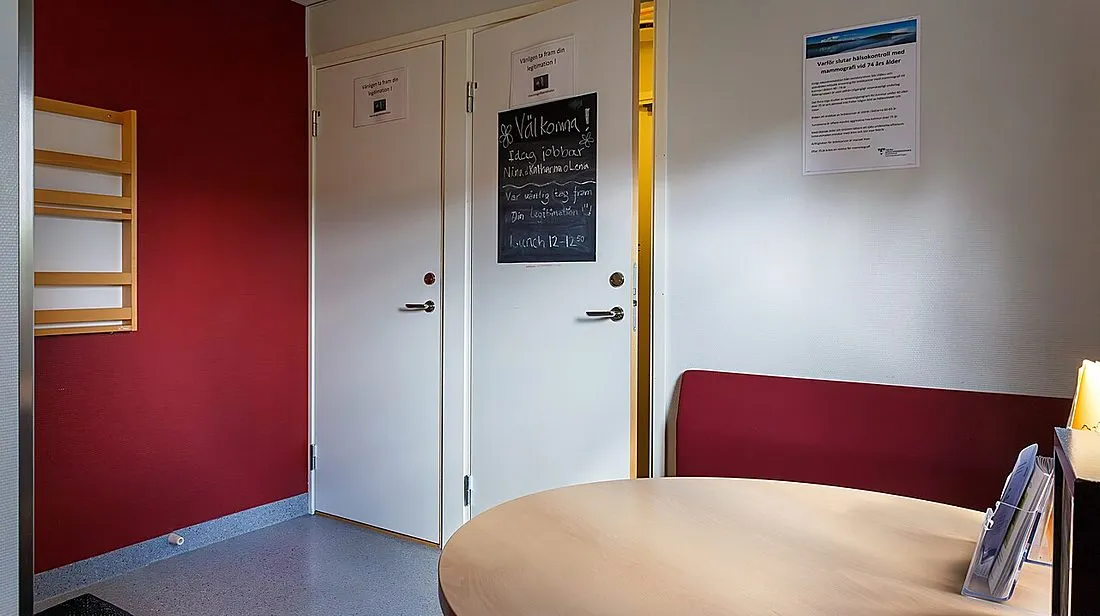
a mammography screening room
Pictured a mammography screening room · W.carter (Wikimedia Commons)

Researchers at the University of Southern Denmark, led by Sisse Helle Njor, reanalyzed all eight major randomized mammography trials and compared the results against real-world data from Denmark, where organized screening began in some regions 17 years before others 11. That staggered rollout let them track exactly how breast cancer diagnoses changed after screening started and how the pattern evolved over time. The additional cases found in the randomized trials closely matched the Danish pattern, where overdiagnosis is estimated at below 5 percent, not the 30 to 50 percent range that has shaped decades of screening debate.

07/08 Human Stories

A fish the size of a fingertip, found and already flagged to protect

While cataloging freshwater fish in Brazil's Rio Cajari region, researcher Yuri Abrantes and his team found a killifish they'd never seen before, its males banded in bold orange chevrons with blue-tinted fins, the longest just 1.1 inches long 94.

a small orange tropical killifish
Pictured a small orange tropical killifish · Unknown (via rawpixel)

They named it Laimosemion laranja, laranja meaning both "orange" and "orange fruit" in Portuguese, in a nod to both its color and the Laranjal do Jari municipality where it turned up. Distinguishing it from close relatives took counting scales (eight in a row across the body, a count no relative shares) and comparing mitochondrial DNA, the genetic barcode researchers use to tell one species from another. The findings were published in Zoosystematics and Evolution.

08/08 Good News

A machine shop that turns felony records into machinist certifications

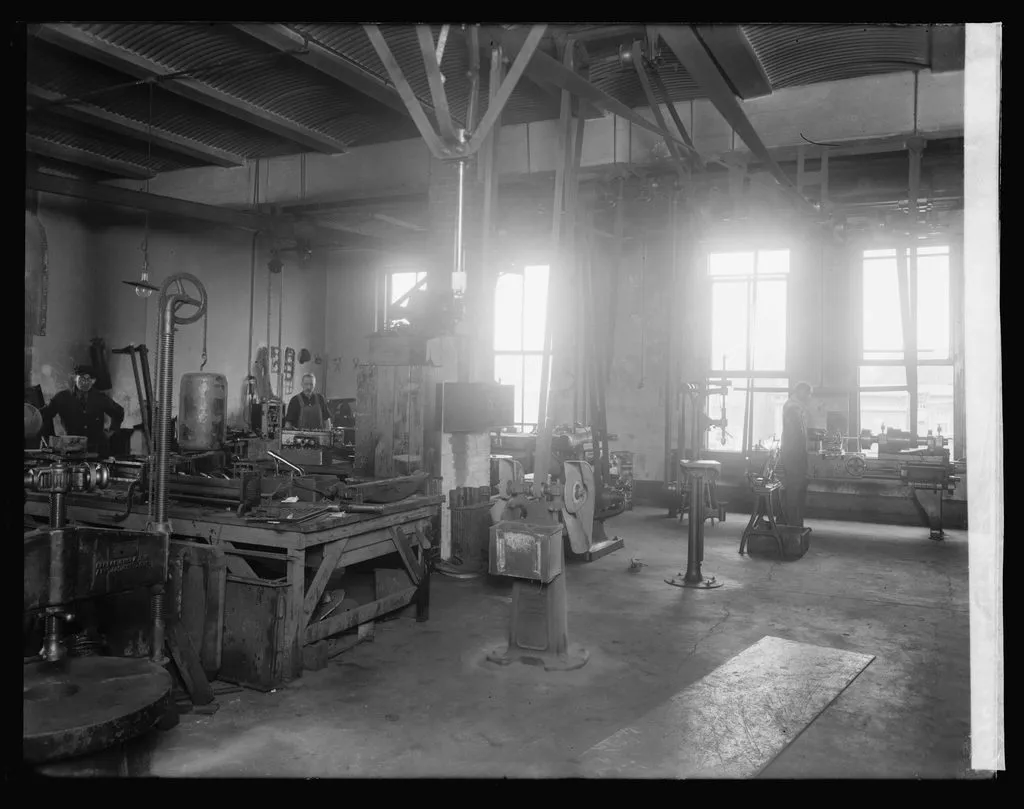
In a converted machine shop in southeastern San Diego, Rise Up Industries runs a paid apprenticeship that teaches formerly incarcerated men to become certified machinists, with therapy and case management built into the program 78.

a machine shop with workers operating lathes
Pictured a machine shop with workers operating lathes · libraryofcongress (via rawpixel)

The shop isn't symbolic work; it fills real contracts for aerospace and medical device parts, automotive components, and fishing lures. Komisi Savaiinaea, who served more than two decades in prison, had never touched a machine before the program and worried he wouldn't keep up with the trigonometry. Anthony Walkens, sentenced to 55 years to life in 1998 and paroled in 2025 after 47 years inside, said walking through the door for the first time felt overwhelming until Savaiinaea and others reassured him it was learnable. Rise Up's own tracking shows 3 percent of graduates reoffend, compared with a national three-year rearrest rate the Bureau of Justice Statistics puts around 66 percent.

Quick notes

Shorter discoveries from this morning, worth knowing but not a full story.

First quantum computer has operated in space A photonic quantum processor built by University of Vienna physicists survived a rocket launch (with a shock-response test at 1,500 times Earth's gravity) and ran successfully in orbit, a step toward processing satellite data on board instead of straining the bandwidth to send it home 14. ScienceAlert
Scientists discovered two bizarre new sea spider species A UBC master's student found two new sea spider species in the Salish Sea, including a hairy-legged, red-eyed one that grooms itself with comb-like appendages, the first new species described there in nearly a century 8. ScienceDaily
One treatment for insomnia may actually slow biological aging In a UCLA trial, older adults who got cognitive behavioral therapy for insomnia showed a slower pace of biological aging on the DunedinPACE clock than those who just got sleep education, the first study to test whether treating insomnia itself can do that 16. ScienceAlert
Don't toss cannabis leaves: They may contain rare compounds with medical potential Chemists at Stellenbosch University found 25 compounds never before reported in cannabis, including 16 rare flavoalkaloids, hiding in leaves usually thrown out as waste 9. ScienceDaily
The secret to growing food on Mars could be fungi Researchers in the US and Brazil are testing whether beneficial fungi that already help plants absorb nutrients on Earth could turn nutrient-poor Martian and lunar dirt into something crops can actually grow in 10. Universe Today
Two astronauts who flew farther than anyone before are taking new NASA roles Artemis II astronauts Victor Glover and Reid Wiseman, fresh off their trip around the Moon, are moving into NASA emeritus roles to mentor the teams preparing for Artemis III 5. ScienceDaily
JWST Finds Dynamic Structural Evolution in Chariklo's Rings The James Webb Space Telescope caught the two rings around the asteroid Chariklo changing in real time, one gaining density and the other thinning, the first time anyone has watched a small body's ring system evolve like this 19. Universe Today
New study of Brazilian twins sheds light on the heritability of our creative confidence A twin study out of the University of São Paulo found that genetics only modestly shapes how creative people believe themselves to be; the much bigger factor is individual life experience, the kind no sibling shares even growing up in the same house 24. PsyPost
Emotional distress when stopping antidepressants appears to be due to withdrawal, not relapse New research gives doctors a way to tell the difference between a medication withdrawal reaction and a real relapse when someone tapers off antidepressants, which matters because the right response to each is the opposite of the other 26. PsyPost
Nike Founder Phil Knight Gives Away a Billion Dollars Phil and Penny Knight gave the University of Oregon $1 billion, reportedly the largest single gift to an American public university ever, to launch a full undergraduate engineering college in a state short on engineers 77. Good News Network
No Sea Visarjan? Mumbai Promotes Artificial Ponds Mumbai's civic authority is offering artificial ponds as an alternative to the sea for Ganpati idol immersion, letting the tradition continue while keeping broken idols out of the ocean 85. The Better India
Glow-up after 100: Centenarians at Austin senior living community get 'glamorous' makeovers from high schoolers High schoolers from a nonprofit called GlamourGals gave manicures and makeovers to residents aged 100 to 104 at an Austin senior community, and both generations said the monthly visits have turned into real friendships 90. Upworthy
An AI That Speaks The Language of Dairy Farmers Amul built an AI assistant named Sarlaben that combines breeding, health, nutrition, and payment guidance in one conversation, in a farmer's own language, for 3.6 million dairy farmers across more than 18,000 Indian villages 84. The Better India

Our process. Your trust.

Every discovery above traces back to an article we read in full. This is the whole corpus behind this morning, and what it was made of.

  • 22 Sources scanned
  • 96 Articles read
  • 7 Fields covered
  • 8 Discoveries

The sources that carried this morning

  1. 1 Psychology Today: The Latest 12 articles
  2. 2 Latest Science News -- ScienceDaily 11 articles
  3. 3 Interesting Engineering 10 articles
  4. 4 ScienceAlert 7 articles
  5. 5 PsyPost Psychology News 7 articles
  6. 6 VegNews.com 7 articles
  7. 7 Futurism 6 articles
  8. 8 Good News Network 5 articles
How an edition is made

Everything we read today

Natural Sciences 20 articles
Psychology & Behavioral Science 19 articles
Social Sciences 5 articles
Technology & Innovation 22 articles
Plant-Based & Vegan 9 articles
Solutions & Good News 16 articles
Human Stories & Ideas 5 articles
The long view · not today’s news, the story behind it

Today’s discoveries didn’t come from nowhere. Here’s the older, ongoing story they belong to, a moment from this day in history, and a question to test what stuck.

Where the story stands

On this day in science

1822 Egyptian hieroglyphs are deciphered Jean-François Champollion announced to the French academy that he had cracked the code of Egyptian hieroglyphs, using the Rosetta Stone to tie the ancient script to a known language. Three thousand years of silent inscriptions could suddenly be read. A whole civilization began to speak again. More from the Almanac →

Before you go: today’s quiz

The daily quiz

How many lives did NHTSA estimate seat belts saved in the US from 1975 to 2017?

Reveal the answer

374,276

NHTSA estimates seat belts saved 374,276 lives in the United States from 1975 through 2017, including 14,955 in the single year 2017.

See the Lifesaver →

Previous editions

Every morning we have published, newest first. Nothing expires.

View the full archive

Get this every morning.

Liked today’s? Tomorrow’s reaches your inbox before breakfast.

  • One email each morning, never more
  • The day’s real discoveries across 8 fields
  • One calm read with your coffee

The full letter, every morning, free for good.

Same free letter, plus the reason it stays that way: no ads, no investors, no agenda but the good news itself.

A single gift of any amount. No account, never a recurring charge.