



The daily brief · September 21, 2026

T. rex ran warm as you do, and REM sleep guards against 83 diseases

Today's discoveries are what happens when measurement finally catches up to wonder: a dinosaur's actual pulse, gravity's stubborn refusal to add up, and the quiet biological math of sleep and hormones protecting a brain for decades.

  • 8 Discoveries
  • 163 Articles read
  • 27 Sources
  • 11 Min read

Today’s discoveries

Everything this morning found, in the order we would read it.

8 stories
  1. 01 Natural Sci. T. rex ran as hot as an elephant UCLA geochemists Randon Flores and Robert Eagle took the actual temperature of a Tyrannosaurus rex, something nobody has managed before. Source: ScienceDaily 1 min read
  2. 02 Natural Sci. A ten-year experiment still can't pin down gravity For a decade, NIST physicist Stephan Schlamminger worked to measure big G, the universal gravitational constant that sets the strength of gravity everywhere in the universe. Source: ScienceDaily 1 min read
  3. 03 Life Sciences Deep dreaming sleep may protect against 83 diseases Researchers led by a team at Capital Medical University tracked 95,559 people in a UK health project, using wrist trackers to map a week of sleep against more than a thousand health… Source: ScienceAlert 1 min read
  4. 04 Life Sciences Menopause hits pause on the brain's normal aging Cognitive neuroscientist Sophie van 't Hof and colleagues at Amsterdam University Medical Center scanned the brains of more than 1,000 people repeatedly across major life transitions,… Source: ScienceAlert 1 min read
  5. 05 Technology Three minutes with a donkey eased teenage sadness and loneliness A study in Scientific Reports had 61 teenagers spend just a few minutes interacting with rescued donkeys and miniature horses, either stroking their backs or scratching their necks the… Source: Futurism 1 min read
  6. 06 Psychology Psilocybin and antidepressants fix the same broken lens, on different timelines People with depression often see the world through a distorted filter, reading a neutral face as angry or a kind comment as an insult. Source: PsyPost 1 min read
  7. 07 Plant-Based A yeast-made cocoa butter fooled four out of five tasters UK startup Sun Bear Biofuture engineers yeast to convert sugar into a fat that behaves like cocoa butter, using precision fermentation instead of tropical farmland. Source: Green Queen 1 min read
  8. 08 Good News A village that sweeps its streets three times a day Fifteen years ago, a schoolteacher named Madhusudan Marandi wanted his village of about 70 families in Odisha, India, to become a model of cleanliness. Source: The Better India 1 min read

The feel-good story of the day

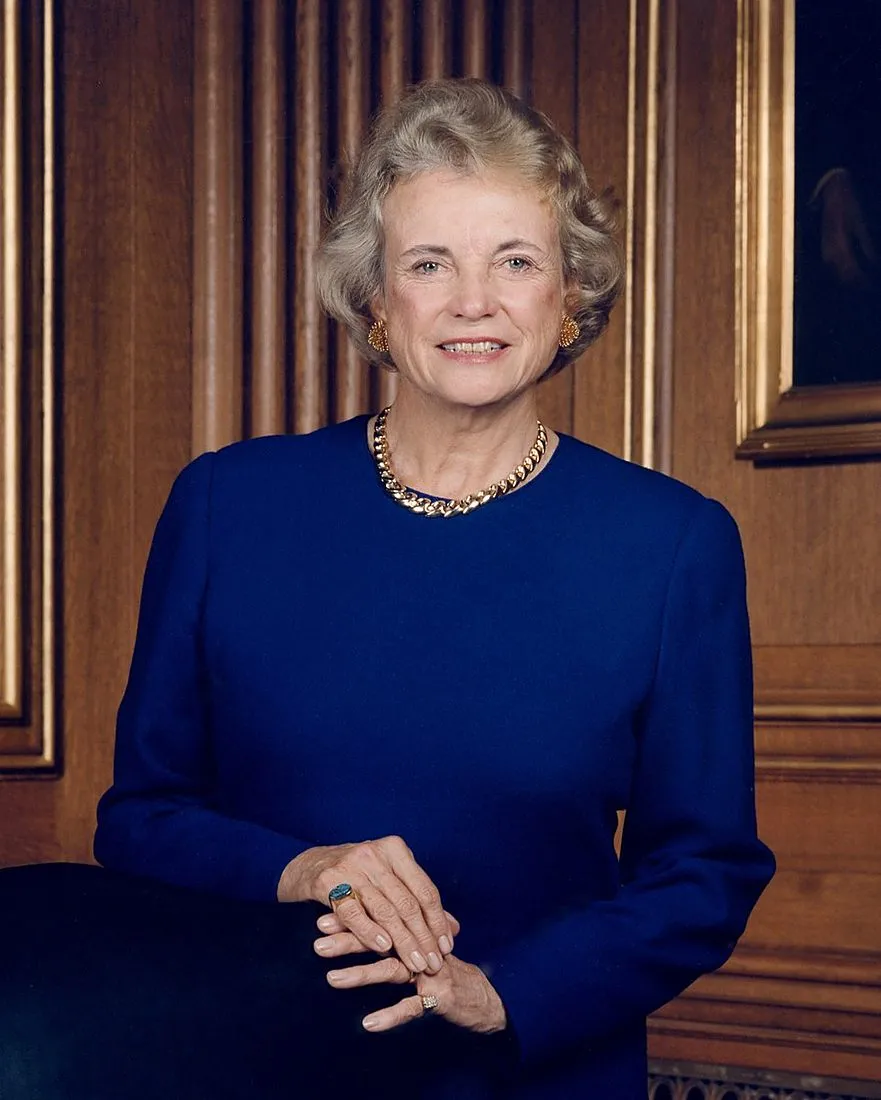
Sandra Day O'Connor Wikimedia Commons / Sandra Day O'Connor
Pictured Sandra Day O'Connor

The day the Senate voted 99 to 0

On September 21, 1981, the U.S. Senate confirmed Sandra Day O'Connor to the Supreme Court by a vote of 99 to 0, making her the first woman ever named to the nation's highest court. She had grown up on a remote Arizona cattle ranch, graduated near the top of her Stanford Law class in 1952, and still couldn't get hired at a major law firm, several offered her a job as a legal secretary instead. She built a career anyway: state senator, judge, and eventually the appointment that changed what the court's bench looked like for good.

In her first year on the Court, O'Connor received more than 60,000 letters from the public, more than any justice before her. She spent the next 24 years as a deciding vote on some of the era's biggest cases, trusted by both sides and fully claimed by neither, which is its own kind of achievement in Washington. She didn't get every call right by everyone's lights, nobody in that job does, but she opened a door that has stayed open ever since.

Today’s complete edition

The discoveries, in full

Read the evidence, what it changes, and the reporting behind each of today’s 8 discoveries.

01/08 Natural Sci. Technology

T. rex ran as hot as an elephant

UCLA geochemists Randon Flores and Robert Eagle took the actual temperature of a Tyrannosaurus rex, something nobody has managed before. They used clumped isotope thermometry: rare carbon-13 and oxygen-18 atoms in tooth enamel bond together at rates that depend on the temperature the enamel formed at, so counting those bonds gives you a real number, regardless of what the animal was drinking 66 million years ago.
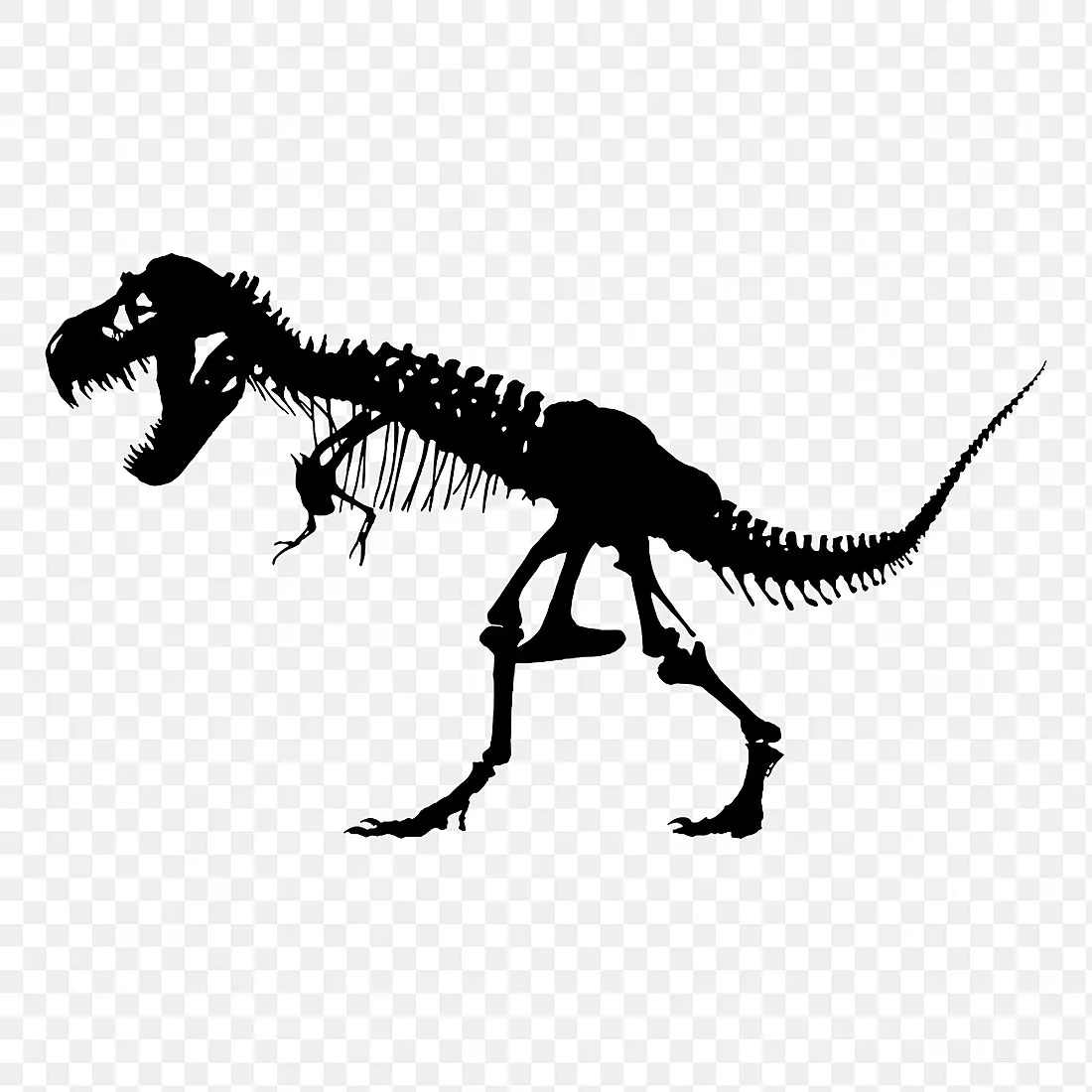
Tyrannosaurus rex skeleton
Pictured Tyrannosaurus rex skeleton · Unknown (via rawpixel)

Working with the museum's specimen known as Thomas the T. rex, and after a decade spent shrinking the amount of fossil material the technique needs by about 90%, they got a reading of roughly 36 degrees Celsius, 97 Fahrenheit 8. That's within a couple degrees of you, and close enough to an elephant that Ars Technica used the comparison in its own headline 96. Published September 16 in Science Advances, it is the first direct temperature measurement ever taken from the animal, not an inference from bone growth rings or guesswork about ancient seawater.

What each field noticed (2)
02/08 Natural Sci.

A ten-year experiment still can't pin down gravity

For a decade, NIST physicist Stephan Schlamminger worked to measure big G, the universal gravitational constant that sets the strength of gravity everywhere in the universe.

a physics laboratory
Pictured a physics laboratory · rijksmuseum (via rawpixel)

When he finally opened the envelope holding the answer that would decode his own data, his new number for big G didn't match another leading recent measurement 1. That gap sounds small, but for a constant this fundamental, it's large enough to matter. Gravity is oddly hard to pin down for the simple reason that it is astonishingly weak: a pinhead-sized magnet can lift a paperclip against the pull of the entire planet. Physicists have been chasing this number for more than 225 years, since roughly a century after Newton, and it remains less precisely known than the constants governing electromagnetism or the nuclear forces.

03/08 Life Sciences

Deep dreaming sleep may protect against 83 diseases

Researchers led by a team at Capital Medical University tracked 95,559 people in a UK health project, using wrist trackers to map a week of sleep against more than a thousand health conditions over a median follow-up of nearly nine years 12.

Deep dreaming sleep may protect against 83 diseases
Unknown (via rawpixel)

REM sleep, the stage where most dreaming happens and the brain looks almost as active as when awake, stood out: more of it tracked with lower risk of 83 different diseases, including heart failure, Alzheimer's, and atrial fibrillation. Deep sleep mattered too, tied to lower risk of 7 conditions including type 2 diabetes. The sweet spot for total sleep landed between six and eight hours; under five hours tracked with higher risk of 37 diseases.

04/08 Life Sciences

Menopause hits pause on the brain's normal aging

Cognitive neuroscientist Sophie van 't Hof and colleagues at Amsterdam University Medical Center scanned the brains of more than 1,000 people repeatedly across major life transitions, including puberty, pregnancy, and menopause 19.

a woman in her fifties
Pictured a woman in her fifties · Burst (via stocksnap)

Gray matter normally shrinks a little every year as a brain ages. During puberty and pregnancy, that shrinkage sped up, consistent with a brain reorganizing itself for a new phase. Menopause did the opposite: when it began, the usual gradual loss of cortical volume simply stopped. "Menopause, in other words, is defined not by what changes," van 't Hof wrote, "but by what does not."

05/08 Technology

Three minutes with a donkey eased teenage sadness and loneliness

A study in Scientific Reports had 61 teenagers spend just a few minutes interacting with rescued donkeys and miniature horses, either stroking their backs or scratching their necks the way the animals groom each other 99.

Three minutes with a donkey eased teenage sadness and loneliness
Lenharth Systems (via stocksnap)

All of the teens reported feeling calmer afterward, regardless of which they did. But researchers led by UC Davis's Rebecca Calisi-Rodríguez tracked something nobody had measured before: how the animal reacted. Teens who saw a donkey wriggle its lips, a sign of pleasure, showed bigger drops in loneliness. Even teens whose donkey walked away, a signal it wanted space, reported bigger drops in sadness. "You can't stand in a pasture watching a child and a donkey interact and pretend only one of them is having an experience," Calisi-Rodríguez said.

06/08 Psychology

Psilocybin and antidepressants fix the same broken lens, on different timelines

People with depression often see the world through a distorted filter, reading a neutral face as angry or a kind comment as an insult. Oxford researcher Marieke Martens and colleagues, including Robin Carhart-Harris, ran a double-blind trial with 59 patients with long-standing depression, split between two 25-milligram doses of psilocybin three weeks apart, or six weeks of daily escitalopram, a standard SSRI 48.

a therapy session
Pictured a therapy session · Unknown (via rawpixel)

Both treatments reduced that negative bias, the study found, suggesting they may relieve depression through a shared mechanism: correcting how the brain reads ambiguous emotional cues. Psilocybin trials have shown faster symptom relief than daily pills, but until now nobody knew whether it worked through that same channel.

07/08 Plant-Based

A yeast-made cocoa butter fooled four out of five tasters

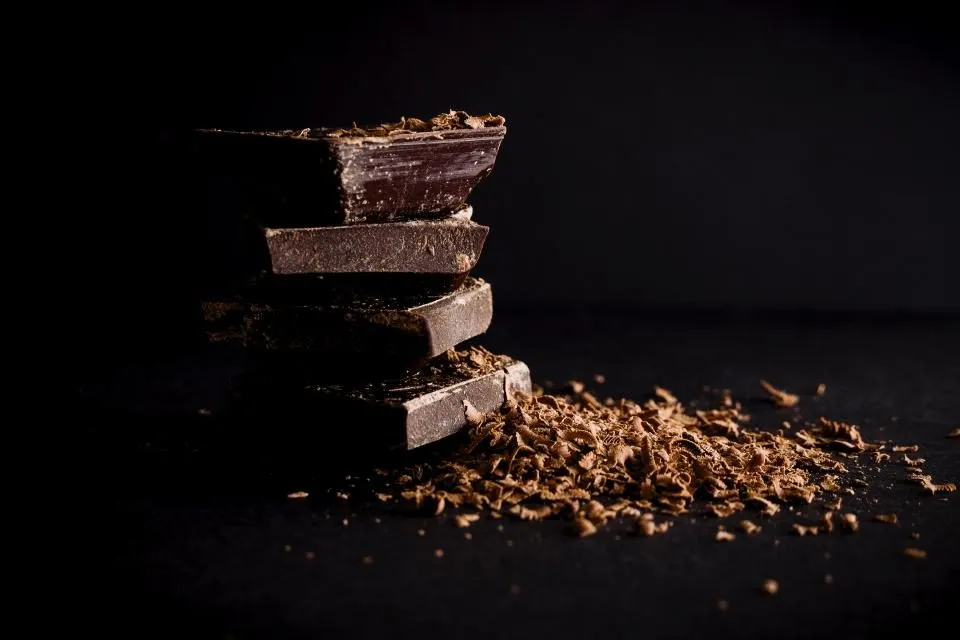
UK startup Sun Bear Biofuture engineers yeast to convert sugar into a fat that behaves like cocoa butter, using precision fermentation instead of tropical farmland. Oxford Brookes University's Centre for Nutrition and Health tested the substitute against real cocoa butter across five products, three foods and two cosmetics, and found people either couldn't tell the difference or actually preferred the yeast version in four of the five cases 127.

a bar of dark chocolate
Pictured a bar of dark chocolate · Micha%u0142%20Grosicki (via stocksnap)

Separate testing by University of the Arts London found no performance gap in a hand balm formulation from a major cosmetics brand either. The company also says it slashed its own production costs, building a fermentation setup for under £1,000 instead of the roughly £250,000 a standard pilot plant would run.

08/08 Good News

A village that sweeps its streets three times a day

Fifteen years ago, a schoolteacher named Madhusudan Marandi wanted his village of about 70 families in Odisha, India, to become a model of cleanliness. The idea stuck.

women painting traditional wall art in a village
Pictured women painting traditional wall art in a village · Unknown (via rawpixel)

Today Babojola's residents sweep their streets three times daily, sort and compost their waste, ban plastic and smoking, and fine anyone, resident or visitor, who litters 144. They pooled their own money for CCTV cameras, dustbins, and solar panels. The village is also known for Bhit Potaw, wall art made by the village's women using pigments from riverside clay, stone, and bark, so the same relationship with the land shows up on the houses as it does in the streets.

Quick notes

Shorter discoveries from this morning, worth knowing but not a full story.

Scientists may have solved a 2,000-year-old Dead Sea Scrolls mystery Researchers at Tel Aviv University think the Qumran sect really did run their community on a tidy 364-day calendar, 52 perfect weeks, before it drifted out of sync with the seasons and got abandoned 3. A 2,000-year-old scheduling problem, finally explained. ScienceDaily
'Rusty treasure' found in the Danube is full of 2,000-year-old iron bars Gravel workers in Austria stumbled onto 500 semifinished iron bars, a two-millennia-old shipwreck's cargo, enough metal to have forged 500 swords or 8,000 nails 9. It came within inches of being sold to scrap dealers before anyone realized what it was. Live Science
Stars turn neon-green in first test image from NASA's Roman telescope Roman's new 300-megapixel camera just opened its eyes for the first time, seeing lime-green loops of unfocused starlight on its way to a parking spot beside the James Webb telescope 10. Its future images will each cover 100 times more sky than Hubble's. Live Science
Scientists discover a hidden 'ID card' in cat urine Cats may recognize each other for months through 13 unusual fatty acids in their urine that stay chemically stable even as the scent around them fades 4. Cats remember you, or at least your chemistry, longer than you'd think. ScienceDaily
Scientists Have Ranked Which Exercises Are Best For Your Bones A review of 124 trials and over 18,000 people found brisk walking or jogging beat every fancier workout for bone density in people over 40 15. About 2 to 3 hours a week is the dose that starts making a real difference. ScienceAlert
Microscopy and AI Decipher Fruit Fly Neural Architecture After nearly two decades of work, scientists have mapped all 166,000 neurons and every synapse in an adult fruit fly's nervous system, a project once considered impossibly slow that AI helped speed up more than a thousandfold 32. The same tools are now aimed at transparent fish brains. Neuroscience News
The Brain Is Two Separate Organs Joined by Evolution Stanford researchers found the brain's front and back halves grow from two entirely separate cell lineages, a discovery that let them finally grow working human hindbrain neurons in a dish for the first time, opening a path to studying ALS and related diseases 30. Neuroscience News
Brain's 'Blue Place' Rewrites How Norepinephrine Drives Learning Allen Institute scientists mapped a brainstem region long assumed to blast the whole brain with one chemical signal, and found it actually routes precise messages to exact destinations, including a single mouse neuron with an axon over 70 centimeters long, the longest ever recorded in the species 31. Neuroscience News
World's first zero-degradation elastocaloric cooling device A Hong Kong team built a solid-state cooling device using a fatigue-resistant alloy that held steady through one million operating cycles with zero performance loss, a real shot at refrigeration without the usual greenhouse gases 108. Interesting Engineering
Scientists create world's first floating titanium RMIT researchers 3D-printed a titanium lattice, filled its hollow beams with foam, and got a metal four times denser than water to float, even after they deliberately cracked and broke parts of it 119. New Atlas
165-Mile Bike Trail Through Minnesota Finally Completed After 30 Years The Mesabi Trail, three decades and countless partners in the making, now links 28 Minnesota communities along old iron-mining country, one of the longest paved cycling trails in America 141. Good News Network
Couple Fosters 59 Dogs in Retirement Nicole and Gary Wordsworth have spent 15 years giving anxious shelter dogs a quiet place to decompress between kennel stays and forever homes, 59 dogs and counting 140. Good News Network
Can dogs sniff out cancer? New AI study shows promise An Indian startup trained an AI on the biometric responses of 15 dogs sniffing breath samples and reported over 90% accuracy detecting seven cancer types across 1,500 patients, a possible low-cost first screen for a country where diagnoses often come too late 149. One company-run study isn't proof yet, and the researchers say so themselves. The Optimist Daily
Target employee tells woman at self-checkout 'You can't leave' A Target security worker had quietly clocked a man photographing a shopper without her knowledge, held her at the register until he'd left the building, then walked her to her car 153. Ordinary vigilance, exactly when it counted. Upworthy
How revisiting old memories can build real self-esteem Psychologist Marisa Franco points to research showing memories aren't fixed recordings, they get rebuilt every time you recall them, and people who consciously "reparent" a painful memory show measurable drops in trauma symptoms and changes in the hippocampus 150. The Optimist Daily

Our process. Your trust.

Every discovery above traces back to an article we read in full. This is the whole corpus behind this morning, and what it was made of.

  • 27 Sources scanned
  • 163 Articles read
  • 8 Fields covered
  • 8 Discoveries

The sources that carried this morning

  1. 1 National Bureau of Economic Research Working Papers 20 articles
  2. 2 Psychology Today: The Latest 16 articles
  3. 3 Neuroscience News 12 articles
  4. 4 ScienceAlert 10 articles
  5. 5 PsyPost Psychology News 10 articles
  6. 6 Interesting Engineering 10 articles
  7. 7 New Atlas 10 articles
  8. 8 Upworthy 10 articles
How an edition is made

Everything we read today

Natural Sciences 22 articles
Life Sciences & Medicine 19 articles
Psychology & Behavioral Science 26 articles
Social Sciences 26 articles
National Bureau of Economic Research Working Papers
Technology & Innovation 32 articles
Plant-Based & Vegan 12 articles
Solutions & Good News 23 articles
Human Stories & Ideas 3 articles
The long view · not today’s news, the story behind it

Today’s discoveries didn’t come from nowhere. Here’s the older, ongoing story they belong to, a moment from this day in history, and a question to test what stuck.

Where the story stands

On this day in science

1981 The first woman joins the Supreme Court The U.S. Senate voted unanimously to confirm Sandra Day O'Connor to the Supreme Court, the first woman to sit on it in nearly two centuries. Years earlier, law firms had offered her only secretarial work despite her top grades. She became one of the most pivotal justices of her era. More from the Almanac →

Before you go: today’s quiz

The daily quiz

In 1800, about four in ten children died before their fifth birthday. Today the global figure is closest to?

Reveal the answer

About 4 percent

The global under-five mortality rate has fallen from about 42.8 percent in 1800 to about 3.7 percent today, its lowest level ever recorded.

See the number →

Previous editions

Every morning we have published, newest first. Nothing expires.

View the full archive

Get this every morning.

Liked today’s? Tomorrow’s reaches your inbox before breakfast.

  • One email each morning, never more
  • The day’s real discoveries across 8 fields
  • One calm read with your coffee

The full letter, every morning, free for good.

Same free letter, plus the reason it stays that way: no ads, no investors, no agenda but the good news itself.

A single gift of any amount. No account, never a recurring charge.