

01/08 Natural Sci.
The volcano that scrubbed its own methane out of the sky
When Hunga Tonga-Hunga Ha'apai erupted in January 2022, it released roughly 300 gigagrams of methane, about as much as two million cows produce in a year 2. Satellites then picked up something researchers weren't looking for: a record spike in formaldehyde inside the ash cloud, a chemical that only exists for a few hours and only appears when methane is actively being broken apart.
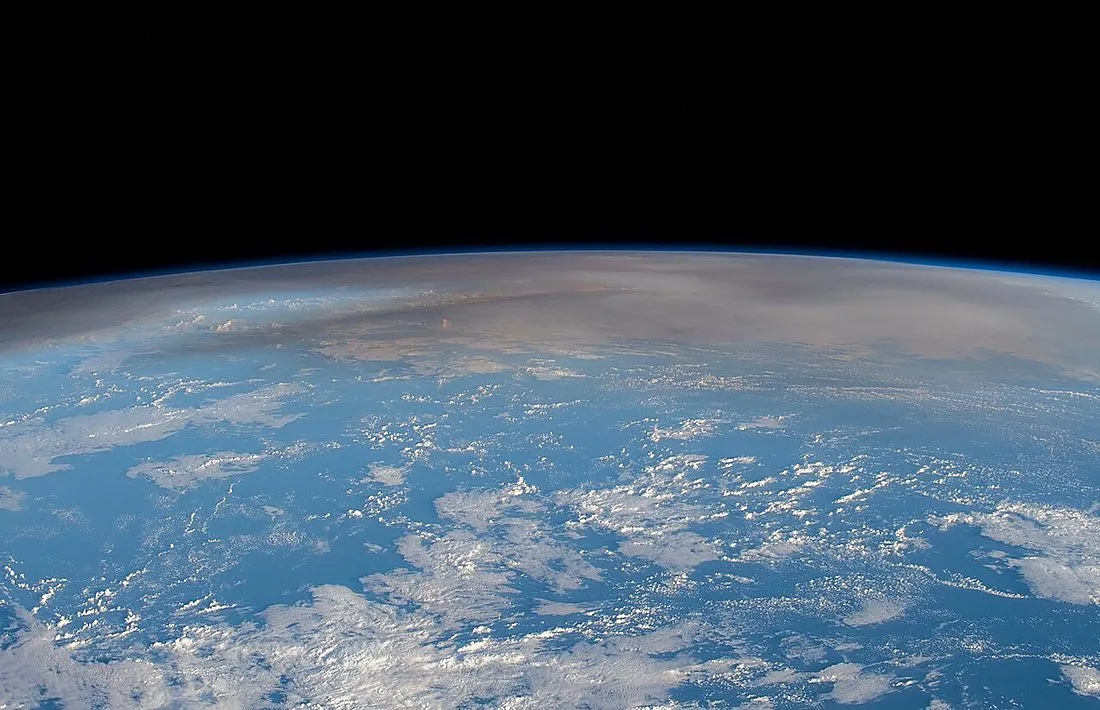
The cloud kept producing it for more than a week, drifting all the way from the South Pacific to South America, destroying methane at a rate of about 900 megagrams a day, roughly what two million cows exhale daily. The likely recipe, still being worked out: volcanic ash, seawater, and sunlight, reacting in a way nobody had documented before.