






An AI cracks a 200-year-old math problem about how fluids behave
On the morning of September 8, roughly 10,000 AI agents working under OpenAI's direction found what mathematicians call a singularity: a point where the Navier-Stokes equations, which describe how fluids from ocean currents to aircraft wings move, break down and predict something physically impossible 67.
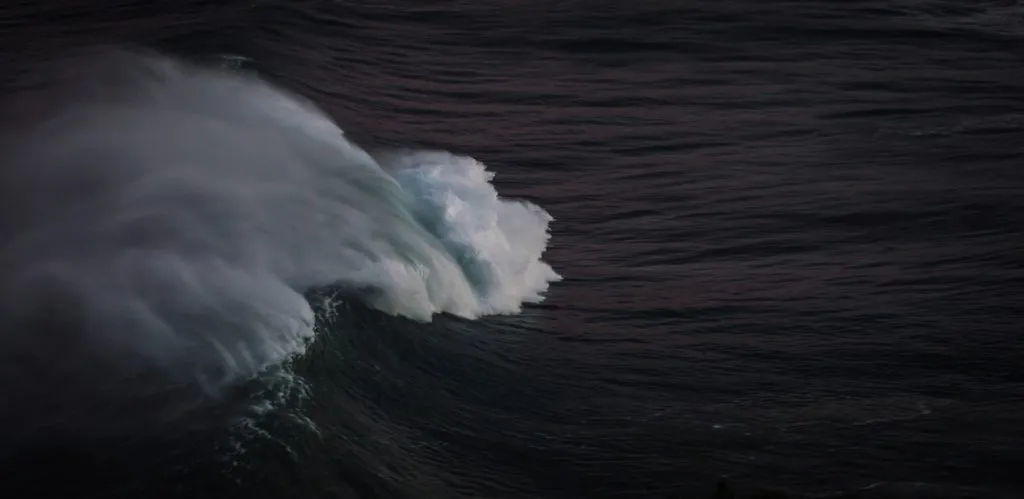
The equations have stood since the mid-1800s, and whether they could ever spin off into nonsense was one of seven Millennium Prize Problems the Clay Mathematics Institute set in 2000, each worth a million dollars, only one of which had ever been solved before today 67. OpenAI says the computation took 88 hours 139 and would cost about $15 million to reproduce for a customer 36, and the result has already been checked line by line in the formal proof language Lean 67. It landed twelve hours after NYU's Tristan Buckmaster and Anthropic's Levent Alpöge, using publicly available models, announced they had cracked several of the stepping-stone problems on the way there, building on a strategy from mathematicians Diego Córdoba and Luis Martínez-Zoroa that broke from a century of conventional approaches 67. Charles Fefferman, who wrote the Clay Institute's original description of the problem, called Córdoba and Martínez-Zoroa the real heroes of the story 67.
What each field noticed (2)
Natural Sci.
Both outlets zeroed in on the math itself: a question that had sat open since the equations were first written down, now resolved with a formally verified proof, and coming on the heels of AI cracking a decades-old Erdős conjecture and finding a counterexample to the century-old Jacobian conjecture this year alone 36.
 MIT Technology Review
 What OpenAI's latest controversy tells us about the future of math
MIT Technology Review focused on what the moment means for the people doing math, not just the math: a dispute over whether OpenAI credited Buckmaster and Alpöge's earlier work, and a worry that the biggest problems may now require resources only a couple of frontier AI companies control 188.
Read the story