




The daily brief · September 4, 2026

An immune switch keeps mice young, and ancient microbes hint at life's first handshake

Today's discoveries share a quiet thread: bodies, minds, and even 3.5-billion-year-old microbial mats turn out to hold more capacity for repair and renewal than anyone gave them credit for.

  • 7 Discoveries
  • 279 Articles read
  • 51 Sources
  • 10 Min read

Today’s discoveries

Everything this morning found, in the order we would read it.

7 stories
  1. 01 Natural Sci. The immune cells that decide how fast you age Stanford researchers found that a specific class of immune cells living permanently inside organs, called tissue-resident macrophages, gradually lose their ability to clear out a second… Source: ScienceDaily 1 min read
  2. 02 Natural Sci. The microbial handshake that may explain how complex life began Stromatolites look like ordinary dark rocks, but they are layered colonies of microbes that have been building themselves up since before animals or plants existed. Source: ScienceDaily 1 min read
  3. 03 Life Sciences The FDA finally trusts doctors with one of psychiatry's most powerful drugs In February 2025, the FDA retired the 30-year-old monitoring registry that had governed clozapine, the only drug approved for treatment-resistant schizophrenia and the only one shown to… Source: STAT 1 min read
  4. 04 Psychology Escaping poverty made people sharper thinkers, not just richer China's Targeted Poverty Alleviation program, launched nationwide in 2015, aimed to eliminate absolute poverty through financial credit, healthcare and job support. Source: PsyPost 1 min read
  5. 05 Technology A dress grown, not sewn Researchers at Shenzhen Institutes of Advanced Technology grew Cordyceps militaris fungus in liquid until it formed small mycelial clumps, pressed those into sheets, then softened the… Source: New Atlas 1 min read
  6. 06 Good News A simple pill cuts first heart attacks in healthy 70-somethings by 30 percent A decade-long, randomized controlled trial of nearly 10,000 Australians aged 70 and older, led by Monash University, found that a daily statin cut the risk of a first major cardiac… Source: The Optimist Daily 1 min read
  7. 07 Plant-Based Wild beaver kits are back in Norfolk after 500 years Beavers were hunted to extinction in England in the early 1500s. Source: Plant Based News 1 min read

The feel-good story of the day

an older couple embracing NASA (via rawpixel)
Pictured an older couple embracing

She lost her memory to Alzheimer's, and got both it and a wedding back

Gail Youngdale's Alzheimer's diagnosis brought fear and a steady loss of independence. Scans once showed nine separate spots of amyloid plaque in her brain, the substance tied to the disease's damage. After treatment with lecanemab, sold as Leqembi, those nine spots are gone, and doctors haven't seen the plaque return.

"I don't have all of my memory back, but most of it," Gail says. She and Phil Mercer had known each other since junior high, attended one formal dance together, then lost touch for decades while each built a life and a marriage of their own. After both were widowed, they crossed paths again at a high school reunion, and Gail kissed him that night. They married a year ago.

Phil is now part of Gail's care team as much as her husband. "I'm glad to help Gail and to help her with her journey to help other people," he says. Her recovery is now part of a national awareness campaign for World Alzheimer's Month, a reminder that for some patients, the disease's course is no longer only one direction.

Today’s complete edition

The discoveries, in full

Read the evidence, what it changes, and the reporting behind each of today’s 7 discoveries.

01/07 Natural Sci.

The immune cells that decide how fast you age

Stanford researchers found that a specific class of immune cells living permanently inside organs, called tissue-resident macrophages, gradually lose their ability to clear out a second type of immune cell as animals get older 3.
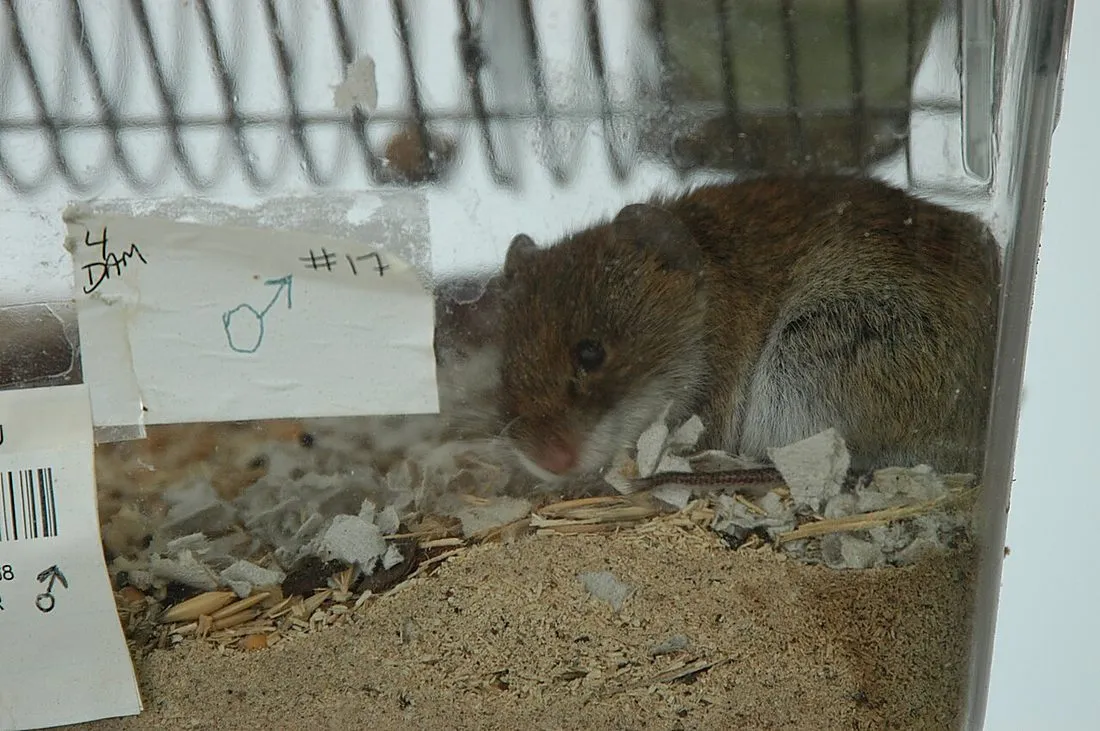
a laboratory mouse being examined by a researcher
Pictured a laboratory mouse being examined by a researcher · IAEA Imagebank (Wikimedia Commons)

That failure appears to drive inflammation throughout the body. When the team blocked a single receptor on those macrophages in mice, the effects showed up almost everywhere: leaner bodies, sharper memory, stronger hearts and muscles, and younger-looking tissue in the brain, liver, spleen, bone marrow, kidney and colon. "We've been trying to figure out why we age," said senior author Katrin Andreasson. "Now we know at least one big reason for it" 3. The receptor responds to a hormone already known for its role in inflammation and pain in both mice and people, which is part of why the team thinks a drug candidate could follow.

02/07 Natural Sci.

The microbial handshake that may explain how complex life began

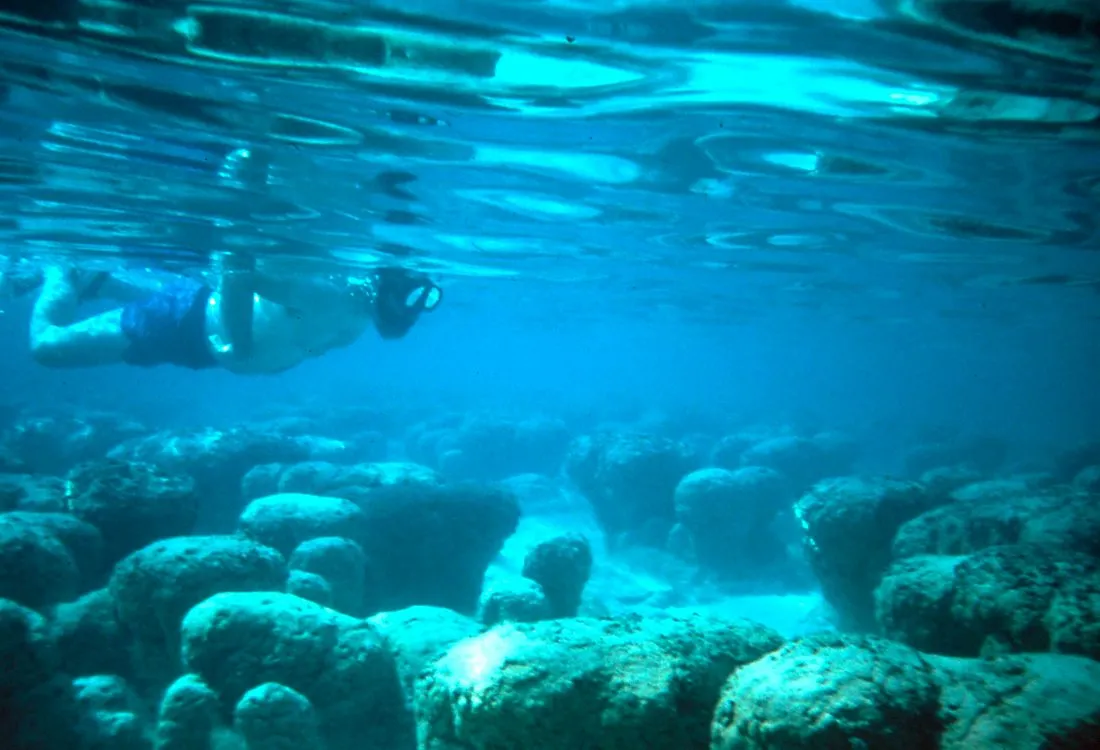
Stromatolites look like ordinary dark rocks, but they are layered colonies of microbes that have been building themselves up since before animals or plants existed. Inside a stromatolite community from Shark Bay in Western Australia, researchers led by UNSW's Brendan Burns found something never directly photographed before: an Asgard archaeon, a microbe from the group thought to be the closest living relative of the ancestors of all complex cells, physically connected to a bacterium by thin, tube-like nanotubes, apparently trading nutrients back and forth 2.

stromatolites at Shark Bay, Western Australia
Pictured stromatolites at Shark Bay, Western Australia · Ed Landing & Markes E. Johnson (in: Journal of Marine Sc (Wikimedia Commons)

One long-standing theory holds that the first complex cell arose when an ancient archaeon and a bacterium formed just this kind of partnership, with one eventually engulfing the other and becoming mitochondria, the cell's power plant. Nobody had actually seen a plausible early version of that handshake until now. "Stromatolites could be more than 'just' a cradle of life where early microbial life flourished," Burns said. "They could also tell us how complex life first emerged" 2.

03/07 Life Sciences

The FDA finally trusts doctors with one of psychiatry's most powerful drugs

In February 2025, the FDA retired the 30-year-old monitoring registry that had governed clozapine, the only drug approved for treatment-resistant schizophrenia and the only one shown to reduce suicide in the illness 91.

a teenager talking with a doctor in a clinic
Pictured a teenager talking with a doctor in a clinic · 立場新聞 (Wikimedia Commons)

Clozapine is, by the account of physicians who have spent careers prescribing it, close to miraculous: roughly one in three people with schizophrenia don't respond to any other medicine, and clozapine can, in the words of one longtime pediatric psychiatrist, "give a person back to themselves." He describes watching children lost to relentless psychosis begin returning to their families within days of starting it. And yet only about 4% of eligible patients in the US ever receive it, even though the weekly blood draws that once gated every prescription are gone.

04/07 Psychology

Escaping poverty made people sharper thinkers, not just richer

China's Targeted Poverty Alleviation program, launched nationwide in 2015, aimed to eliminate absolute poverty through financial credit, healthcare and job support. A new analysis of the national China Family Panel Studies survey found that adults who escaped poverty through the program didn't just gain income, they gained measurable cognitive ground 114.

a family in a rural Chinese village
Pictured a family in a rural Chinese village · Vyacheslav Argenberg (Wikimedia Commons)

Researchers tested two kinds of intelligence: crystallized (accumulated knowledge, tested through word recognition and math) and fluid (the ability to solve new problems and reason on the fly, tested through memory and number sequences). Both improved, and the researchers trace the gains to better physical health, more educational investment and wider job opportunity, the very things chronic financial stress tends to crowd out.

05/07 Technology

A dress grown, not sewn

Researchers at Shenzhen Institutes of Advanced Technology grew Cordyceps militaris fungus in liquid until it formed small mycelial clumps, pressed those into sheets, then softened the brittle result with glycerol until it could be cut and sewn like ordinary cloth 207.

a dress made of living fungal fabric
Pictured a dress made of living fungal fabric · Tobias ToMar Maier (Wikimedia Commons)

The genuinely strange part came next: engineered yeast added to the material produced its own pigment, in blue, red, orange and purple, without a drop of conventional dye. Feed the fabric certain nutrients under humid conditions and it regrows and repairs damaged patches, forming new patterns as it heals. Different nutrients trigger a water-repellent, self-cleaning surface, and a second fungus species, Aspergillus niger, adds built-in UV protection through its own melanin-rich threads. The team's proof of concept was, fittingly, an actual dress.

06/07 Good News

A simple pill cuts first heart attacks in healthy 70-somethings by 30 percent

A decade-long, randomized controlled trial of nearly 10,000 Australians aged 70 and older, led by Monash University, found that a daily statin cut the risk of a first major cardiac event, meaning heart attack, stroke or cardiac surgery, by 30% compared to placebo, with no meaningful rise in serious side effects 246.

Today Got Better

It is the first trial to test statins specifically as prevention in otherwise healthy older adults, a group that earlier statin research mostly skipped because heart disease researchers of decades past focused on middle-aged smokers. One cardiac event was prevented for every 37 people treated over roughly six years. The trial also found no significant difference in dementia rates between the statin and placebo groups, addressing a long-standing worry that had kept some older patients away from the drug.

07/07 Plant-Based

Wild beaver kits are back in Norfolk after 500 years

Beavers were hunted to extinction in England in the early 1500s. Last year, trail cameras at Pensthorpe, a wildlife park near Fakenham, spotted a single free-living beaver on the River Wensum.

a Eurasian beaver
Pictured a Eurasian beaver · Bouke ten Cate (Wikimedia Commons)

Monitoring later turned up a second adult, and now the site has confirmed two kits, meaning the pair bred successfully in the wild 213. "When that first beaver appeared last year, none of us really thought it would lead us to this announcement," said reserve manager Richard Spowage, who described the kits as "very playful." Nobody knows exactly how the original pair got there, though an unsanctioned release is suspected. As a keystone species, beavers reshape the water around them: Pensthorpe has already logged blue tits, water rails, otters, foxes and roe deer using the pool their dam created, and a Cornish farmer told reporters in August that a local beaver dam held water through this summer's record heatwaves.

Quick notes

Shorter discoveries from this morning, worth knowing but not a full story.

Buried underpants and a new definition of kissing win 2026 Ig Nobel prizes Researchers defined kissing precisely enough to work across species, then traced the behavior back roughly 21.5 million years to the shared ancestor of all great apes, meaning early humans were very likely smooching Neanderthals 18. Nature
Survey Finds Blackbirds to Have the Most Beautiful Songs in the Avian World University of Tübingen researchers had people rate 123 bird calls for pleasantness; the blackbird topped the list at 4.52 out of 5, and the winning formula turned out to be varied, higher-pitched and not too loud 229. Good News Network
3 Million Oysters Eaten by New Yorkers Are Rebuilding the City's Reefs New York's Billion Oyster Project has turned 3.2 million pounds of restaurant shell waste into 200 million live oysters across 19 acres of restored harbor reef, filtering tens of trillions of gallons of water along the way 230. Good News Network
What went right this week: the good news that matters A new AI tool built from a routine 10-second ECG correctly flagged up to 93% of heart disease cases in a 67,000-patient trial, catching things "no cardiologist, no matter how expert" can currently see 232. Positive News
What went right this week: the good news that matters A new urine test correctly identified 92.2% of bladder cancer cases in a UK trial of nearly 1,000 patients, which could spare most people the invasive camera exam they currently need just to rule cancer out 232. Positive News
What went right this week: the good news that matters Timor-Leste has eliminated trachoma, the world's leading infectious cause of blindness, becoming the last country in Southeast Asia to clear the disease 232. Positive News
Common Supplement Rivals Antibiotics for Severe Gum Disease In a yearlong Brazilian trial, daily omega-3 plus low-dose aspirin brought 57.7% of severe gum disease patients into remission, almost matching antibiotics at 58%, without the resistance risk 231. Good News Network
Indian Home Stays Cool Without A/C Through Clever Clay Architecture A Kerala home built with perforated clay walls and angled ceilings cools itself through airflow alone; the owner lived there 21 days in the local heat and never once switched on an air conditioner 228. Good News Network
The Spark: Your Laundromat Could Be a Library More than 200 laundromats across the US now host free children's book displays through the Laundromat Library League, meeting kids exactly where their families already spend spare time 233. Reasons to be Cheerful
US startup tests autonomous cargo drone with 500-lb payload, 450-mile range Elroy Air's Chaparral aircraft completed its first fully autonomous, uncrewed flights under a federal pilot program, delivering medical supplies, food and water without needing a runway 190. Interesting Engineering
300-mm wafers enable transparent chips that bend thousands of times without failing MIT engineers built silicon photonic chips thin and flexible enough to bend thousands of times around a cylinder as narrow as a screw, opening the door to health monitors that curve around the body 193. Interesting Engineering
After Decades Without Meat, Christie Brinkley Reveals She's Now Vegan The 72-year-old model, vegetarian since age 12, shared that she has quietly been vegan for two years, cooking simple meals from her own garden and leaning hard on fresh herbs 220. VegNews
Brendan Fraser saw a fan struggling to take a photo. He patiently gave him a whole tutorial. At a London film premiere, Fraser noticed a fan with special needs struggling with his camera and quietly walked over to teach him how to use it, unhurried, before taking a selfie together 252. Upworthy
Tamil Nadu's 70-YO Palmyra Tree Climbers Find New Income Through a Professor's Tourism Trails A tourism researcher's palm-tree walking trails are connecting visitors directly to the elderly climbers, jaggery-makers and weavers who have kept the centuries-old palmyra economy alive, giving both new income 240. The Better India

Our process. Your trust.

Every discovery above traces back to an article we read in full. This is the whole corpus behind this morning, and what it was made of.

  • 51 Sources scanned
  • 279 Articles read
  • 8 Fields covered
  • 7 Discoveries

The sources that carried this morning

  1. 1 PLOS One 20 articles
  2. 2 Psychology Today: The Latest 20 articles
  3. 3 Psychiatric Times articles 16 articles
  4. 4 Phys.org 14 articles
  5. 5 STAT 12 articles
  6. 6 The Conversation Articles 12 articles
  7. 7 Ars Technica - All content 11 articles
  8. 8 PsyPost Psychology News 10 articles
How an edition is made

Everything we read today

Natural Sciences 72 articles
PLOS One
Life Sciences & Medicine 33 articles
Psychology & Behavioral Science 33 articles
Social Sciences 28 articles
Works in Progress RSS Feed
Technology & Innovation 41 articles
Plant-Based & Vegan 20 articles
The Vegan Society - One world. Many lives. Our choice.
Solutions & Good News 29 articles
Human Stories & Ideas 23 articles
The long view · not today’s news, the story behind it

Today’s discoveries didn’t come from nowhere. Here’s the older, ongoing story they belong to, a moment from this day in history, and a question to test what stuck.

The story so far

On this day in science

1882 The first power station lights up New York Thomas Edison's Pearl Street Station switched on in Lower Manhattan, feeding about 400 lamps for 82 customers from the first commercial central power plant. It was a modest start for the electric grid. Within decades, steady power would reach ordinary homes across the world. More from the Almanac →

Before you go: today’s quiz

The daily quiz

Which mammal can lose a patch of skin to a predator and regrow it, hair follicles and glands included, with barely a scar?

Reveal the answer

The African spiny mouse

African spiny mice regenerate lost skin, complete with hair follicles, glands and cartilage, almost scar-free, the clearest case of true regeneration in a mammal and a clue to switching it on elsewhere.

Follow the storyline →

Previous editions

Every morning we have published, newest first. Nothing expires.

View the full archive

Get this every morning.

Liked today’s? Wake up to tomorrow’s, in one short letter.

  • One email each morning, never more
  • The day’s real discoveries across 8 fields
  • One calm read with your coffee

The full letter, every morning, free for good.

Same free letter, plus the reason it stays that way: no ads, no investors, no agenda but the good news itself.

A single gift of any amount. No account, never a recurring charge.