The Field Guide · No. 02
What "it worked in mice" actually means
A result in mice is an early clue, not a cure, because most treatments that work in animals never work in people.
Updated
"Scientists cure cancer in mice" is one of the most misleading kinds of headline, and it is not because the science is fake. It is because a result in mice is the very first step of a very long road. Mice are used because they are cheap, fast, and biologically close enough to be useful for early questions. But close enough is not the same as the same.
The hard truth is that most treatments that look great in animals fail once they reach people. The bodies, doses, diseases, and lifespans are different, and the neat, controlled version of a disease scientists create in a mouse rarely matches the messy real thing in a human with other conditions, other medications, and decades of living. That gap is where most promising drugs quietly die.
This does not mean animal studies are worthless. They are how researchers decide what is even worth testing in humans, and skipping them would be reckless. The point is calibration. A mouse result tells you a hypothesis survived its first test. It does not tell you the treatment is coming to your pharmacy.
So when you see "cured in mice," read it as "worth studying further," and check whether human trials have started. If the answer is no, or if it is only a small early-phase trial, keep your excitement in proportion. The mouse headline is the opening of the story, not the ending.
What to remember
- A result in mice is a first step, not a treatment for people.
- Most treatments that work in animals fail in human trials, often because human biology and real-world disease are more complex.
- Ask whether human trials have started, and which phase, before you get excited.
From the record
Despite an explosion in new knowledge on the molecular mechanisms of disease derived from animal model investigations, translation into effective treatment for human patients has been disappointingly slow.
Asked often
Why do scientists test on mice if it usually doesn't translate?
Mice are a fast, low-cost way to find out whether an idea is worth pursuing at all. They filter out approaches that fail early, so human trials focus on the more promising candidates. They are a screening step, not a guarantee.
How often do mouse results carry over to humans?
Not often. Regulators and researchers note that the large majority of drugs that look safe and effective in animals still fail in human trials, which is why a mouse result should be read as an early clue.
Further reading
Go deeper
Paid link. If you buy a book through this link, Bookshop.org pays us a small commission and sends a share of the sale to independent bookstores.
-
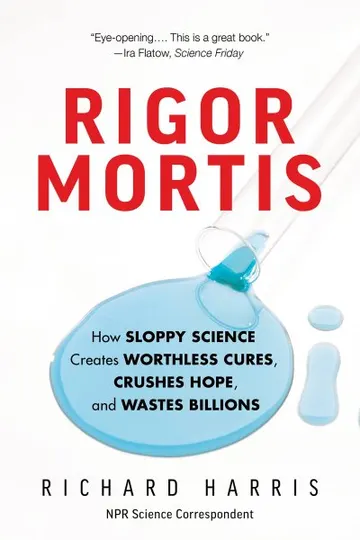
Rigor Mortis (opens Bookshop.org)
Richard Harris · 2017
NPR science correspondent Richard Harris shows how poorly run animal experiments and unreliable lab methods send drug research down dead ends, including mouse results that never carried over to patients.
Read the news better, every morning.
We send you the day's real progress in science, medicine and beyond, told plainly and sourced. Free, forever.
Free forever, no spam. One click to unsubscribe, and we never sell your email.