The Field Guide · No. 10
Watched vs. tested: RCTs vs. observational studies
A randomized trial assigns people to groups to test cause, while an observational study only watches, which is why trials give stronger evidence.
Updated
The single biggest clue to how much a health study is worth is its design, and it comes down to a simple question: did the researchers assign people to groups, or just watch what people were already doing? That difference separates the two main kinds of study, and it decides how much a claim can really tell you.
In a randomized controlled trial, or RCT, researchers randomly sort people into groups, one that gets the treatment and one that does not. Because the sorting is random, the groups end up similar in every other way, so if their outcomes differ, the treatment is the likely cause. This is why RCTs are called the gold standard: randomization is what lets a study claim cause and effect.
In an observational study, including cohort studies, researchers do not assign anything. They watch groups of people who already made their own choices, such as who eats a lot of fish or who exercises, and compare how they fare. These studies are valuable, often the only ethical or practical option, and they can uncover important patterns. But because the groups differ in countless ways beyond the one being studied, they show links, not proof of cause.
So when a study makes news, find out which kind it is. "People who did X had less Y" usually signals an observational study, a lead worth noting but not proof. "People randomly assigned to X had less Y" signals a trial that can actually support cause. The study type is the fastest way to know whether you are reading a strong finding or an interesting hint.
The two designs in official definitions
ClinicalTrials.gov, run by the National Library of Medicine, names two main types of clinical research, clinical trials and observational studies. Both may try to learn about an intervention such as a drug, behavior or device. The main difference is that clinical trial participants are assigned to get an intervention, and observational study participants are not.
The National Cancer Institute defines a randomized clinical trial as one in which participants are divided by chance into separate groups that compare different treatments or other interventions, so the groups will be similar and the treatment effects can be compared more fairly. It defines an observational study as one in which people are observed or certain outcomes are measured, with no attempt to affect the outcome.
Cohort and case-control studies
Two observational designs turn up most often. The institute describes a cohort study as one that compares an outcome in groups of people who are alike in many ways but differ by a certain characteristic, such as female nurses who smoke compared with those who do not. It describes a case-control study as one that compares people with the disease under study (cases) with a very similar group who do not have it (controls), then looks back at their medical and lifestyle histories for factors that may be associated with the disease.
Why assignment by chance matters
The institute gives a concrete case. If doctors could choose which patients go into which group, some might put healthier patients in the treatment group and sicker ones in the control group, even without meaning to. That could make the treatment group look better than the control group even if the treatment does nothing. Random assignment prevents that kind of bias.
Trials add a second guard. In a blinded study the patients, or the patients and their doctors, do not know which treatment is being given. ClinicalTrials.gov says this masking helps make sure the results are looked at fairly.
Not every trial uses a placebo. The institute notes that in cancer treatment trials, participants usually receive either the new treatment or the already approved standard treatment, and researchers compare the two.
What to remember
- An RCT randomly assigns people to groups, which lets it test cause and effect.
- An observational study only watches people's existing choices, so it shows links, not proof.
- "Randomly assigned" signals strong evidence; "people who did X" signals a hint to hold loosely.
From the record
Clinical studies can be divided into two broad categories: trials, in which the investigator intervenes to prevent or treat a disease, and observational studies, in which the investigator makes no intervention and patients are allocated treatment based on clinical decisions.
Asked often
Why are randomized trials called the gold standard?
Because random assignment makes the groups similar in every way except the treatment, so a difference in outcomes can be credited to the treatment itself. That is what lets an RCT support a cause-and-effect claim, which observational studies cannot do alone.
Are observational studies useless then?
Not at all. They are often the only ethical or practical way to study something, and they surface important patterns. They just show associations rather than proof, so their findings should be treated as leads to confirm, not settled cause.
What is the difference between a cohort study and a case-control study?
Both are observational. A cohort study follows groups that differ by a characteristic, such as smokers and non-smokers, and compares outcomes. A case-control study starts with people who have a disease and a similar group who do not, and looks back at their histories for factors linked to the disease.
Does an RCT always need a placebo?
No. In cancer treatment trials, for example, the comparison group usually receives the already approved standard treatment, and placebos are rarely used.
Further reading
Go deeper
Paid link. If you buy a book through this link, Bookshop.org pays us a small commission and sends a share of the sale to independent bookstores.
-
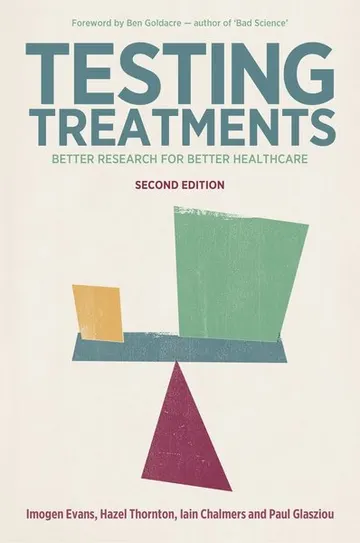
Testing Treatments (opens Bookshop.org)
Imogen Evans, Hazel Thornton, Iain Chalmers and Paul Glasziou · 2011
Written for patients by clinicians and Cochrane co-founder Iain Chalmers, this book explains why fair comparisons and randomization are needed to know whether a treatment works.
Read the news better, every morning.
We send you the day's real progress in science, medicine and beyond, told plainly and sourced. Free, forever.
Free forever, no spam. One click to unsubscribe, and we never sell your email.