The Field Guide · No. 06
Why "linked to" doesn't mean "caused by"
Two things happening together does not prove one causes the other, so "linked to" headlines rarely establish cause and effect.
Updated
"Coffee linked to longer life." "Screen time linked to poor sleep." These headlines are everywhere, and they share a quiet trap: linked to means the two things tend to show up together, not that one causes the other. An association is a starting point for a question, not an answer to it.
The reason is that a third factor can be driving both. People who drink a lot of coffee might also, on average, be wealthier, more social, or more active, and any of those could be the real reason they live longer. That hidden third factor is called a confounder, and it is the usual culprit behind a correlation that looks like cause. Ice cream sales and drowning both rise in summer, but ice cream does not cause drowning. Hot weather drives both.
This is why the phrasing of a headline matters so much. Words like linked to, associated with, and tied to are honest signals that researchers found a pattern, not a cause. The strongest way to actually show cause is a randomized controlled trial, where people are randomly assigned to one group or another so the groups are otherwise similar. Most "linked to" studies are not that kind of study.
So when you read that something is linked to a good or bad outcome, resist the leap to "so it causes it." Ask whether it was an experiment that assigned people to groups, or just an observation that two things traveled together. If it is the second kind, treat it as a lead worth watching, not a fact to act on.
What to remember
- "Linked to" and "associated with" mean a pattern was found, not a cause.
- A hidden third factor (a confounder) often explains why two things move together.
- Randomized experiments, not observational "links," are what actually show cause.
From the record
The phrase "correlation does not imply causation" refers to the inability to legitimately deduce a cause-and-effect relationship between two events or variables solely on the basis of an observed association or correlation between them.
Asked often
What does "confounder" mean?
A confounder is a hidden third factor that influences both things being studied, making them look connected. Hot weather is a confounder for ice cream sales and drowning: it drives both, so they rise together without one causing the other.
How can researchers actually show cause?
The strongest tool is a randomized controlled trial, where people are randomly sorted into groups so the groups are otherwise alike. If the outcomes differ, the treatment is the likely cause. Observational "links" cannot do this on their own.
Further reading
Go deeper
Paid link. If you buy a book through this link, Bookshop.org pays us a small commission and sends a share of the sale to independent bookstores.
-
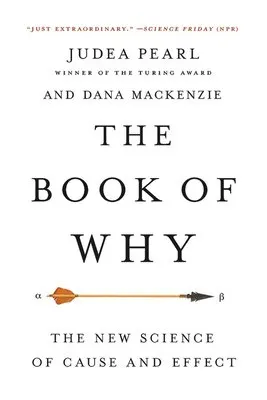
The Book of Why (opens Bookshop.org)
Judea Pearl and Dana Mackenzie · 2018
Turing Award winner Judea Pearl explains, with science writer Dana Mackenzie, why data alone cannot show cause and how diagrams and careful reasoning can.
Read the news better, every morning.
We send you the day's real progress in science, medicine and beyond, told plainly and sourced. Free, forever.
Free forever, no spam. One click to unsubscribe, and we never sell your email.