


The daily brief · August 31, 2026

1.4-million-year-old footprints, and a snake painted 20 feet long

Today's discoveries all turn on scale: a body bigger than we thought, a beam of light bent sideways by a few hundred nanometers, and a serpent painted six meters wide to hold onto a world that was vanishing.

  • 6 Discoveries
  • 166 Articles read
  • 29 Sources
  • 9 Min read

Today’s discoveries

Everything this morning found, in the order we would read it.

6 stories
  1. 01 Natural Sci. The footprints that made an extinct relative taller than we thought Along an ancient Kenyan lakeshore, eight individuals of Paranthropus boisei once walked across the same soft ground, probably within minutes or hours of each other, and left a trail that… Source: ScienceDaily 1 min read
  2. 02 Natural Sci. A cancer treatment reset the immune system of people with severe arthritis Six people with rheumatoid arthritis so severe it had resisted every other treatment received CAR T-cell therapy, a technique built originally to fight cancer, in the world's first trial… Source: ScienceDaily 1 min read
  3. 03 Social Sci. Bones of Egyptian princesses point to female archers, not decoration Six royal mummies excavated at Dahshur in the 1890s, then lost to scholarship for over a century before resurfacing in a 2020 museum curation project, are now telling a different story… Source: Frontiers 1 min read
  4. 04 Natural Sci. NASA's newest telescope launched to map billions of galaxies The $4.3 billion Nancy Grace Roman Space Telescope lifted off from Kennedy Space Center atop a Falcon Heavy rocket, beginning a three-month journey to a gravitationally stable point a… Source: Nature 1 min read
  5. 05 Life Sciences A knee muscle turns out to double as a second heart Every time a calf muscle contracts, it squeezes the veins running through the lower leg and pushes blood back up toward the heart against gravity, a mechanism doctors call the calf… Source: ScienceAlert 1 min read
  6. 06 Social Sci. A 6-meter serpent painted onto stone as colonization arrived On the ceiling of a rock shelter in Australia's Arnhem Land hangs a Rainbow Serpent more than six meters long, crocodile-headed, teeth bared, one of the largest such paintings… Source: Phys.org 1 min read

The feel-good story of the day

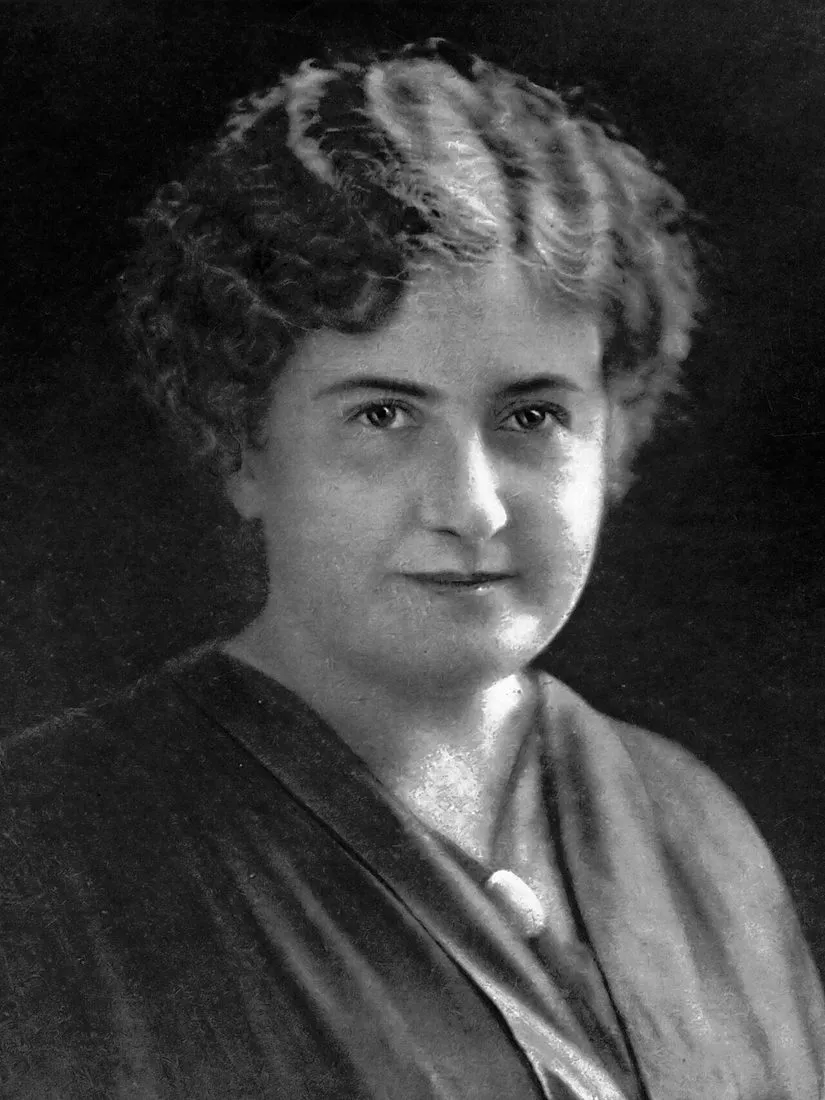
Maria Montessori Wikimedia Commons / Maria Montessori
Pictured Maria Montessori

The doctor who let children teach her

On August 31, 1870, Maria Montessori was born in the Italian province of Ancona. She became one of the first women in Italy to earn a medical degree, at a time when her male classmates reportedly refused to dissect cadavers alongside her, and she was made to work alone after hours instead.

Montessori's real turn came when she began observing children with intellectual disabilities in Rome's asylums and noticed something the institutions around her had missed: given the right materials and enough freedom to choose their own work, these children could concentrate, learn, and take visible pride in what they accomplished. She built a teaching method around that observation, one that treated a child's absorption in a task as something to protect rather than interrupt, and opened her first Casa dei Bambini in a poor Rome neighborhood in 1907.

The method spread to more than 20,000 schools worldwide over the following century. Montessori herself was nominated for the Nobel Peace Prize three times before her death in 1952, for arguing, decades ahead of her field, that respecting a child's independence was itself a form of peacemaking.

Today’s complete edition

The discoveries, in full

Read the evidence, what it changes, and the reporting behind each of today’s 6 discoveries.

01/06 Natural Sci.

The footprints that made an extinct relative taller than we thought

Along an ancient Kenyan lakeshore, eight individuals of Paranthropus boisei once walked across the same soft ground, probably within minutes or hours of each other, and left a trail that survived 1.4 million years 5.

a lakeshore in Kenya at dawn
Pictured a lakeshore in Kenya at dawn · Nick Le (via stocksnap)

Lead author Kevin Hatala measured some of the footprints at up to 1.8 meters tall and around 75 kilograms, human-like dimensions for a species mostly known from skulls with enormous jaws and teeth. Bones accumulate over centuries; footprints capture a single afternoon. That is what makes this trace so rare: not a skeleton, but a snapshot of eight adults occupying one patch of shoreline at the same moment, which is about as close as paleontology gets to catching a species mid-conversation.

02/06 Natural Sci.

A cancer treatment reset the immune system of people with severe arthritis

Six people with rheumatoid arthritis so severe it had resisted every other treatment received CAR T-cell therapy, a technique built originally to fight cancer, in the world's first trial of its kind at Charité in Berlin 12.

A cancer treatment reset the immune system of people with severe arthritis
Unknown (via rawpixel)

Disease activity dropped in every one of the six, and by the end of the observation period three no longer needed any rheumatoid arthritis medication at all. Prof. David Simon's team suspects the culprit was a population of memory B cells hiding in lymph nodes, bone marrow, and joint tissue, quietly reigniting inflammation for years after the original trigger had passed. The CAR T cells hunted those cells down and cleared them, giving the immune system something like a fresh start.

03/06 Social Sci.

Bones of Egyptian princesses point to female archers, not decoration

Six royal mummies excavated at Dahshur in the 1890s, then lost to scholarship for over a century before resurfacing in a 2020 museum curation project, are now telling a different story than their tombs' inventory cards suggested 9.

Bones of Egyptian princesses point to female archers, not decoration
Candace McDaniel (via stocksnap)

Four of the women, daughters and sisters of pharaoh Amenemhat II, were buried with bows, arrows, and in Princess Ita's case an especially ornate dagger, objects usually filed as male grave goods. Dr. Zeinab Hashesh's team found that the bone development in these women's arms and shoulders matches the muscle-loading pattern of people who actually drew bows and threw weapons for years, not people who were handed a prop for the afterlife. Princess Ita died between 28 and, per the study, showed exactly this kind of skeletal wear.

04/06 Natural Sci. Technology

NASA's newest telescope launched to map billions of galaxies

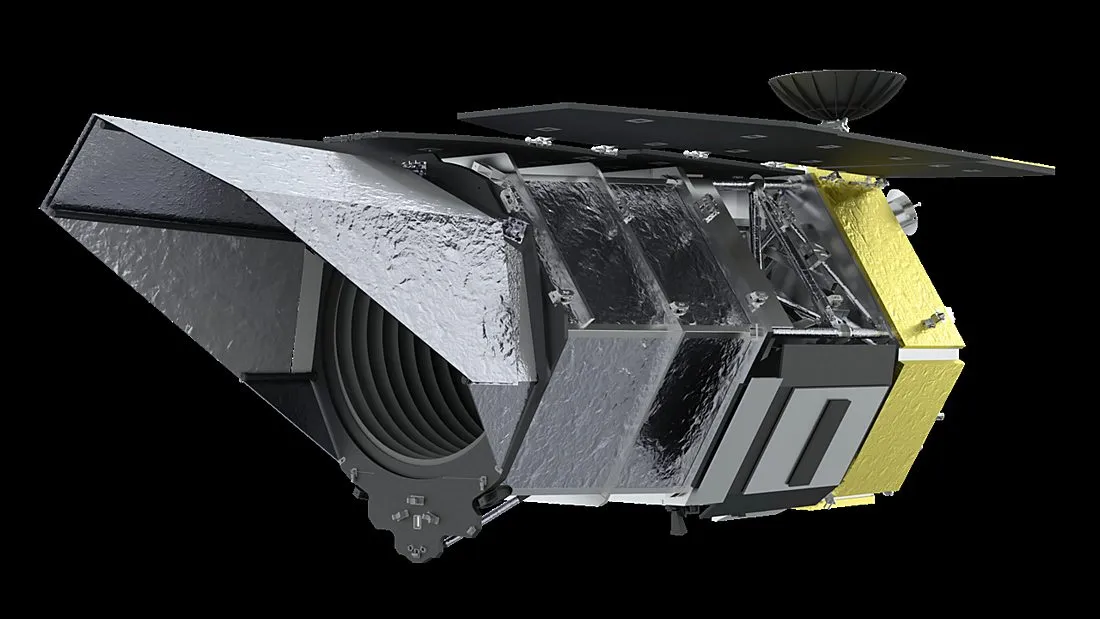
The $4.3 billion Nancy Grace Roman Space Telescope lifted off from Kennedy Space Center atop a Falcon Heavy rocket, beginning a three-month journey to a gravitationally stable point a million miles from Earth, the same neighborhood as the Webb telescope 1822.

Nancy Grace Roman Space Telescope
Pictured Nancy Grace Roman Space Telescope · Wikimedia Commons / Nancy Grace Roman Space Telescope

Roman carries a 300-megapixel infrared camera with a field of view more than 100 times wider than Hubble's, wide enough, says senior project scientist Julie McEnery, to "find the weird, the rare and the unusual." It joins Euclid and the Vera Rubin Observatory to form a trio of sky-mapping instruments meant to reconstruct how the universe's expansion has changed over billions of years, and along the way it is projected to spot thousands of supernovae and tens of thousands of planets 1822.

05/06 Life Sciences

A knee muscle turns out to double as a second heart

Every time a calf muscle contracts, it squeezes the veins running through the lower leg and pushes blood back up toward the heart against gravity, a mechanism doctors call the calf muscle pump 38.

A knee muscle turns out to double as a second heart
Unknown (via rawpixel)

A 2020 Mayo Clinic study of 2,728 adults undergoing vascular testing found that people with impaired calf pump function had a 10-year mortality rate of about 18 percent, compared with roughly 6 percent for people whose pumps worked normally. A larger 2024 follow-up of nearly 6,000 patients found the same pattern: the less blood the calf pump moved during activity, the higher the risk of death, with the weakest pumpers facing more than double the risk of the strongest.

06/06 Social Sci.

A 6-meter serpent painted onto stone as colonization arrived

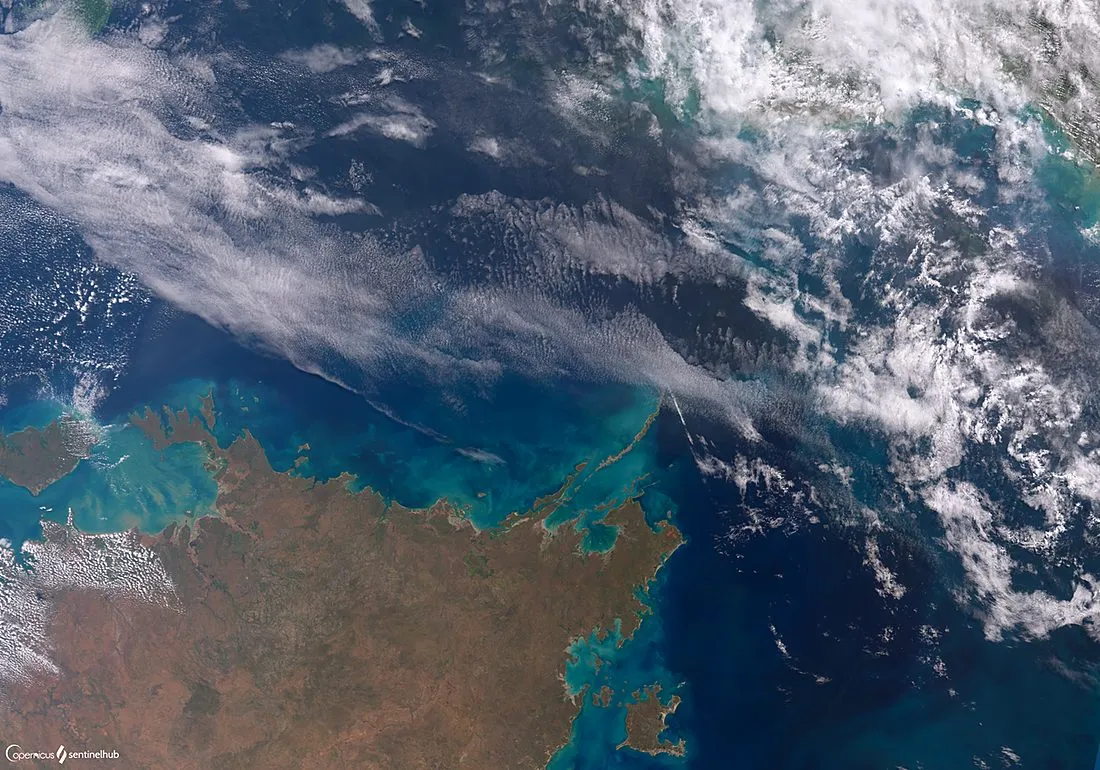
On the ceiling of a rock shelter in Australia's Arnhem Land hangs a Rainbow Serpent more than six meters long, crocodile-headed, teeth bared, one of the largest such paintings archaeologist Paul Taçon has recorded in 40 years of fieldwork in the region 26.

Arnhem Land rock art site, Australia
Pictured Arnhem Land rock art site, Australia · Sentinel Hub (Wikimedia Commons)

Working since 2018 with senior Amurdak Traditional Owner Charlie Mungulda, Taçon's team has now cataloged 165 rock art sites and found 29 Rainbow Serpent images across 21 of them, the densest concentration known anywhere, alongside a giant human figure, Australia's only known painting of a baleen whale, and a 124-meter stone arrangement shaped like a serpent's winding body. The team's new study argues these outsized images cluster in the 19th and 20th centuries, precisely as European colonization began upending the world the painters knew.

Quick notes

Shorter discoveries from this morning, worth knowing but not a full story.

A cancer therapy put severe rheumatoid arthritis into remission Three of six patients with severe, treatment-resistant rheumatoid arthritis needed no more medication after a single course of CAR T-cell therapy 12. ScienceDaily
The FDA Just Approved The First US Freeze-Dried Plasma, Ready in Minutes Ezplaz, the first FDA-licensed freeze-dried plasma in the US, can be stored at room temperature for a year and reconstituted for transfusion in about 2.5 minutes, a real difference for ambulances and disaster zones far from a hospital freezer 36. ScienceAlert
Common supplements rival antibiotics for severe gum disease In a year-long Brazilian trial, omega-3 plus low-dose aspirin matched antibiotics for treating severe periodontitis, with about 58 percent of patients in both groups reaching the treatment goal, a real option for cutting antibiotic use 7. ScienceDaily
324-million-year-old animal with 24 legs reveals how life conquered land A misclassified fossil bug, long filed as a crustacean, turns out to be an early insect frozen mid-transition from water to land, with three walking legs up front and nine swimming limbs still trailing behind 126. New Atlas
US-backed antimony hub in Alaska takes major step toward 2027 production A defense-backed refinery in Alaska is about to start turning domestic ore into antimony, a metal the US currently gets almost entirely from China, with 500 tonnes of equipment already headed north by barge 121. Interesting Engineering
World's first superhot geothermal power plant could be built sooner with latest funding Quaise Energy raised $180 million to drill deeper than conventional rigs can reach, aiming to tap superhot rock as a location-independent clean energy source 115. Interesting Engineering
Man builds solar e-bike to cross the Alps An amateur builder rode a bike he wired himself, solar panels bolted to a cargo frame, over two of the highest paved passes in the Alps, powered by nothing but sunlight 125. New Atlas
Nut consumption is associated with sharper thinking skills and post-stroke brain health markers People who ate more nuts, even in small daily amounts, scored higher on memory and reasoning tests, and stroke survivors who ate more nuts had higher levels of a protein linked to new blood vessel growth in the brain 52. PsyPost
Brain stimulation helps socially anxious individuals control avoidance behaviors A mild electrical stimulation pattern helped people with high social anxiety override the automatic urge to flee a social situation, by syncing rhythms between the brain's control and movement centers 49. PsyPost
1 Lakh Mangroves: How Tiger Widows Are Saving the Sundarbans Women who lost husbands to tiger attacks are now planting 100,000 mangrove saplings across 100 hectares, rebuilding the same habitat and turning grief into the region's best flood defense 149. The Better India
One Way to Keep Childcare Affordable? Give Staff Free Housing A Connecticut childcare center bought six homes for its underpaid teachers instead of raising tuition, delivering about $23,000 in housing value per staffer a year 146. Reasons to be Cheerful
Rare Sea Turtle Near Death on UK Beach Gets 5,000-mile Lift to Texas Rehab A 2-pound, cold-stunned Kemp's ridley turtle found on a Welsh beach in 2023 has spent two years recovering, tripled its weight to 46 pounds, and just flew home to Texas to return to the Gulf of Mexico 142. Good News Network
3 Attempts Failed But This Constable Tried Again After three failed attempts to breathe in a narrow 50-foot well, Constable Manoj Kumar strapped on an oxygen mask, went back down, and brought a five-year-old girl out alive 150. The Better India
These 5 Women Turned Traditional Skills Into Businesses & Created Livelihoods for Others A woman who taught herself paper quilling after surviving polio and a teenage marriage has since trained over 2,000 other artisans, mostly women and orphaned children, in the craft that became her living 147. The Better India
In a first, scientists spot a table-tennis-like force hiding inside a focused laser beam Physicists confirmed a decades-old prediction by measuring a sideways nudge of just a few hundred nanometers in how a laser beam grips a single trapped ion, a precision check that could sharpen future quantum computers 118. Interesting Engineering

Our process. Your trust.

Every discovery above traces back to an article we read in full. This is the whole corpus behind this morning, and what it was made of.

  • 29 Sources scanned
  • 166 Articles read
  • 8 Fields covered
  • 6 Discoveries

The sources that carried this morning

  1. 1 Psychology Today: The Latest 20 articles
  2. 2 National Bureau of Economic Research Working Papers 20 articles
  3. 3 Latest Science News -- ScienceDaily 13 articles
  4. 4 Phys.org 13 articles
  5. 5 Futurism 10 articles
  6. 6 Interesting Engineering 10 articles
  7. 7 Nautilus 10 articles
  8. 8 ScienceAlert 7 articles
How an edition is made

Everything we read today

Natural Sciences 45 articles
Life Sciences & Medicine 2 articles
Psychology & Behavioral Science 27 articles
Social Sciences 26 articles
National Bureau of Economic Research Working Papers
Technology & Innovation 30 articles
Plant-Based & Vegan 10 articles
Solutions & Good News 13 articles
Human Stories & Ideas 13 articles
The long view · not today’s news, the story behind it

Today’s discoveries didn’t come from nowhere. Here’s the older, ongoing story they belong to, a moment from this day in history, and a question to test what stuck.

The story so far

On this day in science

1854 A cholera outbreak launches modern epidemiology A fierce cholera outbreak began in London's Soho, killing scores of people within days. Physician John Snow mapped the deaths to a single public water pump on Broad Street, evidence that dirty water spread the disease and a founding moment for the science of epidemiology. More from the Almanac →

Before you go: today’s quiz

The daily quiz

Which research institute booted up the first cell running entirely on a chemically synthesized genome, back in 2010?

Reveal the answer

The J. Craig Venter Institute

In 2010 the J. Craig Venter Institute synthesized a whole bacterial genome from chemicals, placed it in an emptied cell, and watched it boot up and self-replicate, the first cell run by a human-made genome.

Follow the storyline →

Previous editions

Every morning we have published, newest first. Nothing expires.

View the full archive

Get this every morning.

Liked today’s? Wake up to tomorrow’s, in one short letter.

  • One email each morning, never more
  • The day’s real discoveries across 8 fields
  • One calm read with your coffee

The full letter, every morning, free for good.

Same free letter, plus the reason it stays that way: no ads, no investors, no agenda but the good news itself.

A single gift of any amount. No account, never a recurring charge.