The Field Guide · No. 04
"Cuts your risk 50%" vs. what actually changes
A "50% risk cut" is relative; the absolute change can be tiny, so always ask what the risk went from and to in real numbers.
Updated
"New drug cuts your risk of a heart attack in half" sounds enormous. But cut in half from what? If your risk drops from 2 in 100 to 1 in 100, that is technically a 50% reduction, and it is also a change of just one person in a hundred. Both numbers are true. One is designed to impress you, and one tells you what actually changed.
The impressive-sounding one is the relative risk. It compares the two groups as a ratio, so a drop from 2% to 1% becomes "50% lower." The plain one is the absolute risk, the actual difference in your chances, which here is one percentage point. Headlines and press releases almost always reach for the relative number, because bigger sounds better.
Neither number is a lie, but the relative number without the absolute number is missing the part you need. A 50% reduction of a large risk is a genuinely big deal. A 50% reduction of a tiny risk is often barely worth noticing. You cannot tell which one you are looking at unless you know the starting risk.
So whenever you see a percentage reduction, ask two questions the headline usually skips: from what, and to what, in real numbers? "From 2 in 100 to 1 in 100" tells you far more than "cuts risk 50%." Once you start asking for the absolute numbers, a lot of scary and a lot of miraculous headlines shrink back to their true size.
What absolute risk means
The National Cancer Institute defines absolute risk as a measure of the risk of a certain event happening. Its example: a 35-year-old woman with no known risk factors for breast cancer has an absolute risk of getting it over a lifetime of 90 years of about 13%, which is 1 in 8. The chance she never has it is about 87%, or 7 in 8.
An absolute risk has two parts, a probability and a stretch of time. “1 in 8” and “1 in 8 over 90 years” are different claims, so when a story gives a risk, look for the time period.
What relative risk means
The institute defines relative risk as the risk of an event in one group compared with the risk of the same event in another group, also called the risk ratio. A relative risk of one means there is no difference between the groups. A relative risk above one means the exposure or treatment increases the risk, and below one means it decreases it.
So “50% lower risk” is a relative risk of 0.5, and “50% higher” is 1.5. Neither number says what the risk was to begin with.
Turning one into the other
Multiply the starting risk by the relative risk. A 50% cut from 2 in 100 gives 1 in 100. A 50% increase from 2 in 100 gives 3 in 100. Either way the absolute change is one person in a hundred.
The absolute risk reduction is the starting risk minus the new one, and it is the figure the Smart Health Choices guide calls the most useful way of presenting research results to help your decision-making. Dividing 100 by the reduction in percentage points gives the number needed to treat: a one-point drop means about 100 people treated for one to benefit.
The same guide explains why your own starting point matters. The relative risk is often the same in people irrespective of their level of risk, which means the absolute risk reduction is greatest in those at greatest risk. A drug that halves risk does far more for someone at 40 in 100 than for someone at 2 in 100.
What to remember
- Relative risk is a ratio ("50% lower") and usually sounds bigger than the real change.
- Absolute risk is the actual change in your chances (for example, 2 in 100 down to 1 in 100).
- Always ask "from what, to what?" in real numbers before reacting to a percentage.
- A relative risk of 1 means no difference between the groups. Below 1 means lower risk, above 1 means higher.
- The same relative cut helps a high-risk person far more in absolute terms than a low-risk one.
From the record
The relative risk (RR) of a bad outcome in a group given intervention is a proportional measure estimating the size of the effect of a treatment compared with other interventions or no treatment at all.
Asked often
Is a "50% risk reduction" a lie?
No, it is usually a true relative figure. But without the starting risk it is misleading. Halving a 2% risk gives a 1 percentage point drop, while halving a 40% risk gives a 20 point drop. Same 50%, very different reality.
Which number should I trust more?
Look for the absolute risk, the real change in your chances stated as actual numbers. It is the most useful figure for deciding whether a treatment is worth it for you.
What is absolute risk?
Absolute risk is your actual chance of an outcome over a stated period. The National Cancer Institute’s example is a lifetime breast cancer risk of about 13%, or 1 in 8, for a 35-year-old woman with no known risk factors.
What does a relative risk of 1 mean?
It means no difference in risk between the two groups being compared. Below 1 means lower risk in the first group, and above 1 means higher risk.
How do I turn a relative risk into an absolute one?
Multiply the starting risk by the relative risk. A relative risk of 0.5 applied to a starting risk of 2 in 100 gives 1 in 100, an absolute drop of one percentage point.
Further reading
Go deeper
Paid link. If you buy a book through this link, Bookshop.org pays us a small commission and sends a share of the sale to independent bookstores.
-
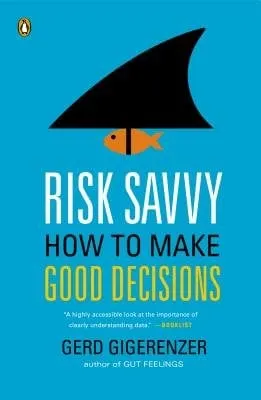
Risk Savvy (opens Bookshop.org)
Gerd Gigerenzer · 2014
Psychologist Gerd Gigerenzer shows how relative risk figures mislead doctors and patients, and how restating them as plain counts of people makes health statistics easier to read.
Read the news better, every morning.
We send you the day's real progress in science, medicine and beyond, told plainly and sourced. Free, forever.
Free forever, no spam. One click to unsubscribe, and we never sell your email.