



The daily brief · August 26, 2026

Immune cells learn to invade tumors, and a temple beats Stonehenge by 1,000 years

Today's discoveries are all about things reaching further than expected: immune cells breaking into tumors, sight crossing from one eye to the other, gravity holding its shape across galaxy clusters, and a fish species finding its way back to water it left sixty years ago.

  • 8 Discoveries
  • 266 Articles read
  • 45 Sources
  • 12 Min read

Today’s discoveries

Everything this morning found, in the order we would read it.

8 stories
  1. 01 Natural Sci. Immune cells get an upgrade to break into tumors Solid tumors have always been the tougher target for cell therapy. Source: ScienceDaily 1 min read
  2. 02 Natural Sci. A solstice temple older than Stonehenge turns up in a Czech field At Chleby in the Central Bohemian Region, archaeologists uncovered a circular ditch enclosure about 750 feet across and 8 feet deep, roughly 6,500 years old, with 12 entrances spaced… Source: Live Science 1 min read
  3. 03 Natural Sci. The universe's biggest gravity test yet says Newton was right Some galaxies move faster than their visible matter should allow, a mismatch that's kept cosmologists guessing for decades between two explanations: either the universe is full of… Source: ScienceDaily 1 min read
  4. 04 Life Sciences A woman recognizes her son again after a transplant never done before Elena, 67, lost the sight in her left eye when a road accident severed the optic nerve; the same crash destroyed the retina, cornea, and stem-cell-bearing tissue in her right eye, but… Source: Good News Network 1 min read
  5. 05 Good News A 745-pound bluefin tuna returns to a sea it left 60 years ago Fisherman Jack Gardner was aboard the Dominator off Whitby when he hooked something enormous: an Atlantic bluefin tuna weighing 745 pounds, just 112 pounds shy of the fishery record, and… Source: Good News Network 1 min read
  6. 06 Technology Lab-grown mini brains just crossed the five-year mark Brain organoids, clusters of stem cells coaxed into growing their own neurons and circuits, usually die within months, their centers starving without a blood supply. Source: SingularityHub 1 min read
  7. 07 Good News A Pittsburgh school cut fights from 130 a year to 10 Pittsburgh Arlington PreK-8 had 360 students and, in the 2024-25 school year, more than 130 fights, plus chronic absenteeism and four principals in a couple of years. Source: Upworthy 1 min read
  8. 08 Plant-Based America's toughest animal welfare law survives another year of attacks California's Proposition 12, passed by voters in 2018, bans the extreme confinement of breeding pigs, egg-laying hens, and veal calves, and blocks the in-state sale of meat and eggs… Source: Sentient 1 min read

The feel-good story of the day

Dolly Parton Carol M Highsmith (via rawpixel)
Pictured Dolly Parton

The woman who turned her fortune into other people's second chances

Dolly Parton, who died this week at 80, spent her career giving away nearly as fast as she earned. In 1995 she started the Imagination Library, mailing one free book a month to children from birth to age five, inspired by her own father never learning to read; three decades later it spans five countries and has put more than 332 million books into kids' hands 250.

When wildfires tore through Tennessee in 2016, she launched a fund that paid displaced families $1,000 a month for six months and hosted a telethon that raised millions more, ultimately distributing $8.9 million directly to people who'd lost their homes. In 2020 she gave $1 million to Vanderbilt University Medical Center for early Covid research; Dr. Naji Abumrad, who worked on the project, said her funding pushed the work that helped develop the Moderna vaccine "10 times faster than it would be without it." She later got her own shot on camera, singing a vaccine-themed "Jolene" to nudge the hesitant.

None of it seemed to cost her the plainness that made people trust her. She answered a famously condescending Barbara Walters interview with nothing but grace, and employees at her company still describe her the way you'd hope a boss might be described: "It's like family," she said once, "and if you love your family and you're treated good in the family, you're going to want to stay there."

Today’s complete edition

The discoveries, in full

Read the evidence, what it changes, and the reporting behind each of today’s 8 discoveries.

01/08 Natural Sci.

Immune cells get an upgrade to break into tumors

Solid tumors have always been the tougher target for cell therapy. Blood cancers respond well to engineered immune cells; a melanoma or a head and neck tumor is harder to enter and better at jamming the immune system's signals once cells do get in.
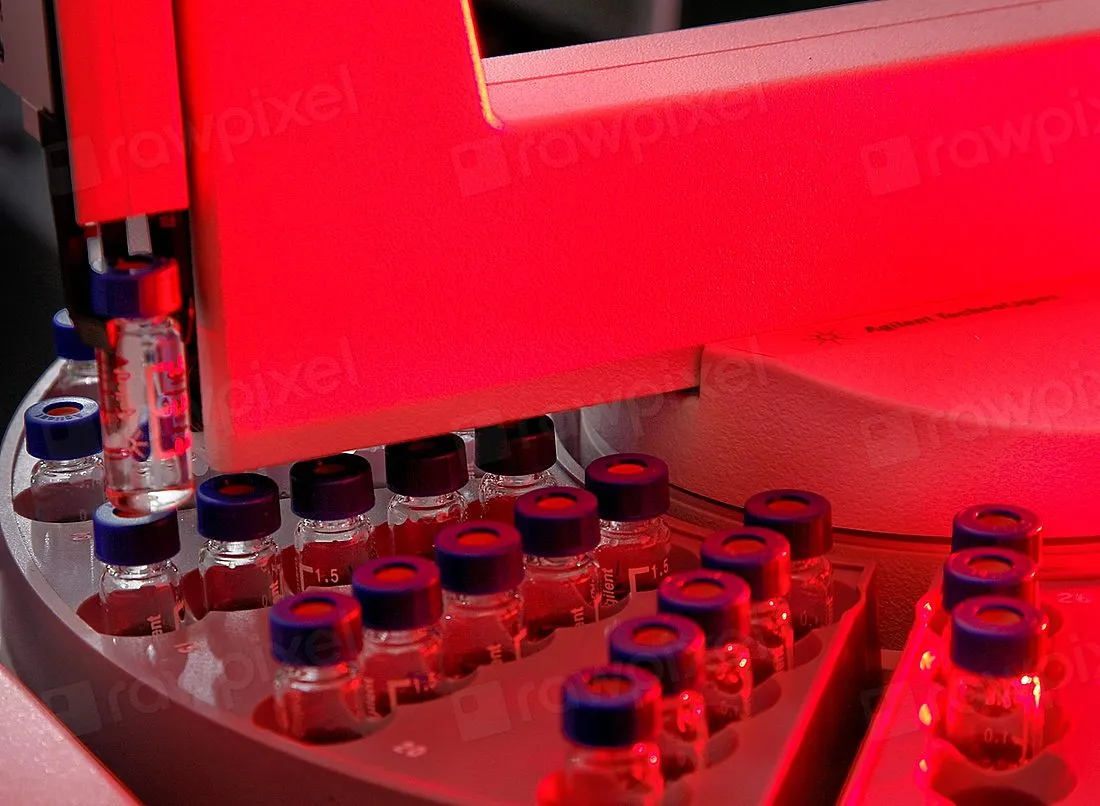
a scientist examining a blood sample in a research lab
Pictured a scientist examining a blood sample in a research lab · U.S. Department of Energy from United States (Wikimedia Commons)

Researchers at Stanford, led by John Sunwoo, found a way around that by converting natural killer cells, the immune system's fast-acting hit squad, into a "tissue-resident" form built to move into solid tissue and stay there 3. In mice, the modified cells slowed the growth of melanoma and head and neck cancers, and did noticeably better when paired with the antibody drug cetuximab, which helps guide them to their target. "It was very reproducible, very striking and very clear," Sunwoo said of how well the cells infiltrated compared to the ordinary kind.

02/08 Natural Sci.

A solstice temple older than Stonehenge turns up in a Czech field

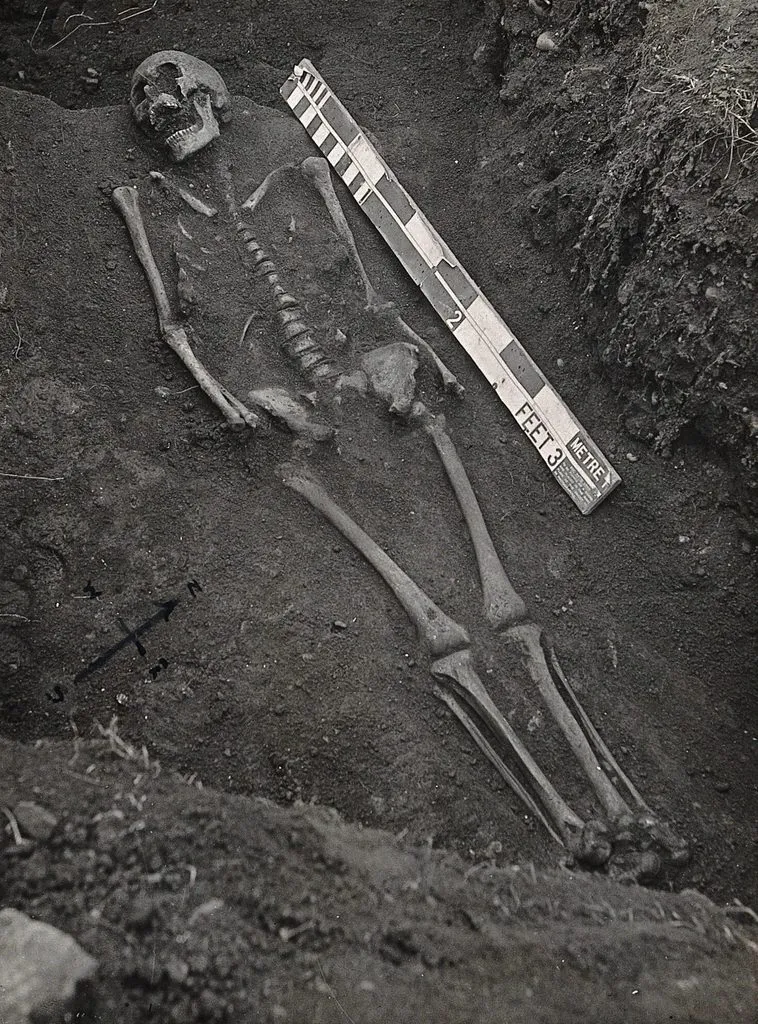
At Chleby in the Central Bohemian Region, archaeologists uncovered a circular ditch enclosure about 750 feet across and 8 feet deep, roughly 6,500 years old, with 12 entrances spaced around its rim 14.

an archaeological excavation at a prehistoric earthwork site
Pictured an archaeological excavation at a prehistoric earthwork site · Unknown (via rawpixel)

That alone would be notable. What made the team look twice was the geometry: the entrances line up so that someone standing at the center could watch the moon reach its most extreme point on the horizon during its 18.6-year cycle, and could catch sunrise on the summer solstice and sunset on the winter one. Animal bones in the ditch suggest the entrances were once decorated with bull skulls and horns, a symbol of strength and fertility among early farming cultures across prehistoric Europe. "Circular enclosures are completely unknown in our region for this period, which already makes the site exceptional," said Petr Krištuf of the University of West Bohemia, who leads the research.

03/08 Natural Sci.

The universe's biggest gravity test yet says Newton was right

Some galaxies move faster than their visible matter should allow, a mismatch that's kept cosmologists guessing for decades between two explanations: either the universe is full of invisible dark matter supplying extra gravitational pull, or gravity itself works differently at large scales than Newton and Einstein predicted.

the Atacama Cosmology Telescope
Pictured the Atacama Cosmology Telescope · Till Niermann (Wikimedia Commons)

University of Pennsylvania researcher Patricio Gallardo and colleagues just ran the largest test of that question to date, using the Atacama Cosmology Telescope to examine how gravity behaves across galaxy clusters separated by hundreds of millions of light-years 10. The result, published in Physical Review Letters: gravity weakens with distance almost exactly the way Newton's inverse-square law says it should, holding up even at scales he never could have imagined measuring. "It is remarkable that the law of the inverse of the squares, proposed by Newton in the 17th century and then incorporated by Einstein's theory of general relativity, is still holding its ground in the 21st century," Gallardo said.

04/08 Life Sciences

A woman recognizes her son again after a transplant never done before

Elena, 67, lost the sight in her left eye when a road accident severed the optic nerve; the same crash destroyed the retina, cornea, and stem-cell-bearing tissue in her right eye, but left that eye's optic nerve intact.

A woman recognizes her son again after a transplant never done before
U.S. Department of Energy (via rawpixel)

Between her two ruined eyes there was, oddly, just enough undamaged tissue to build one working eye. Surgeon Michele Reibaldi and a team in Turin spent six hours doing something never before attempted: transplanting the macula, the light-sensitive tissue responsible for sharp central vision, along with the cornea, sclera, and connective tissue, from her left eye into her right 218. "This procedure represents a new frontier in ocular surgery," Reibaldi said. When Elena opened her eyes afterward, she recognized her son and her dog, Joe.

05/08 Good News

A 745-pound bluefin tuna returns to a sea it left 60 years ago

Fisherman Jack Gardner was aboard the Dominator off Whitby when he hooked something enormous: an Atlantic bluefin tuna weighing 745 pounds, just 112 pounds shy of the fishery record, and the first bluefin caught in the North Sea in six decades 221.

Today Got Better

Overfishing collapsed both the tuna and their herring prey after World War II, and the fishery had been effectively silent ever since. University of Exeter researcher Dr. Lucy Hawkes said a fish reaching that size is itself the proof: "Bluefin tuna are also top predators who can only be in these waters if the ecosystems underneath them are healthy." She credits years of tightly capped catch limits for the rebound.

06/08 Technology

Lab-grown mini brains just crossed the five-year mark

Brain organoids, clusters of stem cells coaxed into growing their own neurons and circuits, usually die within months, their centers starving without a blood supply. A team led by Harvard's Paola Arlotta found a way to keep them alive and developing for more than five years, the longest ever recorded, and published the results in Nature after first sharing them as a preprint 196.

Lab-grown mini brains just crossed the five-year mark
Lenharth Systems (via stocksnap)

The oldest organoids showed gene activity resembling a typical 4-year-old's brain, tracking a normal developmental timeline the whole way despite growing in a dish with no body around them. When the researchers mixed cells from older organoids with younger ones, the older cells kept maturing on schedule anyway, as if carrying their own internal clock. "It was not a given at all that our simplified model would match natural development in this many ways," said study author Irene Faravelli.

07/08 Good News

A Pittsburgh school cut fights from 130 a year to 10

Pittsburgh Arlington PreK-8 had 360 students and, in the 2024-25 school year, more than 130 fights, plus chronic absenteeism and four principals in a couple of years 247.

elementary school students in a classroom
Pictured elementary school students in a classroom · Matt Bango (via stocksnap)

Principal Crystal Caldwell's team started with morning "safety huddles" among staff to flag brewing conflicts before they became physical, then leaned into restorative practices: a student who vandalized a hallway cleans it, rather than sitting in detention. "They need a moment of knowing it's OK to make mistakes, but knowing they can learn from it," Caldwell said. The addition that made headlines was a Harry Potter-style house system, sorting students into teams that earn points for good behavior, borrowed from British boarding schools. Last school year, the same 360-student building had 10 fights.

08/08 Plant-Based

America's toughest animal welfare law survives another year of attacks

California's Proposition 12, passed by voters in 2018, bans the extreme confinement of breeding pigs, egg-laying hens, and veal calves, and blocks the in-state sale of meat and eggs produced that way even from other states 207.

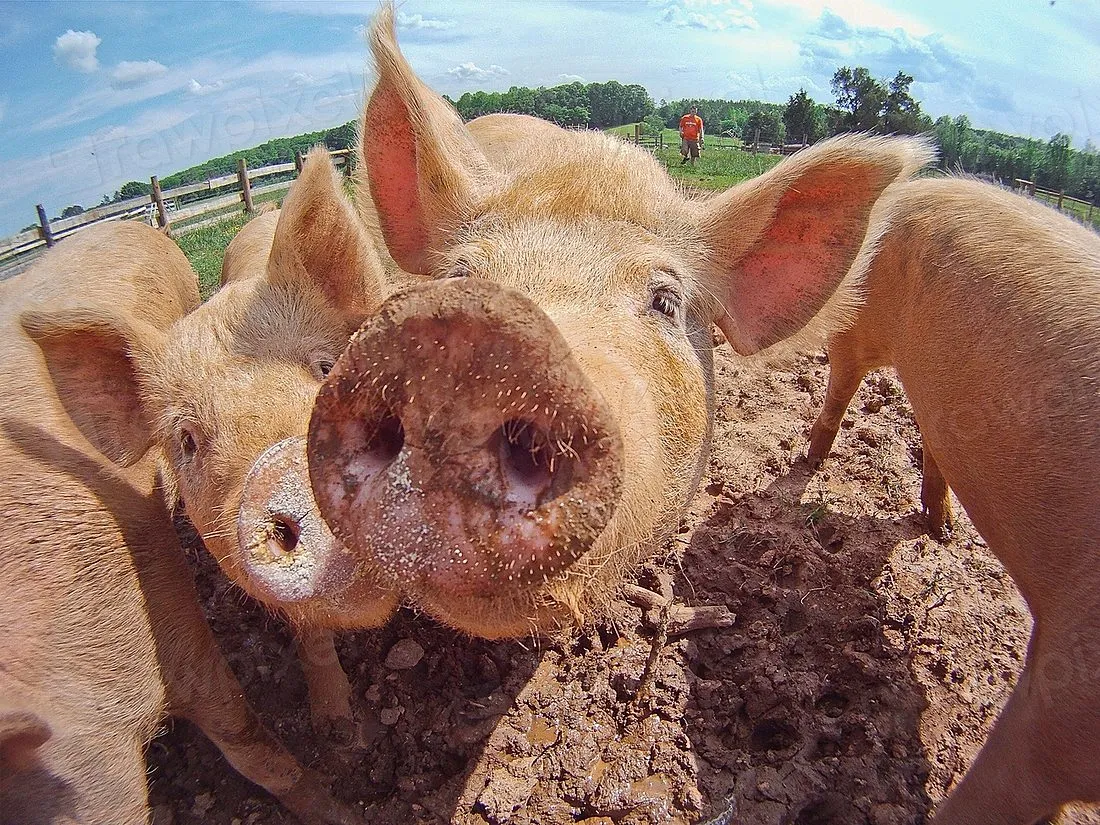
pigs on a farm
Pictured pigs on a farm · U.S. Department of Agriculture (via rawpixel)

The pork lobby and, more recently, congressional Republicans have tried repeatedly to gut it through lawsuits and farm bill riders; the latest attempt died with the farm bill itself this year. Because producers elsewhere have to meet Prop 12's standards to keep selling into California, the law's reach has spread well past state lines: the national share of cage-free eggs rose from under 20 percent in 2018 to 45.7 percent by July 2025. Even the Association of California Egg Farmers, an industry group, has filed briefs defending it, arguing the benefits are real.

Quick notes

Shorter discoveries from this morning, worth knowing but not a full story.

Putting slugs on the map: farmers pioneer precision crop protection A three-year UK research project turned 28 farmers into "slug sleuths," mapping where the pests actually cluster in fields; a pilot using the resulting map cut slug pellet use by half, saving UK farmers an estimated £6 million a year if it spreads nationwide 223. Positive News
A kitchen blender helped scientists make graphene from electronic waste Dublin City University researchers turned old phone and laptop graphite into graphene using nothing fancier than a kitchen blender, tap water, and pulped newspaper, whose plant fibers kept the sheets from clumping back together for hours 176. Interesting Engineering
London's clean-air zone is linked to faster lung growth in children, a new study finds Tracking over 3,400 kids against a comparison city without a clean-air zone, researchers found London children's stunted lung growth fully caught up within four years of the Ultra Low Emission Zone taking effect, the first study to tie a clean-air policy directly to measurably healthier lungs 240. The Optimist Daily
In France, peace and quiet is now a legal right by banning unsolicited cold calls As of early August, French businesses need documented written consent before cold-calling anyone; 97 percent of French people had called telemarketing calls annoying, and one advocacy group is calling the change "a small revolution" 241. The Optimist Daily
US Approves First Drug That Targets Root Cause of Narcolepsy Rather Than its Symptoms Orzeyful mimics orexin, the wakefulness compound missing in narcolepsy type 1, and became the first FDA-approved drug to treat the disease's actual biology rather than just its symptoms; one trial participant called it "the best thing that has ever happened to me" 219. Good News Network
Over 3,000 Endangered Yellow-Legged Frogs and Tadpoles Unleashed to Reclaim SoCal Mountains San Diego Zoo Wildlife Alliance released 3,000 mountain yellow-legged frogs, a species down more than 98 percent from historic numbers, into the San Bernardino and San Jacinto mountains, bringing its 20-year reintroduction total past 10,000 220. Good News Network
What We're Reading: A Wheelchair Rugged Enough for National Park Trails Canada earmarked roughly $50.9 billion for wind and hydropower, enough by the government's estimate to power Toronto, Montreal, and Vancouver combined, while Zion National Park started renting out an all-terrain "Extreme Motus" wheelchair so visitors with disabilities can reach trails they couldn't before 224. Reasons to be Cheerful
CDC releases latest life expectancy data American life expectancy at birth hit 79 in 2024, finally surpassing pre-pandemic levels, driven by fewer Covid deaths alongside drops in unintentional injuries, heart disease, cancer, and homicide 87. STAT
The Vegan Society makes major change to its Vegan Trademark design The world's oldest vegan certification, now covering over 73,000 products, redesigned its label ahead of new EU rules banning unverified vegan claims, giving shoppers a mark they can actually trust instead of second-guess 216. Vegan Food & Living
Could Shellfish Farming Fix Florida's Algal Bloom Problem? A single adult oyster filters more than 50 gallons of water a day, and Florida researchers are betting that farming clams and oysters at scale could pull enough nitrogen out of coastal waters to blunt the toxic algal blooms that have cost the state billions 225. Reasons to be Cheerful
8-year-old twin girls asked to hold their birthday party at Ace Hardware. The staff made it magic. Twins Eliza and Jade asked to spend their 8th birthday working as honorary employees at their neighborhood Ace Hardware, and the store said yes without hesitation, handing out aprons, name tags, and flower pots to 25 kids who left covered in dirt and delighted 246. Upworthy
Her 5-year-old wished his stomach were flatter. Instead of 'you're perfect,' she posed a gentle question. When her five-year-old said he wished his stomach were flatter, nutritionist Emelie Vessey resisted the instinct to say "you're not big" and instead worked to keep the idea of a bigger body from ever sounding like a bad one to begin with 249. Upworthy
\"He's an Angel\": Mom Lost Everything in a Fire. Then a Stranger Saw Her Story and Stepped In to Help Scott Evans saw a Bronx mother's story about losing everything in an apartment fire on the local news and, having never met her, arranged to give her $3,000 for nothing in return; she has since found a new apartment and finished a degree in human services 226. Sunny Skyz
Should We All Be Taking Probiotics Daily? Turns out the biggest randomized trials keep finding no benefit for the common colds, eczema, or preterm infant outcomes probiotics are marketed for, a useful reminder that "probably harmless" and "proven to work" are not the same claim 66. ScienceAlert

Our process. Your trust.

Every discovery above traces back to an article we read in full. This is the whole corpus behind this morning, and what it was made of.

  • 45 Sources scanned
  • 266 Articles read
  • 8 Fields covered
  • 8 Discoveries

The sources that carried this morning

  1. 1 PLOS One 20 articles
  2. 2 Psychology Today: The Latest 20 articles
  3. 3 Nature 17 articles
  4. 4 STAT 17 articles
  5. 5 The Better India : Latest Posts 13 articles
  6. 6 Latest Science News -- ScienceDaily 12 articles
  7. 7 The Conversation Articles 11 articles
  8. 8 Ars Technica - All content 10 articles
How an edition is made

Everything we read today

Natural Sciences 75 articles
PLOS One
Proceedings of the National Academy of Sciences: Proceedings of the National Academy of Sciences: Table of Contents
Life Sciences & Medicine 17 articles
Psychology & Behavioral Science 30 articles
Social Sciences 25 articles
Recent VoxEU Content
Works in Progress RSS Feed
Technology & Innovation 49 articles
Plant-Based & Vegan 20 articles
Solutions & Good News 34 articles
Human Stories & Ideas 16 articles
The long view · not today’s news, the story behind it

Today’s discoveries didn’t come from nowhere. Here’s the older, ongoing story they belong to, a moment from this day in history, and a question to test what stuck.

The story so far

On this day in science

1920 American women win the right to vote The Nineteenth Amendment was certified into the United States Constitution, barring the states from denying the vote on the basis of sex. It secured the ballot for millions of American women after a long campaign for suffrage. More from the Almanac →

Before you go: today’s quiz

The daily quiz

Two things rise and fall together in a study. What does that prove?

Reveal the answer

Not, on its own, that one causes the other

Correlation is not causation. Two things moving together can share a hidden cause or line up by chance, so “linked to” headlines rarely establish cause and effect.

Read the explainer →

Previous editions

Every morning we have published, newest first. Nothing expires.

View the full archive

Get this every morning.

Liked today’s? Wake up to tomorrow’s, in one short letter.

  • One email each morning, never more
  • The day’s real discoveries across 8 fields
  • One calm read with your coffee

The full letter, every morning, free for good.

Same free letter, plus the reason it stays that way: no ads, no investors, no agenda but the good news itself.

A single gift of any amount. No account, never a recurring charge.