




The daily brief · October 11, 2026

Bowel cancer stayed away for 33 months, and the eye has a hidden drain

Today's finds were mostly hiding in plain sight: a drain behind the eye, five patterns under one depression diagnosis, and the angle of your own foot.

  • 7 Discoveries
  • 111 Articles read
  • 24 Sources
  • 10 Min read

Today’s discoveries

Everything this morning found, in the order we would read it.

7 stories
  1. 01 Natural Sci. A short drug course before surgery kept one bowel cancer from coming back In the NEOPRISM-CRC trial at UCL and UCLH, 32 people with stage two or three bowel cancer of one specific genetic type were given up to nine weeks of the immunotherapy drug pembrolizumab… Source: ScienceDaily 1 min read
  2. 02 Natural Sci. The back of the eye has a drain nobody had mapped Researchers at the University of British Columbia and the University of Toronto have found a route that carries fluid and waste from the back of the eye into the body's lymphatic system. Source: ScienceDaily 1 min read
  3. 03 Natural Sci. Changing the angle of your feet eased knee arthritis pain for a year A year-long, randomized, placebo-controlled trial published in The Lancet Rheumatology tested gait retraining: teaching people with knee osteoarthritis to walk with a personalized foot… Source: ScienceDaily 1 min read
  4. 04 Natural Sci. Five patterns of brain activity sit under one depression diagnosis Researchers at the University of Helsinki compared brain activity in 263 people with major depressive disorder and 75 healthy participants. Source: ScienceDaily 1 min read
  5. 05 Natural Sci. A nuclear clock kept itself steady for more than a day A team in Vienna has built the first self-stabilizing nuclear clock, and it ran steadily for more than 24 hours without intervention. Source: ScienceDaily 1 min read
  6. 06 Natural Sci. A photo of one cougar under the Hollywood sign led to the world's largest wildlife overpass Photographer Steve Winter did not photograph an animal professionally until he was 34, then spent about 25 years documenting big cats for National Geographic. Source: Live Science 1 min read
  7. 07 Psychology Screen time did not predict problems in most Scottish children Fiona McQuaid and colleagues at the University of Edinburgh analyzed the Growing Up in Scotland study, which followed children born in 2005 and 2006, with 3,786 children at age 5, 3,126… Source: PsyPost 1 min read

The feel-good story of the day

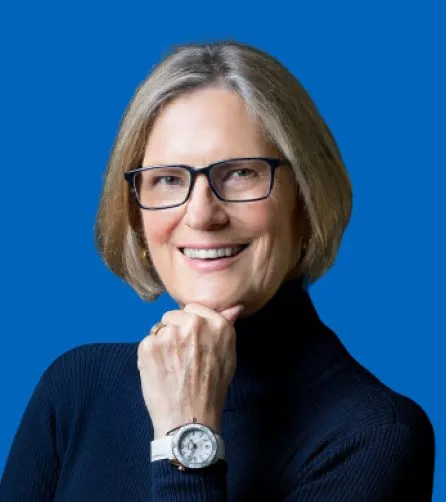
Kathryn D. Sullivan Wikimedia Commons / Kathryn D. Sullivan
Pictured Kathryn D. Sullivan

Kathryn Sullivan walked in space on this day in 1984, and later went to the bottom of the sea

On October 11, 1984, Kathryn D. Sullivan floated out of the space shuttle Challenger's payload bay and became the first American woman to walk in space. She and fellow astronaut David Leestma spent about three and a half hours outside, demonstrating equipment for refueling satellites in orbit. Sullivan was a geologist by training who had joined NASA's astronaut corps in 1978, and her flight was also the first to carry two American women, alongside Sally Ride.

She kept going toward places few people have been. She later led the National Oceanic and Atmospheric Administration, and in 2020 she descended in a submersible to Challenger Deep, nearly seven miles down in the Pacific. That made her the first woman to reach the deepest known point of the ocean, and the first person to have both walked in space and been to the bottom of the sea.

Her path is a reminder that the people who explore the edges of the map are often curious about the whole planet, not just one frontier.

Today’s complete edition

The discoveries, in full

Read the evidence, what it changes, and the reporting behind each of today’s 7 discoveries.

01/07 Natural Sci.

A short drug course before surgery kept one bowel cancer from coming back

In the NEOPRISM-CRC trial at UCL and UCLH, 32 people with stage two or three bowel cancer of one specific genetic type were given up to nine weeks of the immunotherapy drug pembrolizumab before their operation, in place of the usual chemotherapy afterward 12.

a doctor talking with a patient in a hospital room
Pictured a doctor talking with a patient in a hospital room · Direct Media (via stocksnap)

Earlier results had 59% of patients showing no detectable disease after treatment and surgery. Now follow-up has reached 33 months, and none of the patients has had a recurrence. That includes the ones who still had small traces of cancer at surgery; in them, the leftover disease did not grow or spread 12. Under standard care, surgery followed by chemotherapy, about 25% of patients are expected to relapse within three years 12.

02/07 Natural Sci.

The back of the eye has a drain nobody had mapped

Researchers at the University of British Columbia and the University of Toronto have found a route that carries fluid and waste from the back of the eye into the body's lymphatic system.

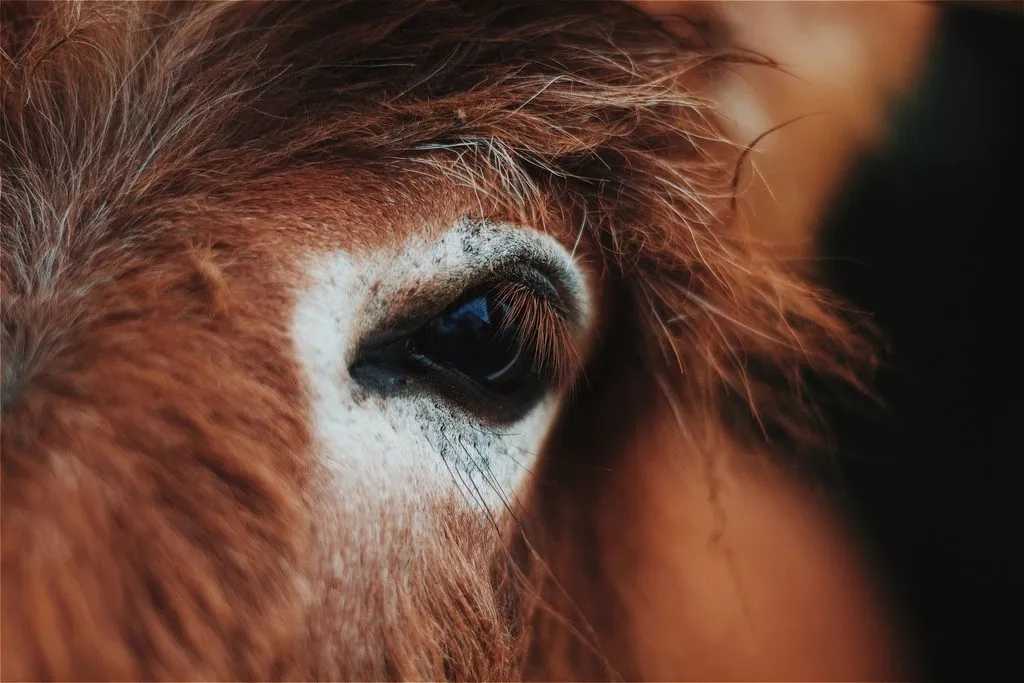
a close-up of a human eye
Pictured a close-up of a human eye · Unknown (via rawpixel)

They named it the posterior ocular lymphatic outflow pathway, POLO for short, and they demonstrated it in mice 6. The retina is among the most metabolically active tissues in the body and constantly produces byproducts that have to go somewhere. "This discovery helps explain how the eye flushes this waste," says Dr. Neeru Gupta, head of UBC's department of ophthalmology and visual sciences 6.

03/07 Natural Sci.

Changing the angle of your feet eased knee arthritis pain for a year

A year-long, randomized, placebo-controlled trial published in The Lancet Rheumatology tested gait retraining: teaching people with knee osteoarthritis to walk with a personalized foot angle that takes pressure off the vulnerable part of the knee 1.

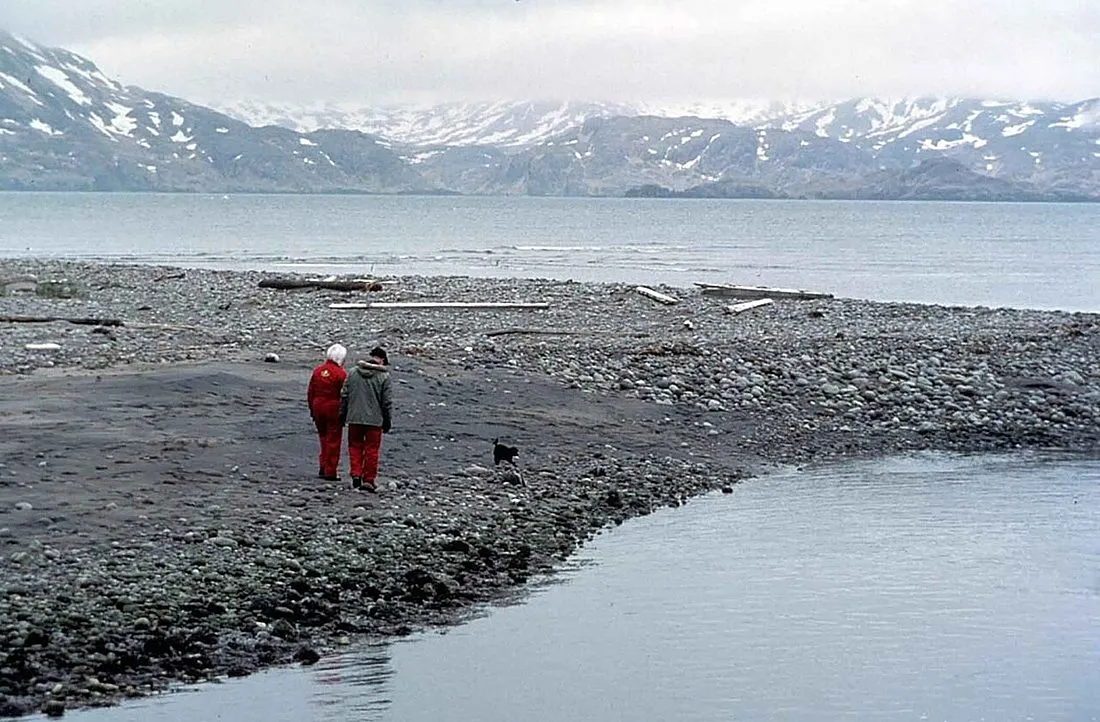
an older couple walking on a trail
Pictured an older couple walking on a trail · Rhode Elaine, U.S. Fish and Wildlife Service (Wikimedia Commons)

After one year, those who learned the new foot position reported significantly less pain than those given a placebo treatment. The relief was comparable in size to benefits reported for some commonly used medications 1. MRI scans also showed slower deterioration in a marker of knee cartilage health. The team came from the University of Utah, New York University and Stanford, and the work was co-led by Scott Uhlrich 1.

04/07 Natural Sci.

Five patterns of brain activity sit under one depression diagnosis

Researchers at the University of Helsinki compared brain activity in 263 people with major depressive disorder and 75 healthy participants. Sorting everyone by functional connectivity, a measure of how closely different brain regions work in step, produced five distinct groups 8.

a person looking out of a window, thoughtful
Pictured a person looking out of a window, thoughtful · thegetty (via rawpixel)

In some, connections between regions were stronger than usual; in others they were weaker. One group with especially strong connections also had more pronounced substance abuse problems. Another, with weaker connections, showed more PTSD symptoms 8.

05/07 Natural Sci.

A nuclear clock kept itself steady for more than a day

A team in Vienna has built the first self-stabilizing nuclear clock, and it ran steadily for more than 24 hours without intervention 3. Thorium nuclei are unusual because two of their energy states sit extremely close together, close enough that laser light can push a nucleus between them.

a precision laboratory with a laser optical table
Pictured a precision laboratory with a laser optical table · U.S. Department of Energy (via rawpixel)

Ticking off that transition replaces the electrons that conventional atomic clocks use 3. The route there was short on paper and long in practice: Thorsten Schumm's group at TU Wien and Ekkehard Peik's team at PTB Braunschweig pinned down the transition experimentally in April 2024, and by that fall had hooked the thorium setup to a conventional optical atomic clock 3. Until now, prototypes needed a regular atomic clock to keep them in line. This one does not 3.

06/07 Natural Sci.

A photo of one cougar under the Hollywood sign led to the world's largest wildlife overpass

Photographer Steve Winter did not photograph an animal professionally until he was 34, then spent about 25 years documenting big cats for National Geographic 13. His picture of the cougar P-22 beneath the Hollywood sign eventually led to the Wallis Annenberg Wildlife Crossing over the 10-lane Highway 101 in California, which is due to open Dec.

the Hollywood Sign in Los Angeles
Pictured the Hollywood Sign in Los Angeles · Thomas Wolf, www.foto-tw.de (Wikimedia Commons)

2 13. Winter is now installing remote cameras on what will be the world's largest wildlife overpass. He and his wife, the writer Sharon Guynup, also exposed conditions at the Tiger Temple in Bangkok, which closed afterward, and helped change US laws on big cats 13. Their retrospective, "Big Cats," came out from National Geographic Books this year 13.

07/07 Psychology

Screen time did not predict problems in most Scottish children

Fiona McQuaid and colleagues at the University of Edinburgh analyzed the Growing Up in Scotland study, which followed children born in 2005 and 2006, with 3,786 children at age 5, 3,126 at age 10 and 2,598 at age 15 27.

a child reading a tablet on a sofa
Pictured a child reading a tablet on a sofa · Family First (via stocksnap)

After accounting for family circumstances, including the quality of the parent-child relationship, time on screens was not linked to emotional, behavioral or social difficulties at ages 5 or 10 27. At 15, teens who gamed five or more hours a day were more likely to have elevated difficulties than those who gamed under an hour. Teens who spent at least an hour a day on social media and messaging were less likely to 27. The paper appeared in JAMA Network Open.

Quick notes

Shorter discoveries from this morning, worth knowing but not a full story.

Astronomers Detect Potential ‘Second Generation’ Planet Around Dying Stellar White Dwarf A Warwick team re-read 25-year-old Hubble data and found niobium at more than 1,000 times the Sun's level in a white dwarf's atmosphere, which they read as a giant planet, on a 4.4-day orbit, built from the debris of the star's death 24. Universe Today
Scientists may have found a shortcut to fusion energy Princeton Plasma Physics Laboratory's new calculations suggest that heating plasma first and raising its density afterward could cut the energy needed to reach fusion ignition; it is a calculation for now, not a reactor 9. ScienceDaily
Scientists Find Squid Are Covered in Hair-Like Cells Remarkably Similar to The Ones in Human Ears An ear specialist at Case Western Reserve tracing the lineage of hearing cells ended up at the longfin inshore squid, whose body surface is studded with them, and says the animal may teach us something about hearing and deafness in people 16. ScienceAlert
A New 'Super Ice' Is 10 Times Stronger, Bringing It Close to The Strength of Concrete Adding cellulose nanocrystals and an antifreeze-protein glue made ice 10 times stronger and able to absorb 70 times more energy before breaking, in a small proof of concept aimed at building in the Arctic and Antarctic 15. ScienceAlert
Adding 1 Mushroom-Derived Molecule to Salt Can Make It Taste 71% Saltier A peptide from the beech mushroom raised the rated saltiness of a salt solution by about 71% among 14 trained tasters, a lab result that says nothing yet about the safety of a future ingredient 19. ScienceAlert
For The First Time Ever, Quantum Spins Shift a Centimeter-Scale Object Controlled electron spins in a diamond moved a levitating assembly of about 128 milligrams, a few grains of rice, by around 100 nanometers, which is a very small push on a very large object by quantum standards 21. ScienceAlert
The Preliminary Lunar Science Report for Artemis II is Out! From behind the Moon, the Artemis II crew watched it block the Sun for 54 minutes, far longer than any eclipse on Earth, with a view of the corona that usually needs scientific instruments 23. Universe Today
One with the world? A new look at brains transformed by psychedelics. Monash researchers scanned 62 psychedelic-naive volunteers on 19 milligrams of psilocybin without giving them tasks, and what they saw in the brain was not exactly the chaos that has been the standard picture 57. Ars Technica - All content
This tattoo ink changes colour with light and can make designs nearly vanish The University of Colorado Boulder's PhotoTat ink switches on under UV light in two to three seconds and fades under white light, with a possible use hiding medical tattoos until a doctor needs them 72. Interesting Engineering
Sloth Bear Named By Julia Roberts is Flourishing After Rescue From Dancing Trade in India Odum, rescued from a life of forced dancing and a cage, is now 26 and spends his days with muskmelon, a pool and a hammock built specially for him 94. Good News Network
Lost Italian Statue by Trevi Fountain Artist Discovered in Salvage Yard Among the Garden Ornaments A builder paid £300 for a 27-inch marble model by Pietro Bracci, the Trevi Fountain sculptor, after spotting its quality among hundreds of architectural cast-offs, and it went to auction with an estimate of $6,600 to $13,300 96. Good News Network
This Truck Eats Garbage Before It Reaches Landfills A 22-foot solar-powered truck sorts, shreds and processes waste on site in Hyderabad, and the project reports more than 1 lakh kg processed and work for around 180 women 103. The Better India : Latest Posts
Daughter Gets to Join Dad as Co-Pilot, With Mom Serving on Flight’s Cabin Crew: A Surprise Full Circle Moment Twenty-two-year-old KLM pilot Zoë found herself in the cockpit beside her father, the captain, with her mother working the cabin, on a flight none of them knew they would share; her parents had met on a flight 95. Good News Network

Our process. Your trust.

Every discovery above traces back to an article we read in full. This is the whole corpus behind this morning, and what it was made of.

  • 24 Sources scanned
  • 111 Articles read
  • 8 Fields covered
  • 7 Discoveries

The sources that carried this morning

  1. 1 Psychology Today: The Latest 20 articles
  2. 2 Latest Science News -- ScienceDaily 12 articles
  3. 3 Interesting Engineering 10 articles
  4. 4 ScienceAlert 8 articles
  5. 5 Futurism 8 articles
  6. 6 PsyPost Psychology News 7 articles
  7. 7 New Atlas 6 articles
  8. 8 VegNews.com 6 articles
How an edition is made

Everything we read today

Natural Sciences 25 articles
Life Sciences & Medicine 1 articles
Psychology & Behavioral Science 27 articles
Social Sciences 3 articles
Technology & Innovation 26 articles
Plant-Based & Vegan 10 articles
Solutions & Good News 15 articles
Human Stories & Ideas 4 articles
The long view · not today’s news, the story behind it

Today’s discoveries didn’t come from nowhere. Here’s the older, ongoing story they belong to, a moment from this day in history, and a question to test what stuck.

Where the story stands

On this day in science

1968 Apollo flies its first crew Apollo 7 lifted off from Cape Kennedy carrying Wally Schirra, Donn Eisele, and Walter Cunningham, the first crewed flight of the Apollo program. Over 11 days they put the new spacecraft through its paces in Earth orbit. Their success cleared the way to aim for the Moon. More from the Almanac →

Before you go: today’s quiz

The daily quiz

Global AIDS deaths peaked in 2004. Since then they have fallen by more than...

Reveal the answer

Two-thirds

Global AIDS deaths peaked at about 2.1 million in 2004 and fell to about 628,000 by 2024, more than two-thirds lower, as antiretroviral therapy reached the people who needed it.

See the number →

Previous editions

Every morning we have published, newest first. Nothing expires.

View the full archive

Get this every morning.

Liked today’s? Tomorrow’s reaches your inbox before breakfast.

  • One email each morning, never more
  • The day’s real discoveries across 8 fields
  • One calm read with your coffee

The full letter, every morning, free for good.

Same free letter, plus the reason it stays that way: no ads, no investors, no agenda but the good news itself.

A single gift of any amount. No account, never a recurring charge.