



The daily brief · October 3, 2026

Animals may be 200 million years older; tiny neurons guard pregnancy

Small things nobody was watching turned out to carry a lot: a sliver of neurons, a baby's first week, an angled obstacle in a tank, an empty hog barn.

  • 8 Discoveries
  • 226 Articles read
  • 44 Sources
  • 11 Min read

Today’s discoveries

Everything this morning found, in the order we would read it.

8 stories
  1. 01 Natural Sci. Animals may have a missing 200 million years A molecular clock analysis, which dates branches of the family tree from the pace of genetic change instead of from bones, puts the first animals between 800 million and 700 million… Source: Latest from Live Science 1 min read
  2. 02 Life Sciences A few hundred neurons that a pregnancy depends on Nirao Shah's team at Stanford tracked gene expression across the female mouse brain during pregnancy and found a small set of neurons that rebuilt themselves. Source: New Scientist 1 min read
  3. 03 Life Sciences Why a good high can flip into panic Northwestern neuroscientists have pinpointed a group of cells that decides whether cannabinoids soothe or alarm. Source: Neuroscience News 1 min read
  4. 04 Life Sciences A baby's first week may set the course for allergy Petter Brodin of Imperial College London followed nearly 600 infants in Sweden through their first year, collecting blood and stool samples. Source: New Scientist 1 min read
  5. 05 Technology Rose-tinted solar panels over a field of broccoli Silvia Ma Lu's team at Mälardalen University in Sweden grew broccoli in three 20-square-meter plots: one in full sun, one under magenta semi-transparent solar panels at 50 percent… Source: ScienceAlert 1 min read
  6. 06 Natural Sci. Brine shrimp help flip a rule of turbulence In the 1960s and '70s, comic book ads promised a "bowlfull of happiness" and delivered a paper envelope of freeze-dried brine shrimp eggs. Source: Quanta Magazine 1 min read
  7. 07 Plant-Based A hog barn becomes a mushroom room The Faaborg family in central Iowa used to raise about 8,000 hogs a year, which left nearly a million gallons of liquid manure to store and haul. Source: Mercy For Animals 1 min read
  8. 08 Natural Sci. An AI reads Napoleon's secret letter In 1809, Eugène, the viceroy of Italy, wrote to Marshal Auguste de Marmont on the Adriatic coast, laying out where every other French and allied army stood, in code meant to survive… Source: Latest from Live Science 1 min read

The feel-good story of the day

Dolly Parton Carol M Highsmith (via rawpixel)
Pictured Dolly Parton

The Book Lady's last count: 332 million

Dolly Parton grew up in a one-bedroom cabin in Appalachian Tennessee with no running water or electricity. Her father could not read or write, and she has said it seemed to cripple him and left him embarrassed. In late 1995 she started the Imagination Library in her hometown of Sevier County, with an opening order of 1,760 books for the children where she grew up. Her father was part of it, and the children called her "The Book Lady."

The idea was simple and stuck to it. Every enrolled child, from birth to age five, gets an age-appropriate book in the mail each month, free, up to 60 books by the time they graduate. Every child starts with "The Little Engine That Could" and ends with "Look Out Kindergarten, Here I Come!" By the time Parton died on Aug. 25, 2026, the program had sent more than 332 million books to children in all 50 states, Canada, the U.K., Australia and Ireland.

Reading aloud at home is where literacy begins, and children in lower-income households tend to hear fewer words and see fewer books. A shelf that fills itself, one envelope a month, goes at that gap directly. The program is expanding in London less than a month after her death.

Today’s complete edition

The discoveries, in full

Read the evidence, what it changes, and the reporting behind each of today’s 8 discoveries.

01/08 Natural Sci.

Animals may have a missing 200 million years

A molecular clock analysis, which dates branches of the family tree from the pace of genetic change instead of from bones, puts the first animals between 800 million and 700 million years ago.
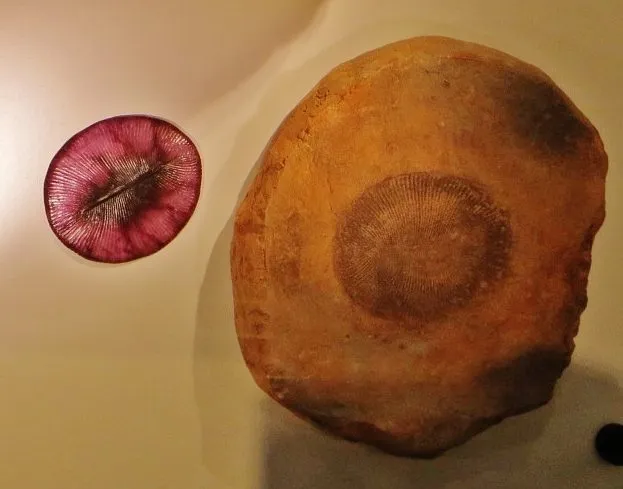
Dickinsonia fossil
Pictured Dickinsonia fossil · Ghedoghedo (Wikimedia Commons)

That is up to 200 million years before the oldest fossil evidence, which sits around 574 million years ago in the Ediacaran. The study appeared Friday in Science Advances 3. Researchers have often treated the roughly 590-million-year-old Weng'an Biota in China as a ceiling. Its rocks preserve microscopic organisms in exquisite detail, yet hold no definitive animals. The authors argue that this absence proves little. Fossils can be missing because scientists are looking in the wrong places or because conditions never suited preservation 3.

02/08 Life Sciences

A few hundred neurons that a pregnancy depends on

Nirao Shah's team at Stanford tracked gene expression across the female mouse brain during pregnancy and found a small set of neurons that rebuilt themselves. In the preoptic hypothalamus, gene expression shifted more than 30-fold at a first pregnancy, turning the cells into a type that "is exclusive to pregnancy" 20.

a pregnant woman
Pictured a pregnant woman · Skitter Photo (via stocksnap)

The neurons carry receptors for pregnancy hormones such as progesterone. They make up fewer than 0.001 percent of the brain's cells. When the researchers bred mice without them, the females mated and conceived, but every pregnancy ended early because the embryos could not implant in the uterine lining 20.

03/08 Life Sciences Human Stories

Why a good high can flip into panic

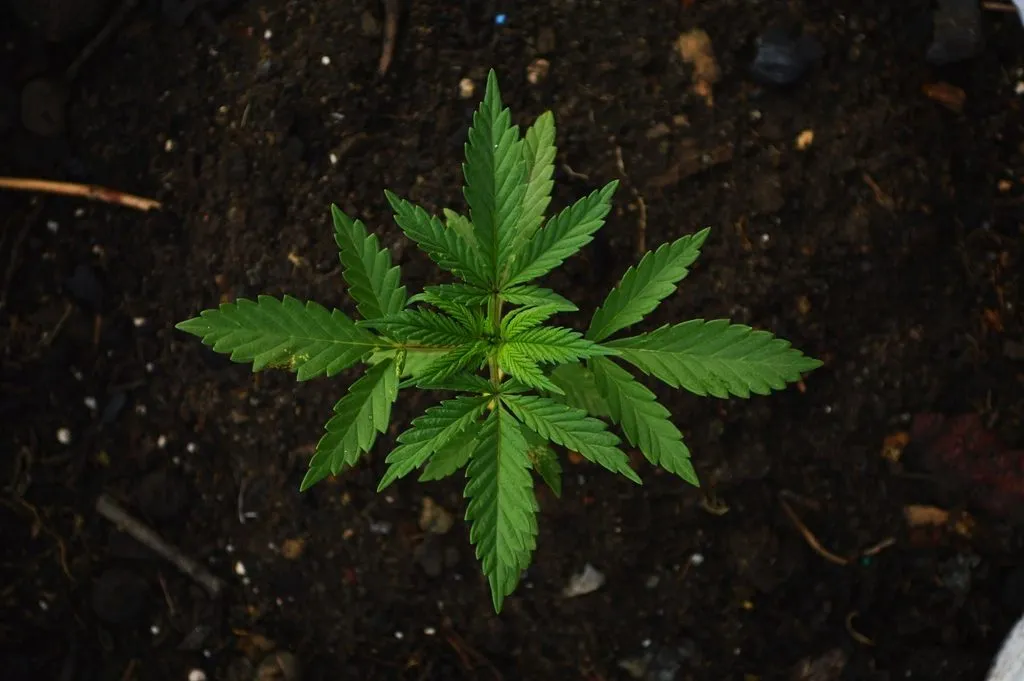
Northwestern neuroscientists have pinpointed a group of cells that decides whether cannabinoids soothe or alarm. These are somatostatin-expressing neurons in the central amygdala.

cannabis plant
Pictured cannabis plant · Unknown (via rawpixel)

Cannabinoids weaken the inhibitory brake on them, so fear circuits fire hard when the environment looks threatening, a result published in Nature Communications 47. In mice, genetically silencing those neurons reversed the cannabinoid-driven threat avoidance 47.

What each field noticed (2)
04/08 Life Sciences

A baby's first week may set the course for allergy

Petter Brodin of Imperial College London followed nearly 600 infants in Sweden through their first year, collecting blood and stool samples. About half had a strong "seeding" immune reaction in week one, marked by high levels of inflammatory molecules such as interferon gamma, and those babies had substantially more Bacteroides in the gut 19.

a newborn baby
Pictured a newborn baby · Studio 7042 (via stocksnap)

By age 1, 39 percent of the strong reactors had developed eczema or a food allergy, against 12 percent of the weak reactors 19. Brodin's explanation is that newborns have a leaky gut that closes after about a week, which lets gut bacteria reach the bloodstream and rouse immune cells 19.

05/08 Technology

Rose-tinted solar panels over a field of broccoli

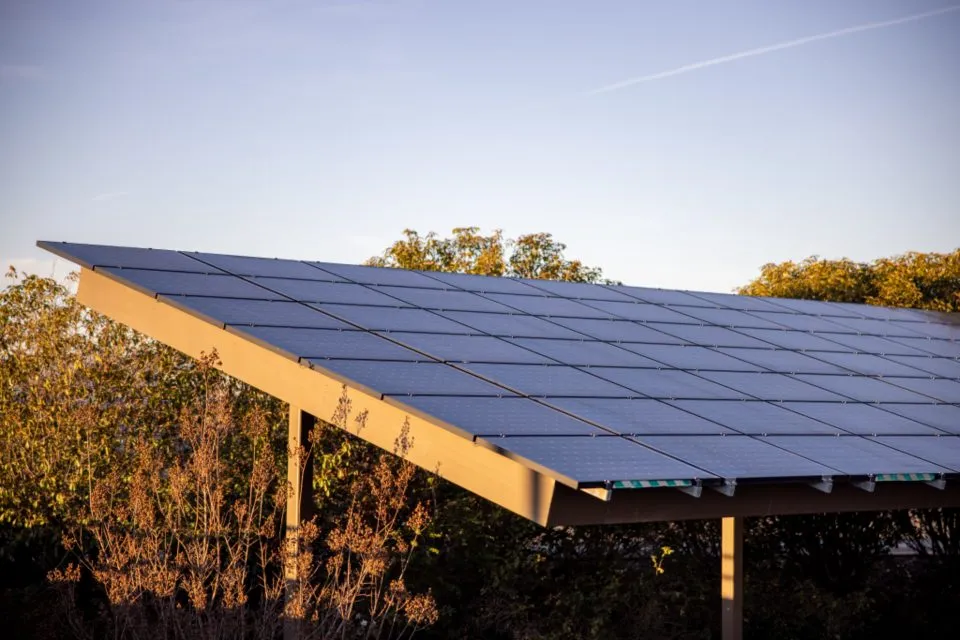
Silvia Ma Lu's team at Mälardalen University in Sweden grew broccoli in three 20-square-meter plots: one in full sun, one under magenta semi-transparent solar panels at 50 percent transparency, and one under panels at 70 percent.

solar panels over a vegetable field
Pictured solar panels over a vegetable field · Matt Bango (via stocksnap)

Plants under the panels took 25 days longer to reach harvest but ended with similar yields, and the two panel setups matched each other despite their different transparency 42. Because the shaded plants got far less light, that works out to much more efficient use of it: 4.5 times greater under the 50 percent panels and 2.8 times under the 70 percent ones 42. The study was published in Cell Reports Physical Science 42.

06/08 Natural Sci.

Brine shrimp help flip a rule of turbulence

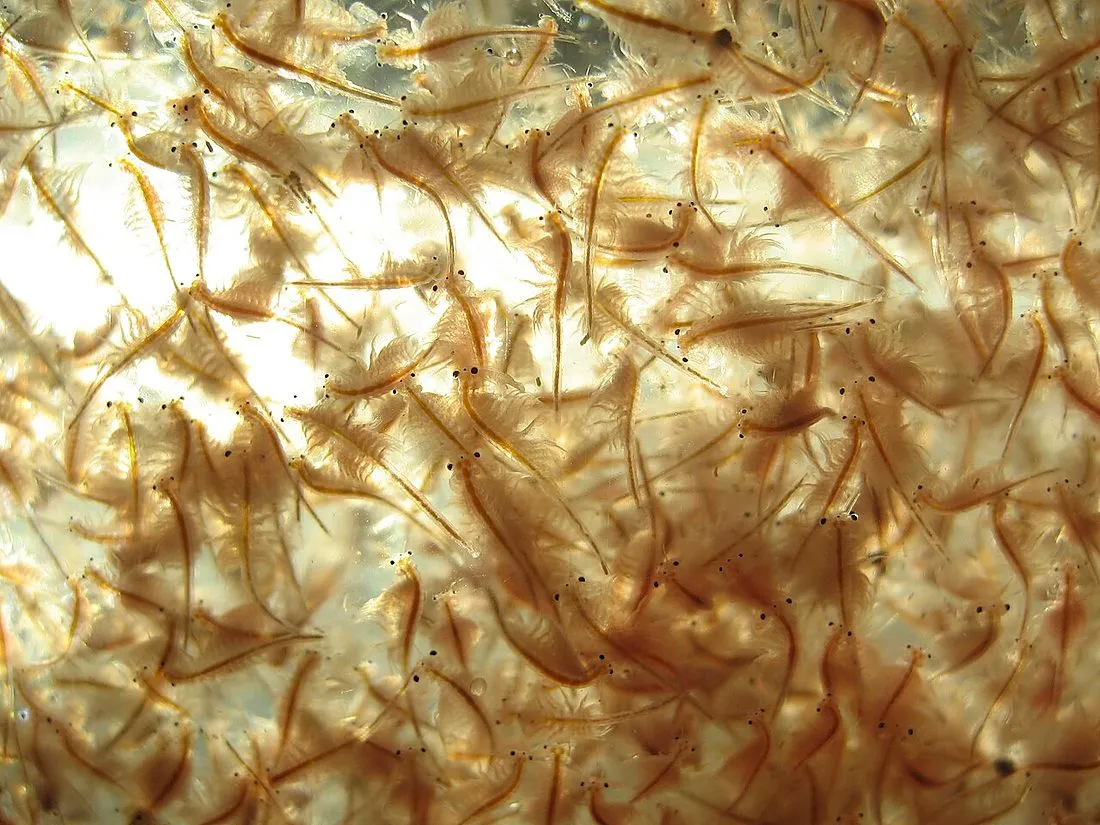
In the 1960s and '70s, comic book ads promised a "bowlfull of happiness" and delivered a paper envelope of freeze-dried brine shrimp eggs 36. The animals, about a centimeter long, swim upside down and trail their abdomens behind them.

brine shrimp
Pictured brine shrimp · Saul Dolgin (Wikimedia Commons)

In a flowing two-dimensional system, energy has long been thought to cascade in only one direction, from large scales to small or the reverse depending on the dimensions. Lei Fang's group at the University of Pittsburgh found, while watching the shrimp, that a small obstacle angled the right way can steer which way the energy flows. "The geometry matters," Fang said 36.

07/08 Plant-Based

A hog barn becomes a mushroom room

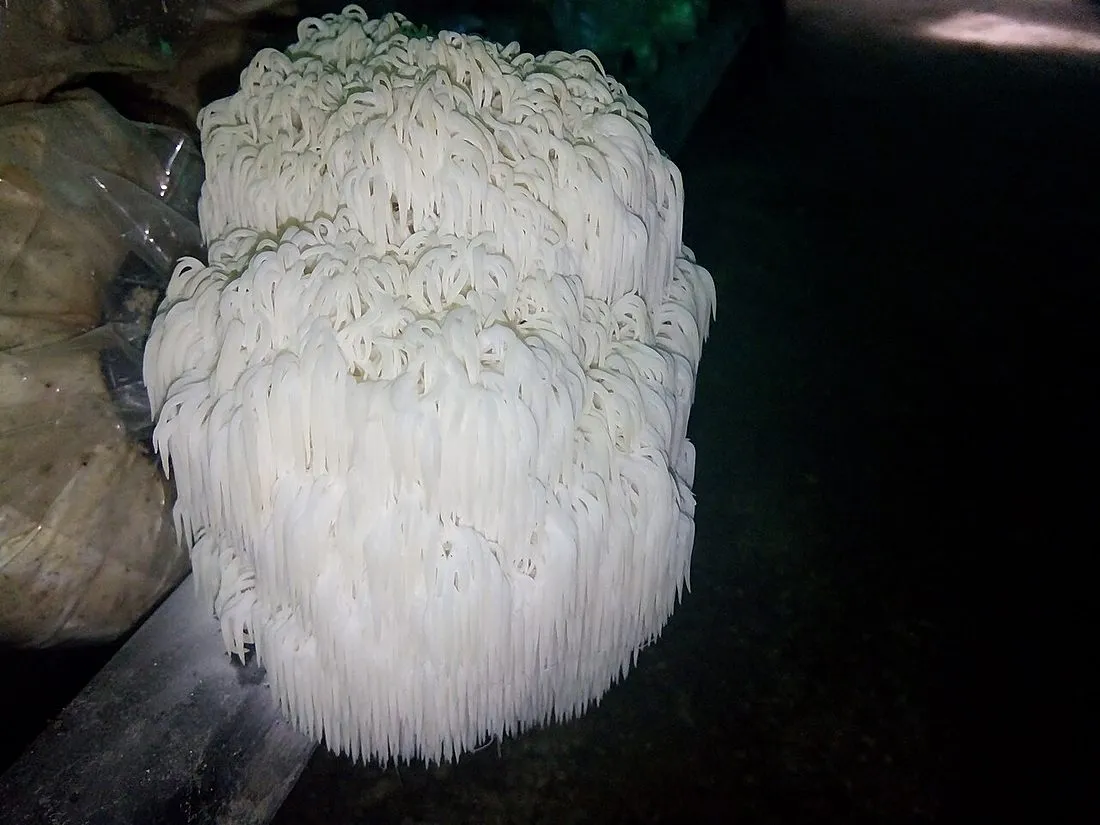
The Faaborg family in central Iowa used to raise about 8,000 hogs a year, which left nearly a million gallons of liquid manure to store and haul 164. With help from Mercy For Animals' Transfarmation Project, they turned half of a 200-foot hog barn into a fruiting room for specialty mushrooms such as lion's mane.

lion's mane mushrooms
Pictured lion's mane mushrooms · Plam1234 (Wikimedia Commons)

They now sell tinctures, coffee blends and flavored salt 164. The timeline: they began working with the project in 2021, left hog production in 2022, and got a $15,000 grant in 2023 for a yearlong pilot. The former manure pit is now a freshwater pond ringed with native grasses and flowers 164.

08/08 Natural Sci.

An AI reads Napoleon's secret letter

In 1809, Eugène, the viceroy of Italy, wrote to Marshal Auguste de Marmont on the Adriatic coast, laying out where every other French and allied army stood, in code meant to survive interception 6.

Napoleon Bonaparte
Pictured Napoleon Bonaparte · Wikimedia Commons / Napoleon Bonaparte (police officer)

The cipher is homophonic: common letters have several interchangeable symbols, with 155 distinct signs across about 1,300 in total 6. Carter Church, an AI engineer at SentinelOne, gave OpenAI's GPT-6 Astra one prompt and a low-resolution scan from a 1969 French army journal. He says that six hours later the letter was decoded 6. Along the way the model found a partial key by cryptology historian Daniel Tant covering 33 symbols, about a third of the letter, that had never been linked to it. Church suspects a naming slip, Grammont for Marmont, kept it apart 6.

Quick notes

Shorter discoveries from this morning, worth knowing but not a full story.

Scientists Discover a Genius Use For Leftover Steel Waste – And It Could Save Lives A model of roads made partly from steel slag found that a 35-percent-epoxy mix lasting an estimated 15 years, against six for conventional pavement, can pay back its higher upfront emissions 40. ScienceAlert
No Longer Just North And South: A New Material Joins The Third Type of Magnetism Physicists report the first experimental evidence of altermagnetism in a cobalt, tantalum and selenium crystal baked above 900 degrees Celsius for two weeks, a material that carries spin currents without stray fields 44. ScienceAlert
This Spectacular Star Field Hides Brown Dwarfs That Never Ignite Webb found brown dwarfs of about two Jupiter masses in IC 348, the lightest ever observed and much lighter than models predicted, and one of them is growing a disk 218. Nautilus
When Milliseconds Matter, Exhaling Quickens Response Time In 35 healthy young adults, visual reactions were 41 milliseconds faster during exhalation than around peak inhalation, with nobody told how to breathe 97. Psychology Today: The Latest
Antarctica’s Wind Farm Saves 122,000 Gallons of Diesel Over 15 Years Powering McMurdo Station Three 330-kilowatt turbines bolted to Crater Hill with no transmissions kept running through 15 Antarctic winters and cut about 122,000 gallons of diesel 183. Good News Network
California brought back beavers for the first time in 70 years, and the results are already amazing A pictograph of a beaver on a Tule River rock shelter helped spark California's first beaver restoration since the 1950s, which had grown to 28 relocated beavers at five sites by September 2024 198. Upworthy
Why 100 UP Farmers Are Planting Turmeric Beside Crops That Elephants Love to Eat An elephant can get in a couple of hours from paddy or sugarcane the energy that takes 12 to 14 hours of forest foraging, so farmers in the Terai Elephant Reserve are trying a crop elephants like less 187. The Better India : Latest Posts
Bihar’s Drinking Water Had Toxins 70x Above the Safe Limit. Two Brothers Built a Machine to Clean It Brothers Arpit and Abhijeet built a magnetic filter that took arsenic below 2 ppb in field pilots, validated by CSIR, and say it has delivered 3.19 million litres across 13 sites 194. The Better India : Latest Posts
After a Near-Fatal Fall on Everest, He Built a Rescue Team That Has Helped Save 400 Indian Soldiers Hemant Sachdev dangled over a crevasse in 2013 until a friend pulled him out, and Tiranga Mountain Rescue, founded in 2016, now runs 16 avalanche teams that have helped save about 400 soldiers 193. The Better India : Latest Posts
UK’s National Museums to Continue 25-Year Policy of Free Entry for Foreign Visitors After a review floated charging overseas tourists, the government kept entry free at 14 national museums, including the British Museum and the Natural History Museum 182. Good News Network
Dog Standing in Road Leads Police to Owner Who Needed Help A leashed dog in a Leawood, Kansas street led an officer half a block to a garage where his owner had been on the floor for over three hours, and the owner is recovering 186. Sunny Skyz
Does MRI-Based Targeting Improve Outcomes With Accelerated TMS for Depression? A randomized trial found MRI-guided targeting beat scalp-based targeting for SAINT magnetic stimulation, and the maker's chief medical officer says over 1,200 patients have been treated, though evidence on suicide reduction is still limited 59. Psychiatric Times articles
Computer-designed protein targets immune receptor linked to inflammation at new 'undruggable' site Scripps researchers built a small synthetic protein that binds the membrane-spanning region of TLR4 and blocks inflammatory signaling, a receptor with no FDA-approved drug aimed squarely at it 29. Phys.org - latest science and technology news stories
Over 100 Years Ago, an Indian Scientist Built a Machine That Could “See” How Plants Grow Jagadish Chandra Bose chained two levers, each magnifying 100 times, into a crescograph that made a plant's growth, about 1/100,000 of an inch per second, visible on paper 195. The Better India : Latest Posts
The Sweet Story Behind the Viral Oregon Trail Sourdough Starter Believed to Date Back to 1847 When Carl Griffith died in 2000, his forum friends formed a preservation society so his family's starter, believed to be from an 1847 wagon trek, could keep going out to bakers who send a stamped envelope 185. Nice News

Our process. Your trust.

Every discovery above traces back to an article we read in full. This is the whole corpus behind this morning, and what it was made of.

  • 44 Sources scanned
  • 226 Articles read
  • 8 Fields covered
  • 8 Discoveries

The sources that carried this morning

  1. 1 Psychology Today: The Latest 20 articles
  2. 2 Phys.org 14 articles
  3. 3 Ars Technica - All content 14 articles
  4. 4 Psychiatric Times articles 10 articles
  5. 5 Futurism 10 articles
  6. 6 Interesting Engineering 10 articles
  7. 7 Nature 9 articles
  8. 8 ScienceAlert 9 articles
How an edition is made

Everything we read today

Natural Sciences 46 articles
Life Sciences & Medicine 22 articles
Psychology & Behavioral Science 29 articles
Psyche | Know Your Self
Social Sciences 18 articles
Technology & Innovation 48 articles
Plant-Based & Vegan 17 articles
Solutions & Good News 25 articles
Human Stories & Ideas 21 articles
Aeon | a world of ideas
The long view · not today’s news, the story behind it

Today’s discoveries didn’t come from nowhere. Here’s the older, ongoing story they belong to, a moment from this day in history, and a question to test what stuck.

Where the story stands

On this day in science

1990 East and West Germany become one again Less than a year after the Berlin Wall opened, East and West Germany formally reunited into a single country, ending 45 years of division. Families and a city split by the Cold War were whole again. It was the clearest sign yet that the long standoff between East and West was ending, mostly peacefully. More from the Almanac →

Before you go: today’s quiz

The daily quiz

Of the roughly 154 million lives vaccines saved over 50 years, about how many were infants?

Reveal the answer

About 101 million

The WHO reports that about 101 million of the 154 million lives saved by immunization from 1974 to 2024 were infants.

See the Lifesaver →

Previous editions

Every morning we have published, newest first. Nothing expires.

View the full archive

Get this every morning.

Liked today’s? Tomorrow’s reaches your inbox before breakfast.

  • One email each morning, never more
  • The day’s real discoveries across 8 fields
  • One calm read with your coffee

The full letter, every morning, free for good.

Same free letter, plus the reason it stays that way: no ads, no investors, no agenda but the good news itself.

A single gift of any amount. No account, never a recurring charge.