

The daily brief · November 20, 2026

A speech region rewrites its 150-year-old job; a liver lives seven weeks

Several things lasted longer or held up better than the textbook said they would: a donated liver, a patient's seizure control, Antarctic ice, a bee colony.

  • 7 Discoveries
  • 289 Articles read
  • 50 Sources
  • 10 Min read

Today’s discoveries

Everything this morning found, in the order we would read it.

7 stories
  1. 01 Natural Sci. A speech region that does more than listen A study published Thursday in Science takes on a question neuroscience has carried since the 1860s. Source: Latest from Live Science 1 min read
  2. 02 Technology A human liver kept alive outside the body for seven weeks A team in Sydney led by transplant surgeon Carlo Pulitano says it kept a donated human liver alive for seven weeks outside the body. Source: MIT Technology Review 1 min read
  3. 03 Technology A gene "dimmer switch" for drug-resistant epilepsy Three men who had lived with epilepsy for at least a decade saw their monthly seizures drop by more than 90 percent in a pilot trial, and one stayed seizure-free for a year. Source: SingularityHub 1 min read
  4. 04 Natural Sci. Antarctica's ice cliffs collapse fast, then stop For years the worry was marine ice cliff instability: once an exposed ice wall passes about 100 meters, roughly the height of the Statue of Liberty, it should collapse under its own weight. Source: ScienceDaily 1 min read
  5. 05 Natural Sci. Tibetan honey bees and the mites that cannot breed at altitude Beekeepers on the Tibetan Plateau report rarely seeing Varroa mites in their colonies, unlike every other region of China. Source: PLOS Biology 1 min read
  6. 06 Life Sciences The ketamine metabolite that may keep the antidepressant effect and drop the high The project started with a mismatch. Source: Psychiatric Times 1 min read
  7. 07 Plant-Based A fungus-fermented meat alternative gets a factory Matr Foods has opened an industrial-scale plant in Ansager, West Jutland, with 60 employees and capacity for up to 4,000 tonnes of meat alternatives a year. Source: Green Queen 1 min read

The feel-good story of the day

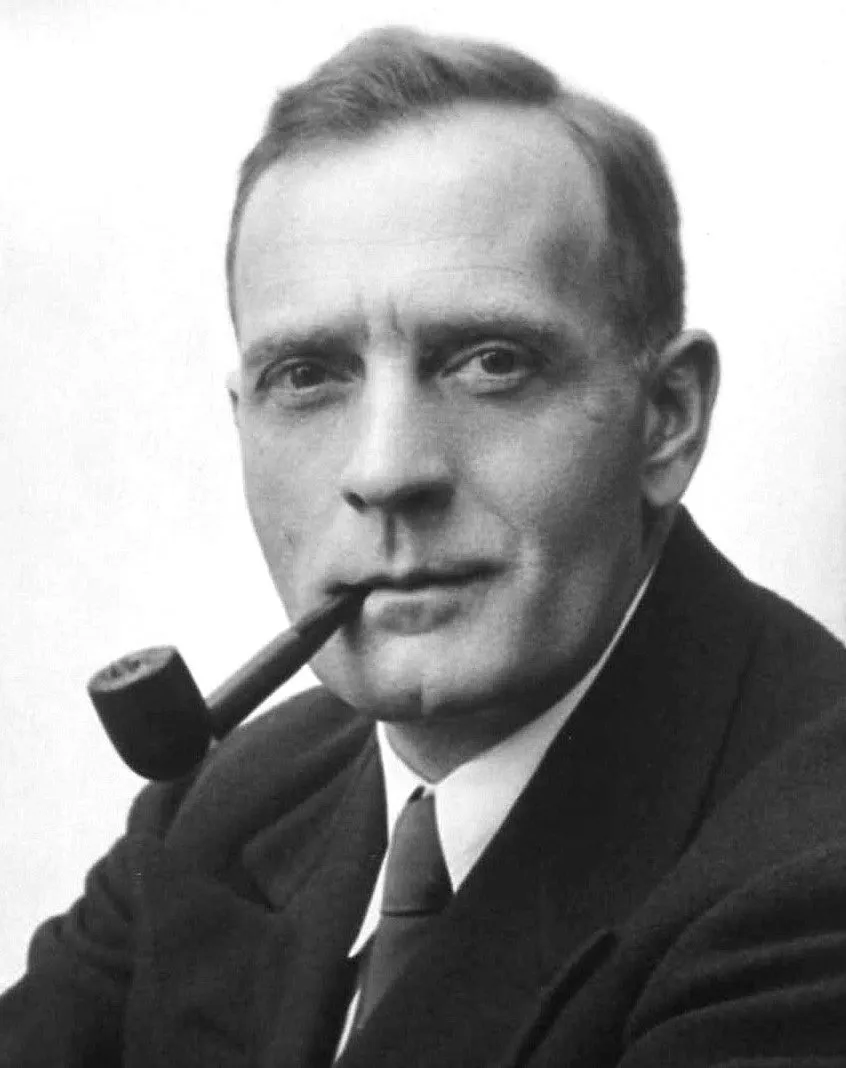
Edwin Hubble Wikimedia Commons / Edwin Hubble
Pictured Edwin Hubble

Edwin Hubble, born this day, showed that the Milky Way is not the whole universe

Edwin Hubble was born on November 20, 1889, in Marshfield, Missouri. He studied law at Oxford as a Rhodes Scholar before returning to astronomy, and he ended up at the Mount Wilson Observatory in California.

In the 1920s he used its 100-inch telescope to pick out Cepheid variable stars in the Andromeda nebula. Their pulsing gave him a distance, and the distance was far too large for Andromeda to sit inside our own galaxy. Overnight, the known universe held many galaxies. In 1929 he followed it with a finding that galaxies recede faster the farther away they are, the first observational evidence that the universe is expanding.

He did it with photographic plates and long nights at the eyepiece. Today the Hubble Space Telescope carries his name, and astronomers still work in the framework his measurements opened.

Today’s complete edition

The discoveries, in full

Read the evidence, what it changes, and the reporting behind each of today’s 7 discoveries.

01/07 Natural Sci.

A speech region that does more than listen

A study published Thursday in Science 18 takes on a question neuroscience has carried since the 1860s. German neuroanatomist Carl Wernicke found a left temporal-lobe area that, when damaged, leaves people unable to understand speech.

Wernicke's area, a neuroscientist reviewing brain recordings in a lab
Pictured Wernicke's area, a neuroscientist reviewing brain recordings in a lab · U.S. Army Europe Images (Wikimedia Commons)

Those patients also talk in a normal rhythm while saying the wrong words: "shoe" becomes "foot," "leg" becomes "peg." So the region is doing something on the production side too, and nobody knew which cells were responsible 18. Alexander Silva at UCSF and colleagues tested two ideas. In one, the area acts as a proofreader that listens to you speak and corrects errors. In the other, it has dedicated activity that generates upcoming speech 18. They recorded from 28 participants with epilepsy who already had electrodes on the brain's surface to monitor seizures 18. An Interesting Engineering summary of the result says a region within Wernicke's area generates word-level blueprints before speech begins 192.

02/07 Technology

A human liver kept alive outside the body for seven weeks

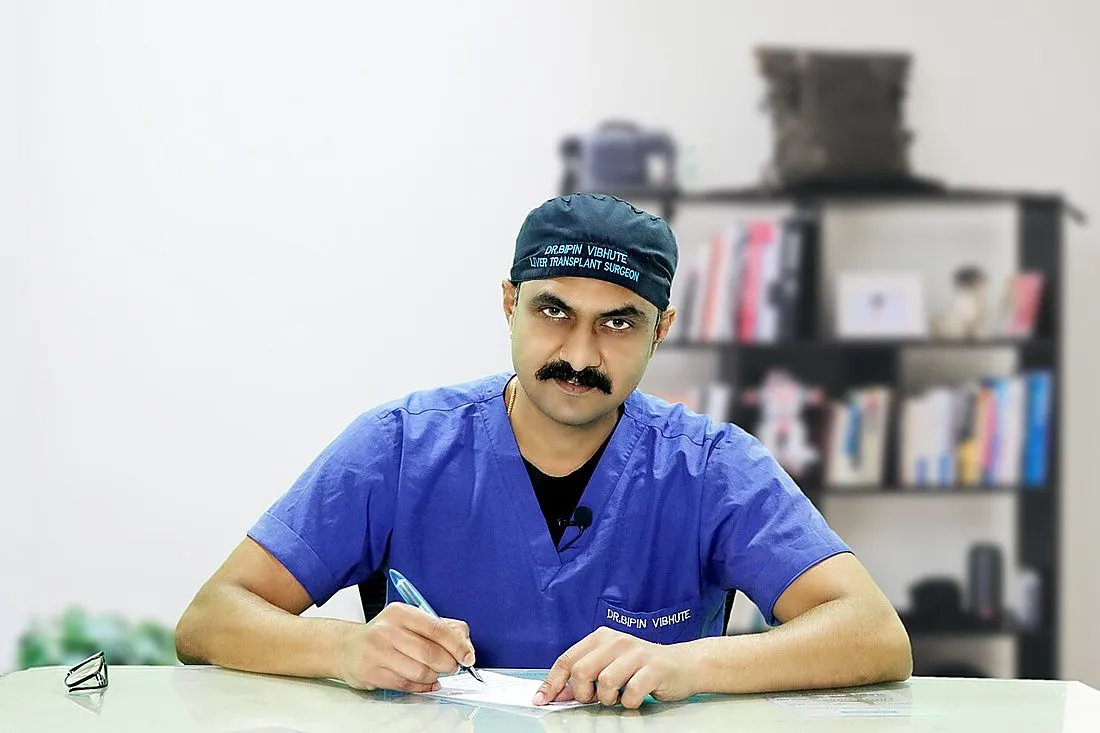
A team in Sydney led by transplant surgeon Carlo Pulitano says it kept a donated human liver alive for seven weeks outside the body. The previous record, set in Switzerland several years ago, was about two weeks 203.

a transplant surgeon at Royal Prince Alfred Hospital, Sydney
Pictured a transplant surgeon at Royal Prince Alfred Hospital, Sydney · B.vibute2021 (Wikimedia Commons)

The liver sat inside what Pulitano calls "an artificial body": automated pumps and sensors that supply blood and nutrients and carry away waste, at body temperature, 37 °C 203. Most organs headed for transplant last only hours on ice 203. The Sydney team described perfusing 55 human livers in a row. Some ran on a system adjusted by hand, and those on the automated system, which produced the seven-week survivor, lasted about three times as long, around four weeks on average 203. Pulitano says automation was the key to the record 203.

03/07 Technology

A gene "dimmer switch" for drug-resistant epilepsy

Three men who had lived with epilepsy for at least a decade saw their monthly seizures drop by more than 90 percent in a pilot trial, and one stayed seizure-free for a year 213.

A gene "dimmer switch" for drug-resistant epilepsy
Lenharth Systems (via stocksnap)

The team delivered a gene into the small patch of hippocampus where the seizures began. The gene makes a protein that works like a dimmer switch on neurons. It stays silent until an FDA-approved drug switches it on, and then it turns down that region's electrical activity instead of shutting it off 213. The approach is called chemogenetics, and it has been a staple of animal research for years. This is its first step into human medicine 213.

04/07 Natural Sci.

Antarctica's ice cliffs collapse fast, then stop

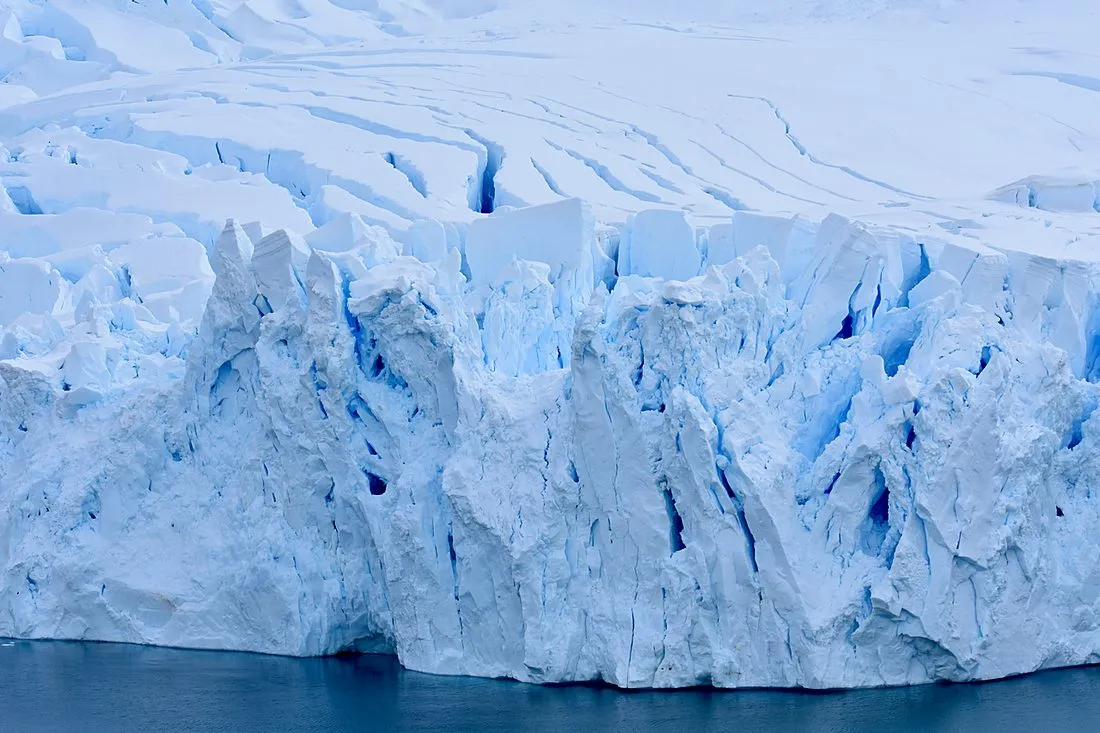
For years the worry was marine ice cliff instability: once an exposed ice wall passes about 100 meters, roughly the height of the Statue of Liberty, it should collapse under its own weight.

an Antarctic ice cliff
Pictured an Antarctic ice cliff · Parikshit Sharma Photography (Wikimedia Commons)

That exposes a taller wall behind it, and the chain reaction would peel the ice sheet back 12. MIT and Woods Hole researchers checked that idea against four years of satellite observations of more than 15,000 Antarctic ice cliffs, in a study in Science 12. Cliffs that retreated did so faster than models predicted. Then the retreat stopped, and every glacier they followed eventually stabilized 12. Underwater ridges, surrounding water, and broken ice appear to act as natural defenses 12. "We don't see this runaway effect," said lead author Caroline Needell 12.

05/07 Natural Sci.

Tibetan honey bees and the mites that cannot breed at altitude

Beekeepers on the Tibetan Plateau report rarely seeing Varroa mites in their colonies, unlike every other region of China 39. Varroa destructor is the biggest pest of honey bees and keeps beekeepers on continual miticide use 39.

Tibetan honey bees and the mites that cannot breed at altitude
Unknown (via rawpixel)

Researchers ran translocation experiments to find out why. Above 3,500 meters, low oxygen reduces mite fecundity and arrests offspring development, so the mite population cannot persist over the long term 39. Colonies kept at low altitude under oxygen levels like those at 3,500 meters showed the same drop in mite fertility and the same stalled development 39.

06/07 Life Sciences

The ketamine metabolite that may keep the antidepressant effect and drop the high

The project started with a mismatch. A single ketamine infusion relieves treatment-resistant depression within hours and the relief lasts one to two weeks, though ketamine itself is gone from the body in a few hours 9596.

a psychiatrist talking with a patient in a clinic
Pictured a psychiatrist talking with a patient in a clinic · Antje Sommer-Schlögl (Wikimedia Commons)

Metabolite analyses found hydroxynorketamines still detectable for 3 to 7 days in some participants, tracking the rise and fall of the antidepressant response. That suggested ketamine might be a prodrug 9596. Ketamine produces roughly two dozen metabolites within minutes, so chemists at the National Center for Advancing Translational Sciences synthesized the approximately 20 naturally occurring ones 9596. One of the 12 hydroxynorketamines, 2R,6R-HNK, stood out. It was active across preclinical assays, produced no sedative or dissociative effects, and showed favorable pharmacokinetics 9596. A ketamine analog engineered to resist conversion to 6-hydroxynorketamines lost antidepressant-like activity. In rodents, 2R,6R-HNK alone reproduced ketamine's rapid onset and effects lasting days after the drug cleared 9596.

07/07 Plant-Based

A fungus-fermented meat alternative gets a factory

Matr Foods has opened an industrial-scale plant in Ansager, West Jutland, with 60 employees and capacity for up to 4,000 tonnes of meat alternatives a year. Its current Copenhagen site makes 30 tonnes 216.

a food production facility worker handling plant-based burgers
Pictured a food production facility worker handling plant-based burgers · Chris Allen (Wikimedia Commons)

The company says it is the world's first factory able to ferment greens on an industrial scale 216. Matr uses fungi as a binder and flavor enhancer for vegetables, not as the protein itself. Peas, lupin beans, beetroots, potatoes, and oats are inoculated with fungal spores, and the mycelium breaks down nutrients into flavor-rich amino acids and starches that help browning 216. The products have 8.5g of protein and 10g of fibre per 100g, and the company reports a footprint of 1.6kg CO2e per kg, 94 percent lower than beef 216.

Quick notes

Shorter discoveries from this morning, worth knowing but not a full story.

Experimental compound burns fat without sacrificing muscle A UC Berkeley compound raised energy expenditure by up to 18% in mice without extra activity or higher body temperature, and paired with GLP-1 drugs it did better than either alone, though safety and effectiveness in humans are unknown 3. ScienceDaily
CAR-T therapy helps stiff person syndrome patients walk and work again After one round of CAR-T cells in a small Mayo Clinic trial, Shari St. Germain said she "walked for seven minutes on the treadmill," and Jonathan Walden is back at work 258. The Optimist Daily
Something strange is living beneath the skin of deep-sea pigs University of Tokyo researchers found a new bacterium in sea pig body walls with a 649,000-base genome, over a quarter of it devoted to surface proteins, some with more than 5,000 amino acids; what the sea pig gets out of the deal is unknown 9. ScienceDaily
New Anesthetic Candidate Dulled Pain Responses in Mice Without Putting Them to Sleep Out of 12,000 compounds screened in zebrafish larvae, one called nidradine cut painful-heat responses in awake mice to a median of 40 percent of trials, against 90 percent in controls 80. ScienceAlert
Over 100 Cave Bear Skeletons Found in ‘Sensational’ Discovery by Alpine Guide A mountain guide found the cave at about 9,100 feet in South Tyrol, and it is now behind iron bars until paleontologists, climate researchers, and ancient-DNA specialists start work in June 243. Good News Network
Empire State Building Lit Up with Gold Marks Historic Milestone of NASA’s Voyager 1 This Week Voyager 1 passed one light-day from Earth, about 16 billion miles, so NASA is celebrating a day after the fact because the signal takes that long to arrive, even as the spacecraft stopped sending science data this week 242. Good News Network
Montreal Is Harnessing Soothing Ocean Sounds to Combat Traffic Noise Four speakers in Verdun's Parc des Madelinots play recordings of Magdalen Islands waves and birds for residents who were displaced to Montreal 245. Reasons to be Cheerful
She Checked on Her ‘Loud’ Upstairs Neighbor, Inspiring Strangers to Raise More Than $100,000 Heidi Widmer assumed the thumping upstairs was someone bowling, then helped 87-year-old Carole with Parkinson's spill her recycling, and strangers went on to raise more than $109,000 for Carole 241. Good News Network
For the First Time, This Dazzling San Francisco Snake is Being Released Into the Wild Sixty-two captive-bred San Francisco garter snakes went back to the wild, with 130 more born this year and slated for release in 2027 287. Nautilus
How a Professor Turned Tamil Nadu’s Traditional Kolams Into a Computer Language Statistics professor Gift Siromoney stacked seven sheets of paper with carbon paper and had women draw kolams in red pen, which let him record each stage and write the drawing rules down as a grammar a computer can run 250. The Better India
Ikea Foundation Pours $72M Into Two Global Food Waste Reduction Initiatives at COP31 A third of food produced never reaches a plate, and the €65M commitment splits into €40M for Flare, which targets 22.6 million tonnes of CO2e, and €25M for Flower, both running to 2030 218. Green Queen
Exclusive: From Leaving Engineering for Music to Earning a Grammy Nod, Devan Ekambaram’s ‘Varuvaaiy’ Makes History For Tamil Ekambaram heard his phone fill with 80 or 90 congratulations while he was at a temple, too nervous to watch, because Varuvaaiy became the first Tamil song nominated for a Grammy 256. The Better India
Secrets of a superfruit: The açaí genome gets decoded Brazilian scientists sequenced roughly 75 percent of the açaí genome, which turned up about 41,700 genes, many with unknown functions, after production grew more than tenfold since the late 1980s 2. Knowable Magazine

Our process. Your trust.

Every discovery above traces back to an article we read in full. This is the whole corpus behind this morning, and what it was made of.

  • 50 Sources scanned
  • 289 Articles read
  • 8 Fields covered
  • 7 Discoveries

The sources that carried this morning

  1. 1 PLOS One 20 articles
  2. 2 Psychology Today: The Latest 20 articles
  3. 3 STAT 15 articles
  4. 4 Nature 14 articles
  5. 5 Phys.org 14 articles
  6. 6 Latest Science News -- ScienceDaily 13 articles
  7. 7 The Conversation Articles 12 articles
  8. 8 Futurism 10 articles
How an edition is made

Everything we read today

Natural Sciences 87 articles
PLOS One
Life Sciences & Medicine 26 articles
Psychology & Behavioral Science 31 articles
The latest from psychological science Association for Psychological Science APS
Social Sciences 26 articles
Works in Progress RSS Feed
Technology & Innovation 43 articles
Plant-Based & Vegan 26 articles
Solutions & Good News 30 articles
Human Stories & Ideas 20 articles
The long view · not today’s news, the story behind it

Today’s discoveries didn’t come from nowhere. Here’s the older, ongoing story they belong to, a moment from this day in history, and a question to test what stuck.

Where the story stands

On this day in science

1998 The first piece of the space station reaches orbit A Russian rocket carried Zarya into orbit, the first module of the International Space Station. Piece by piece the station grew from there, until people from many nations were living and working together above the Earth without a break. More from the Almanac →

Before you go: today’s quiz

The daily quiz

What single tool did the most to prevent malaria cases in Africa since 2000?

Reveal the answer

Insecticide-treated bed nets

A 2015 Nature study found that of an estimated 663 million malaria cases averted, insecticide-treated bed nets were the single largest contributor, at 68 percent.

See the Lifesaver →

Previous editions

Every morning we have published, newest first. Nothing expires.

View the full archive

Get this every morning.

Liked today’s? Tomorrow’s reaches your inbox before breakfast.

  • One email each morning, never more
  • The day’s real discoveries across 8 fields
  • One calm read with your coffee

Free from tomorrow morning, for good.

Same letter. Your $5 a month keeps it free for everyone else.

Any amount, charged once.