



The daily brief · November 16, 2026

Stem cells with a bone-marrow address, and a dead star's 8-minute pulse

Old puzzles got sharper answers today: where an infused stem cell lands, what a dead star is doing, and how many genes touch Alzheimer's.

  • 7 Discoveries
  • 150 Articles read
  • 28 Sources
  • 11 Min read

Today’s discoveries

Everything this morning found, in the order we would read it.

7 stories
  1. 01 Natural Sci. Stem cells given a "return address" cut fractures in women with severe osteoporosis Stem cells infused into the bloodstream have a bad habit of going everywhere except the bone marrow. Source: ScienceAlert 1 min read
  2. 02 Natural Sci. The first picture of a black hole passes an independent audit The 2019 image of the black hole in galaxy M87, 55 million light-years away, took an Earth-sized virtual telescope stitched together from radio dishes around the globe. Source: Phys.org 1 min read
  3. 03 Natural Sci. A dead star spinning every 8 minutes has a Sun-like partner Long-period radio transients are bright radio flashes that repeat every few minutes to every few hours. Source: ScienceDaily 1 min read
  4. 04 Psychology A giant Alzheimer's gene hunt finds 127 risk regions, 48 of them new An international genetic study in Nature scanned data from more than 2.8 million people and identified 127 regions of DNA associated with Alzheimer's disease, 48 of them for the first time. Source: PsyPost 1 min read
  5. 05 Natural Sci. The Danish hunter-gatherer who ate like a farmer Rødhals Man was buried in a shell midden on the Danish island of Sejerø, some time between 3800 and 3900 BC, near the start of the Neolithic in the area. Source: New Scientist 1 min read
  6. 06 Social Sci. A phonics push once written off as a failure shows up in adult paychecks Fewer than one in three US fourth graders read at a proficient level. Source: National Bureau of Economic Research Working Papers 1 min read
  7. 07 Good News A wrist device that cut tics by a quarter in a UK trial In a 2023 UK trial of 121 people, a prototype wrist device reduced tic frequency by an average of 25 percent. Source: The Optimist Daily: Making Solutions the News 1 min read

The feel-good story of the day

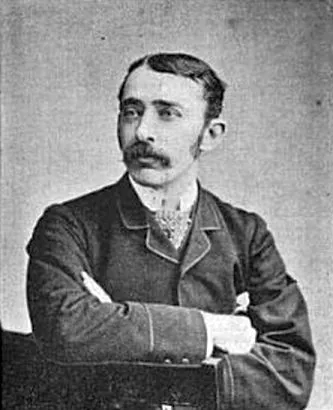
John Ambrose Fleming Wikimedia Commons / John Ambrose Fleming
Pictured John Ambrose Fleming

The professor who taught a light bulb to listen

On November 16, 1904, the English engineer John Ambrose Fleming patented a two-element glass tube he called a thermionic valve. He was born in Lancaster in 1849 and was by then a professor at University College London and a scientific adviser to Marconi's wireless company. Radio signals arrive as rapidly alternating current, and the detectors of the day were fragile and unreliable.

Fleming had seen an effect Thomas Edison noticed in light bulbs in the 1880s: current flows one way from a hot filament to a metal plate. Fleming realized that this one-way gate could turn alternating radio signals into the direct current a detector needs. His valve, the first vacuum tube, became the beginning of electronics, and it sat inside radios for decades before transistors replaced it.

Fleming kept working and teaching long after that. He was knighted in 1929 and died in 1945 at the age of 95. The glowing tube that listened for radio waves was invented on a day like today by a man who noticed an old light-bulb quirk could do something useful.

Today’s complete edition

The discoveries, in full

Read the evidence, what it changes, and the reporting behind each of today’s 7 discoveries.

01/07 Natural Sci.

Stem cells given a "return address" cut fractures in women with severe osteoporosis

Stem cells infused into the bloodstream have a bad habit of going everywhere except the bone marrow. A first-in-human trial in Cell fixed that by coating each patient's own mesenchymal stem cells in a special sugar that works as a return address for bone marrow 29.

a doctor talking with an older woman patient
Pictured a doctor talking with an older woman patient · AnonymousUnknown author (Wikimedia Commons)

Ten women over 50 with advanced osteoporosis each got a single infusion. Over the next two years, fractures across the group fell from an average of eight per year to 0.5 per year, a 94 percent sustained decrease 29. Four months in, bone biopsies showed the area occupied by bone tissue was up about 70 percent, and markers of bone formation stayed elevated for half a year 29. Two years out, patients reported 34 percent less bone pain and 30 percent lower disability scores 29.

02/07 Natural Sci.

The first picture of a black hole passes an independent audit

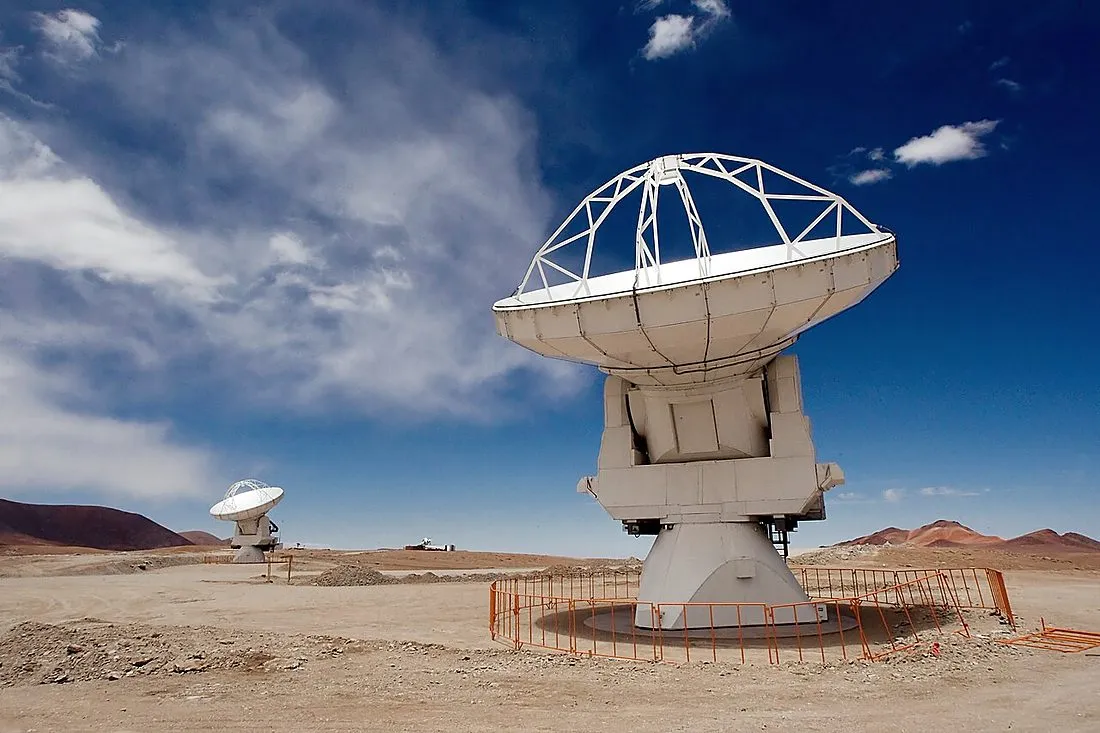
The 2019 image of the black hole in galaxy M87, 55 million light-years away, took an Earth-sized virtual telescope stitched together from radio dishes around the globe.

Atacama Large Millimeter/submillimeter Array
Pictured Atacama Large Millimeter/submillimeter Array · Wikimedia Commons / Atacama Large Millimeter Array

Photographing it is like photographing a doughnut on the moon from Earth 21. Four imaging teams worked on the original, and all produced a ring, but the fine details differed, and one study challenged whether the source was a ring at all 21. A new analysis in Nature went back to the original data with a different method called closure invariants. The standard approach combines telescope measurements in pairs, and the new one combines them in triplets, which cancels out errors from the atmosphere and from each instrument 21. The authors report that the results validate the original work and add a fresh perspective on the ring's structure 21.

03/07 Natural Sci.

A dead star spinning every 8 minutes has a Sun-like partner

Long-period radio transients are bright radio flashes that repeat every few minutes to every few hours. Only about a dozen are known, and the sources astronomers could identify were all white dwarfs paired with small, cool red dwarfs 423.

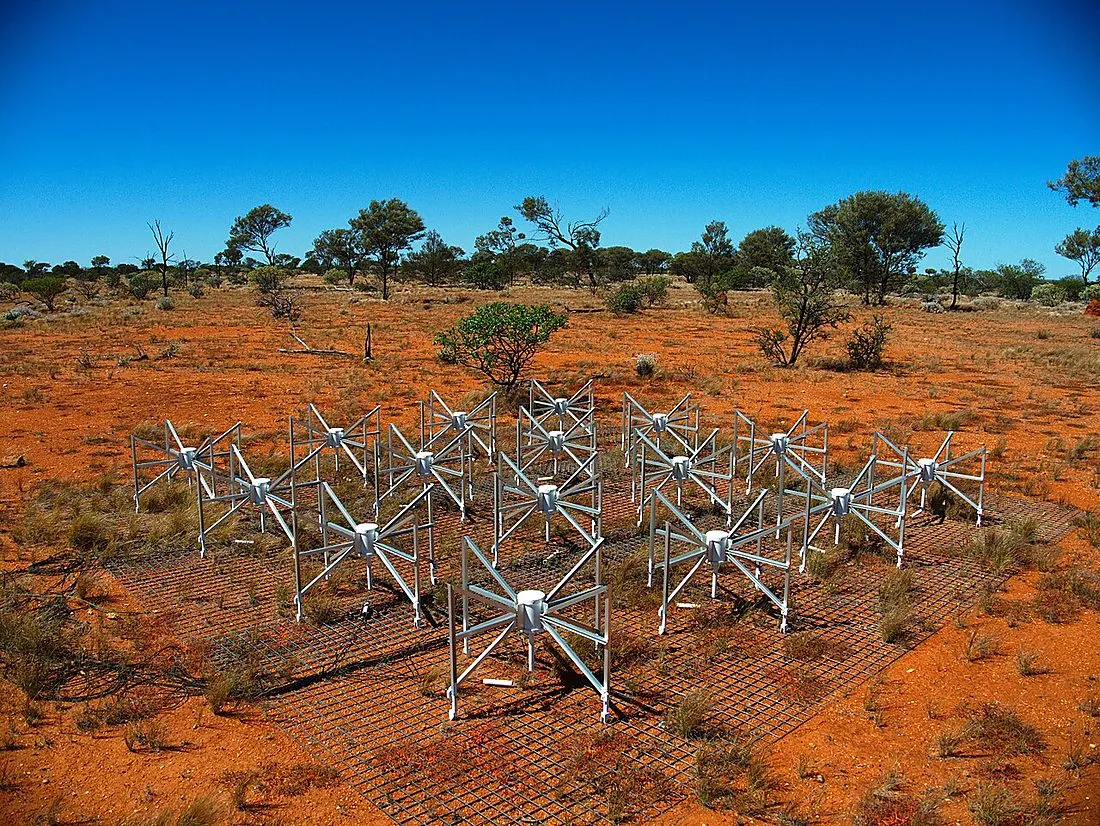
Murchison Widefield Array
Pictured Murchison Widefield Array · Wikimedia Commons / Murchison Widefield Array

In late 2024, a team searching with the Murchison Widefield Array in Western Australia caught flashes arriving every 7.9 minutes, then lost them for weeks 23. Plotting every detection and non-detection together showed the pulses appear for a window of about six hours, then vanish for 26 23. That fits two stars orbiting each other every 32 hours. MeerKAT in South Africa pinned the source to a single faint star, and a Keck spectrum showed it was a G-type star of nearly the Sun's mass and temperature 23. The system, GPM J071507−114153, sits more than 5,000 light-years away 4. The pulses arrive up to 4 seconds early or late as the source swings around its orbit, which is how the team knows a white dwarf is involved 23.

04/07 Psychology

A giant Alzheimer's gene hunt finds 127 risk regions, 48 of them new

An international genetic study in Nature scanned data from more than 2.8 million people and identified 127 regions of DNA associated with Alzheimer's disease, 48 of them for the first time 43.

an older woman reading a book by a window
Pictured an older woman reading a book by a window · Shixart1985 (Wikimedia Commons)

Common inherited variants account for nearly three times as much of the population variation in risk as earlier estimates suggested 43. Earlier maps, from a 2021 study of 1.1 million people and a 2022 study of nearly 790,000, had brought the total to roughly 80 regions, and some modeling had argued gene discovery was nearly finished 43. The new results link genetic susceptibility to heightened gene activity in the brain's immune cells and dampened gene activity in nerve cells 43.

05/07 Natural Sci.

The Danish hunter-gatherer who ate like a farmer

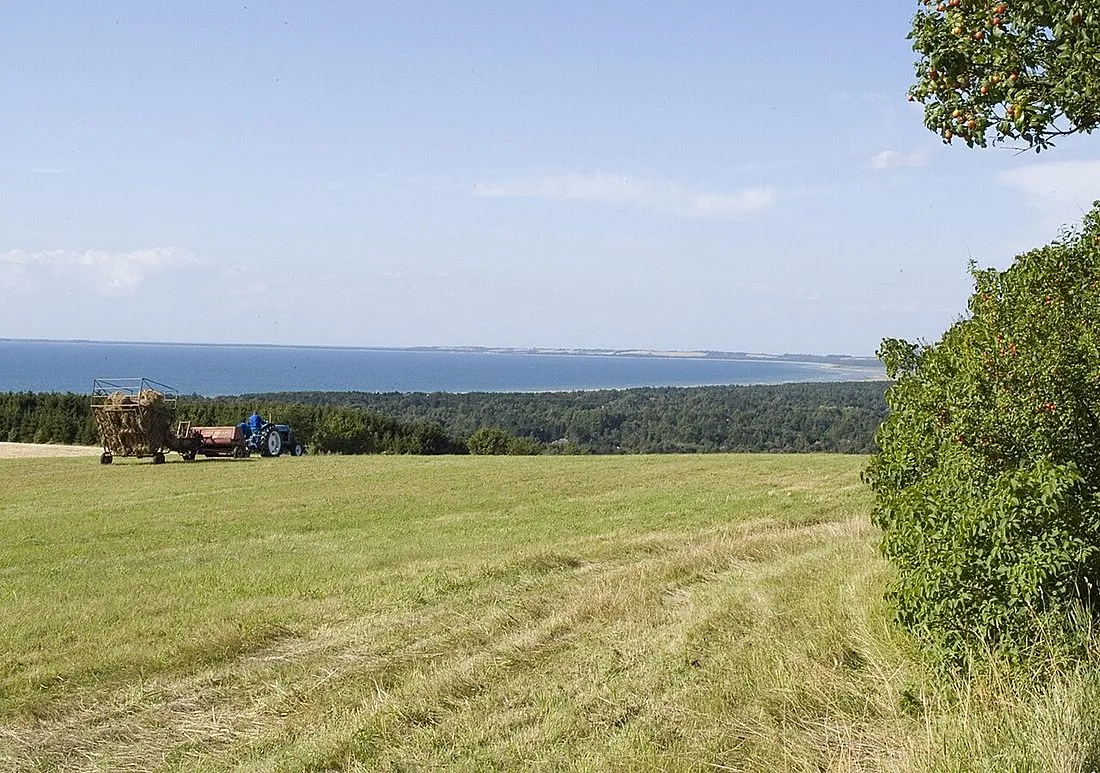
Rødhals Man was buried in a shell midden on the Danish island of Sejerø, some time between 3800 and 3900 BC, near the start of the Neolithic in the area 12. His genetic ancestry matched the local Mesolithic hunter-gatherers of the Ertebølle culture, yet a 1981 study had him eating mainly seafood 12.

Sejerø island, Denmark
Pictured Sejerø island, Denmark · Odsherred Kommune (Wikimedia Commons)

"There was something wrong and it is always when things don't fit that you may be on the track of something important," says Anders Fischer 12. The team measured isotopes of carbon, nitrogen and sulphur in several bones that renew at different rates, plus a tooth that records childhood diet 12. For most of his life his main food came from animals in the shallow eelgrass forests, like molluscs, flatfish or eels. From about age 11, his diet shifted toward terrestrial, probably farmed, protein, unlike any Mesolithic hunter-gatherer recorded so far 12. His grave had a stone frame and lacked ochre staining, both closer to early farmers' burials 12.

06/07 Social Sci.

A phonics push once written off as a failure shows up in adult paychecks

Fewer than one in three US fourth graders read at a proficient level 79. Reading First was a federal program that spent nearly $1 billion a year promoting phonics-based instruction in K-3 classrooms under No Child Left Behind, then was abandoned over concerns it did not work 79.

a first grader reading with a teacher
Pictured a first grader reading with a teacher · U.S. Navy photo by Journalist 3rd Class Matthew R. Schwarz (Wikimedia Commons)

Researchers used Texas administrative data and the program's eligibility formulas to look again. Eligibility raised third-grade reading scores by 0.1 standard deviations, and the gains persisted through at least eighth grade 79. Students did better on exam questions that needed basic decoding, and math scores improved too 79. Following the cohorts into early adulthood, the program increased on-time high school graduation, college enrollment, four-year college completion, and earnings at age 25 79.

07/07 Good News

A wrist device that cut tics by a quarter in a UK trial

In a 2023 UK trial of 121 people, a prototype wrist device reduced tic frequency by an average of 25 percent 134. The device, called Neupulse, came out of research at the University of Nottingham 134.

a teenage girl smiling
Pictured a teenage girl smiling · Candace McDaniel (via stocksnap)

It sends rhythmic electrical pulses into the median nerve in the wrist, and trials show this changes activity in the brain regions that control movement and can lower both frequency and intensity of tics 134. Nottingham professor Stephen Jackson calls the response from users "a dream come true," and some of the feedback is concrete: people got through wedding vows without ticking, or moved through an airport and boarded a flight 134. Katie, a 15-year-old from Hertfordshire whose vocal tics began at age seven, said the effect was immediate and she became "really calm" 134. The university and its spin-out company, Neurotherapeutics Ltd, secured £1 million in additional funding to bring it to market 134.

Quick notes

Shorter discoveries from this morning, worth knowing but not a full story.

A High-Dose Flu Vaccine Is Linked to Nearly 55% Lower Alzheimer's Risk In nearly 165,000 adults 65 and older, a high-dose flu shot was tied to up to 22 percent lower Alzheimer's risk over two years than a standard dose 28. It cannot prove cause and effect, and one author said he did not know the higher dose existed until public health officials asked him about it 28. ScienceAlert
A common osteoporosis drug blocked spinal damage in a surprising new study An existing osteoporosis drug stopped abnormal mineral buildup in the spines of zebrafish bred without a collagen IX gene, a hint at why back discs wear out 5. It has not been tested in humans, and no drug now stops disc degeneration 5. ScienceDaily
A simple supplement could help your immune system fight cancer and viral infections In mice, more dietary arginine reduced colon cancer tumors and eased flu and SARS-CoV-2 infection, and giving it after flu infection also helped 6. Whether it works in people is not yet known 6. ScienceDaily
NASA's Voyager 1 mission forever changed our view of Jupiter Voyager 1 reaches one light-day from Earth on Nov. 18, and one of its 1979 finds was Jupiter's thin, faint ring system, seen only because the planet was backlit 9. Ground telescopes confirmed it soon after, and we now know all four outer planets have rings 9. Live Science
Uranus and Neptune’s bizarre magnetic fields may finally be explained Uranus's magnetic axis is tilted 59 degrees and Neptune's 47, against 11 for Earth, and new simulations tie the oddness to how interior materials conduct electricity under extreme conditions 3. The models suggest the poles could shift by tens of degrees within a few decades 3. ScienceDaily
World-First Bone Marrow Transplant Successfully Treats Non-Malignant Disease A 40-year-old woman with a decade of aplastic anemia received marrow from a deceased organ donor, and six months later she needs no transfusions and her blood is made entirely by donor cells 124. It is one patient, but it adds a donor source for conditions that now lean on living donors 124. Good News Network
'Zero-emission' aluminum production switches up the chemical equation Smelting aluminum releases about 1.5 kg of CO2 per kilogram of metal from the chemistry alone, which renewable power cannot fix, and Hydro's HalZero process just produced aluminum for the first time with a different reaction 107. It is a demonstration, and the company says the process could eliminate direct emissions 107. New Atlas
Coffeehouses and the Scientific Revolution After a parish in 17th-century London got its first coffeehouse, applied scientists and instrument shops increased, and a calibrated model puts coffeehouses behind 31 percent of London's applied scientists in the half century after the first opened in 1652 62. The effect was strongest among scientists with weak family ties to Oxford and Cambridge 62. Marginal REVOLUTION
Korean magnetic textile cools train tracks to thwart disaster A magnetically mounted fiberglass textile blocks more than 85 percent of solar heat and lowered rail temperatures by up to 10.9 °C in Korean tests, with two technicians laying 2 km an hour 104. The designers say it lasts up to 10 years 104. New Atlas
World’s largest fresh water Lake sees sharpest flow rebound in 343 years A tree-ring reconstruction shows streamflow into Lake Baikal's basin recovered to 145.2 percent of its long-term average starting around 2017, the strongest rebound in 343 years of record 103. The team ties it to a regional slowdown in Arctic warming 103. Interesting Engineering
The Health Effects of Eating Red Meat: A Natural Experiment in Alpha-Gal Syndrome Patients diagnosed with the tick-borne meat allergy lost a sustained 0.8 kg compared with patients with other tick-borne diseases, along with small drops in triglycerides, glucose, HbA1c and LDL cholesterol 86. The authors call the benefits modest but measurable 86. National Bureau of Economic Research Working Papers
Thailand’s Deevana Hotels & Resorts to Make 45% of Proteins Plant-Based by 2030 A five-hotel chain in Phuket and Krabi pledged a 45:55 plant-to-animal split in the weight of protein it buys by 2030, and it plans to get there by adding dishes with tofu, legumes and mushrooms, not removing meat 112. Green Queen
Beavers were brought to the desert to save a dying river. 6 years later, here are the results. Since 2019, Utah State University researchers have moved displaced beavers onto the Price River, and not all stayed or survived, but enough built dams that the article reports healthier water levels and thriving fish 143. Upworthy

Our process. Your trust.

Every discovery above traces back to an article we read in full. This is the whole corpus behind this morning, and what it was made of.

  • 28 Sources scanned
  • 150 Articles read
  • 8 Fields covered
  • 7 Discoveries

The sources that carried this morning

  1. 1 National Bureau of Economic Research Working Papers 20 articles
  2. 2 Psychology Today: The Latest 17 articles
  3. 3 Phys.org 13 articles
  4. 4 Interesting Engineering 10 articles
  5. 5 Upworthy 10 articles
  6. 6 PsyPost Psychology News 9 articles
  7. 7 ScienceAlert 7 articles
  8. 8 New Atlas 7 articles
How an edition is made

Everything we read today

Natural Sciences 33 articles
Life Sciences & Medicine 2 articles
Psychology & Behavioral Science 26 articles
Social Sciences 27 articles
National Bureau of Economic Research Working Papers
Technology & Innovation 22 articles
Plant-Based & Vegan 11 articles
Solutions & Good News 24 articles
Human Stories & Ideas 5 articles
The long view · not today’s news, the story behind it

Today’s discoveries didn’t come from nowhere. Here’s the older, ongoing story they belong to, a moment from this day in history, and a question to test what stuck.

Where the story stands

On this day in science

1974 Humanity sends a message to the stars Astronomers at the Arecibo telescope in Puerto Rico beamed a coded radio message toward a distant cluster of stars, sketching our numbers, our chemistry, and our place around the Sun. More a demonstration than a real attempt at contact, it showed we had learned to call across the galaxy. More from the Almanac →

Before you go: today’s quiz

The daily quiz

A treatment made of just water, salt and sugar has saved tens of millions of children. What is it?

Reveal the answer

Oral rehydration therapy

Oral rehydration therapy treats the dehydration caused by diarrhoea. The glucose lets the gut absorb water and salt even during severe illness. It may have saved more than 70 million children.

See the Lifesaver →

Previous editions

Every morning we have published, newest first. Nothing expires.

View the full archive

Get this every morning.

Liked today’s? Tomorrow’s reaches your inbox before breakfast.

  • One email each morning, never more
  • The day’s real discoveries across 8 fields
  • One calm read with your coffee

Free from tomorrow morning, for good.

Same letter. Your $5 a month keeps it free for everyone else.

Any amount, charged once.