


The daily brief · November 15, 2026

Alzheimer's may leave clues a decade early, and Starship gets caught

Today's best finds are about getting there early: brain changes a decade before the memory slips, and quasars from the universe's first 670 million years.

  • 7 Discoveries
  • 114 Articles read
  • 23 Sources
  • 11 Min read

Today’s discoveries

Everything this morning found, in the order we would read it.

7 stories
  1. 01 Natural Sci. Alzheimer's may announce itself years before the first lost keys Two teams came at the same problem from different sides this week. Source: ScienceDaily 2 min read
  2. 02 Natural Sci. Euclid finds baby-universe quasars that outshine a trillion Suns ESA's Euclid telescope has turned up 31 quasars from the early universe, including two that set the record for the earliest ever seen. Source: ScienceDaily 1 min read
  3. 03 Natural Sci. SpaceX catches a Starship that has been to orbit On Saturday, November 14, Ship 42, the 171-foot upper stage of Starship, came back from orbit and settled between the two arms of the launch tower at Starbase, Texas. Source: Universe Today 1 min read
  4. 04 Natural Sci. A heart-scan pattern flags people doctors would have waved through More than 300,000 people in the United States die of sudden cardiac arrest each year, and doctors have struggled to say which patients most need an implanted defibrillator. Source: ScienceDaily 1 min read
  5. 05 Psychology One patient's amygdala points to a cause of PTSD's threat bias A man with drug-resistant epilepsy and severe PTSD had part of his right amygdala selectively inactivated in an awake, bedside procedure. Source: PsyPost 1 min read
  6. 06 Good News Two Marshall Islands atolls become the country's first national marine sanctuary Bikar and Bokak are the northernmost atolls in the Marshall Islands, about 72 and 239 miles from the nearest inhabited atoll. Source: Good News Network 1 min read
  7. 07 Natural Sci. Exercise after ACL surgery helped, and did not hurt the cartilage In the SUPER-Knee trial at La Trobe University, 184 adults aged 18 to 40 were still struggling with their knees one to three years after ACL reconstruction. Source: ScienceDaily 1 min read

The feel-good story of the day

a man mowing a lawn thegetty (via rawpixel)
Pictured a man mowing a lawn

He lost his job and started mowing lawns for free. Now 2,100 volunteers mow with him.

When Brian Schwartz was laid off in 2020, he was a new father caring for a sick parent, in the middle of the pandemic 104. He noticed that some elderly neighbors needed help with their yards, and mowing was a safe, socially distanced way to offer it 104. He called the idea I Want to Mow Your Lawn 104.

It has grown into a network of 2,100 volunteers in every state, with more than 3,100 free visits so far 104. Volunteers get alerts about nearby requests and can call or text homeowners without sharing their personal numbers, and groups can organize a service day 104. A third of requests come in by phone, at 862-66-MOWER, because many of the people who need the help are not online 104. More than 100 case managers and social workers have referred people 104.

Schwartz points out that an overgrown yard can be a trip hazard for an older person, so the work is about safety as well as looks 104. Two AARP Community Challenge grants this year are helping the group make homes and streets safer for older residents 104. Each visit is a one-time offer, not a promise of ongoing service 104.

Today’s complete edition

The discoveries, in full

Read the evidence, what it changes, and the reporting behind each of today’s 7 discoveries.

01/07 Natural Sci.

Alzheimer's may announce itself years before the first lost keys

Two teams came at the same problem from different sides this week. At Johns Hopkins, researchers studied hundreds of brain scans and found that the entorhinal cortex and the amygdala begin losing tissue before the hippocampus does, even though the hippocampus is the region doctors usually check first 1.

Alzheimer's may announce itself years before the first lost keys
Unknown (via rawpixel)

The shrinkage tracked with abnormal tau protein buildup. Senior author Michael Miller put the window at "at least a 5-to-10-year play where your brain is changing" 1. The work is in NeuroImage Reports and was presented at the Society for Neuroscience meeting 1. At Stanford Medicine, the starting point was two groups at opposite ends of aging: 110 people with Alzheimer's and 180 adults over 75 whose memories beat the typical middle-aged score, the so-called SuperAgers 22. Resting-state fMRI scans showed which brain connections separated them, and the team boiled that into a single number, the ARC score 22. On 143 scans from people already in one group or the other, it sorted about 71 percent correctly 22. Then came the real test: ARC scores from 1,315 adults with no cognitive impairment, followed for mostly five to six years and up to 12 22. People whose scans looked more Alzheimer's-like declined faster and were more likely to develop Alzheimer's or mild cognitive impairment 22. The score predicted decline better than demographics, genetic risk, and amyloid and tau biomarkers 10.

02/07 Natural Sci.

Euclid finds baby-universe quasars that outshine a trillion Suns

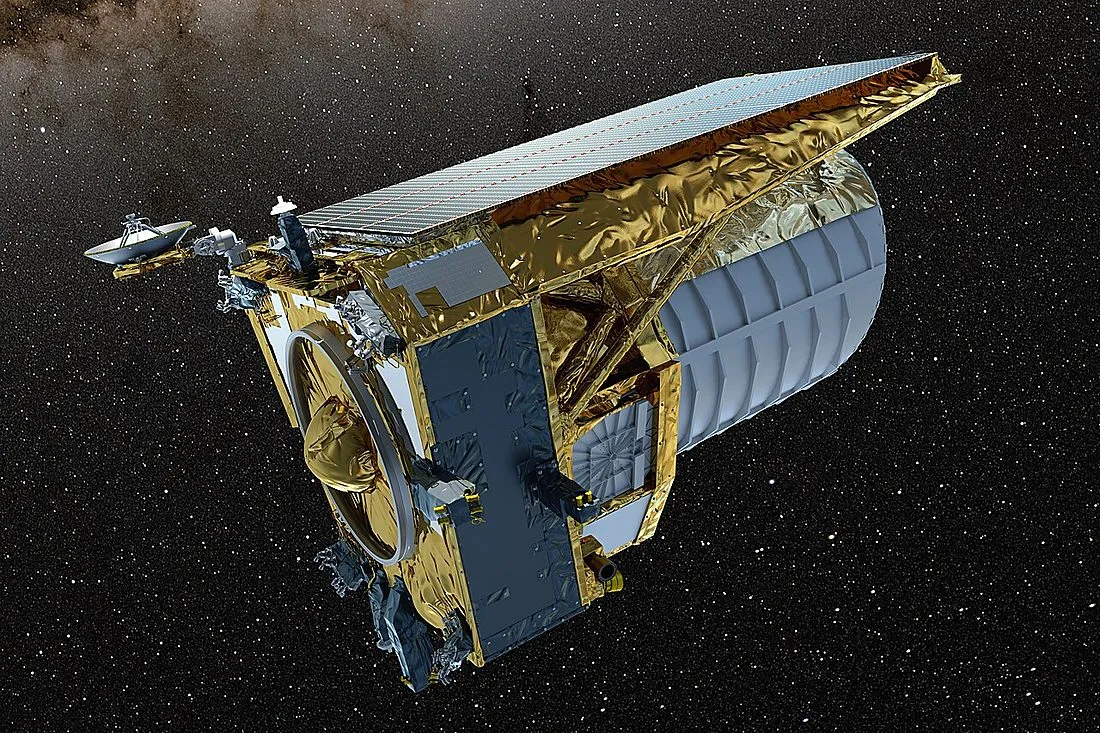
ESA's Euclid telescope has turned up 31 quasars from the early universe, including two that set the record for the earliest ever seen 3. Each was radiating as much light as a trillion Suns when the universe was 670 million years old, about 5 percent of its present age 3.

Euclid space telescope
Pictured Euclid space telescope · European Space Agency (Wikimedia Commons)

A quasar is a galaxy's core lit up by gas spiraling into a supermassive black hole, bright enough to outshine the rest of the galaxy hundreds or thousands of times over 3. They are hard to find: few galaxies had grown big enough to host one, the light is faint, and the sources are easy to mistake for much closer stars 3.

03/07 Natural Sci. Technology

SpaceX catches a Starship that has been to orbit

On Saturday, November 14, Ship 42, the 171-foot upper stage of Starship, came back from orbit and settled between the two arms of the launch tower at Starbase, Texas 24.

Starship launch tower at Starbase, Texas
Pictured Starship launch tower at Starbase, Texas · Alexander Hatley (Wikimedia Commons)

It had left about 22 hours earlier, circled the Earth 14 times, and released 26 more Starlink satellites along the way 24. It was the 15th Starship test flight and the longest yet 24. The arms had caught Super Heavy boosters three times before, but never a ship coming back from orbit 24. The day before, the booster's own catch was called off after a fuel-system alarm, and it splashed down in the Gulf 2462.

What each field noticed (2)
Ars Technica

SpaceX returned its Starship rocket on Saturday—but there's a catch

The Ars reporter, watching from Starbase, stressed how little room there was: two nubs on either side of the ship, each sticking out about a foot, were the only thing the arms had to grip 49. The ship flew horizontally through the clouds, then swung upright on its engines at the last moment 49. Interesting Engineering added the speed, about 17,000 mph before drag slowed it, and the reason a ship is harder than a booster: it goes farther and faster and has to survive orbital reentry heating 62.

Read the story
04/07 Natural Sci.

A heart-scan pattern flags people doctors would have waved through

More than 300,000 people in the United States die of sudden cardiac arrest each year, and doctors have struggled to say which patients most need an implanted defibrillator 7.

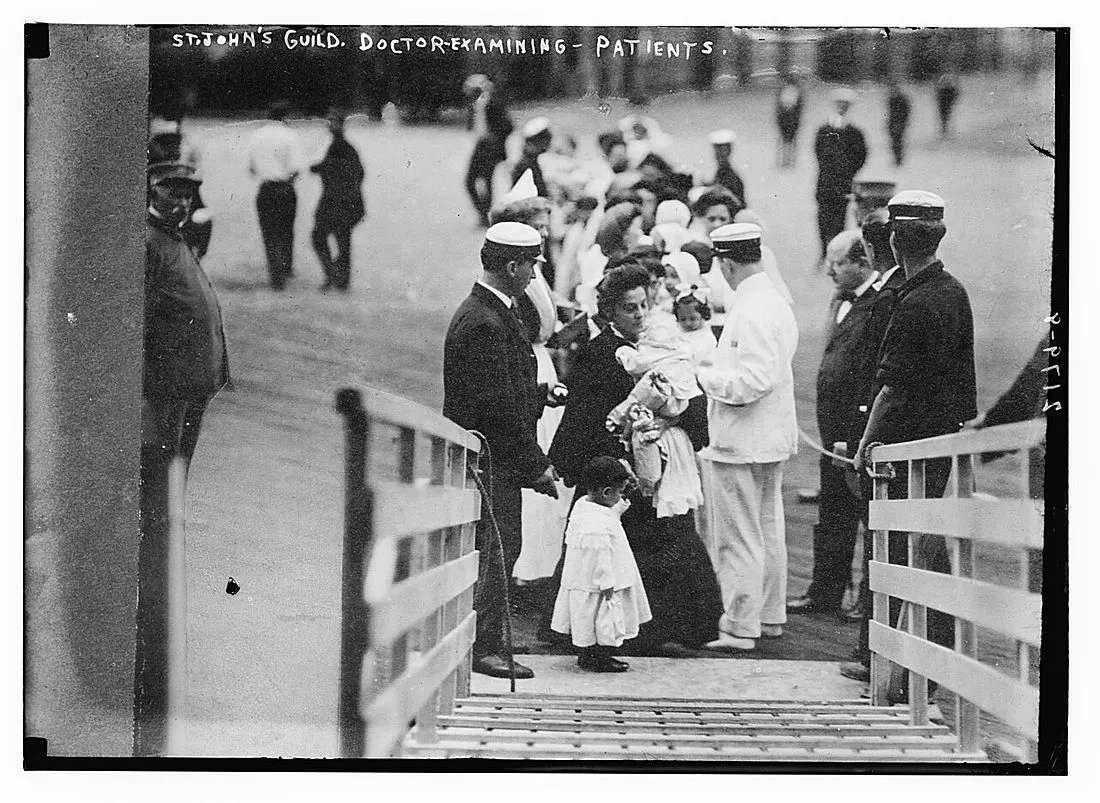
a doctor examining an older patient
Pictured a doctor examining an older patient · Bain News Service, publisher (Wikimedia Commons)

UC Berkeley researchers trained an AI on more than 440,000 electrocardiograms from Sweden, matched to death certificates, so it could learn the difference between healthy people, people with known heart risks, and people who later died of sudden cardiac causes 7. They then tested it on thousands of records from the United States and Taiwan 7. The usual screen, which looks at how much blood the heart pumps per beat, picks out a group with a 4.6 percent annual sudden-death rate 7. The AI picked out a group at 7 percent 7.

05/07 Psychology

One patient's amygdala points to a cause of PTSD's threat bias

A man with drug-resistant epilepsy and severe PTSD had part of his right amygdala selectively inactivated in an awake, bedside procedure 28. Afterward he was less likely to see ambiguous faces as fearful, and his trauma symptoms dropped sharply 28.

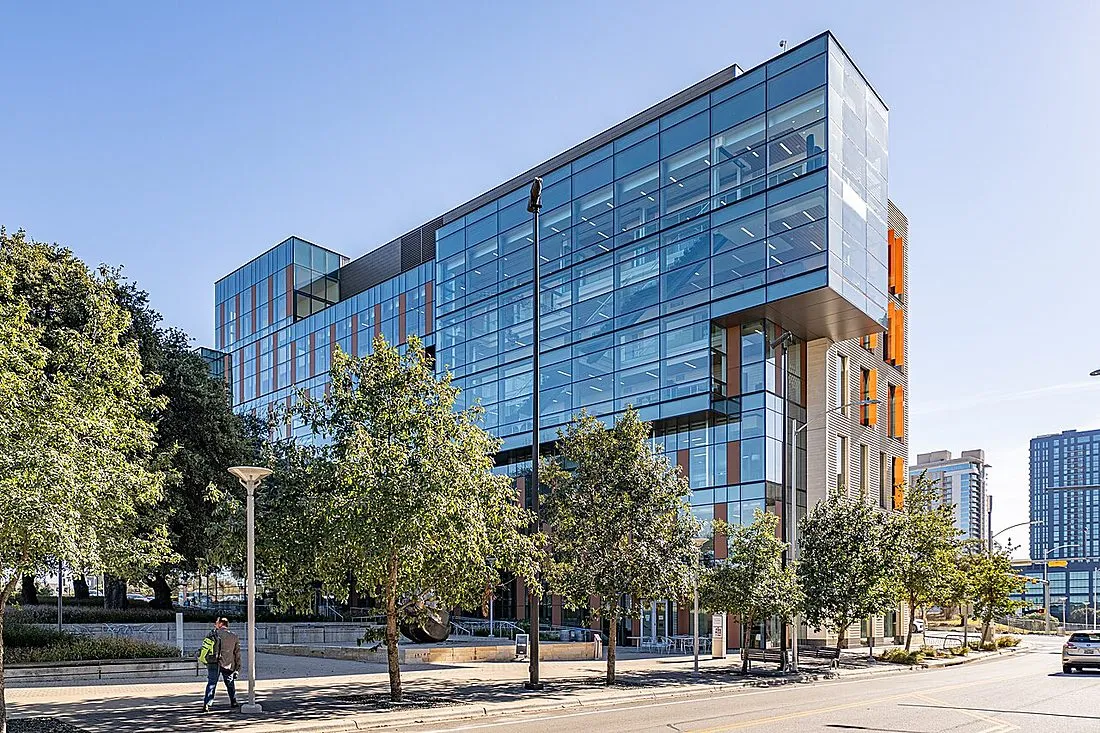
Dell Medical School, University of Texas at Austin
Pictured Dell Medical School, University of Texas at Austin · Wikimedia Commons / Dell Medical School

The study, in Nature Communications, tracked his brain signals and his emotion perception before and immediately after the procedure 28. Brain scans have long shown a hyperactive amygdala in PTSD, but scans only capture correlation, so it has been unclear whether the activity drives the threat bias or merely rides along with it 28.

06/07 Good News

Two Marshall Islands atolls become the country's first national marine sanctuary

Bikar and Bokak are the northernmost atolls in the Marshall Islands, about 72 and 239 miles from the nearest inhabited atoll 91. Starting in 2023, researchers surveyed them by scuba, underwater video, deep-sea cameras, and a submarine 91.

Bikar Atoll, Marshall Islands
Pictured Bikar Atoll, Marshall Islands · Image courtesy of the Image Science & Analysis Laborator (Wikimedia Commons)

They counted over a dozen breeding seabird colonies, 266 groups of reef fish, 79 groups of deep-sea fishes, and 15 groups of open-water predators including sharks, jacks, and wahoo 91. Fourteen of the groups had never been recorded in the Marshall Islands, and two might be new to science 91. About 18,500 square miles around the atolls are now the country's first national marine sanctuary 91.

07/07 Natural Sci.

Exercise after ACL surgery helped, and did not hurt the cartilage

In the SUPER-Knee trial at La Trobe University, 184 adults aged 18 to 40 were still struggling with their knees one to three years after ACL reconstruction 12. Half got a four-month progressive exercise program supervised by a physical therapist, and half got one education session 12.

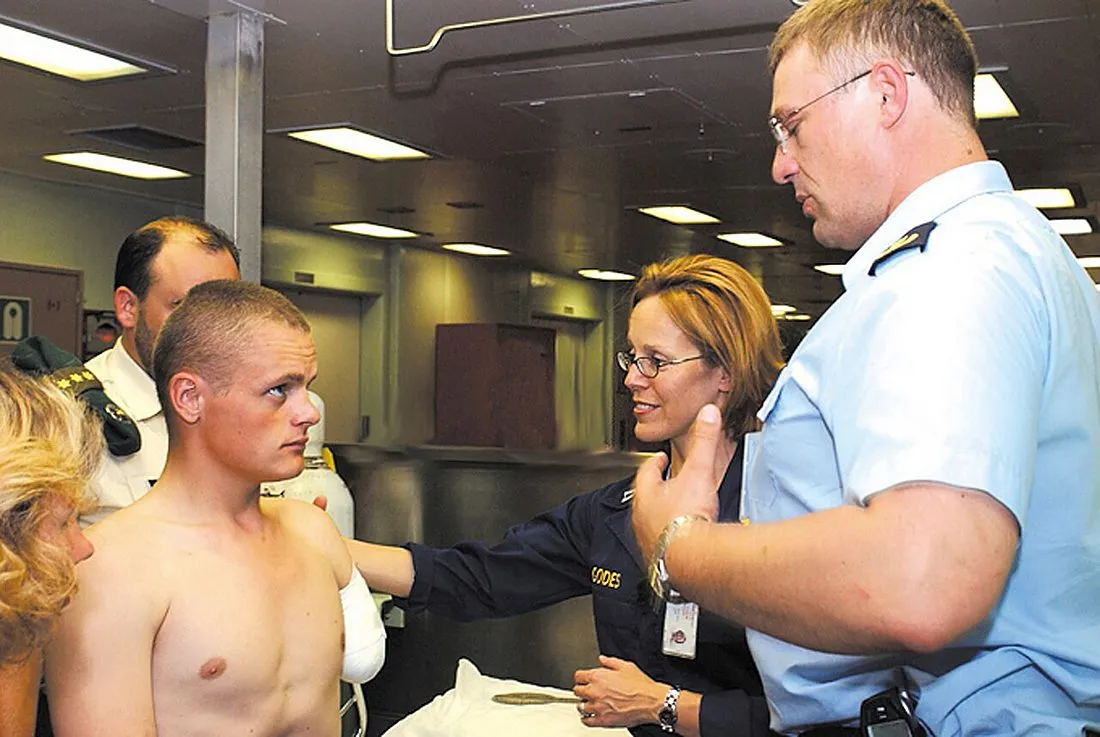
a physical therapist helping a patient with knee exercises
Pictured a physical therapist helping a patient with knee exercises · U.S. Navy photo by Hospital Corpsman 2nd Class Kate Castillo (Wikimedia Commons)

The exercise group had less pain, stronger muscles, and a better quality of life, with no evidence that the exercise damaged cartilage or worsened early osteoarthritis 12. It was published in Annals of Internal Medicine 12.

Quick notes

Shorter discoveries from this morning, worth knowing but not a full story.

A giant icy world hiding beyond Pluto could be our sixth dwarf planet Astronomer Matthew Holman found 2026 ED138, roughly 1,000 kilometers across, in Rubin Observatory data on October 13, and Mario Jurić called it the largest trans-Neptunian object found in about 20 years, turned up while the telescope was still being commissioned 9. ScienceDaily
A Robot Just Built a Structure in Space All on Its Own – For The First Time Ever Caltech's ASTRA robot assembled one 1.4-meter bay of an antenna reflector from composite tubes and aluminum joints with no astronauts involved, a proof of concept for building things too big to fold into a rocket 15. ScienceAlert
Dinosaurs may have been eating seaweed 100 million years ago Carbon isotopes in the teeth of coastal Cretaceous dinosaurs, crocodiles, turtles, and fish point to food from the sea, which explains unusually high readings that land plants alone could not 4. ScienceDaily
Scientists Issue 'Words of Warning' After Strange Discovery in Danish Skeletons Six of 27 medieval skeletons looked older than the monasteries they were buried in, and a fish-heavy diet is the likely reason, because water carries older carbon; one Svendborg skeleton dated to 1100-1155 CE in a monastery built in 1236 20. ScienceAlert
James Webb telescope finds ice older than the star it orbits Webb found water and carbon dioxide ice around young Beta Pictoris, mixed in about the same proportions as in our Solar System's comets, which hints that water-rich worlds may be common around young stars 50. Ars Technica
Scientists discover a bizarre paradox among endangered penguins The first full drone census of Erect-crested penguins found about 27,800 breeding pairs on the 50-hectare Bounty Islands, stable for 25 years, while the Antipodes, with about 29,800 pairs, are down more than 40 percent since 1995 6. ScienceDaily
Scientists Invented an Electric Comb, And Tests in Mice Show It Promotes Rapid Hair Growth In mice, the electric comb alone took regrowth from about 1 percent to about 40 percent over 28 days, and adding experimental genetic therapies pushed it higher, though humans have not been tested 19. ScienceAlert
The First Foreign Astronaut Will Visit China's Tiangong Space Station in Two Weeks Shenzhou 24 is set to launch November 25 with a Pakistani payload specialist, the first foreigner aboard Tiangong, after a selection process that ended in April 2026 23. Universe Today
With Phones & Measuring Tapes, Pune Residents Are Building a Map to Protect the City's Trees When a road-widening plan threatened 529 trees on Ganeshkhind Road, volunteers from Pune River Revival documented more than 500 of them within a month using the iNaturalist app 96. The Better India
Couple with Autism and ADHD Find Passion Cleaning Filthy Street Signs Paul and Ruth Richmond-Watson in Brighton now clean at least one road sign a day, 20 to 25 minutes each with a backpack pump and a long-handled brush, because the grime made them unreadable at night 90. Good News Network
Heroic Bravery of Woman who Hid Troops from Nazis in WWII Revealed in Diaries 40 Years After her Death Ada Le Poidevin hid three British soldiers in her garden shed on occupied Guernsey with German troops next door, and her niece Liz Walton pieced the story together from diaries and photographs 92. Good News Network
Winemakers are learning that conservation can be good for business Researchers who analyzed 107 vineyards in South Africa's Western Cape, about 20 percent of the total, found many growers treat soil and habitat conservation as a business strategy against drought and heat 51. Ars Technica
A middle school teacher used students breaking their pencils to teach a brilliant lesson about respect After her students went through 2,000 pencils in four months, teacher Jess gave each one an engraved pencil a month, and students started taking care of them and helping each other 108. Upworthy
Trump’s War on Iran is Pushing the Global South Toward Chinese Solar Panels in Record Numbers Nigeria's solar capacity added in 2026 already exceeds 2024 and 2025 combined, and one Lagos electronics bazaar now hosts over 200 solar shops where there were a handful in 2008 52. Futurism
Public Money Is Being Used To Buy Frankenchickens That UK Ministers Want Phased Out Norway announced plans in February to phase out fast-growing chicken breeds by 2027, Denmark has called for an EU-wide ban, and more than 120 UK constituents lobbied Parliament this week for the public sector to stop buying them 79. Plant Based News

Our process. Your trust.

Every discovery above traces back to an article we read in full. This is the whole corpus behind this morning, and what it was made of.

  • 23 Sources scanned
  • 114 Articles read
  • 7 Fields covered
  • 7 Discoveries

The sources that carried this morning

  1. 1 Latest Science News -- ScienceDaily 12 articles
  2. 2 Psychology Today: The Latest 12 articles
  3. 3 Interesting Engineering 10 articles
  4. 4 Upworthy 10 articles
  5. 5 ScienceAlert 8 articles
  6. 6 Futurism 8 articles
  7. 7 New Atlas 8 articles
  8. 8 VegNews.com 7 articles
How an edition is made

Everything we read today

Natural Sciences 24 articles
Psychology & Behavioral Science 18 articles
Social Sciences 6 articles
Technology & Innovation 30 articles
Plant-Based & Vegan 10 articles
Solutions & Good News 23 articles
Human Stories & Ideas 3 articles
The long view · not today’s news, the story behind it

Today’s discoveries didn’t come from nowhere. Here’s the older, ongoing story they belong to, a moment from this day in history, and a question to test what stuck.

Where the story stands

On this day in science

1738 William Herschel, who found a new planet, is born William Herschel was born in Hanover and later settled in England, where he ground his own mirrors and swept the night sky. In 1781 he discovered Uranus, the first planet found in recorded history, which doubled the known size of the solar system. More from the Almanac →

Before you go: today’s quiz

The daily quiz

Roughly how many lives did the WHO estimate vaccines saved over the past 50 years?

Reveal the answer

154 million

The figure is about 154 million lives from 1974 to 2024, the equivalent of six lives every minute, with about 101 million of them infants.

See the Lifesaver →

Previous editions

Every morning we have published, newest first. Nothing expires.

View the full archive

Get this every morning.

Liked today’s? Tomorrow’s reaches your inbox before breakfast.

  • One email each morning, never more
  • The day’s real discoveries across 8 fields
  • One calm read with your coffee

Free from tomorrow morning, for good.

Same letter. Your $5 a month keeps it free for everyone else.

Any amount, charged once.