


The daily brief · November 8, 2026

A 150-year rock mystery gets an answer; psilocybin rewires mouse brains

Old assumptions gave way today: Europe's primeval forest turns out to have been mostly meadow, and the missing layer in the rock record has an explanation.

  • 7 Discoveries
  • 123 Articles read
  • 26 Sources
  • 10 Min read

Today’s discoveries

Everything this morning found, in the order we would read it.

7 stories
  1. 01 Natural Sci. Two to three cups of coffee, and a dementia rate less than half as high A long-running study of U.S. Source: ScienceDaily 1 min read
  2. 02 Natural Sci. Psilocybin rewires the cortex, and the rewiring can be pulled apart from the trip A University of California, Santa Cruz team reported in Nature Neuroscience on October 15 that, in mice, psilocybin quickly pushes brain cells to form new connections and helps those… Source: ScienceDaily 1 min read
  3. 03 Natural Sci. Europe's ancient forest was mostly meadow A study led by Aarhus University, published in Biological Conservation, finds that open woodlands, grassy clearings, wildflower meadows and large grazing animals dominated Europe for… Source: ScienceDaily 1 min read
  4. 04 Plant-Based Denmark gives up its mink farms Denmark, once the world's largest producer of mink skins, is expected to join the EU ban on mink farming. Source: Plant Based News 1 min read
  5. 05 Human Stories The Great Unconformity finally has an explanation In the Grand Canyon you can touch two rocks hundreds of millions of years apart: a flat sedimentary layer about 540 million years old or younger sits directly on crystalline basement up… Source: Nautilus 1 min read
  6. 06 Natural Sci. Rubin Observatory finds two Milky Way companions in 7% of the sky Using preliminary observations that cover just 7% of the night sky, astronomers working with the Vera C. Source: ScienceDaily 1 min read
  7. 07 Good News A free app that reads a photo of a sick mango tree In Varanasi, Shiv Kumar Yadav's four-acre mango nursery was at risk after black patches and white fungal growth spread across his saplings and the leaves fell. Source: The Better India 1 min read

The feel-good story of the day

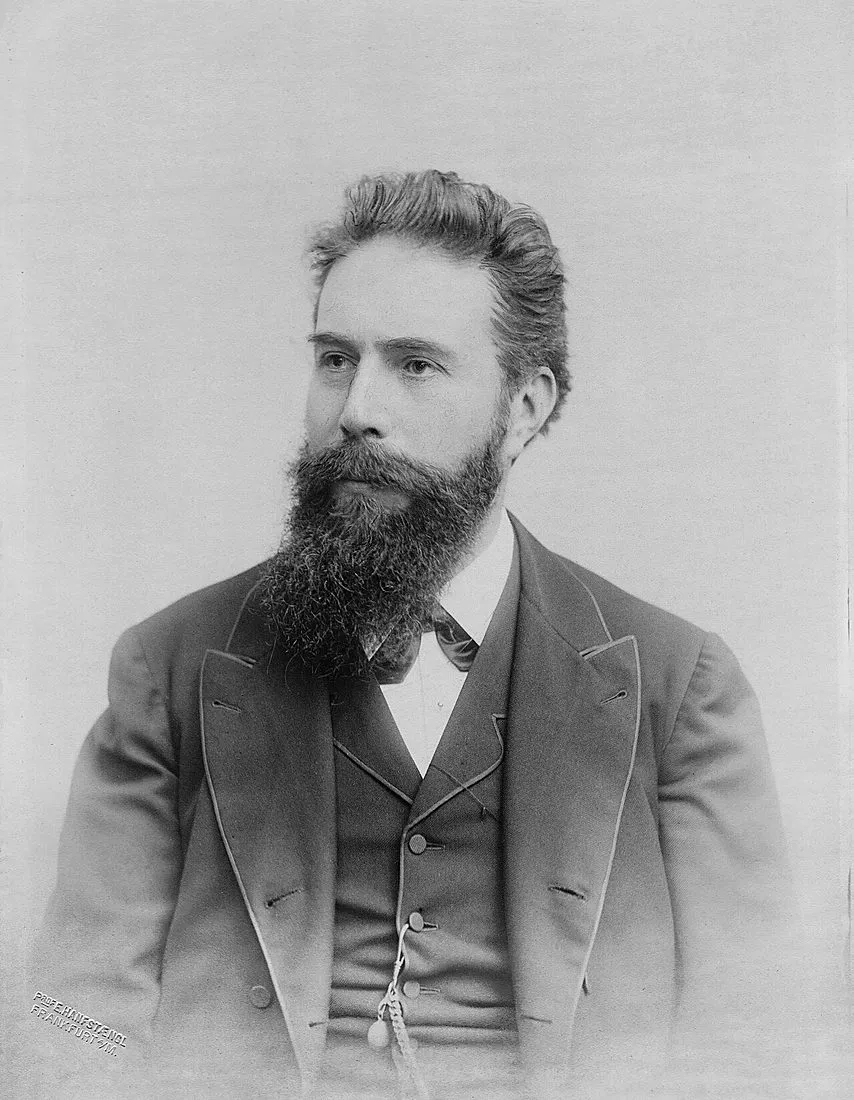
Wilhelm Röntgen Wikimedia Commons / Wilhelm Röntgen
Pictured Wilhelm Röntgen

The physicist who gave away the X-ray

On November 8, 1895, in Würzburg, Germany, the physicist Wilhelm Röntgen was working with a cathode-ray tube wrapped in black cardboard when he noticed a screen across the room glowing. Something was getting through the cardboard that nobody had a name for, so he called it X, for unknown. He spent the following weeks testing what it passed through and what it did not, mostly alone in his laboratory.

By late December he had made a photograph of the bones in his wife Bertha's hand, wedding ring and all. Within months, doctors were using the rays to find bullets and broken bones. Röntgen could have patented the technique. He chose not to, and wanted it free for anyone to use.

In 1901 he received the first Nobel Prize in Physics and passed the prize money to his university. Every fracture diagnosed since, and every dental X-ray, descends from one glowing screen and a researcher who decided the discovery belonged to everyone.

Today’s complete edition

The discoveries, in full

Read the evidence, what it changes, and the reporting behind each of today’s 7 discoveries.

01/07 Natural Sci.

Two to three cups of coffee, and a dementia rate less than half as high

A long-running study of U.S. adults, with follow-up of up to 43 years, found that people who drank the most caffeinated coffee developed dementia at 141 cases per 100,000 people a year 1.

a cup of coffee on a table
Pictured a cup of coffee on a table · WDnet Studio (via stocksnap)

Among people who rarely or never drank it, the rate was 330 1. The best numbers sat at two to three cups a day, and the pattern held regardless of genetic risk 1. Tea also tracked with better cognition, at a somewhat lower amount 1. Decaf did not show the same association 1.

02/07 Natural Sci.

Psilocybin rewires the cortex, and the rewiring can be pulled apart from the trip

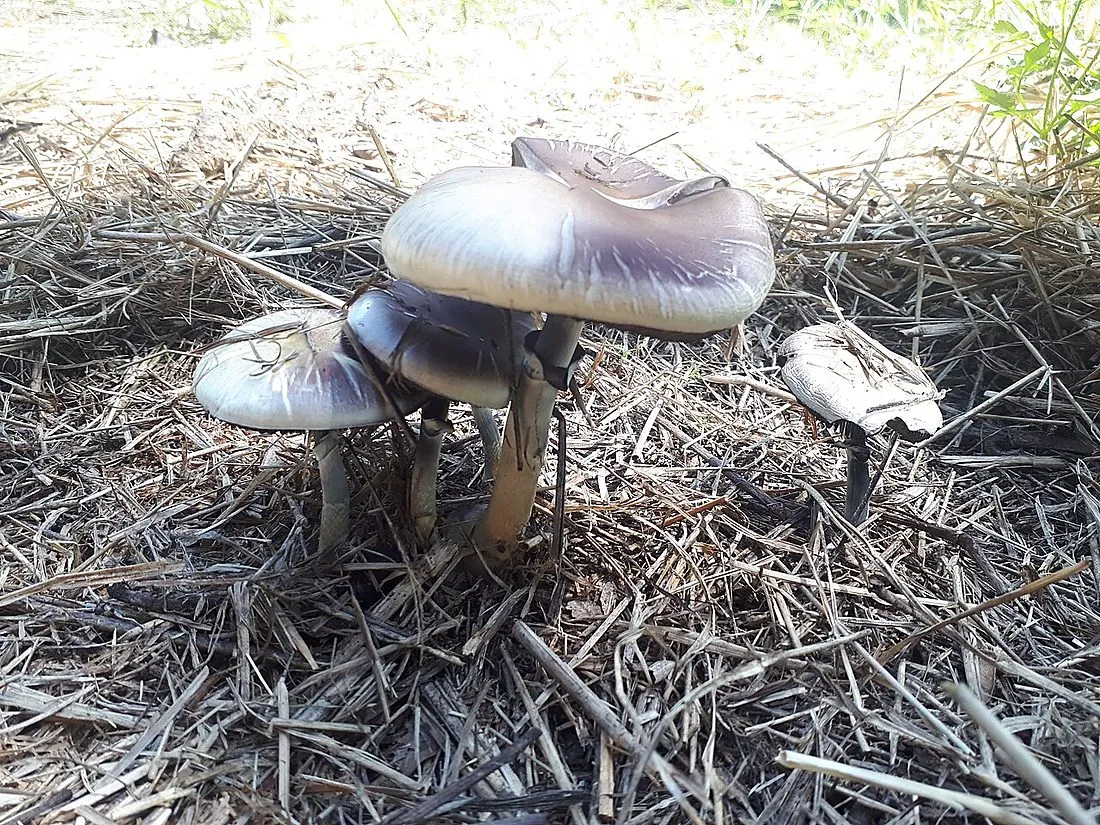
A University of California, Santa Cruz team reported in Nature Neuroscience on October 15 that, in mice, psilocybin quickly pushes brain cells to form new connections and helps those connections mature 3.

Psilocybe cubensis mushrooms
Pictured Psilocybe cubensis mushrooms · Robert van der Horst (Wikimedia Commons)

It also promotes the removal of certain older connections, so the drug is pruning as well as building 3. The effect depended on a particular group of neurons in the cerebral cortex, and it differed between healthy mice and chronically stressed ones 3. The detail with the most practical weight: the researchers could separate the cellular rewiring from a behavioral response commonly associated with psychedelic effects 3. Senior author Yi Zuo called it "a major advance" in understanding how psilocybin reshapes neural circuits 3.

03/07 Natural Sci.

Europe's ancient forest was mostly meadow

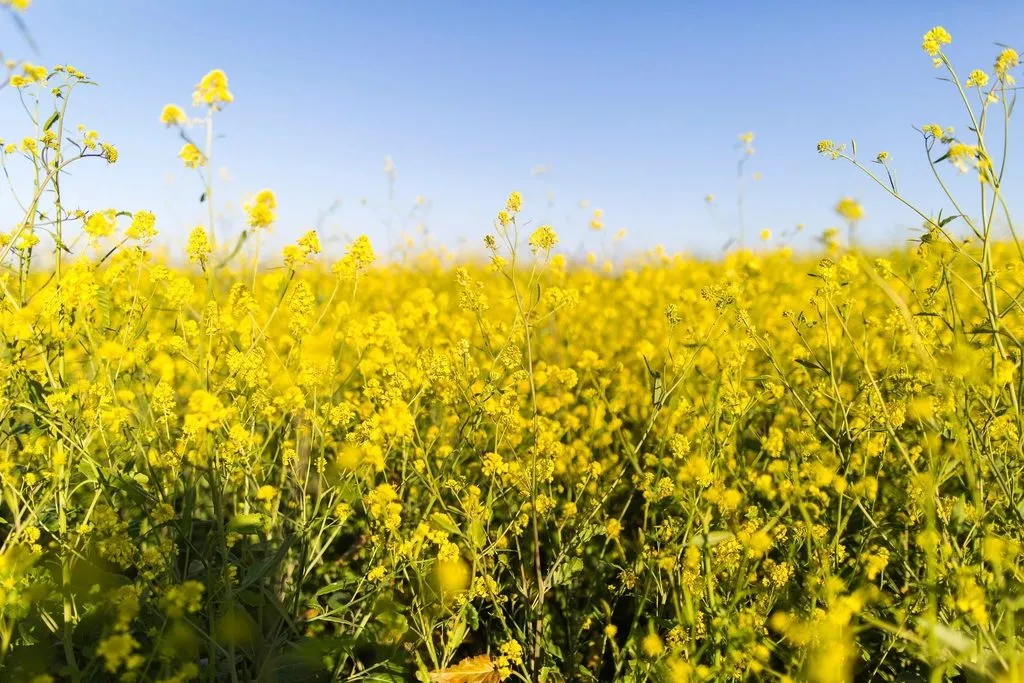
A study led by Aarhus University, published in Biological Conservation, finds that open woodlands, grassy clearings, wildflower meadows and large grazing animals dominated Europe for more than 20 million years 2.

a wildflower meadow with scattered oak trees
Pictured a wildflower meadow with scattered oak trees · Unknown (via rawpixel)

The dense, dark forests many people picture as Europe's natural state look like a relatively recent development 2. Birds and butterflies thrived in the sunlit mix, and big grazers kept trees and shrubs from taking over 2. For decades, conservation has leaned on what the authors call the "closed-forest paradigm," the belief that near-continuous canopy came first 2.

04/07 Plant-Based

Denmark gives up its mink farms

Denmark, once the world's largest producer of mink skins, is expected to join the EU ban on mink farming 85. After first opposing the ban, the government chose not to seek an exemption, and its seven remaining mink farms must close by August 2029 85.

an American mink
Pictured an American mink · Wikimedia Commons / An American in Paris (film)

About 15,000 mink are left in the country, down from the 17 million culled in 2020 to contain a mutated strain of COVID-19 85. The industry was made legal again in 2023 85. Nature Minister Christian Rabjerg Madsen said, "A business should not continue just because it has existed for a long time. It should also make sense for society, for the economy, and for the animals" 85.

05/07 Human Stories

The Great Unconformity finally has an explanation

In the Grand Canyon you can touch two rocks hundreds of millions of years apart: a flat sedimentary layer about 540 million years old or younger sits directly on crystalline basement up to two billion years old 121.

the Grand Canyon
Pictured the Grand Canyon · Wikimedia Commons / The Grand Canyon of the Yellowstone (1872)

Geologists found the same gap on several continents in the 1870s and named it the Great Unconformity; up to a quarter of Earth's history is missing there 121. For 150 years nobody knew what erased it. A paper published in Nature now argues that deep processes in the mantle lifted some continents high above the sea, where enormous sheets of ice ground their surfaces down 121.

06/07 Natural Sci.

Rubin Observatory finds two Milky Way companions in 7% of the sky

Using preliminary observations that cover just 7% of the night sky, astronomers working with the Vera C. Rubin Observatory in Chile found two objects that had escaped notice 6.

Vera C. Rubin Observatory
Pictured Vera C. Rubin Observatory · NOIRLab/NSF/AURA/C. Corco (Wikimedia Commons)

Aquarius IV is a tiny, extremely faint galaxy about 355,000 light-years away on the Milky Way's far outskirts 6. Rubin-GC1 is a star cluster on the opposite side of the galaxy, hidden behind thick clouds of cosmic dust 6. The Aquarius IV study was published in Research Notes of the AAS, and the Rubin-GC1 paper has been accepted by The Astrophysical Journal Letters 6. William Cerny, lead author of the Aquarius IV study, said these discoveries are "just the beginning for Rubin" 6.

07/07 Good News

A free app that reads a photo of a sick mango tree

In Varanasi, Shiv Kumar Yadav's four-acre mango nursery was at risk after black patches and white fungal growth spread across his saplings and the leaves fell 103. Advice from pesticide dealers and neighbors came too late or was too general, so he photographed the plants, uploaded the image to an app and described what he saw 103.

Today Got Better

The answer came in seconds: remove infected parts, improve drainage, stop overwatering, and apply the recommended fungicide in the stated amount 103. He says the spread was under control within days and estimates he saved about Rs 10,000 that season 103. The app is FarmerChat, launched in October 2024 by the non-profit Digital Green India, and it has reached over one million users 103.

Quick notes

Shorter discoveries from this morning, worth knowing but not a full story.

Less Than 42 Minutes of Bright Light Daily Is a Stronger Predictor of Dementia Than Obesity, Study Finds In UK Biobank data from nearly 88,000 older adults, at least 42 minutes a day of bright light (5,000 lux or more) went with a 17 percent lower relative risk of dementia roughly eight years later, and up to 41 percent for night owls, all from one week of wearing a light sensor 17. ScienceAlert
A compound hidden in broccoli could help fight a devastating genetic disease Swinburne researchers found that sulforaphane raised levels of frataxin, the protein that is too scarce in Friedreich ataxia, and helped protect vulnerable nerve cells, though clinical trials are still needed to show it works in patients 5. ScienceDaily
Meet The 'Hell Chicken', a Dinosaur With an Extremely Rare Type of Diet Infernogallus jamesi weighed about 12 kilograms, had jaw muscles running front to back and a ridged palate that worked like a mortar and pestle, and probably spent its time on soft fruit such as drupes 13. ScienceAlert
A dead star's mysterious rings reveal what could happen when our Sun dies The white dwarf J1328−1450 has two concentric rings of planetary wreckage with a clean gap between them, possibly held open by surviving bodies, one maybe as large as Pluto or the Moon 7. ScienceDaily
Orbiter Detects Signs of Activity on Mars The ExoMars Trace Gas Orbiter spotted hydrogen chloride spikes near Alba Mons, where researchers also found new fissures thousands of feet long, evidence that Mars kept enough internal heat for volcanic activity until recently 65. Futurism
Saturday assorted links An assessment cited there says Antarctic blue whales fell from more than 200,000 to a low of just 418 and have since recovered at 4.5% a year to more than 4,000 52. Marginal REVOLUTION
Weight loss is tied to earlier bedtime, not the hours spent asleep Among 196 adults at risk for type 2 diabetes, falling asleep earlier was linked to more weight loss over eight weeks, independent of how long they slept 83. New Atlas
Scientists Identified 10 Healthy Diets Linked to Slower Biological Aging In 6,470 adults, closer adherence to any of ten dietary guidelines went with slower epigenetic aging, which the lead epidemiologist called "not massive, but measurable" and which leaves room to eat to your own taste and budget 14. ScienceAlert
The Shocking Reality of Garden Waste at IIT Bombay! Startup Infixen turns nearly 2 tonnes of daily campus garden waste into fuel pellets that cook for 1,200 students and cut that hostel's LPG use by 60% 107. The Better India
Annie by Thinkerbell Labs | HP Lights of Change Annie lets visually impaired students learn to read, write and type in Braille without waiting for a teacher, and it is already used by more than 11,000 students across over 490 learning centres 108. The Better India
Adventurer Finally Hugs Mom After 28-Year Walk Around the World From Home in UK Karl Bushby finished a 31,000-mile walk home to Hull on November 2, after swimming the English Channel when the tunnel operator refused him, a swim he admitted he was "just not into" 98. Good News Network
Baby Saved After Racing Heartbeat Detected by Family Doberman Saraya the doberman would not leave six-month-old Alexander's side, his mother took him in, and doctors found a heart rate of 280 beats per minute from Wolff-Parkinson-White syndrome, now controlled with propranolol 97. Good News Network
Battery-free sensor powers up wirelessly via local circuitry radiation A graphene inductor with a steel core picks up the 60 Hz magnetic field around ordinary wiring and charges capacitors fast enough to run a nanowatt-scale temperature sensor with no battery 78. New Atlas
How to Be Happy for the Rest of Your Life A two-week daily diary of 268 older adults (average age 65) tracked perceived gains and losses of aging, sense of control and happiness, and the column reports that holding on to a feeling of control goes with feeling happier 46. Psychology Today
Prior expertise may determine whether AI builds skills or substitutes for them, field experiment suggests In a three-month trial with 133 patent lawyers, AI improved draft quality most for juniors, and on a later task without it, senior lawyers who had used the tool beat senior lawyers who had not 32. PsyPost

Our process. Your trust.

Every discovery above traces back to an article we read in full. This is the whole corpus behind this morning, and what it was made of.

  • 26 Sources scanned
  • 123 Articles read
  • 8 Fields covered
  • 7 Discoveries

The sources that carried this morning

  1. 1 Psychology Today: The Latest 13 articles
  2. 2 Interesting Engineering 10 articles
  3. 3 Upworthy 10 articles
  4. 4 PsyPost Psychology News 9 articles
  5. 5 Futurism 9 articles
  6. 6 ScienceAlert 8 articles
  7. 7 Latest Science News -- ScienceDaily 7 articles
  8. 8 New Atlas 7 articles
How an edition is made

Everything we read today

Natural Sciences 21 articles
Life Sciences & Medicine 5 articles
Psychology & Behavioral Science 22 articles
Social Sciences 7 articles
Technology & Innovation 29 articles
Plant-Based & Vegan 10 articles
Solutions & Good News 25 articles
Human Stories & Ideas 4 articles
The long view · not today’s news, the story behind it

Today’s discoveries didn’t come from nowhere. Here’s the older, ongoing story they belong to, a moment from this day in history, and a question to test what stuck.

Where the story stands

On this day in science

1895 X-rays are discovered Physicist Wilhelm Roentgen discovered X-rays, a form of light that could see straight through the human body. Within weeks doctors were using them to find broken bones, and medicine gained a new set of eyes. More from the Almanac →

Before you go: today’s quiz

The daily quiz

The biggest genetic risk factor for severe COVID-19, a stretch of chromosome 3, was inherited from which ancient human relatives?

Reveal the answer

Neanderthals

Hugo Zeberg and Svante Paabo showed the main genetic risk factor for severe COVID-19, a stretch of chromosome 3, was inherited from Neanderthals and is carried by about half of people in South Asia.

Follow the tracker →

Previous editions

Every morning we have published, newest first. Nothing expires.

View the full archive

Get this every morning.

Liked today’s? Tomorrow’s reaches your inbox before breakfast.

  • One email each morning, never more
  • The day’s real discoveries across 8 fields
  • One calm read with your coffee

Free from tomorrow morning, for good.

Same letter. Your $5 a month keeps it free for everyone else.

Any amount, charged once.