



The daily brief · November 5, 2026

A third kind of magnetism, and a gene that may buffer autism

Today's best finds are things people treated as settled, from how many kinds of magnetism exist to who ruled Iron Age Britain.

  • 8 Discoveries
  • 263 Articles read
  • 47 Sources
  • 10 Min read

Today’s discoveries

Everything this morning found, in the order we would read it.

8 stories
  1. 01 Natural Sci. Physicists confirm a third kind of magnetism For nearly 90 years, magnetic materials fit into two boxes: ferromagnets, like the one holding a photo to your fridge, and antiferromagnets. Source: ScienceDaily 1 min read
  2. 02 Social Sci. Cash for pregnant mothers in Flint, and fewer newborn deaths Flint, Michigan, had 9.4 infant deaths per 1,000 births in 2024, nearly double the US rate of 5.54. Source: Vox Future Perfect 1 min read
  3. 03 Life Sciences One gene may explain why autism is diagnosed more in boys Hundreds of rare genetic variants are linked to autism, yet they lead to overlapping traits. Source: Neuroscience News 1 min read
  4. 04 Life Sciences How bitter coffee turns into a favorite Almost nobody loves their first sip of black coffee. Source: Neuroscience News 1 min read
  5. 05 Natural Sci. A toothbrush that makes its own electricity Yanhui Lu's team at Peking University made bristles from PVDF, a plastic that generates a charge when it bends. Source: Live Science 1 min read
  6. 06 Natural Sci. Verica, the Iron Age "king" who sent Rome to Britain, was probably a woman Verica ruled the Atrebates in southern Britain, and the Roman historian Cassius Dio records a Briton who fled an uprising and appealed to Emperor Claudius, who invaded in AD 43. Source: New Scientist 1 min read
  7. 07 Plant-Based Washington, D.C. and Denver vote to ban foie gras Voters passed citizen-initiated ballot measures in both cities: 73 percent in D.C. Source: Sentient 1 min read
  8. 08 Life Sciences Mobile clinics cut deaths among people who inject drugs The NIH-funded HPTN 094 trial enrolled 409 adults without HIV who injected drugs and had opioid use disorder, in Houston, Los Angeles, New York City, Philadelphia and Washington, D.C.. Source: NIH News Releases 1 min read

The feel-good story of the day

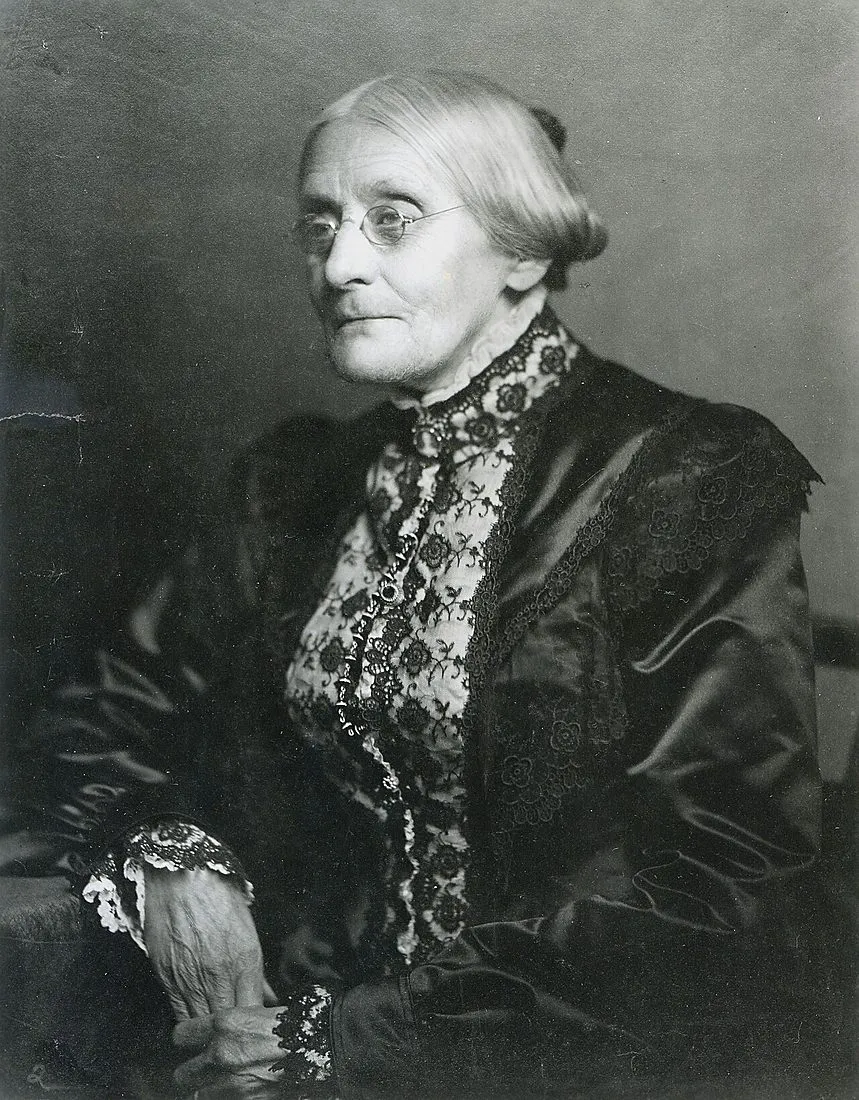
Susan B. Anthony Wikimedia Commons / Susan B. Anthony
Pictured Susan B. Anthony

She voted anyway

On November 5, 1872, Susan B. Anthony walked into a polling place in her hometown of Rochester, New York, and cast a ballot, though the law did not let women do so. She was arrested a couple of weeks later and tried the following year. The court fined her $100, and she told the judge she would never pay it.

Anthony was born in 1820 in Adams, Massachusetts, and spent decades as a organizer, speaker and campaigner for women's suffrage. She treated her arrest as another platform and used the trial to argue that the Constitution already covered women.

She died in 1906. The Nineteenth Amendment, guaranteeing women the vote nationwide, was ratified in 1920, fourteen years later. The fine, as far as the record shows, was never paid.

Today’s complete edition

The discoveries, in full

Read the evidence, what it changes, and the reporting behind each of today’s 8 discoveries.

01/08 Natural Sci.

Physicists confirm a third kind of magnetism

For nearly 90 years, magnetic materials fit into two boxes: ferromagnets, like the one holding a photo to your fridge, and antiferromagnets. A team led by SLAC National Accelerator Laboratory now reports, in Science, direct experimental evidence for a third box called altermagnetism 1.

SLAC National Accelerator Laboratory
Pictured SLAC National Accelerator Laboratory · Wikimedia Commons / SLAC National Accelerator Laboratory

They worked with manganese telluride, a material long filed under antiferromagnets, and used specialized X-rays to find a chirality in its magnetic structure 1. Chirality is a built-in handedness, the way a screw or spiral staircase twists one direction. Lead author Daniel Jost said researchers had spent the past few years collecting phenomena that didn't fit the old two-way split, and this result confirms the third phase is real 1.

02/08 Social Sci.

Cash for pregnant mothers in Flint, and fewer newborn deaths

Flint, Michigan, had 9.4 infant deaths per 1,000 births in 2024, nearly double the US rate of 5.54 137. For two years the city has run Rx Kids, a no-strings cash program through GiveDirectly: $1,500 at enrollment, usually in the first 16 weeks of pregnancy, then $500 a month until a year after birth 137.

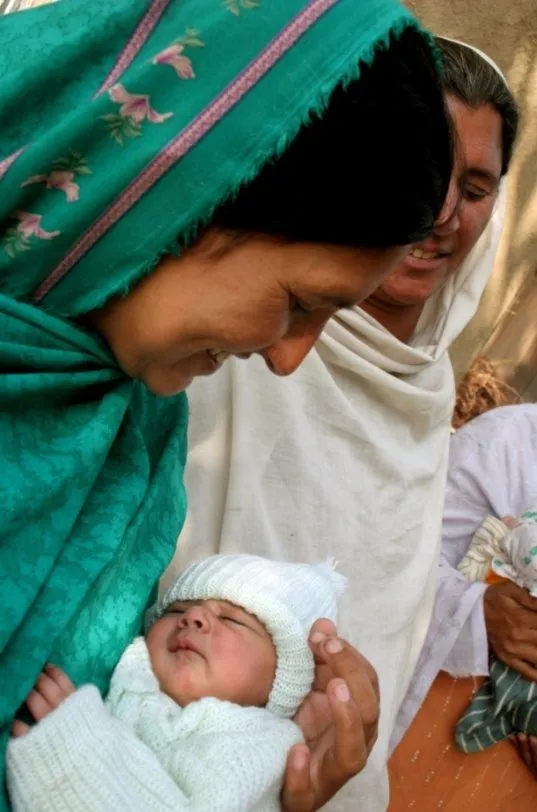
a mother holding her newborn baby
Pictured a mother holding her newborn baby · USAID Pakistan (Wikimedia Commons)

New findings show neonatal mortality, deaths in the first month, fell from 9.4 to 5.1 per 1,000 live births after mothers received the money 137. Baby supplies were the top expense, then rent and food 137. An earlier study of the same Flint group found expectant mothers were less likely to smoke, and co-director Mona Hanna points to better prenatal care as a likely route 137.

03/08 Life Sciences Technology

One gene may explain why autism is diagnosed more in boys

Hundreds of rare genetic variants are linked to autism, yet they lead to overlapping traits. A Boston Children's Hospital team publishing in Nature found that dialing down one autism-linked gene in human cells triggers a coordinated drop across a network of other autism genes, a pattern they call transcriptomic convergence 81.

a scientist in a genetics laboratory
Pictured a scientist in a genetics laboratory · Unknown (via rawpixel)

In the lab-grown progenitor cells, 27 other autism-implicated genes grew quieter in at least 10 of the experiments 195. Mapping the network pointed to ZFX, an X-linked gene that escapes the usual silencing of one X chromosome, so females run it at a higher baseline 81195.

What each field noticed (2)
New Atlas

One gene could explain why autism appears to affect boys more than girls

New Atlas spends more time on what the work doesn't show. The Y chromosome carries a similar gene, ZFY, but it activates other genes more weakly, and a reanalysis of donated brain tissue found reduced ZFX activity in excitatory neurons from autistic males 195. It also notes a 2014 genetic study in which autistic women carried more autism genes than autistic men, which fits a higher threshold in women 195.

Read the story
04/08 Life Sciences

How bitter coffee turns into a favorite

Almost nobody loves their first sip of black coffee. A study in Nature, led by Zachary Knight's group at UC San Francisco with Yale and the Max Planck Institute, maps a slow dopamine signal that runs from the gut to the anterior basolateral amygdala 82.

a cup of black coffee
Pictured a cup of black coffee · Olu Eletu (via stocksnap)

Unlike the millisecond spikes triggered by sight or taste, this one builds over minutes as nutrients reach the digestive tract 82. In mice, activating that pathway trained the animals to prefer a calorie-free flavor, and blocking it completely prevented them from linking a new taste to calories 82. Brain imaging in mice and humans, including PET and fMRI in people, showed stronger responses in the left side of the amygdala than the right 82.

05/08 Natural Sci.

A toothbrush that makes its own electricity

Yanhui Lu's team at Peking University made bristles from PVDF, a plastic that generates a charge when it bends 1137. Each stroke produces electricity that triggers reactive oxygen species in saliva and water, molecules that damage bacterial cells 11.

a person brushing their teeth
Pictured a person brushing their teeth · Unknown (via rawpixel)

In lab tests the thicker bristles killed about 53 percent of Streptococcus mutans, a cavity-causing species, and 78 percent of Porphyromonas gingivalis, a gum-disease bacterium, against 9 and 8 percent for nylon 37. Adding an antioxidant that neutralizes the reactive oxygen largely erased the effect 11. The bristles stayed soft and kept their electrical properties after three months of use 37. New Scientist also reports more than twice the reduction in plaque, gum inflammation and bleeding versus conventional brushes, with some tests using plaque grown from human mouths on pieces of cow enamel 37.

06/08 Natural Sci. Human Stories

Verica, the Iron Age "king" who sent Rome to Britain, was probably a woman

Verica ruled the Atrebates in southern Britain, and the Roman historian Cassius Dio records a Briton who fled an uprising and appealed to Emperor Claudius, who invaded in AD 43 36.

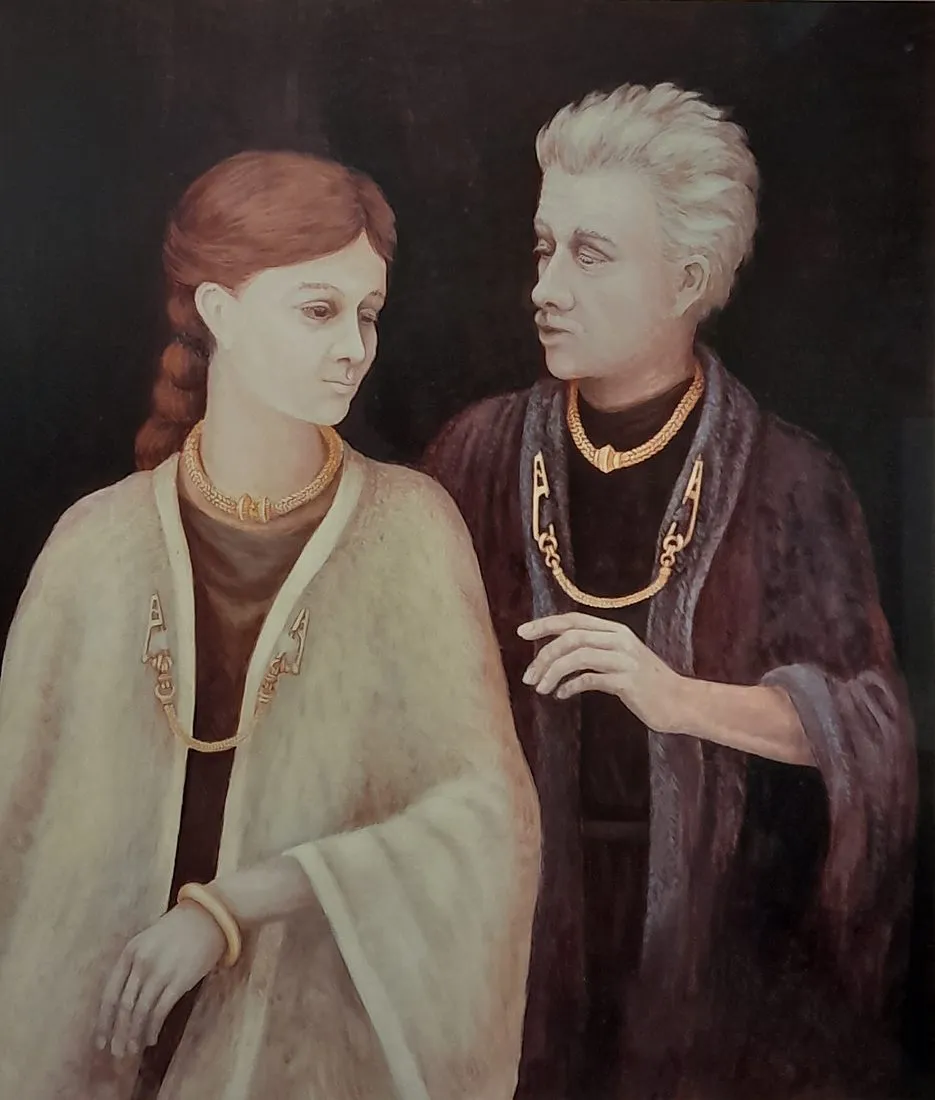
Iron Age British gold coin
Pictured Iron Age British gold coin · Ario1234 (Wikimedia Commons)

Archaeologist Miles Russell of Bournemouth University argues in a new book that the ruler was female 36. His case: about 95 percent of Iron Age British names ending in "a" are female, Verica's coins tend to show female warriors on horseback, and the coin inscription read as "son of Commios" could equally be "daughter of Commios" 36. The title "rex" on the coins wasn't gender-specific 36.

What each field noticed (2)
07/08 Plant-Based

Washington, D.C. and Denver vote to ban foie gras

Voters passed citizen-initiated ballot measures in both cities: 73 percent in D.C. and 66.55 percent in Denver 208. Both ban force-feeding ducks and geese to make foie gras, plus its sale and distribution; Denver's also bans transport and receipt 208.

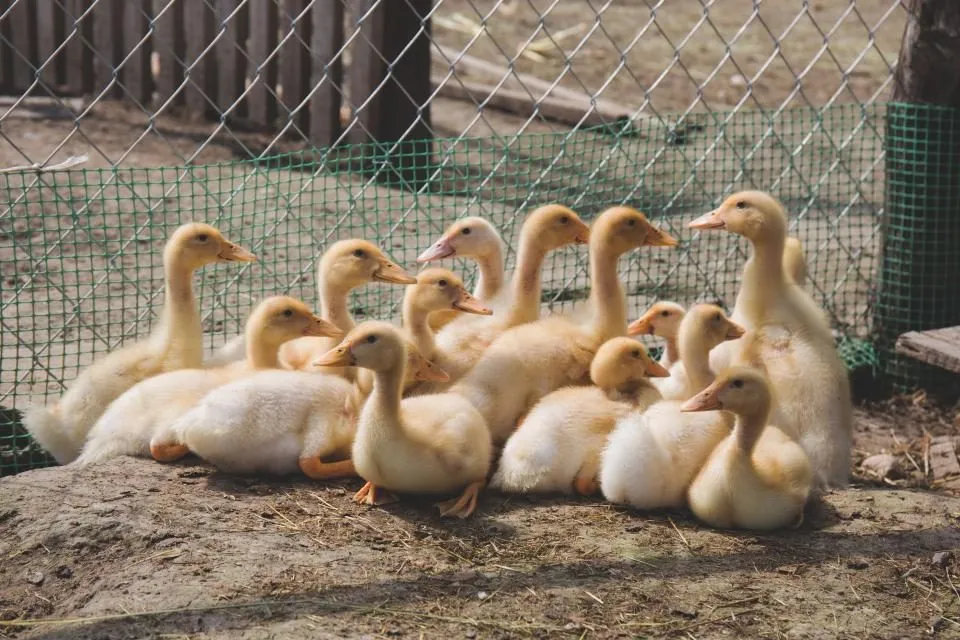
a flock of ducks
Pictured a flock of ducks · Freestocks.org (via stocksnap)

Foie gras comes from gavage, where birds are force-fed through a tube several times a day in their last weeks, swelling their livers to as much as 10 times normal size 208. Pro-Animal Future led both campaigns, and its executive director Eva Hamer says the practice is "so visceral" and tied to wealthy elites 208.

08/08 Life Sciences

Mobile clinics cut deaths among people who inject drugs

The NIH-funded HPTN 094 trial enrolled 409 adults without HIV who injected drugs and had opioid use disorder, in Houston, Los Angeles, New York City, Philadelphia and Washington, D.C. 79.

a mobile medical van
Pictured a mobile medical van · U.S. Army photo by Sgt. Griffin Payne (Wikimedia Commons)

All got 26 weeks of peer navigation; half also got HIV prevention medication, opioid treatment and limited clinical services on a mobile unit 79. All-cause deaths were 71 percent lower in the mobile-unit group 79.

Quick notes

Shorter discoveries from this morning, worth knowing but not a full story.

The Download: blended meat, restored sight, and the agentic web A retinal implant called PRIMA, paired with camera-equipped glasses, helped people with geographic atrophy, a form of macular degeneration that affects over 5 million people; after training, more than 80% of recipients could read, do crosswords and use their phones 192. MIT Technology Review
Brazil Expands Protected Area for ‘One of the Richest and Most Sensitive Biomes on the Planet’ Pantanal Matogrossense National Park grew by 185 square miles on top of 523, protecting breeding corridors in a wetland with the largest concentration of jaguars on Earth 221. Good News Network
Italy Sees Collapse in its Homicide Rate to 3rd Lowest in the EU Italy recorded 1,916 homicides (3.4 per 100,000) in 1991, and its 2023 rate was 0.57 against a European average of 0.91 223. Good News Network
Woman Becomes First Person to Swim the Entire California Coastline Catherine Breed covered 900 miles in 111 days through tropical storms, adverse currents and eight shark encounters, a trip planned as 10 miles a day for 90 days 224. Good News Network
Personalized brain therapy hits 68 percent remission for PTSD A personalized magnetic stimulation therapy reported 68 percent remission in its trial versus a 10.9 percent ceiling for approved medications in a 2020 review, though these are separate studies, not a head-to-head 240. The Optimist Daily: Making Solutions the News
Nationwide trends in physical disability among rheumatoid arthritis patients in Korea (2010–2022): A retrospective cohort study based on national registry data Among Korean patients with rheumatoid arthritis, registered physical disability fell from 17.4% to 10.9% between 2010 and 2022, though it is still above the 2.3% in the general population 47. PLOS One
Glioblastoma’s Chaos Follows Predictable Rules Mapping over a million patient-derived cells showed glioblastoma cells shift states along conserved routes, and overexpressing MYT1L extended survival in preclinical models, a lead for a cancer with a median survival of about 15 months 80. Neuroscience News
The Human Brain May Organize Emotions Using a Hexagonal Grid An fMRI study at Emory found a hexagonal signature in brain activity as people evaluate emotional information, the same sixfold geometry grid cells use to map physical space 73. ScienceAlert
One month of time-restricted eating linked to a nine-month drop in estimated brain age in new study In a small study of men with metabolic syndrome, eating inside an eight-hour window for a month came with better memory scores, weight loss and slightly younger MRI brain-age estimates 116. PsyPost Psychology News
New Jersey Students Fill Football Field With More Than 250,000 Pounds of Food for Families in Need Students at Howell High School covered a football field with yellow donation bags, a record 250,000-plus pounds of food sent to about 30 food banks across New Jersey 228. Sunny Skyz
Are schools a great equalizer? They help kids catch up, but wealthier children still pull ahead Counting 77 kinds of investment, the gap between the richest and poorest quarter of children is 24 percent before age 5 and 12 percent once they start school 155. The Conversation Articles
‘For the 1st Time, I Was Paid To Do Theatre’: These Friends Are Paying Artists Rs 15000/Month To Learn Theatre The Bargad fellowship pays a monthly stipend to theatre trainees, and its first cohort in January 2025 had 14 fellows, including an auto-rickshaw driver's son whose family worried acting couldn't pay 234. The Better India : Latest Posts

Our process. Your trust.

Every discovery above traces back to an article we read in full. This is the whole corpus behind this morning, and what it was made of.

  • 47 Sources scanned
  • 263 Articles read
  • 8 Fields covered
  • 8 Discoveries

The sources that carried this morning

  1. 1 Nature 20 articles
  2. 2 PLOS One 20 articles
  3. 3 Psychology Today: The Latest 17 articles
  4. 4 The Conversation Articles 14 articles
  5. 5 STAT 13 articles
  6. 6 Ars Technica - All content 12 articles
  7. 7 PsyPost Psychology News 11 articles
  8. 8 The Better India : Latest Posts 11 articles
How an edition is made

Everything we read today

Natural Sciences 78 articles
PLOS One
Life Sciences & Medicine 27 articles
Psychology & Behavioral Science 31 articles
Psyche | Know Your Self
Social Sciences 21 articles
Pew Research Center
Recent VoxEU Content
The Conversation Articles
Technology & Innovation 44 articles
Plant-Based & Vegan 16 articles
Solutions & Good News 30 articles
Human Stories & Ideas 16 articles
The long view · not today’s news, the story behind it

Today’s discoveries didn’t come from nowhere. Here’s the older, ongoing story they belong to, a moment from this day in history, and a question to test what stuck.

Where the story stands

On this day in science

2013 India reaches for Mars on its first try The Indian Space Research Organisation launched the Mars Orbiter Mission, nicknamed Mangalyaan, from the Satish Dhawan Space Centre. It made India the first nation to reach Mars orbit on its first attempt, and it was built for a famously small fraction of the usual cost. More from the Almanac →

Before you go: today’s quiz

The daily quiz

Which study design gives the strongest evidence that a treatment causes an effect?

Reveal the answer

A randomized controlled trial

A randomized trial assigns people to groups so the only systematic difference is the treatment. An observational study only watches, so it can show a link but not prove cause.

Read the explainer →

Previous editions

Every morning we have published, newest first. Nothing expires.

View the full archive

Get this every morning.

Liked today’s? Tomorrow’s reaches your inbox before breakfast.

  • One email each morning, never more
  • The day’s real discoveries across 8 fields
  • One calm read with your coffee

Free from tomorrow morning, for good.

Same letter. Your $5 a month keeps it free for everyone else.

Any amount, charged once.