


The daily brief · November 1, 2026

A blood test sees Alzheimer's risk early, and a dinosaur ate fruit

Today's best finds came from looking closely at small things: a protein's docking site, a scoop of cave dirt, a bird's body clock.

  • 7 Discoveries
  • 136 Articles read
  • 24 Sources
  • 10 Min read

Today’s discoveries

Everything this morning found, in the order we would read it.

7 stories
  1. 01 Natural Sci. A blood test that sees Alzheimer's risk years ahead Researchers at the Mass General Brigham Neuroscience Institute pooled six observational studies and clinical trials from North America, Japan, and Australia. Source: ScienceDaily 1 min read
  2. 02 Natural Sci. The dinosaur that ate fruit Paleontologists from Stony Brook University, the Royal Ontario Museum, and the North Dakota Geological Survey described Infernogallus jamesi, a turkey-sized, feathered, toothless… Source: Phys.org 1 min read
  3. 03 Psychology A toad-derived nasal spray eases hard-to-treat depression A clinical trial in JAMA tested a single dose of a synthetic nasal spray of mebufotenin, a psychedelic compound found in the venom of the Sonoran Desert toad, in people with… Source: PsyPost 1 min read
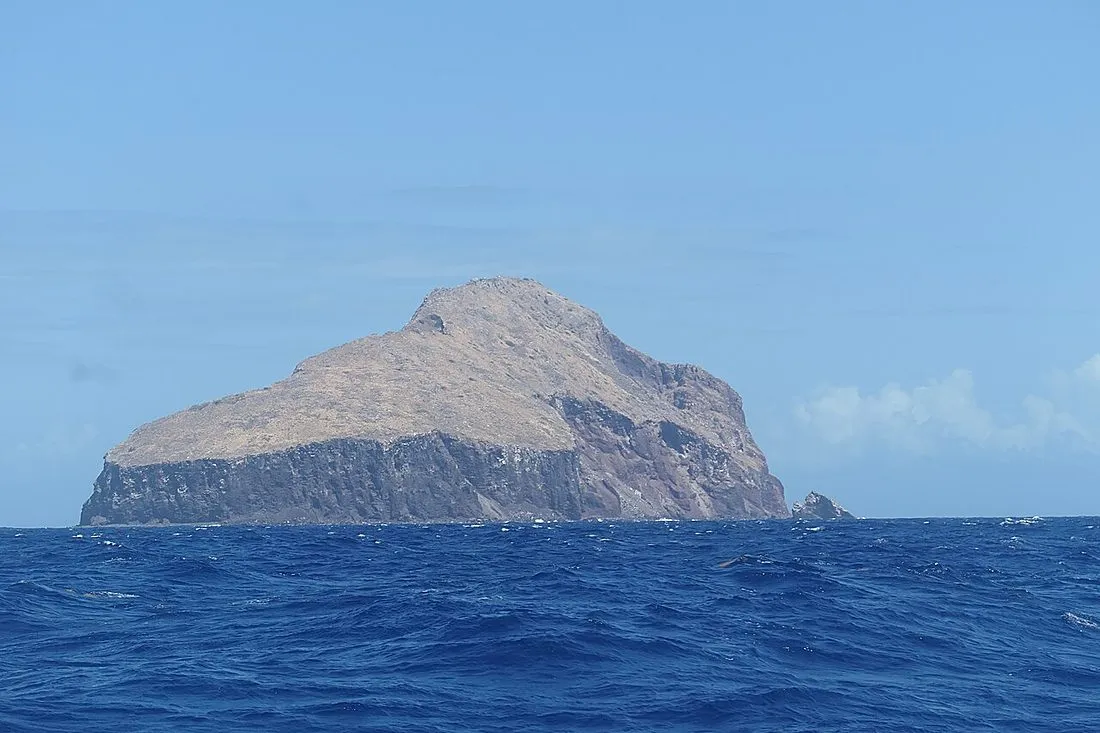
  4. 04 Good News An island stripped bare comes back without a single replanted seed In 2016, Redonda, an uninhabited 1.5-square-kilometer Caribbean island, was a barren rock. Source: Upworthy 1 min read
  5. 05 Natural Sci. The gut-bacterium toxin finally has a known docking point Bacteroides fragilis lives in the intestines of up to 20% of healthy people, and certain strains make a toxin, BFT, that damages the colon's protective lining, drives chronic… Source: ScienceDaily 1 min read
  6. 06 Technology Seabirds get jet lag, and it bends their compass A Science study on Manx shearwaters, pigeon-sized seabirds closely related to albatross, found they jet-lag themselves on feeding trips. Source: Ars Technica 1 min read
  7. 07 Natural Sci. Twenty-two thousand years of DNA from a pinch of cave dirt University of Vienna researchers recovered human DNA from a sediment sample from El Mirón Cave in Spain. Source: ScienceAlert 1 min read

The feel-good story of the day

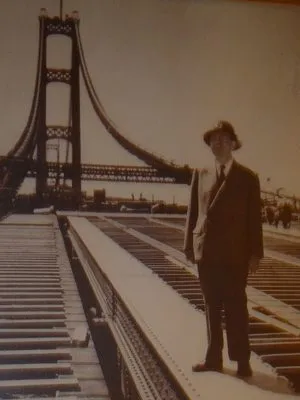
David B. Steinman, bridge engineer Wikimedia Commons / David B. Steinman
Pictured David B. Steinman, bridge engineer

The bridge engineer who learned from other people's collapses

On November 1, 1957, the Mackinac Bridge opened to connect Michigan's Upper and Lower peninsulas over the Straits of Mackinac. Its designer was David B. Steinman, who grew up in the shadow of the Brooklyn Bridge and hoped to build something that could rival it.

Before this job, Steinman had finished the Thousand Islands Bridge connecting New York to Canada, then spent over a decade away from bridge building. When he returned, he built in lessons from suspension bridges that had failed in the 1940s. He gave the roadway an airfoil shape to cut crosswind drag, added stiffening trusses beneath it, and left the center two lanes as open grid so air can flow up through the deck and cancel the lift. The result is stable in winds up to 150 miles per hour.

The bridge is called the "Mighty Mac," and it is still the longest suspension bridge between anchorages in the Western Hemisphere, at 26,372 feet (8,038 meters). Every driver who crosses it on a windy day is relying on a design that began with studying what had gone wrong elsewhere.

Today’s complete edition

The discoveries, in full

Read the evidence, what it changes, and the reporting behind each of today’s 7 discoveries.

01/07 Natural Sci.

A blood test that sees Alzheimer's risk years ahead

Researchers at the Mass General Brigham Neuroscience Institute pooled six observational studies and clinical trials from North America, Japan, and Australia. That gave them 2,684 older adults with no sign of cognitive impairment when they enrolled, some as early as 2004, followed through 2025 7.

Today Got Better

Each person's blood was measured for a marker called phosphorylated tau 217 (p-tau217), and each had a PET brain scan at baseline. About 478 of them eventually developed cognitive impairment 7. Among people with very high p-tau217, the risk was 38% within five years and an estimated 78% within ten, though the ten-year figure rests on substantially less data 7. The results appeared in JAMA and were presented at the Alzheimer's Association International Conference 7.

02/07 Natural Sci.

The dinosaur that ate fruit

Paleontologists from Stony Brook University, the Royal Ontario Museum, and the North Dakota Geological Survey described Infernogallus jamesi, a turkey-sized, feathered, toothless dinosaur of about 12 kilograms (25 pounds) 21.

Hell Creek Formation, Montana
Pictured Hell Creek Formation, Montana · Wikimedia Commons / Hell Creek Formation

The fossils, including a nearly complete, articulated skull, came from the Hell Creek Formation, where it lived alongside T. rex and Triceratops, which explains the name "hell chicken" 21. Its chewing muscles were arranged in a way seen today only in fruit-eating parrots, built for mashing stone fruits to strip the flesh from the seed 21. The work appeared in Nature Communications 21. Lead author Gregory Funston said "we never expected to discover fruit-eating dinosaurs," and noted that for more than 100 years nobody had seen the skulls of these animals 21.

03/07 Psychology Technology

A toad-derived nasal spray eases hard-to-treat depression

A clinical trial in JAMA tested a single dose of a synthetic nasal spray of mebufotenin, a psychedelic compound found in the venom of the Sonoran Desert toad, in people with treatment-resistant depression 5078.

Sonoran Desert toad
Pictured Sonoran Desert toad · Wikimedia Commons / Sonoran Desert

The double-blind randomized trial enrolled 193 adults, and the 8 and 12 milligram doses cut scores on a standard depression test significantly, with mild to moderate side effects 78. Symptoms eased within a day, and the benefit lasted up to eight weeks 50. The psychedelic experience was brief enough that most patients were assessed as ready to leave the clinic within two hours 50.

What each field noticed (2)
Futurism

Psychedelic Compound in Toad Venom Can Treat Depression When Snorted, Scientists Find

Futurism traced the compound back to the late-1980s toad-licking scare, whose spread media analysis put down to retelling more than to teenagers 78. It also gave the skeptic's reading. Psychopharmacology researcher Chittaranjan Andrade pointed out that "The average patient became only about 30 percent better," with response and remission rates below those typically seen with ketamine and electroconvulsive therapy 78.

Read the story
04/07 Good News

An island stripped bare comes back without a single replanted seed

In 2016, Redonda, an uninhabited 1.5-square-kilometer Caribbean island, was a barren rock. Goats and about 6,000 black rats, brought by phosphate miners a century earlier, had eaten nearly all its plants 129.

Redonda, Antigua and Barbuda
Pictured Redonda, Antigua and Barbuda · Addshore (Wikimedia Commons)

Over 50 goats were airlifted to Antigua with pool noodles over their horns and hoods over their eyes. Trapping them had failed with snares, traps, and a net launcher, until the team noticed that getting the kids into the corral made the parents follow 129. About ten people, some of them cliff rappellers, placed rat bait roughly every 100 feet, and by March 2017 all signs of rats were gone 129. The government of Antigua and Barbuda worked with the Environmental Awareness Group, Fauna & Flora, and Re:wild 129.

05/07 Natural Sci.

The gut-bacterium toxin finally has a known docking point

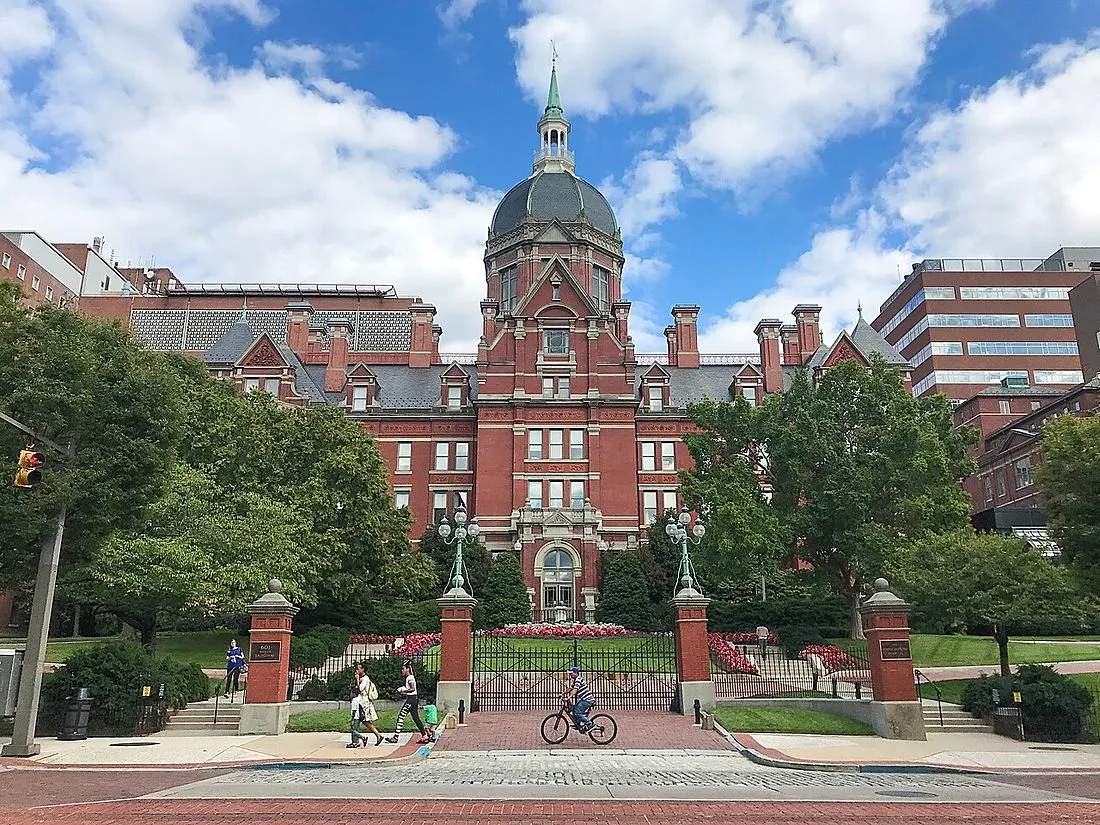
Bacteroides fragilis lives in the intestines of up to 20% of healthy people, and certain strains make a toxin, BFT, that damages the colon's protective lining, drives chronic inflammation, and promotes tumors 2.

Johns Hopkins Hospital
Pictured Johns Hopkins Hospital · Wikimedia Commons / Johns Hopkins Hospital

Cynthia Sears's group showed the tumor link in a 2009 Nature Medicine study, but the receptor the toxin grabs on to stayed unknown for nearly two decades 2. Now a Johns Hopkins team reports in Nature that the docking point is a protein called claudin-4. They built a molecular decoy that intercepts the toxin before it can damage colon cells, and it protected mice from the toxin's effects 2. Sears said "We've made several attempts over time to identify the receptor, so this is an exciting moment" 2.

06/07 Technology

Seabirds get jet lag, and it bends their compass

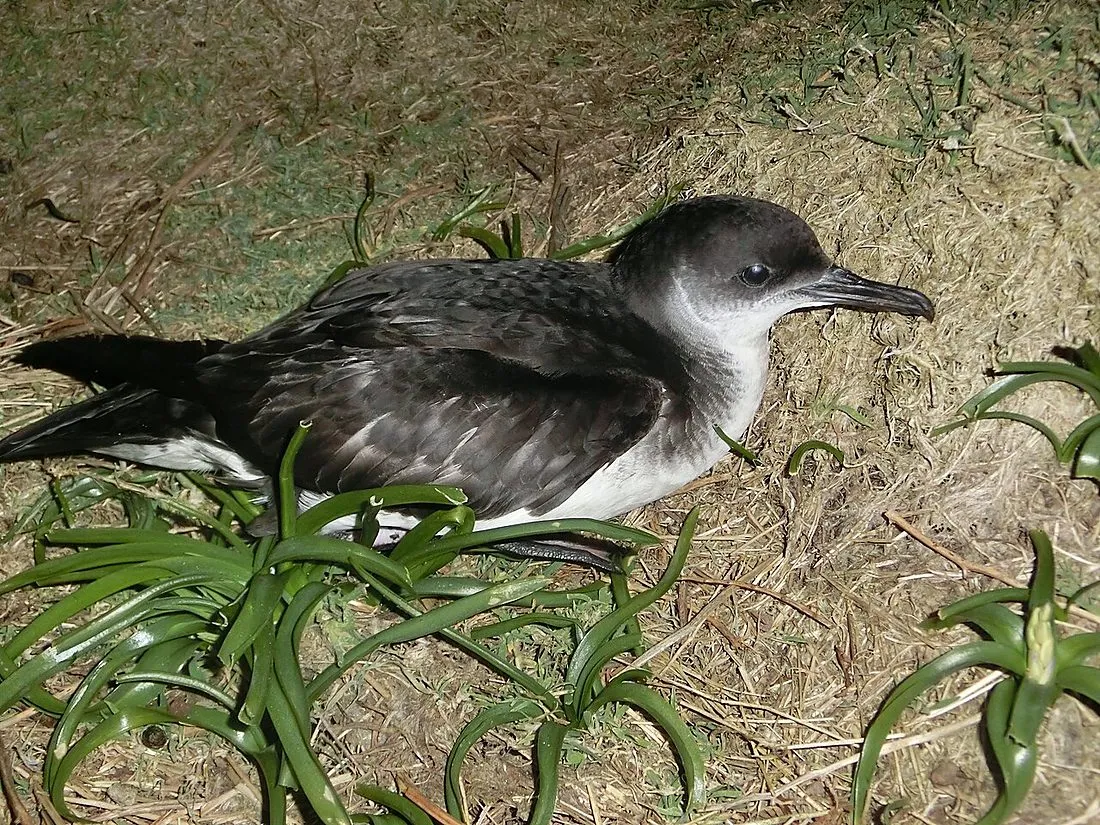
A Science study on Manx shearwaters, pigeon-sized seabirds closely related to albatross, found they jet-lag themselves on feeding trips 71. They nest in burrows around the North Atlantic, and about half the population is in Wales.

Manx shearwater
Pictured Manx shearwater · Wikimedia Commons / Manx shearwater

They range from a few dozen to more than 1,000 kilometers out to feed 71. Heading home, they are thought to find their position with a map sense, possibly smell-based, then steer by the Sun as a compass 71. That only works with an accurate internal clock, since the Sun's angle shifts all day, and the birds' clock is not perfect 71. Oxford's Patrick Lewin, the lead author, says the jet lag leaves a measurable mark: it skews their compass 71.

07/07 Natural Sci.

Twenty-two thousand years of DNA from a pinch of cave dirt

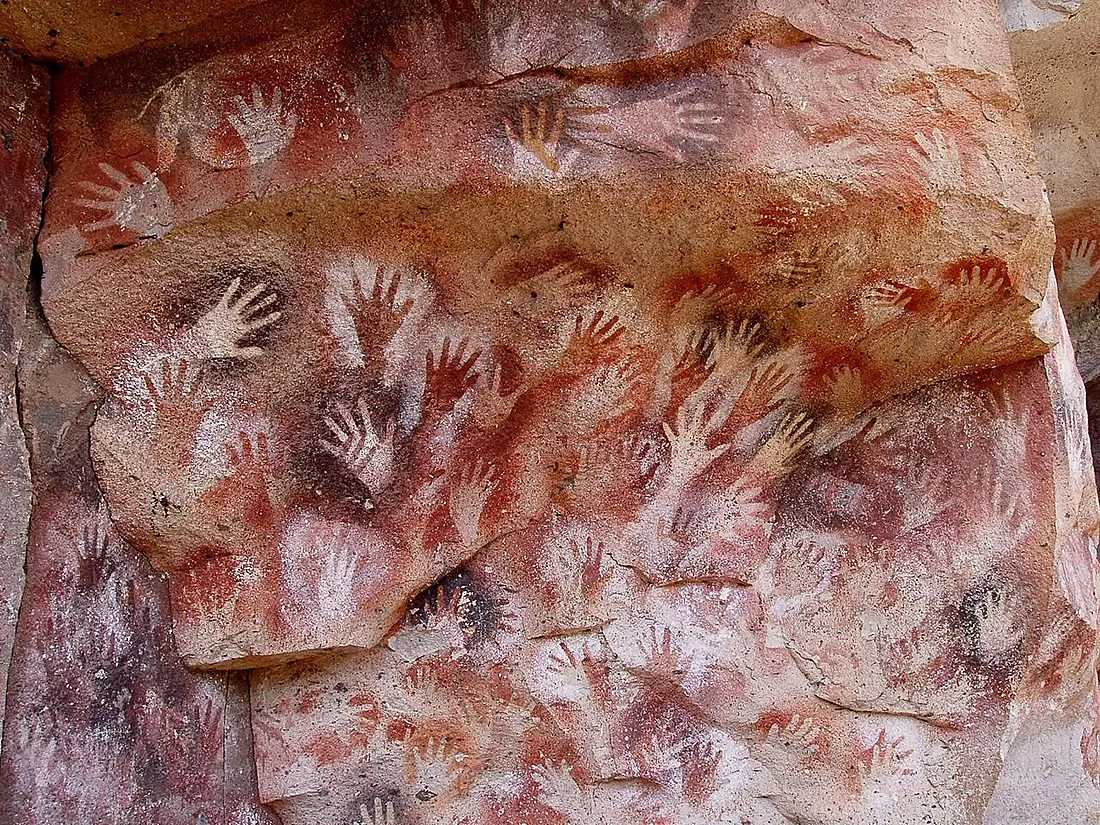
University of Vienna researchers recovered human DNA from a sediment sample from El Mirón Cave in Spain. The sample weighed no more than a few grains of rice and was sequenced 100 times to yield enough usable data, sifting through more than a billion DNA fragments, with modern contamination accounted for 35.

El Mirón Cave, Spain
Pictured El Mirón Cave, Spain · Wikimedia Commons / Cave painting

No human remains exist in that layer. The DNA, probably shed as skin, hair, or blood, came from several people sheltering in the cave about 22,000 years ago, during the coldest stretch of Europe's last ice age 35. They likely belonged to a western ancestry group with dark skin, hair, and eyes, and the DNA came from more males than females 35. The study is in Science Advances 35.

Quick notes

Shorter discoveries from this morning, worth knowing but not a full story.

Harvard smartphone app guides the blind faster, with fewer collisions In a test with 14 people using a cane, the Mobilio app got them to destinations 13% faster and with 41% fewer indoor collisions than Google Maps, and lead author Raymond Liu designed it after surveying more than 100 people with limited or no sight 94. New Atlas
How an IAS Officer, Panchayats Revived a Dead River for 6,000+ Villagers Under Rs. 5 Crores A Madhya Pradesh river that had become an open drain was rebuilt with village labor, stone, and borrowed machinery instead of contractors and concrete, and between 1,000 and 1,500 people turned up to float lamps on it 119. The Better India
A Day at IIT Bombay: How 1,200+ Students Are Fed Using Waste The campus turns 2 tonnes of daily garden waste into leaf-pellet fuel, cutting cooking-gas use by 60% in a mess that feeds 2,000 people, and the institute no longer pays ₹50 lakh a year to haul the leaves away 120. The Better India
B-Vitamin Supplement Can Treat Psoriasis, a Skin Condition with No Cure A vitamin B5 derivative, pantethine, eased symptoms in a small human trial and fully prevented psoriasis in mice, by calming immune cells that overreact 113. Good News Network
Girl Sitting in Dirt at Bus Stop Gets Surprise Bench From Homeowner–Camera Catches her Jig (WATCH) Florida teachers Maren and David Douglass saw a middle schooler sitting in the dirt at the end of their driveway on their camera, built her a bench, and later added a Mini Free Library that other neighborhood kids now use 112. Good News Network
Retirees Who Lost Spouses Fall in Love Again at 88, After Meeting in the Gym Barbara Thompson and Fred Jenkins met at a Birmingham retirement village gym, now go three times a week, and have no plans to move in together, since they each keep their own apartment 114. Good News Network
Scientists discover a bacterial defense so strange they thought it was broken Gladstone's Seth Shipman calls a newly found type VI retron system "by far, the strangest of the retron systems that we or anyone else has come across," and the study says it may help design more precise DNA-editing tools 10. ScienceDaily
Astronomers may have been wrong about what ended the 'Cosmic Dark Age' Hubble observations of six nearby starburst galaxies found that the strongest emitters of fog-clearing ultraviolet light lack fast supernova-driven winds, which challenges the textbook idea of how the early universe cleared 12. Live Science
Seeing Your Pain Through an Evolutionary Lens May Ease Depression, Early Trial Finds In a preliminary trial of 61 adults in Bucharest, two eight-hour group days of cognitive evolutionary therapy led to more improvement one week later than being on a waiting list 33. ScienceAlert
Fish switch leaders 2.8 times a second to stay in sync, reveals a virtual reality study Rummy-nose tetras in a virtual-reality bowl followed one influential neighbor at a time and swapped about 2.8 times a second, so the school has no fixed leader 93. Interesting Engineering
Intestine-inspired bacterial biobattery creates 8 times the power Binghamton researchers copied the finger-like villi of the small intestine to build a bacteria-powered battery that makes over eight times more electricity per unit volume than a flat design 98. New Atlas
In Kashmir, 150,000 Flowers Make Just 1 Kg of Saffron. Here’s How Farmers Harvest Them Pampore's crocus fields bloom for a few weeks from late October, and families pick each flower by hand at dawn, going over every field three times 123. The Better India
A Critically Endangered Pangolin on Shillong’s Doorstep: What Its Sighting Tells Us About Urban Forests A camera trap caught a Chinese pangolin in forests at the edge of Shillong for the first time in the Wildlife Institute of India's study area, though one sighting does not say how many live there 117. The Better India
85-YO Kerala Grandmother Teaches Children 3 Languages and Maths With Just Sand & a Stick For about a decade, 85-year-old Indira Amma has taught children Malayalam, Hindi, English, and maths by having them trace letters in sand 118. The Better India
Scientists smash oxygen nuclei to recreate matter from the Big Bang Colliding oxygen nuclei at the Relativistic Heavy Ion Collider showed jet quenching, a sign of quark-gluon plasma, at lower energies than shown before, which sets a new lower boundary for where it forms 6. ScienceDaily

Our process. Your trust.

Every discovery above traces back to an article we read in full. This is the whole corpus behind this morning, and what it was made of.

  • 24 Sources scanned
  • 136 Articles read
  • 8 Fields covered
  • 7 Discoveries

The sources that carried this morning

  1. 1 Phys.org 13 articles
  2. 2 Psychology Today: The Latest 12 articles
  3. 3 Latest Science News -- ScienceDaily 11 articles
  4. 4 PsyPost Psychology News 10 articles
  5. 5 Futurism 10 articles
  6. 6 Interesting Engineering 10 articles
  7. 7 Upworthy 10 articles
  8. 8 ScienceAlert 8 articles
How an edition is made

Everything we read today

Natural Sciences 41 articles
Life Sciences & Medicine 2 articles
Psychology & Behavioral Science 22 articles
Social Sciences 5 articles
Technology & Innovation 30 articles
Plant-Based & Vegan 10 articles
Solutions & Good News 23 articles
Human Stories & Ideas 3 articles
The long view · not today’s news, the story behind it

Today’s discoveries didn’t come from nowhere. Here’s the older, ongoing story they belong to, a moment from this day in history, and a question to test what stuck.

Where the story stands

On this day in science

1963 The great Arecibo radio telescope opens The Arecibo Observatory opened in Puerto Rico, its dish slung across a natural sinkhole a thousand feet wide, the largest radio telescope on Earth for half a century. It studied distant galaxies and pulsars, and in 1974 it beamed humanity's first message toward the stars. It listened to the universe for 57 years, until the dish finally collapsed. More from the Almanac →

Before you go: today’s quiz

The daily quiz

Two things rise and fall together in a study. What does that prove?

Reveal the answer

Not, on its own, that one causes the other

Correlation is not causation. Two things moving together can share a hidden cause or line up by chance, so “linked to” headlines rarely establish cause and effect.

Read the explainer →

Previous editions

Every morning we have published, newest first. Nothing expires.

View the full archive

Get this every morning.

Liked today’s? Tomorrow’s reaches your inbox before breakfast.

  • One email each morning, never more
  • The day’s real discoveries across 8 fields
  • One calm read with your coffee

Free from tomorrow morning, for good.

Same letter. Your $5 a month keeps it free for everyone else.

Any amount, charged once.