





The daily brief · October 29, 2026

Bleached coral healed by a clone's touch, and a possible world past Pluto

Today is about hidden repair work, from a bleached coral that healed against its own clone to a fetal brain that discards its flawed neurons.

  • 7 Discoveries
  • 276 Articles read
  • 48 Sources
  • 11 Min read

Today’s discoveries

Everything this morning found, in the order we would read it.

7 stories
  1. 01 Good News A bleached coral recovered after touching a healthy clone of itself Danny Collins did not set out to run this experiment. Source: The Bright Side 1 min read
  2. 02 Natural Sci. A candidate dwarf planet turns up inside Pluto's own range of distances On October 13, Matthew Holman of the Center for Astrophysics | Harvard & Smithsonian was running data from the Vera C. Source: ScienceAlert 1 min read
  3. 03 Life Sciences The developing brain edits out its own genetically flawed neurons A team at Harvard Medical School and Boston Children's Hospital sequenced the DNA and RNA of 44,861 individual brain cells and found that the prenatal cortex is full of large… Source: Neuroscience News 1 min read
  4. 04 Natural Sci. Gut pain that outlasts inflammation may come from stiff tissue Many people with ulcerative colitis, the most common form of inflammatory bowel disease, keep hurting after medication has calmed the inflammation and the colonoscopy looks normal. Source: Latest from Live Science 1 min read
  5. 05 Psychology Feeling good turns out to be a separate target from feeling less bad In a 2026 randomized trial of 98 adults with severely low positive affect and depression or anxiety, 15 sessions of Positive Affect Treatment cut anxiety and depression more than a… Source: Psychology Today: The Latest 1 min read
  6. 06 Good News Namibia's desert lions are tracked by rangers with smartphones and GPS collars In 2018, three skinny lions turned up at Benjamin Kordom's family farm south of Khorixas, in north-west Namibia. Source: Positive News 1 min read
  7. 07 Plant-Based Cow-free casein gets an FDA "no questions" letter Four months after filing a joint notice, the European startups Formo and Those Vegan Cowboys received a "no questions" letter from the US FDA on their precision-fermented casein. Source: Green Queen 1 min read

The feel-good story of the day

a grocery store cashier usdoe (via rawpixel)
Pictured a grocery store cashier

A cashier at Longo's paid for a stranger's groceries because she remembered gift cards

Gina Coleman was staying at a Yellow Brick House shelter in Ontario with her toddler. She had gift cards for groceries, but at the Longo's checkout they turned out to be for a different retailer, and the store could not take them. With no other money, she did not know what to do.

Ada Everingham, a Longo's employee, offered to cover it. She paid about $150 with her own debit card. Everingham said she and her mother had been food insecure when she was younger and had relied on gift cards themselves. "I just thought I would have liked it if someone did that for me, too," she said. Coleman cried at the register and later called the store's guest care team to tell them what Everingham had done.

Coleman and her daughter have since been offered a townhouse through a transitional housing program and plan to move to Belleville on November 16. Her daughter, who has always slept in the same bed as her, will have a bed of her own.

Today’s complete edition

The discoveries, in full

Read the evidence, what it changes, and the reporting behind each of today’s 7 discoveries.

01/07 Good News

A bleached coral recovered after touching a healthy clone of itself

Danny Collins did not set out to run this experiment. A third-year PhD student in Stephen Palumbi's lab at Stanford, he had a healthy coral fragment end up against a bleached one, and the bleached piece started to colour up 248.
coral reef
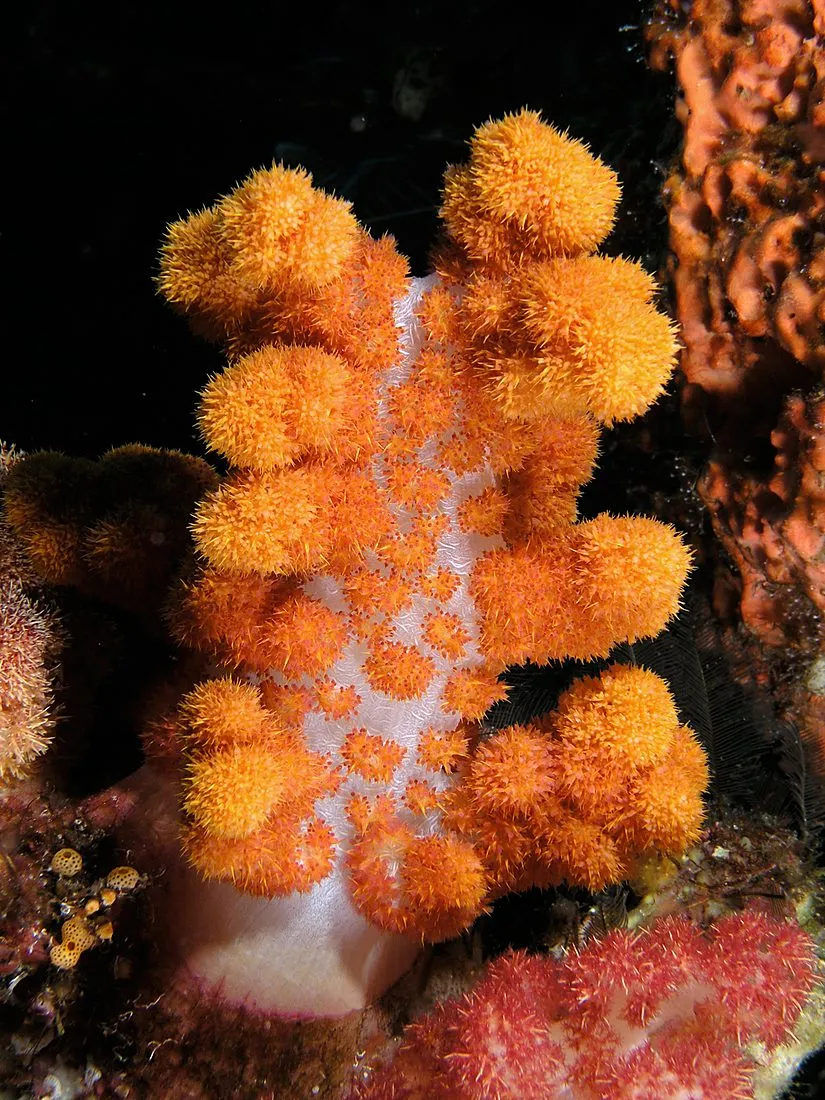
Pictured coral reef · Nhobgood Nick Hobgood (Wikimedia Commons)

So he ran it properly: ten pairs, each a healthy fragment and a bleached fragment cut from the same animal. In five pairs the tissue touched, and in five the fragments sat a few millimetres apart 248. All five touching pairs recovered fully, in seven weeks, which the Science Advances paper (14 October 2026) calls the fastest documented recovery of bleached coral. All five pairs with a gap died 248. In some cases three days of contact was enough to start the transfer, as the algae that feed the coral moved across tissue that had fused 248.

02/07 Natural Sci. Technology

A candidate dwarf planet turns up inside Pluto's own range of distances

On October 13, Matthew Holman of the Center for Astrophysics | Harvard & Smithsonian was running data from the Vera C. Rubin Observatory through a search algorithm that compares billions of detections and links the ones that belong to the same object 75.

Vera C. Rubin Observatory
Pictured Vera C. Rubin Observatory · NOIRLab/NSF/AURA/C. Corco (Wikimedia Commons)

The object, provisionally 2026 ED138, was bright for its distance, about 46 times farther from the Sun than Earth is, which pointed to something big 75182. Mario Jurić at the University of Washington dug 20 more detections out of Rubin's records, and older survey images pushed the object's history back to 2016, roughly a decade of evidence for reconstructing its orbit 75200. Current estimates put it at 600 to 1,500 kilometers across, on an orbit tilted 25 degrees from the plane of the planets 69182. "My first reaction was one of excited disbelief," Holman said, and he began checking whether he or the code had made a mistake 75. The images had been on file for years before any code connected them.

What each field noticed (2)
New Atlas

World's largest digital camera snaps new world beyond Pluto

This angle was why it stayed hidden. It orbits near the plane of the Milky Way, where millions of background stars bury a faint, slow-moving speck. Finding it took software that connects observations scattered across Rubin's enormous collection of detections 200. Futurism added that the telescope carries a 3.2-gigapixel camera, considered the largest digital camera ever built 182.

Read the story
03/07 Life Sciences

The developing brain edits out its own genetically flawed neurons

A team at Harvard Medical School and Boston Children's Hospital sequenced the DNA and RNA of 44,861 individual brain cells and found that the prenatal cortex is full of large duplications and deletions of DNA, called copy number variants.

a newborn baby
Pictured a newborn baby · Studio 7042 (via stocksnap)

On average 25.9 percent of prenatal neurons carried them, and in some samples up to 46 percent. After birth the average falls to 6.2 percent 81. Neurons with a heavy load of these variants turn down genes needed to build and maintain synapses. They lose the competition to wire into working circuits and die off 81. The work was published in Nature on October 28. The fetal cortex makes an astronomical surplus of neurons and discards a large share around birth, and this is the first account of which ones go and why 81.

04/07 Natural Sci.

Gut pain that outlasts inflammation may come from stiff tissue

Many people with ulcerative colitis, the most common form of inflammatory bowel disease, keep hurting after medication has calmed the inflammation and the colonoscopy looks normal.

a doctor consulting a patient
Pictured a doctor consulting a patient · Direct Media (via stocksnap)

A study in Science Immunology (October 23) offers a reason 16. Dr. Heng Xu of Ninth People's Hospital in Shanghai and colleagues started with single-cell sequencing from patients with ulcerative colitis and from mice with the disease. One cell type stood out: an immune cell that lives permanently in the gut wall and sits touching nerve endings. It was more numerous in colitis and carried more of the protein Piezo1, which contributes to pain signals in neurons 16. When the team pressed a probe on the gut tissue, it was stiffer in two mouse models, one with visible inflammation and one with almost none. The mice with almost none still showed pain 16. In Xu's words, that stiffness "alone keeps triggering the alarm even after the fire is out." 16

05/07 Psychology Life Sciences

Feeling good turns out to be a separate target from feeling less bad

In a 2026 randomized trial of 98 adults with severely low positive affect and depression or anxiety, 15 sessions of Positive Affect Treatment cut anxiety and depression more than a treatment aimed at reducing negative affect.

a woman enjoying a sunrise
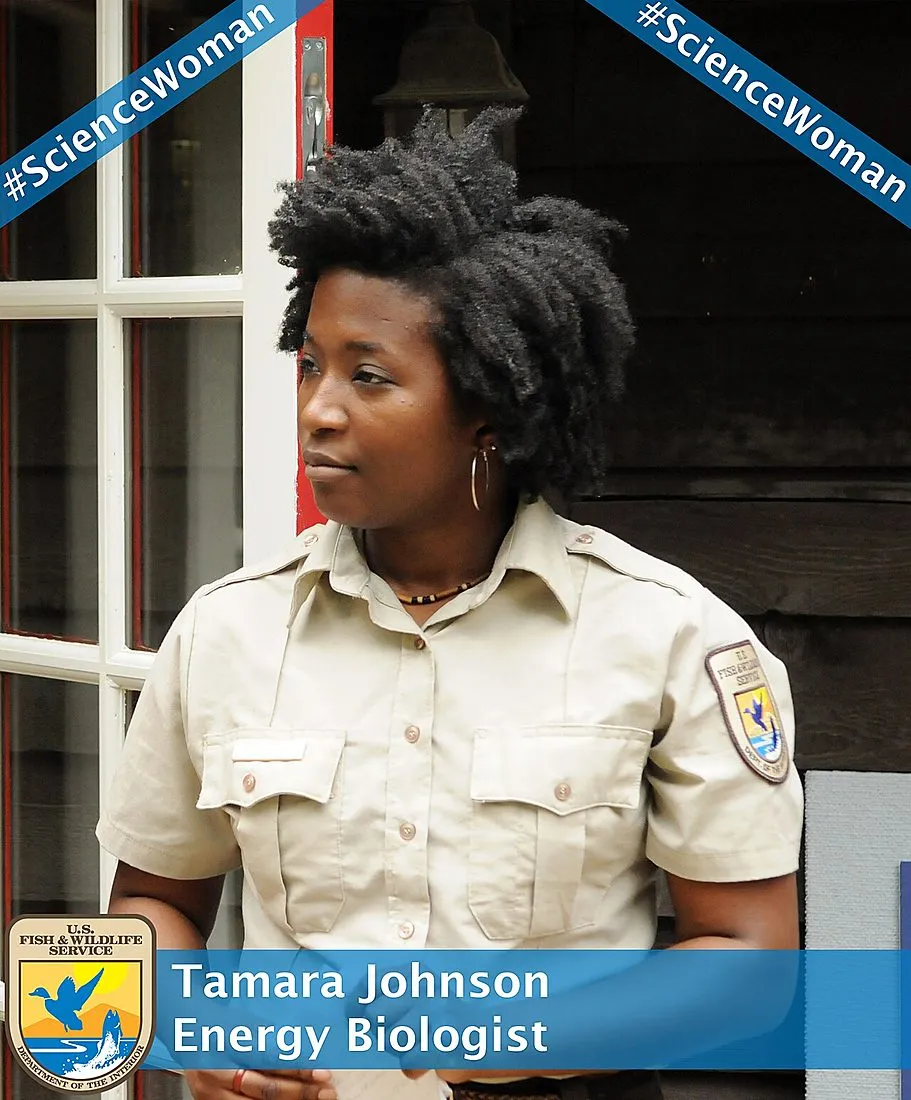
Pictured a woman enjoying a sunrise · USFWS/Southeast (Wikimedia Commons)

The advantage held at one-month follow-up 121. The therapy, developed by Michelle Craske, Alicia Meuret and colleagues, goes after the reward system directly. It trains people to anticipate good experiences, to savor them while they happen, and to notice what made them good so they can repeat them 121.

What each field noticed (2)
Psychiatric Times

The Lingering 'Blah': Residual Symptoms and Sleep as an Early Warning Sign

Psychiatrists describe the same gap from the clinic. Dr. Harding says a vague sense of "blah" is the most common complaint that lingers after a patient starts to respond, and Dr. Citrome asks about sleep at every visit because patients report it accurately and early trouble sleeping can be a warning sign 86. A companion episode adds a figure from Erin Crown: roughly 55 percent of patients with major depression who have anhedonia never see it resolve 85.

Read the story
06/07 Good News

Namibia's desert lions are tracked by rangers with smartphones and GPS collars

In 2018, three skinny lions turned up at Benjamin Kordom's family farm south of Khorixas, in north-west Namibia. The dogs sensed them first, and the children, who had "never seen lions in the wild, only in pictures at school," ran for the house 229.

desert-adapted lion in Namibia
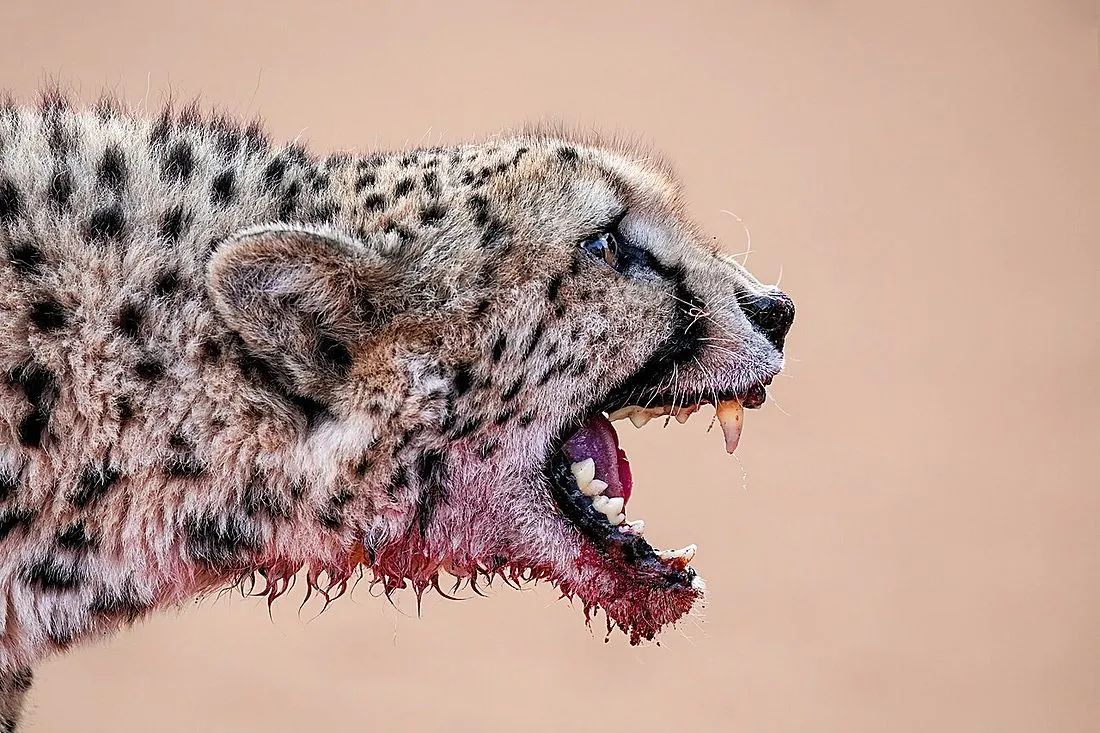
Pictured desert-adapted lion in Namibia · Giles Laurent (Wikimedia Commons)

The lions ate a duck and chicken dinner, were chased off, and killed a dozen dogs on a neighbouring farm 229. Kordom joined the Lion Rangers programme, launched that year and now running across 11 conservancies. He is now field coordinator for more than 40 rangers, patrol leaders and rapid response team members, many of them farmers, covering 40,000 square kilometers from the Skeleton Coast to the edge of Etosha 229. They use smartphones, camera traps and GPS collars, and patrol up to 40 kilometers a day on foot. They log every sighting, kill, track and scat, plus each lion's body condition and injuries 229.

07/07 Plant-Based

Cow-free casein gets an FDA "no questions" letter

Four months after filing a joint notice, the European startups Formo and Those Vegan Cowboys received a "no questions" letter from the US FDA on their precision-fermented casein.

a wheel of cheese
Pictured a wheel of cheese · Artprof23 (Wikimedia Commons)

It is the first such letter issued for precision-fermented casein in the country 210. The FDA reviewed the full dossier filed in December 2025: identity, manufacturing, allergenicity, toxicology and dietary exposure. The letter covers use in cheese alternatives at up to 25 percent inclusion 210. Casein is the group of proteins that makes up 80 percent of dairy protein, and it is what makes hard cheeses melt and stretch 210. Microbes fed a specific DNA sequence make it in bioreactors. The two companies worked together on R&D for two years and have since gone separate ways, so they now share one letter and two roadmaps 210.

Quick notes

Shorter discoveries from this morning, worth knowing but not a full story.

Smaller EV batteries, longer range? Scientists may have found a way KAIST researchers borrowed chip-making precision so lithium piles up evenly on the copper foil of anode-free batteries instead of growing sharp dendrites, a lab-stage fix for the problem that has limited their lifespan 6. Latest Science News -- ScienceDaily
New battery manufacturing method cuts processing time 60%, could save $100 million Cornell and a Binghamton battery maker found they could shorten "formation," a stage worth about a third of production costs, by up to 60 percent, because key resistance measurements settle after just 1.5 cycles 193. Interesting Engineering
Growth, yield and nutrient-use responses of drought-tolerant maize varieties to sowing date and fertilizer microdosing in northern Benin In a two-year trial in northern Benin, small fertilizer doses raised maize yields 153 to 247 percent over no fertilizer, and the drought-tolerant varieties peaked at 35 kg of nitrogen, less than half the recommended 76 41. PLOS One
These 1970s Kids Had to Stay in School For 1 Year Longer. Decades Later, The Results Are Dramatic. A 1972 law raised the school-leaving age from 15 to 16 for anyone born after September 1, 1957, and that sharp cutoff gave researchers what they call the first causal evidence that more schooling means less dementia 63. ScienceAlert
Maxwell's Demon Can Extract Energy From Hidden Memories, Study Finds A Konstanz team trapped a glass bead with a laser in a liquid full of micelle strands they could not see, and still pulled out extra energy by reading what the bead's motion revealed about that hidden network 68. ScienceAlert
NASA’s Artemis I mission reveals surprising radiation levels near the Moon More than 10,000 tiny crystals riding in two mannequins around the Moon found radiation higher than in Earth orbit, but not as much higher as scientists expected, in preliminary measurements 11. Latest Science News -- ScienceDaily
Scientists discover a hidden oxygen reservoir deep inside Earth High-pressure experiments and simulations show magma can hold more oxygen than its chemistry should allow, a possible hidden contributor to Earth's oxygen-rich atmosphere billions of years ago 9. Latest Science News -- ScienceDaily
First-Ever Shared Framework for Women’s Heart Health Details 5 Key Phases Four medical societies produced one shared framework for women's heart health, covering four life stages plus pregnancy, and it flags early signals such as a first period before age 10 228. Nice News
Kenya unlocks $160 million to protect the Maasai Mara and Tsavo ecosystems The money is split evenly between the Kenyan government and private donors, and it is released only as the government hits policy benchmarks, covering 173,000 square kilometers over ten years 250. The Optimist Daily: Making Solutions the News
Nature-Inspired Tech Prevents Microplastics Entering Atlantic Ocean Through Wastewater A filter that copies water-shedding plants removed 98 percent of microplastic particles in lab tests, and Atlantic City is now running a two-year pilot to see if it holds up at full scale 224. Good News Network
What has actually caused the decline in drug overdose deaths? US overdose deaths fell 27 percent in 2024 and early 2025 data show another drop, and experts say the credit is shared among changes in the drug supply, user behavior and harm reduction 97. STAT
Vivienne Westwood Showcases Vegan Feathers At Paris Fashion Week Three outfits in the SS27 collection used FEVVERS, a plant-based feather alternative, in a new continuous-trim format designed to fit existing production lines 214. Plant Based News
Why Some People Love Hugs While Others Hate Them Among 15,049 UK adults, about 70 percent remembered hugs mainly for comfort and support, and people with more empathy and body awareness were likelier to keep those warm memories 78. Neuroscience News
Does Bed-Sharing Cause Anxiety? It's About Timing In a UK study that followed families from pregnancy, bed-sharing in infancy was not linked to later anxiety or depression, and later-starting bed-sharing may signal a child's struggles rather than cause them 132. Psychology Today: The Latest

Our process. Your trust.

Every discovery above traces back to an article we read in full. This is the whole corpus behind this morning, and what it was made of.

  • 48 Sources scanned
  • 276 Articles read
  • 8 Fields covered
  • 7 Discoveries

The sources that carried this morning

  1. 1 Nature 20 articles
  2. 2 PLOS One 20 articles
  3. 3 Psychology Today: The Latest 20 articles
  4. 4 Ars Technica - All content 15 articles
  5. 5 The Conversation Articles 13 articles
  6. 6 Latest Science News -- ScienceDaily 12 articles
  7. 7 STAT 12 articles
  8. 8 Interesting Engineering 10 articles
How an edition is made

Everything we read today

Natural Sciences 77 articles
Knowable Magazine
PLOS One
Life Sciences & Medicine 27 articles
Psychology & Behavioral Science 31 articles
Psyche | Know Your Self
Social Sciences 26 articles
Technology & Innovation 45 articles
Plant-Based & Vegan 17 articles
Solutions & Good News 37 articles
Human Stories & Ideas 16 articles
The long view · not today’s news, the story behind it

Today’s discoveries didn’t come from nowhere. Here’s the older, ongoing story they belong to, a moment from this day in history, and a question to test what stuck.

Where the story stands

On this day in science

1969 The first message travels the internet's ancestor Researchers sent the first message between two computers over ARPANET, the network that grew into the internet. The link connected labs in California and set the digital world in motion. More from the Almanac →

Before you go: today’s quiz

The daily quiz

What does a study's “effect size” tell you?

Reveal the answer

How big the difference is, which decides whether a real result actually matters

A result can be real but tiny. Effect size measures how large the difference is, which is what tells you whether it matters in real life.

Read the explainer →

Previous editions

Every morning we have published, newest first. Nothing expires.

View the full archive

Get this every morning.

Liked today’s? Tomorrow’s reaches your inbox before breakfast.

  • One email each morning, never more
  • The day’s real discoveries across 8 fields
  • One calm read with your coffee

Free from tomorrow morning, for good.

Same letter. Your $5 a month keeps it free for everyone else.

Any amount, charged once.