


The daily brief · October 23, 2026

Prime editing inside a patient, and free online help for new mothers

Medicine got more personal today: a gene edited inside the body, and a cancer vaccine built from one patient's own tumor.

  • 7 Discoveries
  • 274 Articles read
  • 49 Sources
  • 11 Min read

Today’s discoveries

Everything this morning found, in the order we would read it.

7 stories
  1. 01 Natural Sci. A gene gets rewritten inside a living person for the first time Prime Medicine, a company in Cambridge, Massachusetts, announced earlier this month that it had treated the first person in its prime editing trial, the first known case of that… Source: Nature 1 min read
  2. 02 Life Sciences A melanoma vaccine made from the patient's own tumor cuts recurrence by 42% In a large clinical trial run by Moderna and Merck, a personalized mRNA vaccine reduced the risk of melanoma recurrence by 42% compared with a standard treatment. Source: STAT 1 min read
  3. 03 Life Sciences A free online course cuts postpartum depression relapse by 26% A randomized trial of 500 pregnant women across all 50 U.S. Source: Neuroscience News 1 min read
  4. 04 Natural Sci. The brain files fractions and whole numbers on the same line Researchers led by Stanislas Dehaene and Daniela Valério scanned adults with 7T fMRI while they compared numbers, and found that activity across the intraparietal sulcus shifts in an… Source: PLOS Biology 1 min read
  5. 05 Social Sci. SunZia, the biggest renewable project in US history, finally switches on In central New Mexico, more than 900 turbines, each as tall as the Statue of Liberty and spread across desert roughly the size of Chicago, now feed a 550-mile transmission line to… Source: Future Perfect | Vox 1 min read
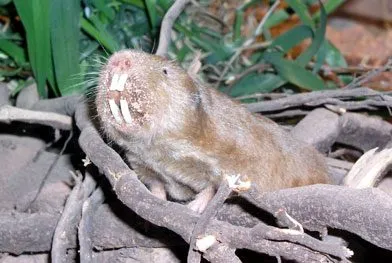
  6. 06 Natural Sci. Mole rats get stressed when Earth's magnetic field disappears Ansell's mole rat is a near-blind, social burrower that digs tunnels kilometers long, the longest built by any mammal except humans, and it appears to steer by magnetic fields. Source: ScienceAlert 1 min read
  7. 07 Good News A Samoan island recovers within a year of losing its rats and pigs Nu'utele Island is a Key Biodiversity Area in Samoa with one of the country's most pristine native forests, and it had been damaged by invasive rats and by feral pigs that churned up… Source: Good News Network 1 min read

The feel-good story of the day

teenagers at a high school homecoming Candace McDaniel (via stocksnap)
Pictured teenagers at a high school homecoming

A homecoming king hands over his crown

At a pep rally at Mahanoy Area High School in Schuylkill County, Pennsylvania, two friends were the nominees for homecoming king. Axton Kuhl, 17, has Down syndrome and had been looking forward to homecoming for years. Keni Cedanio Ramirez, also 17, heard his name announced as the winner.

Then Keni noticed that Axton was struggling under the attention of a packed gymnasium. Keni took off his crown and sash and gave them to his friend, and the two embraced. "I just did what any friend would have done, and I tried to cheer him up," he said. Axton's mother, Alyssa Shellhamer, said her son had talked about becoming king for years. "He'll talk about it forever," she said.

Keni says the lesson came from home. His younger brother has autism, and he hoped someone would show his brother the same kindness. He credits his mother for teaching him the values behind it, and says seeing Axton smile made him forget his own nerves. The video spread, strangers stopped to tell him they were proud, and his answer to why it resonated was short: "I try not to treat nobody like they’re less than me."

Today’s complete edition

The discoveries, in full

Read the evidence, what it changes, and the reporting behind each of today’s 7 discoveries.

01/07 Natural Sci.

A gene gets rewritten inside a living person for the first time

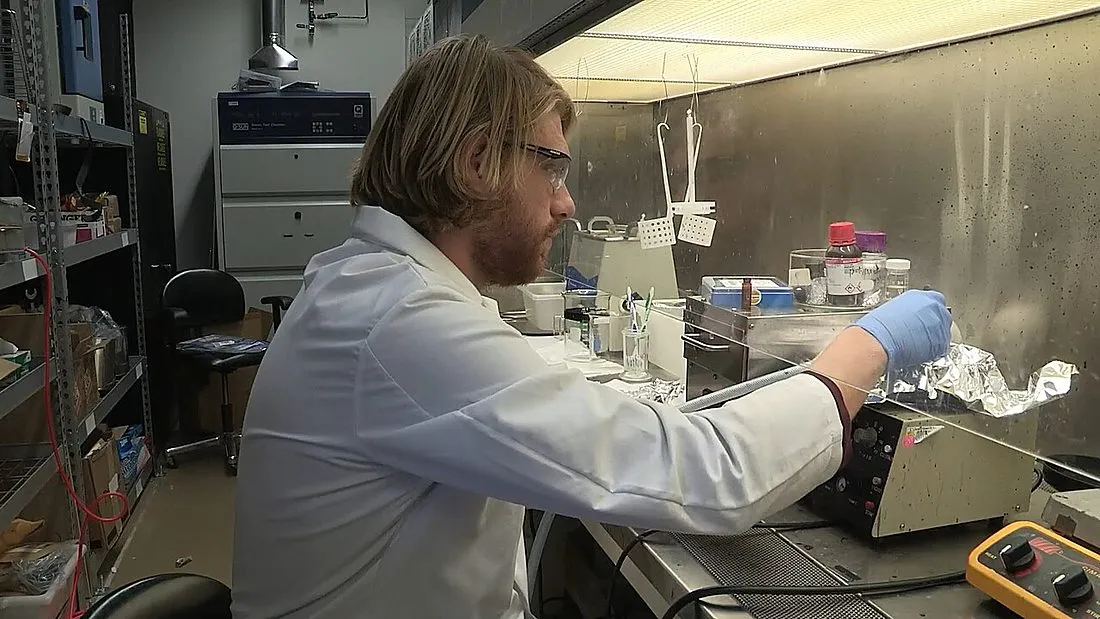
Prime Medicine, a company in Cambridge, Massachusetts, announced earlier this month that it had treated the first person in its prime editing trial, the first known case of that technique altering DNA directly in a human body 25.
a scientist working in a research laboratory
Pictured a scientist working in a research laboratory · Stanford ENERGY, Video by Mark Shwartz (Wikimedia Commons)

The target is Wilson disease, caused by mutations in a gene called ATP7B. That gene makes a protein that carries excess copper out of liver cells, and without it the copper builds up and can damage the liver and the nerves 25. The treatment rewrites DNA in the liver cells to erase the mutation. It does not switch the gene off. That distinction matters: Casgevy, the only gene-editing therapy the FDA has approved so far, uses CRISPR-Cas9, which is often used to disable genes rather than rewrite them 25. Base editing can fix single DNA letters but cannot make the corrections the most common ATP7B mutations need, so prime editing was the tool left standing 25.

02/07 Life Sciences

A melanoma vaccine made from the patient's own tumor cuts recurrence by 42%

In a large clinical trial run by Moderna and Merck, a personalized mRNA vaccine reduced the risk of melanoma recurrence by 42% compared with a standard treatment 90.

A melanoma vaccine made from the patient's own tumor cuts recurrence by 42%
Unknown (via rawpixel)

The vaccine, intismeran autogene, is made for each patient. It targets neoantigens, the mutations unique to that person's tumor, and it rests on the same mRNA technology that produced the Covid-19 vaccines 90. Detailed numbers were presented at the European Society for Medical Oncology congress in Madrid, where oncologists called the result an important advance because patients lived significantly longer without their cancer returning 9097.

03/07 Life Sciences

A free online course cuts postpartum depression relapse by 26%

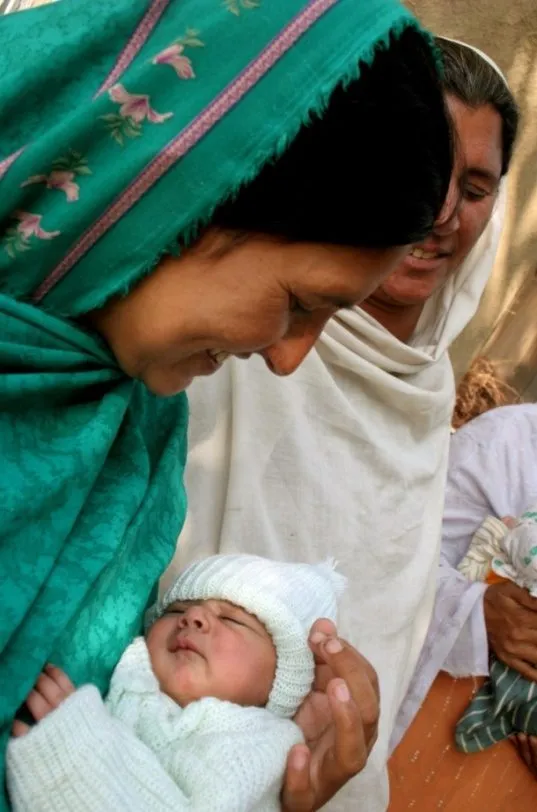
A randomized trial of 500 pregnant women across all 50 U.S. states, all with a history of major depression, found that an eight-session online mindfulness program lowered the rate of depression relapse by 26% compared with usual care, through six months postpartum 86.

a mother holding her newborn baby
Pictured a mother holding her newborn baby · USAID Pakistan (Wikimedia Commons)

The program, Mindful Mood Balance for Moms, is free and self-paced. It adapts mindfulness-based cognitive therapy with peer videos and audio practices, and it came out of the University of Colorado Boulder and Massachusetts General Hospital 86. The trial was published in The Lancet Public Health 86. Participants also reported less everyday anxiety and less perceived stress 86.

04/07 Natural Sci. Life Sciences

The brain files fractions and whole numbers on the same line

Researchers led by Stanislas Dehaene and Daniela Valério scanned adults with 7T fMRI while they compared numbers, and found that activity across the intraparietal sulcus shifts in an orderly path as the numbers get bigger 3585.

a student solving math problems on a chalkboard
Pictured a student solving math problems on a chalkboard · Airman 1st Class Larissa Greatwood (Wikimedia Commons)

Whole numbers such as 3, 7 and 12 and fractions such as 1/4, 2/3 and 5/8 landed on one shared map, with a topographic layout of numerical preference in the anterior inferior parietal cortex common to both 3585. The study was published October 22 in PLOS Biology 85.

What each field noticed (2)
Neuroscience News

How the Brain Maps Every Number

This write-up gives the sample, 20 native French-speaking adults deciding whether each number was larger or smaller than the one before. It also notes the price of fractions: slower responses and more errors when two fractions are close in value 85.

Read the story
05/07 Social Sci.

SunZia, the biggest renewable project in US history, finally switches on

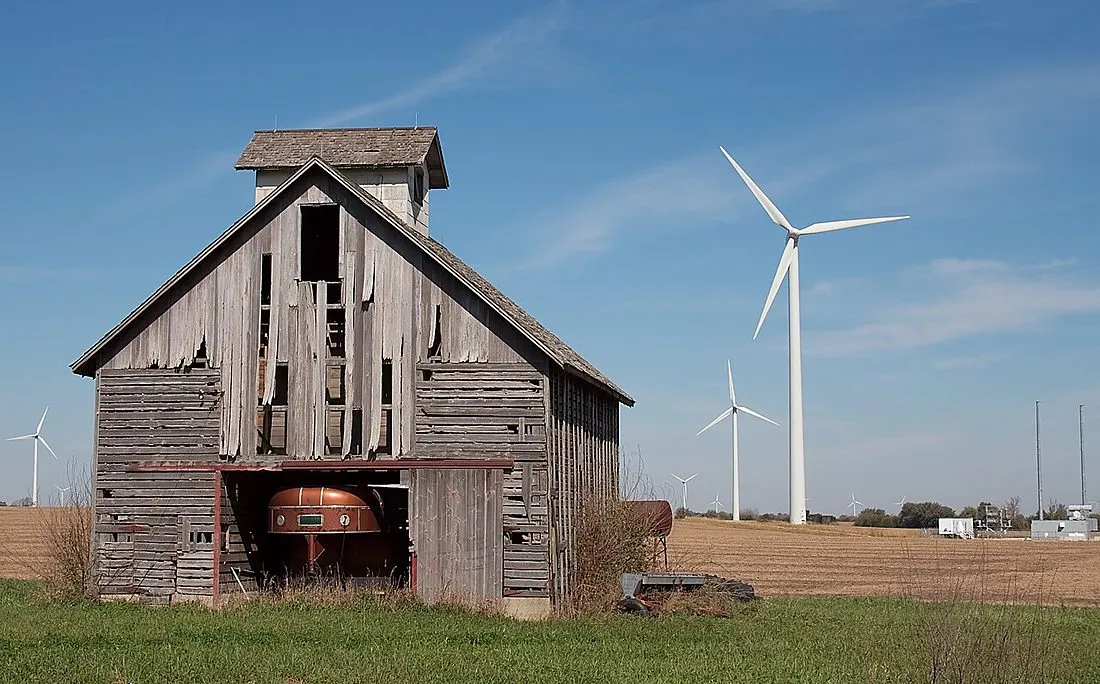
In central New Mexico, more than 900 turbines, each as tall as the Statue of Liberty and spread across desert roughly the size of Chicago, now feed a 550-mile transmission line to customers as far away as California 136.

wind turbines in a desert landscape
Pictured wind turbines in a desert landscape · Dori (Wikimedia Commons)

The SunZia Wind and Transmission project powers over one million homes and generates more electricity than the Hoover Dam 136. It took about 20 years: permitting problems, lawsuits and, above all, an energy market that wasn't ready for the power it had to offer 136. When the turbines first came online, the head engineer called Pattern Energy's CEO to say "It works!", and at the ribbon-cutting some construction workers showed off new turbine tattoos 136.

06/07 Natural Sci.

Mole rats get stressed when Earth's magnetic field disappears

Ansell's mole rat is a near-blind, social burrower that digs tunnels kilometers long, the longest built by any mammal except humans, and it appears to steer by magnetic fields 70.

Ansell's mole rat
Pictured Ansell's mole rat · Anfimo at German Wikipedia (Wikimedia Commons)

Neurobiologists at the Max Planck Institute for Neurobiology of Behavior made the animals' brains transparent with a chemical procedure to build a 3D atlas, then exposed mole rats to magnetic fields that changed every 30 seconds, along with a near-zero field about 2% of Earth's strength in Germany 70. The strongest, most widespread brain response came from the near-zero field, with extra activity in regions linked to stress, anxiety and fear, including the amygdala 70. The researchers say this is the first time a mammal has been shown actively avoiding the absence of a magnetic field 70. In this experiment the loudest signal was a missing one.

07/07 Good News

A Samoan island recovers within a year of losing its rats and pigs

Nu'utele Island is a Key Biodiversity Area in Samoa with one of the country's most pristine native forests, and it had been damaged by invasive rats and by feral pigs that churned up soil and kept native plants from growing 229.

Nu'utele Island, Samoa
Pictured Nu'utele Island, Samoa · Stephen Glauser (Wikimedia Commons)

Between March 2025 and May 2026, field teams made 12 expeditions and spent more than 130 days on the island's rugged terrain removing the animals, working with local landowners, Island Conservation and Samoa's environment ministry 229. A year on, project manager Paul Jacques reports native seedlings carpeting the forest floor, knee-high where regeneration had been suppressed, and giant taro growing where crops would have failed 229. One month after the removal, researchers found active nests with eggs in bird's-nest ferns, a spot that had been highly vulnerable to invasive species 229.

Quick notes

Shorter discoveries from this morning, worth knowing but not a full story.

A revolutionary new microscope could reveal the hidden machinery of life Berkeley physicists brought phase contrast, the trick that earned a 1953 Nobel Prize, to electron microscopy with a laser phase plate, which could let cryo-EM see proteins as small as one-third the size of those that challenge current microscopes 9. ScienceDaily
STAT+: Alnylam says Huntington’s drug shows promise in early study At the highest dose, the experimental drug brezosiran cut mutant huntingtin in patients' spinal fluid by 60% or 64% depending on the assay, and a placebo-controlled study to see whether it slows the disease starts next year 88. STAT
New Multi-Arm, Multi-Stage UK Trial to Test Alzheimer Treatments The UK's AD-SMART trial will test two repurposed drugs, one for type 2 diabetes and one for ADHD, against placebo in up to 1,200 people, dropping any that fail early so new candidates can step in 87. Psychiatric Times
What went right this week: the good news that matters Across 28 Pacific and Indian Ocean islands, reefs around atolls with thriving seabird colonies grew up to 2.5 times faster than those around rat-infested ones, because bird droppings fertilize the reef 231. Positive News
What went right this week: the good news that matters In a two-year basic income trial with 211 people in three Indigenous communities in the Peruvian Amazon, food insecurity fell from 73% to 26%, though the trial was small and had no control group 231. Positive News
‘World’s Largest Deforestation Project’ Halted Early, Saving Potentially 4 Million Acres Indonesia reached rice self-sufficiency about three years early, and an official says 4.4 million acres of forest once slated for rice will stay untouched, with future expansion pointed at 28 million acres of degraded land 226. Good News Network
Beneath psilocybin’s apparent brain chaos, scientists find signs of a hidden order A Nature study found that under psilocybin the brain's activity is not random: it forms structured patterns that track what participants are doing and experiencing 112. PsyPost
New biological marker could end trial and error in depression care A brain-derived circular RNA called CDR1as, readable from a standard blood draw, was higher at baseline in patients who did not respond to the antidepressant sertraline after eight weeks, a first step toward picking a drug on the first try 109. PsyPost
Tofoo & Co to Double Tofu Production & Support £73M in Sales with New Plant Protein Factory The UK's leading tofu brand has broken ground on a North Yorkshire factory that will double its output to more than 10,000 tonnes by 2033 and support £73M in sales 204. Green Queen
Would You Try a New Potato That Tastes Like Roast Chicken? After more than a decade of breeding a French heirloom with a New York variety, Row 7's Poulette potato tastes, according to chef Dan Barber, as if it were cooked in chicken fat, and its name means "young hen" 218. VegNews
Revamped playground design could protect children around the world from dangers of the sun A design method that sorts playgrounds into activity zones to cut ultraviolet exposure is already in use at a New Zealand school, in a country with some of the world's highest skin cancer rates 67. Phys.org
Wildlife Photog Captures Hummingbird Hawk-Moth Hovering at 85 Wingbeats Per Second A warm summer made 2026 a record year for hummingbird hawk-moth sightings in the UK, and the 2-inch moths out-hover hummingbirds, 85 wingbeats a second against about 50 230. Nice News
Once Buried in Garbage, Now Open to People: 4 Indian Cities Reclaiming Landfills In Gorakhpur, a 40-acre former dumping ground is now an eco-park drawing around 500 visitors a day, and in Raichur part of a cleared dumpsite hosts a Miyawaki forest 236. The Better India
150 Andhra Women Are Turning a Harmful Water Weed Into Handbags, Home Décor & Income Women in Andhra Pradesh's Krishna district weave canal-clogging water hyacinth into handbags and baskets, clearing 100 to 120 tonnes a month early on and earning an average of Rs 10,000 to Rs 15,000 monthly 242. The Better India
The Giving Grove: how Kansas City’s free community orchards became a national model The Giving Grove has planted 14,000 free fruit trees in 847 orchards across 17 cities, and more than four out of five are still in production 244. The Optimist Daily

Our process. Your trust.

Every discovery above traces back to an article we read in full. This is the whole corpus behind this morning, and what it was made of.

  • 49 Sources scanned
  • 274 Articles read
  • 8 Fields covered
  • 7 Discoveries

The sources that carried this morning

  1. 1 PLOS One 20 articles
  2. 2 Psychology Today: The Latest 20 articles
  3. 3 Ars Technica - All content 19 articles
  4. 4 Latest Science News -- ScienceDaily 15 articles
  5. 5 Phys.org 14 articles
  6. 6 STAT 13 articles
  7. 7 Interesting Engineering 10 articles
  8. 8 Upworthy 10 articles
How an edition is made

Everything we read today

Natural Sciences 84 articles
PLOS One
Life Sciences & Medicine 19 articles
Psychology & Behavioral Science 32 articles
Social Sciences 13 articles
Technology & Innovation 54 articles
Plant-Based & Vegan 21 articles
Solutions & Good News 31 articles
Human Stories & Ideas 20 articles
The long view · not today’s news, the story behind it

Today’s discoveries didn’t come from nowhere. Here’s the older, ongoing story they belong to, a moment from this day in history, and a question to test what stuck.

Where the story stands

On this day in science

2001 The iPod puts a thousand songs in your pocket Apple unveiled the iPod, a small white music player that could hold a thousand songs and slip into a shirt pocket. It changed how people carried and bought music, and it set Apple on the path to the iPhone six years later. The click wheel became one of the most familiar gadgets of its decade. More from the Almanac →

Before you go: today’s quiz

The daily quiz

In 1953, Watson and Crick described the structure of DNA as what shape?

Reveal the answer

A double helix

In 1953 James Watson and Francis Crick published their description of DNA's double-helix structure, revealing how life stores and copies its own instructions.

See the day →

Previous editions

Every morning we have published, newest first. Nothing expires.

View the full archive

Get this every morning.

Liked today’s? Tomorrow’s reaches your inbox before breakfast.

  • One email each morning, never more
  • The day’s real discoveries across 8 fields
  • One calm read with your coffee

Free from tomorrow morning, for good.

Same letter. Your $5 a month keeps it free for everyone else.

Any amount, charged once.