




The daily brief · October 19, 2026

Bleached corals recover by touch, and a zombie star won't budge

Several things that looked past saving turned out to have a way back: a bleached coral, an ice cliff, a depression that nothing else had touched.

  • 7 Discoveries
  • 160 Articles read
  • 31 Sources
  • 11 Min read

Today’s discoveries

Everything this morning found, in the order we would read it.

7 stories
  1. 01 Natural Sci. Bleached corals healed by touching their own clones At Stanford, Danny Collins paired 10 coral fragments, one bleached and one healthy in each pair, all cut from the same animal. Source: Phys.org 1 min read
  2. 02 Natural Sci. A 1181 supernova is made of tiny knots, and its star never moved In August 1181, astronomers in China and Japan recorded a new naked-eye star in Cassiopeia. Source: Live Science 1 min read
  3. 03 Life Sciences Three brain pathways separate lasting depression relief from none Mount Sinai researchers examined the largest group of patients assembled so far across several independent cohorts who had received subcallosal cingulate deep brain stimulation for… Source: ScienceDaily 1 min read
  4. 04 Good News An antibody for a disease that turns muscle to bone cuts new lesions Fibrodysplasia ossificans progressiva turns muscle, tendon and ligament into bone, and a single flare can begin a joint that never bends again. Source: The Bright Side 1 min read
  5. 05 Good News The Antarctic ice cliffs fell fast, then stopped Caroline Needell, with Catherine Walker and Jeremy Bassis, used NASA's ICESat-2 to measure more than 15,000 Antarctic ice cliffs about every three months from 2019 to 2023. Source: The Bright Side 1 min read
  6. 06 Human Stories People kept walking the lake shore at White Sands while the climate lurched The White Sands footprints in New Mexico drew controversy in 2021 because they placed people in North America thousands of years earlier than other accepted sites. Source: Nautilus 1 min read
  7. 07 Social Sci. Making the stove cheaper, not the cooking, got Kenyans off charcoal Economists Susanna Berkouwer and Joshua Dean cross-randomized three things among 2,134 charcoal users in Kenya: a discount on buying an US$84 induction stove, a discount on using it, and… Source: NBER Working Papers 1 min read

The feel-good story of the day

Subrahmanyan Chandrasekhar Wikimedia Commons / Subrahmanyan Chandrasekhar
Pictured Subrahmanyan Chandrasekhar

The 19-year-old who did the math on a ship

Subrahmanyan Chandrasekhar was born on October 19, 1910, in Lahore. In 1930 he sailed to England for graduate study at Cambridge, and on the voyage he worked out what happens to a white dwarf, the dense Earth-sized core a star leaves behind, when it is heavy enough. Above roughly 1.4 times the mass of the Sun, he found, such a star cannot hold itself up. He was 19.

The idea was not welcomed. In 1935 the astronomer Arthur Eddington dismissed it publicly, and Chandrasekhar kept working anyway. He moved to the University of Chicago and spent the rest of his career there, and he went on to study the structure of stars, the motion of stellar systems and the physics of black holes. In 1983 he shared the Nobel Prize in Physics with William Fowler. He died in 1995.

The limit now carries his name, and NASA's Chandra X-ray Observatory was named in his honor. White dwarfs are why today's supernova story has anything to say: the zombie star at the center of Pa 30 is one.

Today’s complete edition

The discoveries, in full

Read the evidence, what it changes, and the reporting behind each of today’s 7 discoveries.

01/07 Natural Sci.

Bleached corals healed by touching their own clones

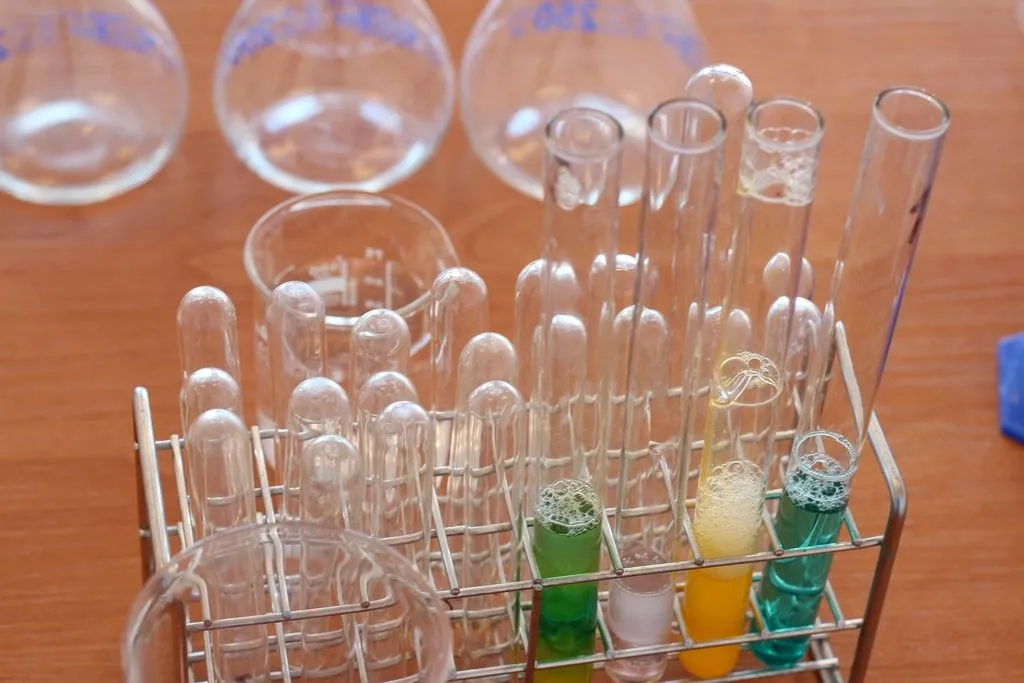
At Stanford, Danny Collins paired 10 coral fragments, one bleached and one healthy in each pair, all cut from the same animal. He set five pairs close enough to touch and left a gap of a few millimeters between the other five.

coral reef
Pictured coral reef · Unknown (via rawpixel)

The bleached fragments in the touching pairs recovered fully within seven weeks, the fastest documented recovery to date. The ones without contact died 28. The idea began in 2025, when Steve Palumbi found two fragments from one colony had tipped over in a tank. Color had returned to the bleached one wherever they touched, which meant its algae partners were back. Palumbi says genetically identical corals recognize each other, and their tissues fuse if they are the same clone. The paper is in Science Advances 28.

02/07 Natural Sci. Technology

A 1181 supernova is made of tiny knots, and its star never moved

In August 1181, astronomers in China and Japan recorded a new naked-eye star in Cassiopeia. Eight surviving texts date it to between Aug.

Gemini North telescope
Pictured Gemini North telescope · Mailseth (Wikimedia Commons)

4 and 6, and it stayed visible for 185 days. It is one of only five Milky Way supernovae known to have been witnessed before the telescope 18. The remnant, Pa 30, sits 7,500 light-years away. New Gemini North images from Hawaii show about 10 times more filamentary structure than anyone had seen before 18. The filaments turn out to be chains of tiny knots, not smooth streaks, and the work appears in The Astrophysical Journal 18. Ilaria Caiazzo says the planetary region of our solar system could fit inside each knot about ten times, and that the knots are strikingly uniform 98.

What each field noticed (2)
Futurism

Scientists Discover Weird Conditions at Site of Star That Exploded During the Period of Japanese Samurai

Futurism goes to the middle of the debris, where the star survived. Pa 30 is the only known star in our galaxy to have lived through an incomplete Type Iax supernova, probably after two white dwarfs collided 98. Explosions conserve momentum, Caiazzo notes, so a lopsided blast should have kicked the star away, and "we practically don't see the star moving away at all" 98.

Read the story
03/07 Life Sciences

Three brain pathways separate lasting depression relief from none

Mount Sinai researchers examined the largest group of patients assembled so far across several independent cohorts who had received subcallosal cingulate deep brain stimulation for depression that no conventional treatment had touched.

Three brain pathways separate lasting depression relief from none
Unknown (via rawpixel)

Lasting improvement tracked with stimulation reaching three white matter pathways: the cingulum bundle, the forceps minor, and the medial uncinate fasciculus/ventral amygdalofugal pathways. Patients who had not improved after two years shared a pattern of too little stimulation of one crucial connection. The paper appeared in the American Journal of Psychiatry on October 1 8.

04/07 Good News

An antibody for a disease that turns muscle to bone cuts new lesions

Fibrodysplasia ossificans progressiva turns muscle, tendon and ligament into bone, and a single flare can begin a joint that never bends again. The FDA approved garetosmab-grts, brand name Pasatru, on 19 August 2026 for adults with the disease.

a physician with a patient
Pictured a physician with a patient · Unknown (via rawpixel)

The antibody blocks activin A 145. In the OPTIMA trial, 63 adults (mean age 26.6) were split into placebo (21), 3 mg/kg (19) and 10 mg/kg (23). At 56 weeks, published in The Lancet, new bone lesions numbered 19 on placebo, 1 on the lower dose and 2 on the higher dose, with no deaths. A company readout from weeks 56 to 84 reports no new lesions on the drug and nine on placebo 145. That later figure is the company's, not a second journal paper.

05/07 Good News

The Antarctic ice cliffs fell fast, then stopped

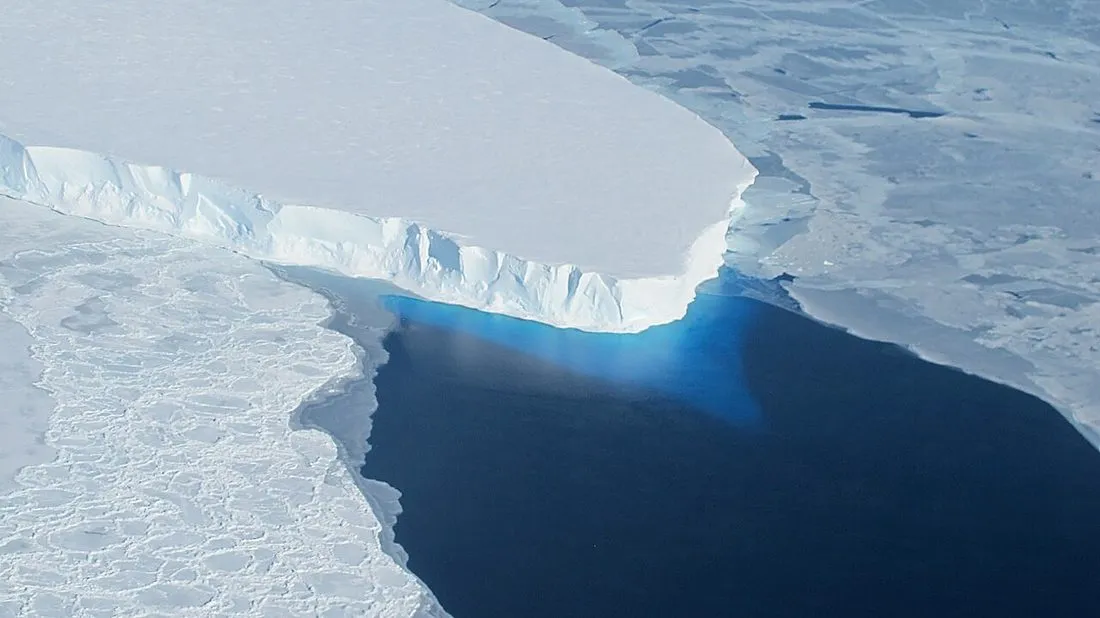
Caroline Needell, with Catherine Walker and Jeremy Bassis, used NASA's ICESat-2 to measure more than 15,000 Antarctic ice cliffs about every three months from 2019 to 2023.

Thwaites Glacier
Pictured Thwaites Glacier · Wikimedia Commons / Thwaites Glacier

The average cliff stood about 30 metres tall, and a few topped 100. The theory called marine ice cliff instability says a cliff taller than about 100 metres should collapse under its own weight, expose a taller cliff behind it, and keep going. When cliffs did retreat, they went faster than the models assumed. The retreat then ended: the glaciers they watched spread back toward the ocean and stabilised, and the team does not see the runaway effect. The paper is in Science, dated 15 October 146.

06/07 Human Stories

People kept walking the lake shore at White Sands while the climate lurched

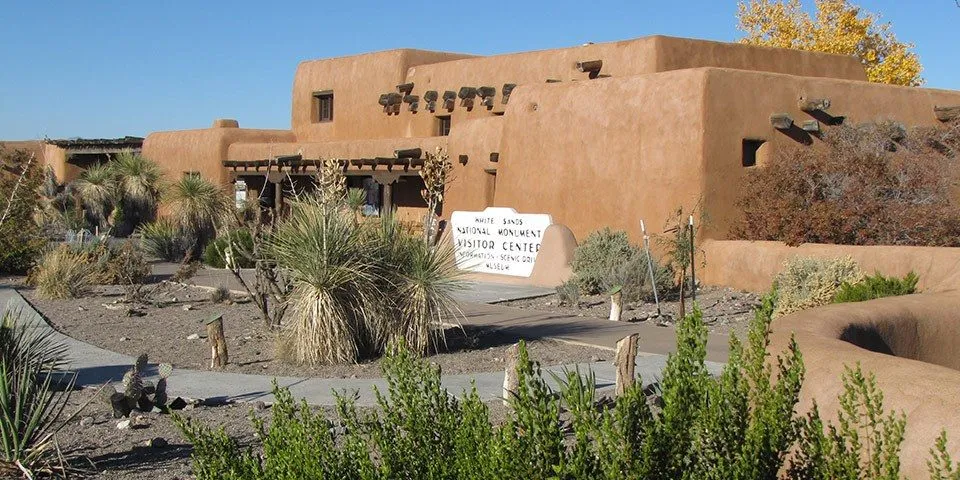
The White Sands footprints in New Mexico drew controversy in 2021 because they placed people in North America thousands of years earlier than other accepted sites. Later work with several independent dating techniques strengthened the dates.

White Sands National Park
Pictured White Sands National Park · Wikimedia Commons / White Sands National Park

Now expanded excavations have found 20 separate sediment horizons holding footprints, spanning about 23,500 to 21,700 years ago, in the depth of the last ice age. Pollen and plant waxes preserved in the sediment record the surroundings. Lake Otero filled much of the basin, conifer forest covered the mountains, and temperatures ran about 4°C colder than today. From about 23,600 years ago the lake shrank, oak and sagebrush replaced conifers, and a short severe drought hit around 23,200 years ago, matching a rapid shift seen in Greenland ice cores. The earliest footprint layer sits near that transition 157.

07/07 Social Sci.

Making the stove cheaper, not the cooking, got Kenyans off charcoal

Economists Susanna Berkouwer and Joshua Dean cross-randomized three things among 2,134 charcoal users in Kenya: a discount on buying an US$84 induction stove, a discount on using it, and an interest-free loan.

an induction cooktop
Pictured an induction cooktop · Unknown (via rawpixel)

A 75 percent usage subsidy had a precise zero effect on adoption and use. A discount on the stove itself produced large welfare gains 85. Credit constraints made the purchase subsidy work 35 to 73 percent better, up to US$10 to US$12 of observable welfare gain per subsidy dollar. The cost of abatement fell to US$12 per tonne of CO2e, against US$137 in a counterfactual with no such constraints 85.

Quick notes

Shorter discoveries from this morning, worth knowing but not a full story.

Archaeologists discover 1,200-year-old mummified hairless dog in Peru At Castillo de Huarmey, a Wari Empire site about 190 miles north of Lima, naturally mummified Peruvian hairless dogs and puppies turned up in burials, the first physical evidence of the breed there, though the lead author notes that past emotions are hard to read from bones 13. ScienceDaily
Japan's MMX mission aims to swipe soil samples from Mars's moon Phobos The H3 rocket lifts off today at 20:41 BST, starting a five-year trip that would bring Phobos soil home for the first time, arriving at Mars in August 2027 on a moon with about 0.1% of Earth's gravity 31. Phys.org
A single microwave line runs five silicon spin qubits with 99.9% accuracy RIKEN researchers fixed the crosstalk that usually drags fidelity from 99.95% to around 99.5%, so five qubits ran together through one line at 99.9% or better 108. Interesting Engineering
New Multi-Omics Study Maps How Exercise Can Change Bodies Salk researchers mapped 22 tissues in mice after eight weeks of wheel running; exercise changed nearly half the genes examined in at least one tissue, yet no single gene shifted in all 22 62. Psychology Today
Scientists discover that male and female skin play by different rules Tracking skin stem cells in living mice for five months showed female cells working in a coordinated way and male cells acting more independently, an effect set by sex hormones that fits faster wound healing in females 9. ScienceDaily
Mushroom peptide makes salt taste 70% saltier – and it's good for you Of 6,000 candidates from the edible Hypsizygus marmoreus mushroom, one peptide, ASHGEGF, raised perceived saltiness by 70.59% in human and electronic tongue tests; it has not yet been tried in real low-sodium food 114. New Atlas
A single dose of psilocybin eased depression within days, but its edge over placebo faded within a year In a Swedish trial of 35 adults, one 25-mg dose lifted depression on a self-report measure from day two for more than three months, while the difference on the main clinician-rated measure faded by one year 41. PsyPost
Black Death had dramatic effect on species diversity as humans abandoned farmland, study finds Across more than 100 European pollen records, landscapes where farming collapsed lost about 40% of their plant biodiversity, which rebounded to slightly above its old level after about 150 years of renewed human activity 17. Live Science
Denmark's Cellugy Brings Fossil-Free Skincare Production to Industrial Scale A fermentation process for a cellulose thickener, a role where nearly 70% of products today come from petrochemicals, held its quality at 15,000 litres in Ghent 117. Green Queen
Gas Protein Firm Solar Foods Becomes Foundational Member of Deep Space Food Consortium Solar Foods grows Solein from microbes fed carbon dioxide, hydrogen and oxygen, with no farmland, and the company says it releases about 1% of the greenhouse gases of meat; Factory 02 is meant to make 12,800 tonnes a year from 2028 118. Green Queen
How one small device is solving the apartment solar access problem Allume Energy's SolShare splits one rooftop system across every apartment in a building and won Australia's 2026 Good Design Award of the Year 148. The Optimist Daily
Putting GPS on Just 5 Elephants Is Helping Assam Keep Wildlife & People at a Safe Distance Five collared elephants produced more than 38,000 GPS locations, and herds in Sonitpur and Udalguri turned out to push toward farms mainly from October through January 137. The Better India
2 Researchers Built a Pond for Thirsty Wildlife & Ended up Filming Goa's First Leopard Cat Footage A 40-litre pond dug for animals in the dry months drew the first photographic record of a mainland leopard cat in Goa at 12:54 am on 7 March 2024 140. The Better India
Volunteers became salmon, deer and earthworms. Then they set out to save their river Eighteen volunteers learned the senses of a red deer, kestrel, earthworm, otter or salmon, then mapped risks along Somerset's River Tone, and one deer-walker found a pile of earth that changed the smell enough that she couldn't tell where she was 134. Positive News
Village Installs Knitted Traffic Cops to Slow Down Speeding Drivers Fillongley's Knit and Natter group put woollen speed-gun figures by a junction with 11 collisions in four years, and the parish clerk saw brake lights come on; no speed survey exists yet, and one figure was stolen within days 132147. Good News Network

Our process. Your trust.

Every discovery above traces back to an article we read in full. This is the whole corpus behind this morning, and what it was made of.

  • 31 Sources scanned
  • 160 Articles read
  • 8 Fields covered
  • 7 Discoveries

The sources that carried this morning

  1. 1 Psychology Today: The Latest 20 articles
  2. 2 National Bureau of Economic Research Working Papers 20 articles
  3. 3 Latest Science News -- ScienceDaily 15 articles
  4. 4 Phys.org 13 articles
  5. 5 Interesting Engineering 9 articles
  6. 6 ScienceAlert 7 articles
  7. 7 PsyPost Psychology News 7 articles
  8. 8 Futurism 7 articles
How an edition is made

Everything we read today

Natural Sciences 39 articles
Life Sciences & Medicine 1 articles
Psychology & Behavioral Science 27 articles
Social Sciences 27 articles
National Bureau of Economic Research Working Papers
Works in Progress RSS Feed
Technology & Innovation 22 articles
Plant-Based & Vegan 11 articles
Solutions & Good News 28 articles
Human Stories & Ideas 5 articles
The long view · not today’s news, the story behind it

Today’s discoveries didn’t come from nowhere. Here’s the older, ongoing story they belong to, a moment from this day in history, and a question to test what stuck.

Where the story stands

On this day in science

1943 The first cure for tuberculosis is found At Rutgers, a graduate student named Albert Schatz isolated streptomycin, the first antibiotic that could kill the bacterium behind tuberculosis. For the first time the disease that had killed about one in seven people could be cured with a drug. It was the first of a whole family of antibiotics dug out of soil microbes. More from the Almanac →

Before you go: today’s quiz

The daily quiz

Guinea worm disease is close to being eradicated. Reported cases fell from a peak of 892,055 in 1989 to about how many in 2025?

Reveal the answer

About 10

Reported Guinea worm cases fell from a peak of 892,055 in 1989 to about 10 in 2025, leaving it on the brink of becoming the second human disease ever eradicated, after smallpox, and the first wiped out with no vaccine or drug.

See the number →

Previous editions

Every morning we have published, newest first. Nothing expires.

View the full archive

Get this every morning.

Liked today’s? Tomorrow’s reaches your inbox before breakfast.

  • One email each morning, never more
  • The day’s real discoveries across 8 fields
  • One calm read with your coffee

Free from tomorrow morning, for good.

Same letter. Your $5 a month keeps it free for everyone else.

Any amount, charged once.