

The daily brief · October 12, 2026

Spinach powers failing rat hearts, and a foot angle eases knees

Small adjustments did a lot today: a foot turned a few degrees, a heart handed a leaf's machinery, a tortoise census that finally modeled the animals hiding in the scrub.

  • 7 Discoveries
  • 137 Articles read
  • 26 Sources
  • 10 Min read

Today’s discoveries

Everything this morning found, in the order we would read it.

7 stories
  1. 01 Good News A foot turned a few degrees eased knee arthritis as well as pills In a year-long randomized trial of 68 people with mild-to-moderate arthritis on the inner side of the knee, a small change in foot angle brought pain relief equivalent to medication and… Source: Good News Network 1 min read
  2. 02 Natural Sci. Spinach leaf machinery gave failing rat hearts a light-powered battery A team at Union Hospital in Wuhan pulled thylakoids, the membranes where spinach makes ATP from light, ground them into nanoscale particles, and wrapped them in membranes taken from… Source: Phys.org - latest science and technology news stories 1 min read
  3. 03 Good News A once-endangered tortoise now numbers about 183,000 on one atoll The Seychelles Islands Foundation and the University of Exeter analyzed five years of tortoise counts, 2018 to 2022, on Aldabra Atoll and arrived at a best estimate of almost 183,000… Source: Good News Network 1 min read
  4. 04 Social Sci. Rotating work partners taught strangers better than keeping one friend The researchers built a working factory in India and recruited Hindu and Muslim men to produce goods in pairs. Source: National Bureau of Economic Research Working Papers 1 min read
  5. 05 Natural Sci. A seal-toothed, otter-tailed Jurassic hunter shows how mammals learned to nurse A new fossil species, Megacauda sungei, lived about 165 million years ago in what is now Inner Mongolia, and microCT scans let an international team rebuild its skull and skeleton in detail. Source: Phys.org - latest science and technology news stories 1 min read
  6. 06 Psychology Paying attention to a skin reaction made the swelling smaller Researchers at Bar-Ilan University used histamine to provoke a standard skin reaction: a droplet on the skin, a small prick, and a raised bump called a wheal with a patch of redness… Source: PsyPost Psychology News 1 min read
  7. 07 Good News Rooftop panels carried Australia's grid through lunch On a recent Saturday, solar and wind met 80.4 percent of demand on Australia's national electricity market, which spans the eastern states, South Australia, and the Australian Capital… Source: The Optimist Daily: Making Solutions the News 1 min read

The feel-good story of the day

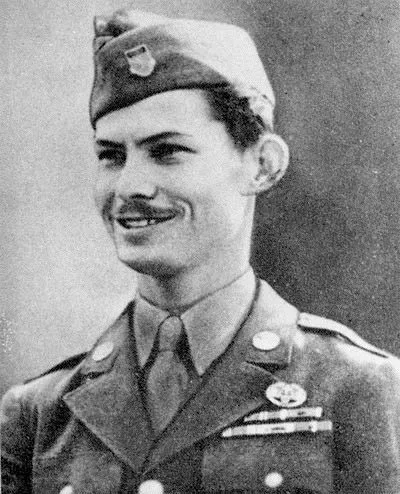
Desmond Doss Wikimedia Commons / Desmond Doss
Pictured Desmond Doss

The medic who went up the ridge without a rifle

On October 12, 1945, Desmond Doss was awarded the Medal of Honor, the first conscientious objector to receive it. Raised a Seventh-day Adventist, he refused to carry a weapon into combat and served instead as a medic with the 307th Infantry of the 77th Infantry Division. He earned two Bronze Stars with a V for valor on Guam and in the Philippines before Okinawa.

At the Maeda Escarpment, the cliff known as Hacksaw Ridge, his unit climbed the summit under heavy artillery, mortar and machine-gun fire, and was driven back with about 75 casualties. Doss stayed on the fire-swept ground. One by one he carried the wounded to the edge of the cliff and lowered them on a rope-supported litter to friendly hands, saving an estimated 75 men.

He did it without ever picking up a gun, which is why his story still gets told in rooms full of people arguing about courage. The 2016 film Hacksaw Ridge is based on it.

Today’s complete edition

The discoveries, in full

Read the evidence, what it changes, and the reporting behind each of today’s 7 discoveries.

01/07 Good News

A foot turned a few degrees eased knee arthritis as well as pills

In a year-long randomized trial of 68 people with mild-to-moderate arthritis on the inner side of the knee, a small change in foot angle brought pain relief equivalent to medication and slowed cartilage loss 118.
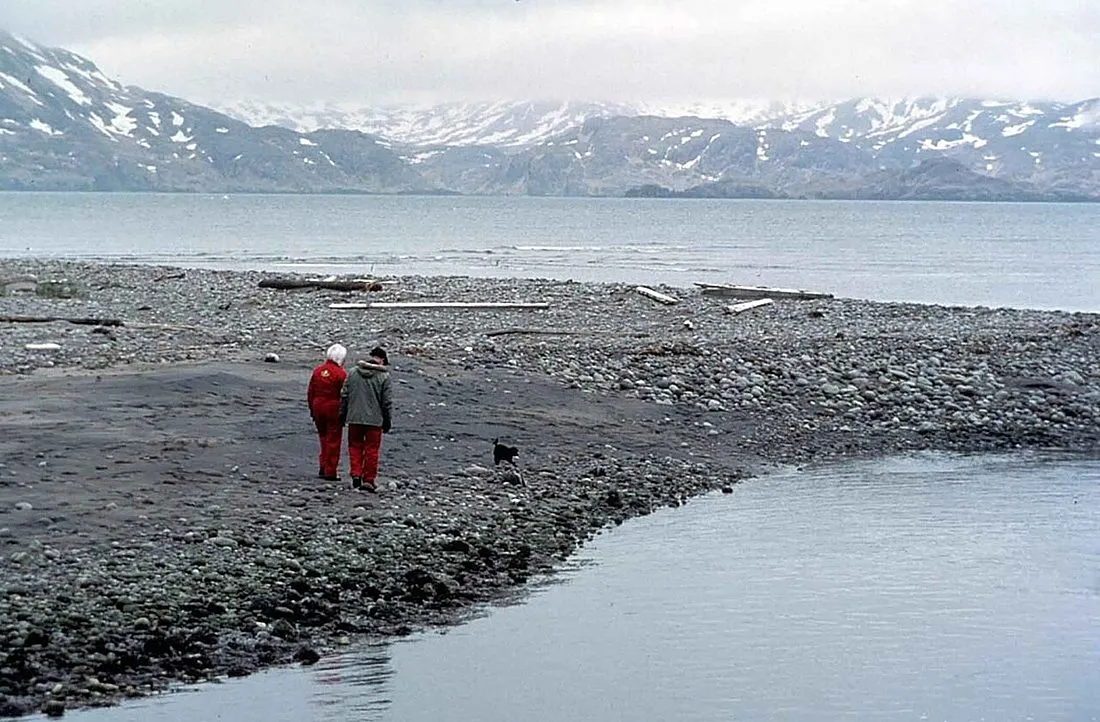
an older couple walking in a park
Pictured an older couple walking in a park · Rhode Elaine, U.S. Fish and Wildlife Service (Wikimedia Commons)

Researchers from the University of Utah, New York University and Stanford had each volunteer walk on a pressure-sensitive treadmill ringed with motion-capture cameras, then worked out whether turning the toe inward or outward, by 5 or 10 degrees, took the most load off that particular knee. Half the group got a sham version prescribing foot angles identical to their natural walk, so the placebo effect had somewhere to show up. The real-angle group had less cartilage degradation on MRI over the year, and the work appeared in The Lancet Rheumatology 118. It is the first placebo-controlled trial of a biomechanical fix for osteoarthritis.

02/07 Natural Sci.

Spinach leaf machinery gave failing rat hearts a light-powered battery

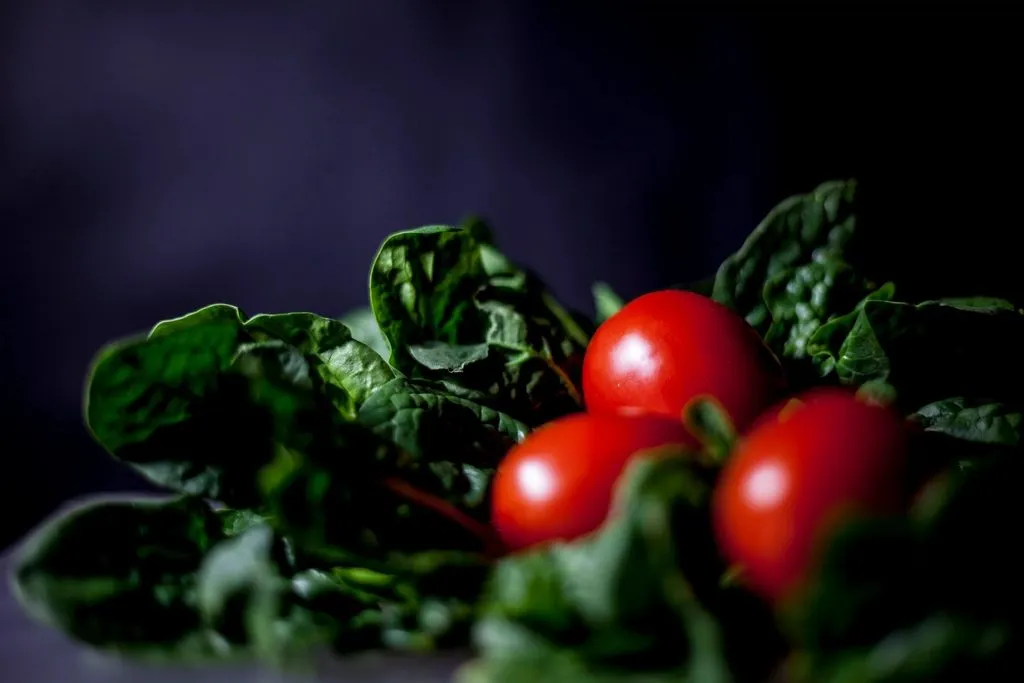
A team at Union Hospital in Wuhan pulled thylakoids, the membranes where spinach makes ATP from light, ground them into nanoscale particles, and wrapped them in membranes taken from heart muscle cells so cardiac cells would let them in 11.

fresh spinach leaves
Pictured fresh spinach leaves · Unknown (via rawpixel)

Cultured rat heart cells took up more of the coated particles than uncoated ones, and under red light their ATP levels rose and their mitochondria held their structure better under stress 11. Then came the animals: rats whose aortas were surgically narrowed so the heart had to pump against resistance, four groups of six. Treatment began four weeks after surgery, with particles injected into the heart muscle every three days and 10 minutes of red laser through the chest 11. The lit, treated hearts pumped better and showed less tissue damage, reported in the journal Small 11.

03/07 Good News

A once-endangered tortoise now numbers about 183,000 on one atoll

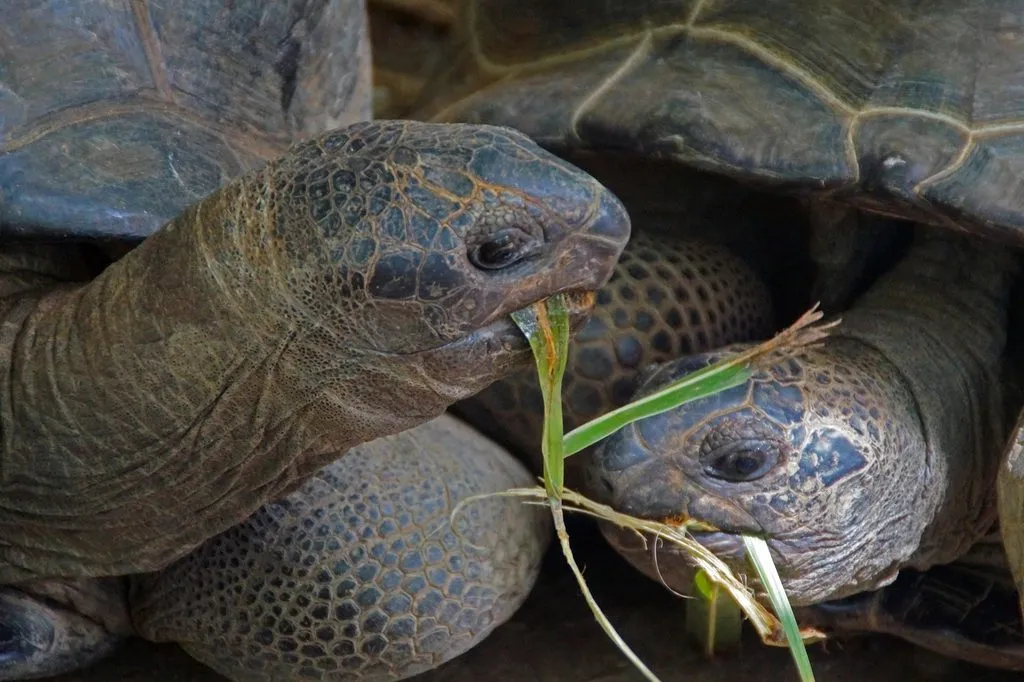
The Seychelles Islands Foundation and the University of Exeter analyzed five years of tortoise counts, 2018 to 2022, on Aldabra Atoll and arrived at a best estimate of almost 183,000 adult and sub-adult giant tortoises 119.

Aldabra giant tortoise
Pictured Aldabra giant tortoise · Unknown (via rawpixel)

That is the highest figure on record, and the first update to the 100,000 figure that has been cited since the late 1990s 119. Dense vegetation makes counting hard in places, so the team modeled the animals it could not see as well as those it did 119. Over the study years the population looked relatively stable, so this is a new baseline, not a growth curve 119. In the 19th century, exploitation had left fewer than 1,000 tortoises on the island; Aldabra became a strict nature reserve in 1981 and a UNESCO site in 1982 119.

04/07 Social Sci.

Rotating work partners taught strangers better than keeping one friend

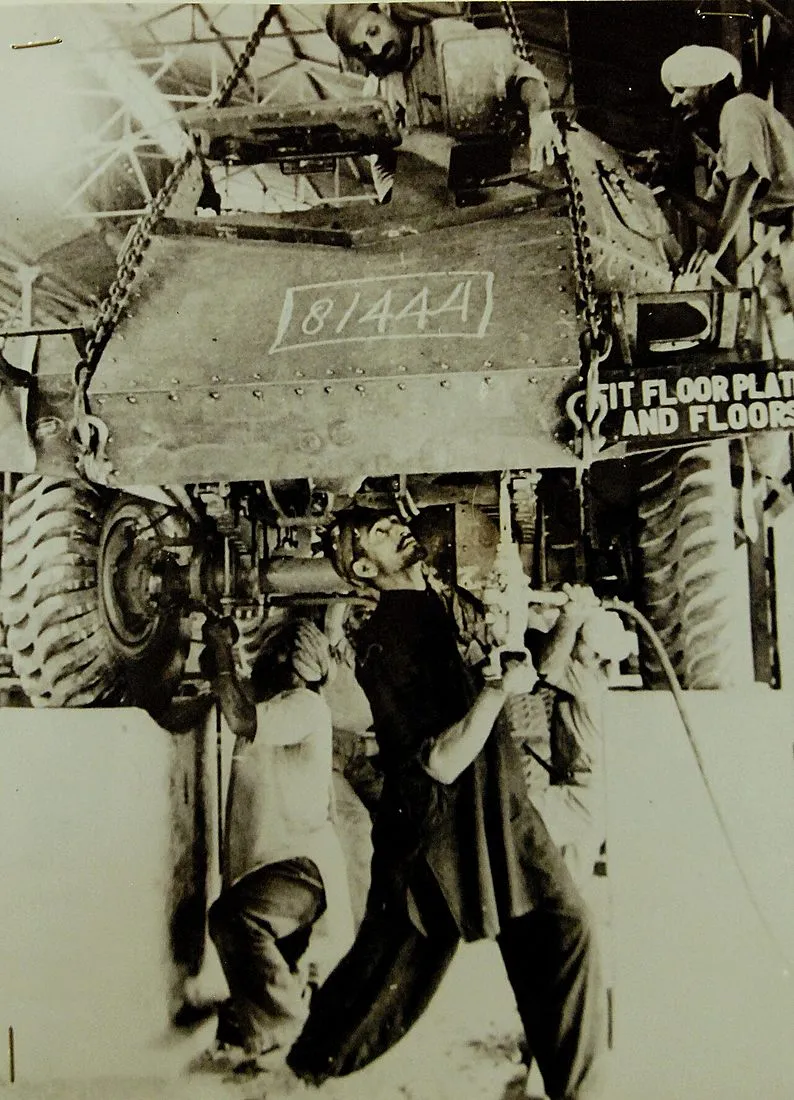
The researchers built a working factory in India and recruited Hindu and Muslim men to produce goods in pairs 67. Participants were randomly assigned to one of three arrangements: the same ingroup or outgroup partner every day (deep contact), a different outgroup partner each day (broad contact), or a control group 67.

factory workers on a production line in India
Pictured factory workers on a production line in India · National Museum of the U.S. Navy (Wikimedia Commons)

Deep contact strengthened social and economic ties with that one partner. Only broad contact reduced the majority group's misperceptions about outgroup strangers 67. Both arms learned about their partners from how productive they were, but only the rotating group carried the update over to people they had never met 67.

05/07 Natural Sci.

A seal-toothed, otter-tailed Jurassic hunter shows how mammals learned to nurse

A new fossil species, Megacauda sungei, lived about 165 million years ago in what is now Inner Mongolia, and microCT scans let an international team rebuild its skull and skeleton in detail 6.

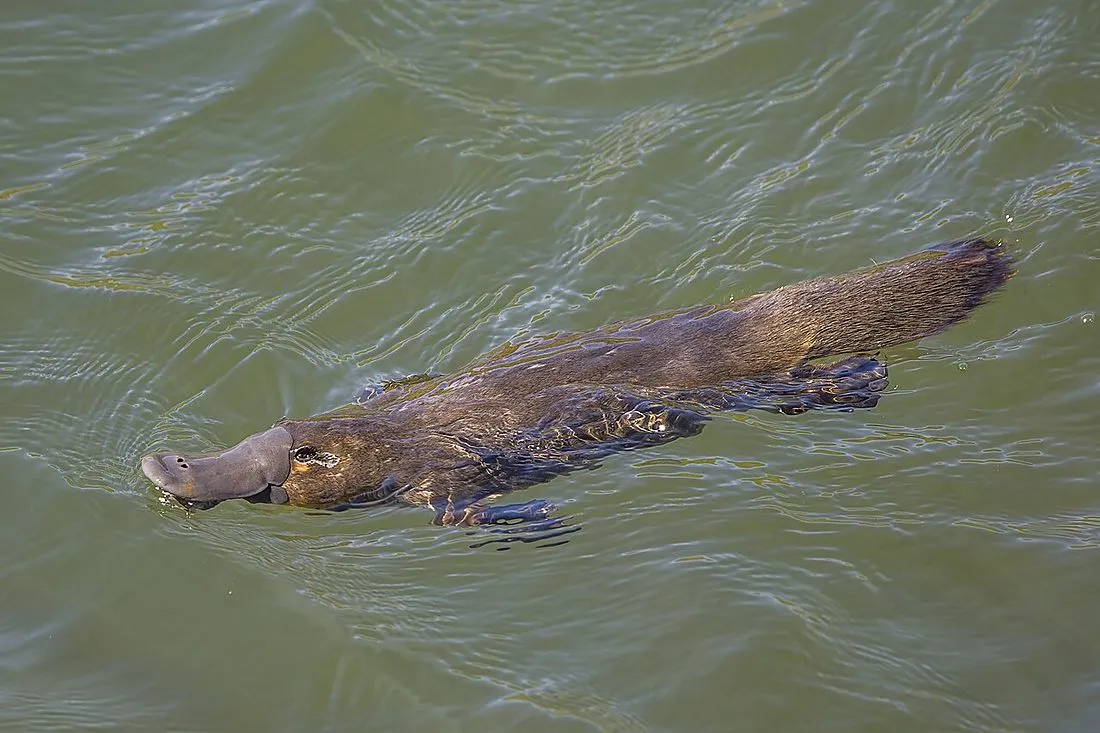
platypus
Pictured platypus · Charles J. Sharp (Wikimedia Commons)

It had blade-like cheek teeth resembling a modern seal's, a platypus-like pelvis, and an otter-like tail, which points to a semiaquatic predator of small vertebrates and invertebrates 6. The surprise sat on the roof of its mouth: a pair of small bony projections closely resembling those in living marsupials and placental mammals, where they help support the soft palate and the muscles of suckling, swallowing and airway protection 6. The throat also held specialized hyoid bones, which anchor swallowing muscles in mammals today 6. The work was published in Nature 6.

06/07 Psychology

Paying attention to a skin reaction made the swelling smaller

Researchers at Bar-Ilan University used histamine to provoke a standard skin reaction: a droplet on the skin, a small prick, and a raised bump called a wheal with a patch of redness around it called a flare 31.

a person sitting calmly with eyes closed
Pictured a person sitting calmly with eyes closed · PattayaPatrol (Wikimedia Commons)

When volunteers deliberately focused on the reaction instead of distracting themselves, the swelling and redness were substantially smaller and the swelling subsided faster 31. The findings were published in Nature Human Behaviour 31. In this test, a smaller, quicker-settling reaction is read as better-regulated immune activity 31.

07/07 Good News

Rooftop panels carried Australia's grid through lunch

On a recent Saturday, solar and wind met 80.4 percent of demand on Australia's national electricity market, which spans the eastern states, South Australia, and the Australian Capital Territory 133.

rooftop solar panels on a house in Australia
Pictured rooftop solar panels on a house in Australia · Unknown (via rawpixel)

For about 30 minutes around lunchtime, rooftop panels on homes and businesses carried more than half of the total load by themselves, with large-scale solar and wind covering most of the rest, hydro about one percent, and fossil fuels 20 percent 133. More than 4.3 million Australian households now have rooftop solar 133. Coal generation in Queensland hit a record low over the same weekend 133.

Quick notes

Shorter discoveries from this morning, worth knowing but not a full story.

Lifting Weights Changes Your Fat Long Before You Lose Weight – at Least in Mice After seven sessions of stair-climbing with a weight on the tail, obese mice had less fat around their organs and smaller fat cells before any weight came off, and the fat-dismantling pathway ran more actively 18. ScienceAlert
An Earth-Sized Planet Could Survive With 2 Suns Just 16 Light-Years Away Simulations built on a century of velocity data say an Earth-sized planet could survive in the habitable zone of 70 Ophiuchi, two orange dwarfs only 16 light-years away 19. ScienceAlert
'Swamp-like colors' on the moon: NASA report reveals strange sights from Artemis II mission The Artemis II crew reported yellow, green and brown patches around the Aristarchus Plateau, and Christina Koch likened one region to "a yellow snow-capped mountain" 3. Latest from Live Science
A Little Fish in The Deep Sea Swallowed a Meal Way Bigger Than Itself. Scientists Caught It on Camera. A remotely operated vehicle filmed a black swallower at 1,259 meters with a stomach stretched nearly see-through, and what it ate is, in the chief scientist's words, a mystery that "may never be solved" 21. ScienceAlert
A Distant Planet Emitted a Burst of Radio Waves. Why? The Webb telescope found the host of FRB 20240304B, a small star-forming galaxy 10.6 billion years back, making it the most distant fast radio burst source yet placed in a galaxy 135. Nautilus
Statins May Protect People From Glaucoma or Blindness By Preventing or Slowing Nerve Cell Death Among 210,000 statin users matched against 210,000 non-users, those with glaucoma were 36 percent less likely to need incisional surgery at five years, though the study is observational and cannot prove cause 120. Good News Network
Family Sells 650 Acres on East Texas Lake to Become State Park, Saying Land is 'Part of my soul' The Pollard family, who grew pecans there for 80 years, sold the longest remaining stretch of Lake Palestine shoreline for $1 million so it can become a state park, planned to open in phases from late 2027 117. Good News Network
39 Tonnes of Leftover Food From Lalbaugcha Raja Was Turned Into Electricity for a Mumbai Hospital Festival leftovers went to biomethanation plants at city hospitals and came back as 3,645 cubic metres of biogas and 4,382 kWh of electricity 129. The Better India : Latest Posts
India Has A New Plan to Tackle Waste in the Wild: What Will Change in Tiger Reserves For the first time, solid waste management is its own scored criterion across all 58 tiger reserves, covering waste from forest posts, tourism and rescue centres 124. The Better India : Latest Posts
Road Pricing under Heterogeneity -- by Itai Ater, Brad Ross, Adi Shany, Shoshana Vasserman Using a two-year experiment with nearly 10,000 drivers, the authors model congestion pricing that would raise welfare as much as adding a lane to every highway while raising enough revenue to compensate the losers 70. National Bureau of Economic Research Working Papers
MineReader detector sniffs out explosives without the middleman A detector tested in Brisbane looks for the magnetic-resonance signature of the explosive RDX itself, which means plastic and wooden mines have no casing to hide behind 100. New Atlas: Technology-Innovation-Outdoor News
Impossibly tiny Swiss motor looks like anything but EPFL's FiberMotor is a 1 to 3 millimeter flexible fiber, and four bundled together lifted a 46-gram chocolate bar and flexed a robotic finger 104. New Atlas: Technology-Innovation-Outdoor News
Algiecel Opens Microalgae Facility at Novonesis Site to Scale Up Fish Oil Alternatives A Danish startup went from a 700-litre pilot to a 5,500-litre plant, fed with CO2 captured from an on-site biogas plant, to make fish-free omega-3 oil 107. Green Queen
Most long-term singles stay satisfied with their lives over 11 years, study finds Tracking 2,930 German adults who stayed unpartnered from 2009 to 2021, researchers found life satisfaction generally high and steady, even as desire for a partner and sexual fulfillment varied 33. PsyPost Psychology News

Our process. Your trust.

Every discovery above traces back to an article we read in full. This is the whole corpus behind this morning, and what it was made of.

  • 26 Sources scanned
  • 137 Articles read
  • 7 Fields covered
  • 7 Discoveries

The sources that carried this morning

  1. 1 Psychology Today: The Latest 20 articles
  2. 2 National Bureau of Economic Research Working Papers 20 articles
  3. 3 Phys.org 13 articles
  4. 4 Interesting Engineering 10 articles
  5. 5 The Better India : Latest Posts 9 articles
  6. 6 PsyPost Psychology News 8 articles
  7. 7 ScienceAlert 7 articles
  8. 8 Futurism 7 articles
How an edition is made

Everything we read today

Natural Sciences 25 articles
Psychology & Behavioral Science 29 articles
Social Sciences 25 articles
National Bureau of Economic Research Working Papers
Technology & Innovation 25 articles
Plant-Based & Vegan 11 articles
Solutions & Good News 18 articles
Human Stories & Ideas 4 articles
The long view · not today’s news, the story behind it

Today’s discoveries didn’t come from nowhere. Here’s the older, ongoing story they belong to, a moment from this day in history, and a question to test what stuck.

Where the story stands

On this day in science

1928 The iron lung saves its first patient At Boston Children's Hospital, doctors placed an eight-year-old girl in respiratory failure from polio into a new machine that breathed for her, the first clinical use of the iron lung. She revived within a minute. The device kept thousands of patients alive until the polio vaccine ended the need for it. More from the Almanac →

Before you go: today’s quiz

The daily quiz

About what share of the world now uses safely managed drinking water?

Reveal the answer

Nearly three-quarters

About 73.7 percent of the world used safely managed drinking water in 2024, up from 61.3 percent in 2000, which still leaves roughly one in four people without it.

See the number →

Previous editions

Every morning we have published, newest first. Nothing expires.

View the full archive

Get this every morning.

Liked today’s? Tomorrow’s reaches your inbox before breakfast.

  • One email each morning, never more
  • The day’s real discoveries across 8 fields
  • One calm read with your coffee

The full letter, every morning, free for good.

Same free letter, plus the reason it stays that way: no ads, no investors, no agenda but the good news itself.

A single gift of any amount. No account, never a recurring charge.