The Field Guide · No. 33
Placebo and nocebo: how expectation changes what a pill does
A placebo can measurably ease symptoms even when patients are told exactly what it is, and its mirror image, the nocebo effect, can produce real side effects from an inert pill.
Updated
A placebo is an inactive treatment, a sugar pill, a saline injection, or a sham procedure, given to a patient. A placebo effect is the real, measurable change in symptoms that can follow anyway, driven by expectation, ritual, and the experience of being treated rather than by any active ingredient. The mirror image is the nocebo effect: a real, measurable worsening of symptoms, or a side effect, that follows from expecting harm, even when the substance taken is inert.
For decades the working assumption was that a placebo only works through deception, that a patient has to believe the pill is the real drug. A 2010 trial at a single academic center tested that assumption directly. Researchers randomized 80 patients with irritable bowel syndrome to either open-label placebo pills, handed over with the explanation that they were inert but had been shown in clinical studies to help through mind-body self-healing, or to no treatment at all. At the 21-day endpoint the open-label placebo group scored 5.0 on the trial's Global Improvement Scale against 3.9 for the untreated group, and 59% of the placebo group reported adequate relief of their symptoms, a rate the researchers noted was comparable to actual IBS drugs. Nobody was deceived. Patients knew exactly what they were taking.
Two traps follow. First, a placebo effect is not evidence that the original symptom was imagined. The scales used to measure it are structured and validated, and the improvement they recorded was real even though the pill had no active ingredient, which is why a new drug has to beat a placebo arm, not just beat nothing. Second, side effects reported by patients who already believe a drug harms them can be nocebo-driven rather than pharmacological. A 2021 trial gave 60 people who had already quit statins over muscle symptoms a statin, a matching placebo, and no pill at all, one month at a time. Mean symptom intensity was 8.0 on no-tablet months, 15.4 on placebo months, and 16.3 on statin months, a gap between placebo and statin too small to be significant. By the trial's own calculation, 90% of the symptom burden patients blamed on the statin also showed up on placebo.
So when a headline cites a drug's side-effect rate from patients who knew what they were taking, or dismisses a symptom as psychological because a placebo also relieved it, look for whether there was a blinded placebo arm and how large its response was. A striking side-effect number can shrink once nocebo is accounted for, and a striking placebo response does not mean nothing was wrong to begin with. Pair a placebo or nocebo claim with a look at how the trial was blinded and what its comparison group actually shows.
What to remember
- A placebo effect is a real, measurable change in symptoms driven by expectation and treatment ritual, not proof the original symptom was imagined.
- The nocebo effect runs the same mechanism in reverse: expecting harm from an inert substance can produce real, measurable side effects.
- In a 2021 statin trial, 90% of the muscle-symptom burden patients blamed on the drug also appeared on placebo, showing how much of a reported side effect can be nocebo rather than pharmacology.
From the record
Placebo treatment can significantly influence subjective symptoms. However, it is widely believed that response to placebo requires concealment or deception.
Asked often
Does a placebo only work if the patient is deceived?
No. In a 2010 trial, patients with irritable bowel syndrome who were told exactly what they were taking, an inert pill described as working through mind-body self-healing, still scored higher on a validated symptom scale than patients given no treatment at all (5.0 versus 3.9 at 21 days), and 59% reported adequate relief. The effect did not require concealment.
How much of a drug's side effects can be nocebo rather than the drug itself?
It varies by drug and by study, but a 2021 trial of 60 patients who had already quit statins over muscle symptoms found their symptom intensity was nearly identical whether they were taking the statin or a matching placebo, 16.3 versus 15.4, and only clearly lower with no pill at all, 8.0. The trial's own calculation put 90% of the symptom burden down to nocebo.
Further reading
Go deeper
Paid link. If you buy a book through this link, Bookshop.org pays us a small commission and sends a share of the sale to independent bookstores.
-
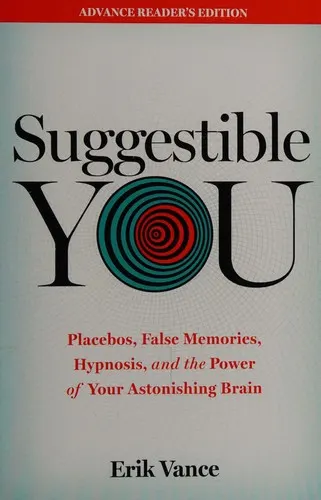
Suggestible You (opens Bookshop.org)
Erik Vance · 2016
Science journalist Erik Vance, who trained as a neuroscientist, reports on placebo and nocebo research and visits labs and healers to show how expectation changes pain and symptoms.
Read the news better, every morning.
We send you the day's real progress in science, medicine and beyond, told plainly and sourced. Free, forever.
Free forever, no spam. One click to unsubscribe, and we never sell your email.