The Field Guide · No. 19
Healthy-user bias: the people who take the pill are already different
People who take a preventive treatment or follow health advice are, on average, already healthier and more careful, so their better outcomes can be mistaken for the effect of the treatment.
Updated
Suppose an observational study finds that people who take a certain vitamin, or eat a certain food, or keep up with a preventive medicine, have fewer heart attacks. Tempting conclusion: the vitamin works. But there is a quieter explanation. The kind of person who reliably takes a daily vitamin is also, on average, the kind of person who exercises, sees a doctor, sleeps enough, and does not smoke. This is healthy-user bias.
The people who adhere to any health behaviour tend to differ from those who do not in dozens of ways, many of them hard to measure and all of them tied to better health. So when the adherent group turns out healthier, you genuinely cannot tell how much of that was the treatment and how much was simply the sort of person who takes it. The intervention gets credit that partly belongs to the person.
There is an even sharper version, the healthy-adherer effect. In trials, people who take their assigned pills reliably do better than people who skip them, even when the pill is a placebo. Sticking to a routine is itself a marker of the habits and circumstances that keep people healthy. So comparing people who took the drug with people who did not is not comparing like with like.
This is one of the main reasons observational studies of preventive habits should be read with caution, and why randomized trials matter so much. Random assignment scatters those hidden differences evenly between the groups, so a difference in outcome can be pinned on the treatment. When a headline says people who do a healthy thing live longer, ask whether they were randomly assigned to do it, or simply chose to, because choosing it usually comes bundled with a hundred other advantages.
What to remember
- People who adhere to a treatment or health behaviour are usually healthier and more careful to begin with.
- That head start can be mistaken for the effect of the treatment, especially in observational studies.
- Even placebo-takers who adhere do better, so randomized trials are needed to separate the treatment from the person.
From the record
Occurs when people who use an intervention are inherently healthier, more health-conscious, or more engaged with healthcare than non-users, leading to an apparent effect that is partly or wholly attributable to these underlying differences rather than to the intervention itself.
Asked often
What is the healthy-user bias?
It is the tendency for people who take a preventive treatment or follow health advice to be healthier and more health-conscious to start with. Their better outcomes can look like the effect of the treatment when they are partly just the effect of being that kind of person.
What is the healthy-adherer effect?
It is a related pattern seen in trials: people who reliably take their assigned pills do better than those who don't, even when the pill is a placebo. Adherence is a marker of other healthy habits, so it predicts good outcomes on its own.
Further reading
Go deeper
Paid link. If you buy a book through this link, Bookshop.org pays us a small commission and sends a share of the sale to independent bookstores.
-
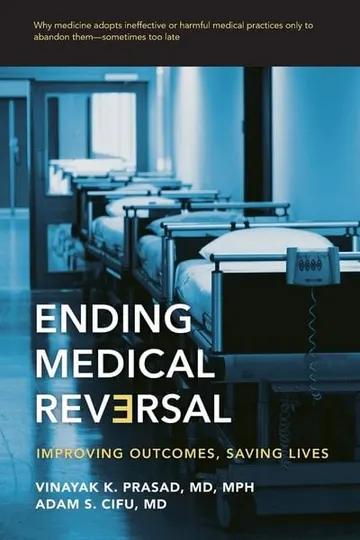
Ending Medical Reversal (opens Bookshop.org)
Vinayak K. Prasad and Adam S. Cifu · 2015
Two physicians catalog accepted treatments later overturned by better trials, including hormone therapy, and explain how observational studies of healthier patients led doctors astray.
Read the news better, every morning.
We send you the day's real progress in science, medicine and beyond, told plainly and sourced. Free, forever.
Free forever, no spam. One click to unsubscribe, and we never sell your email.