



A cubic kilometer of Antarctic ice wins the physics Nobel
Francis Halzen of the University of Wisconsin, Madison won the 2026 Nobel Prize in Physics for decisive contributions to the IceCube Neutrino Observatory and the discovery of high-energy neutrinos of astrophysical origin 159.
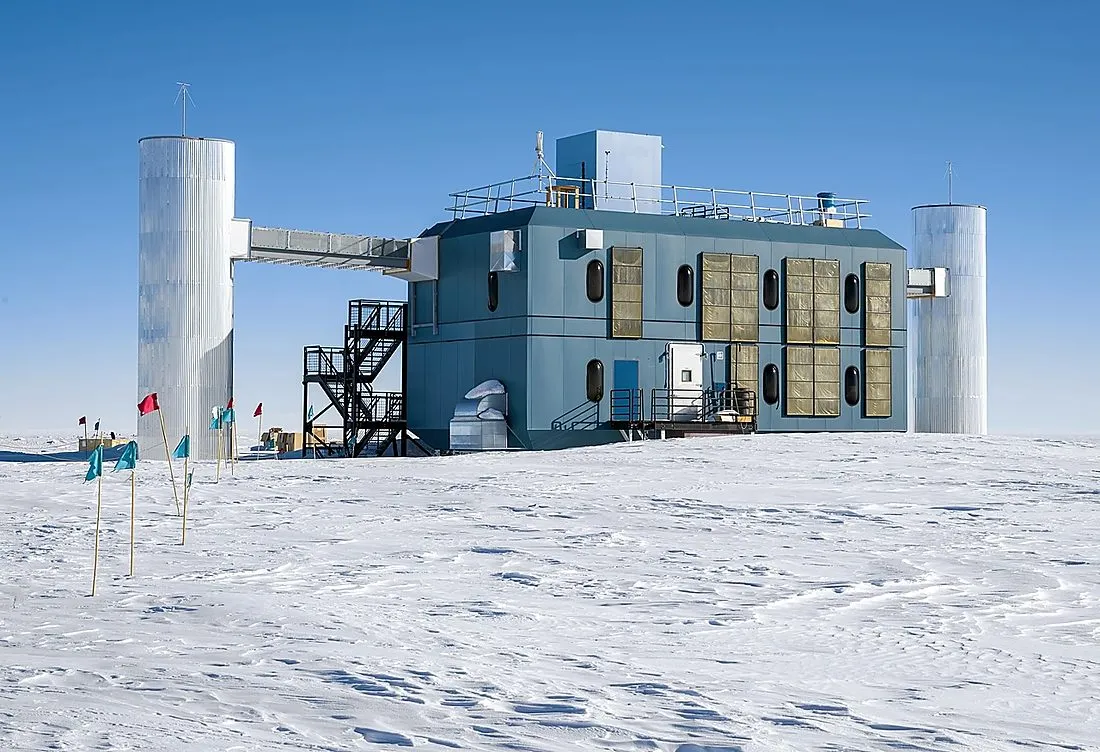
IceCube uses a cubic kilometer of the Antarctic ice cap, about a billion tons, as its detector. Most neutrinos pass through it untouched, but now and then one smashes into a proton or neutron in the ice and throws off a shower of particles that light sensors can see 141. The particle itself began as a patch on missing energy: Wolfgang Pauli proposed it in a 1930 letter to colleagues because radioactive beta decay appeared to lose energy, which he judged, correctly, to be impossible 159. Halzen was blunt about the early days: "no respectable conservative physicist would have joined me" 159.
What each field noticed (3)
 Ars Technica
 Neutrino physicist wins 2026 Nobel Physics Prize
Ars stressed that Halzen himself credited a "large collaboration," and let colleague Danielle Norcini explain the result: the first high-energy neutrinos detected from beyond our galaxy, which opened a new field of neutrino astronomy 159. Neutrinos feed "multimessenger" astronomy, where they are read alongside light and gravitational waves 159.
Read the story
I’m a physicist who worked on the Nobel-winning neutrino search...
A member of the team that began building IceCube in 2005 explained why neutrinos are the useful messenger. More than 10,000 high-energy cosmic-ray particles hit every square meter of the upper atmosphere each second, some carrying over a million times the energy of protons at the Large Hadron Collider, but magnetic fields bend their paths so they cannot point back to their sources 141. Neutrinos, which should be produced wherever cosmic rays are accelerated, travel straight 141.
Read the story Big Think
 IceCube, high-energy neutrinos, and Francis Halzen win 2026’s Physics Nobel
Big Think put the prize on a 39-year timeline, back when neutrino astrophysics meant the Sun and little else 255. It argues that nobody could have predicted GPS from the speed of light or transistors from quantum physics, so the fundamental advance has to come first 255.
Read the story