


The daily brief · October 10, 2026

Chimps steal less from friends, and summer heat is saved for winter

Today is about holding on: to muscle in old age, to July's heat until January, and, for chimpanzees, to a little restraint around friends.

  • 7 Discoveries
  • 238 Articles read
  • 47 Sources
  • 11 Min read

Today’s discoveries

Everything this morning found, in the order we would read it.

7 stories
  1. 01 Natural Sci. The one workout that kept muscle on while fat came off At the University of the Sunshine Coast, 123 healthy adults from the Greater Brisbane region, average age 72, did three supervised 45-minute gym sessions a week for six months. Source: ScienceDaily 1 min read
  2. 02 Psychology Chimpanzees steal less from their friends UC Berkeley researchers spent more than 800 hours watching 26 chimpanzees at the Ngamba Island Chimpanzee Sanctuary in Uganda, noting who groomed whom, who spent time together, and who… Source: Greater Good 1 min read
  3. 03 Natural Sci. A burst from the young universe got its origin story from a small galaxy In 2024 the MeerKAT radio array caught a fast radio burst, FRB 20240304B, and pinned its position closely, yet optical images of that spot showed no object. Source: Universe Today 1 min read
  4. 04 Social Sci. Data center heat, saved in rock until winter In Verona, Wisconsin, the health software company Epic Systems has spent two decades drilling roughly 6,100 wells, 300 to 800 feet deep, that heat and cool about 40 buildings on its… Source: The Conversation 1 min read
  5. 05 Life Sciences A gene for anorexia that lives in fat and muscle, not the brain Researchers supported by Michigan State University sequenced people with severe anorexia nervosa and found that about 11% of them (17 of 154) carried rare variants predicted to damage a… Source: Neuroscience News 1 min read
  6. 06 Good News Two captive-bred bustards take their first flight into the Thar On Sunday morning, two male Great Indian Bustards, a critically endangered species, were released into Desert National Park at Sam in Rajasthan by Union Environment Minister Bhupender Yadav. Source: The Better India 1 min read
  7. 07 Good News Conservation succeeds where locals run it A University of Sydney team led by Dr. Source: Good News Network 1 min read

The feel-good story of the day

Fridtjof Nansen Unknown (via rawpixel)
Pictured Fridtjof Nansen

The explorer who gave refugees a passport

Fridtjof Nansen was born on this day in 1861 near Christiania, now Oslo. He trained as a zoologist, crossed the Greenland ice cap on skis in 1888, and in the 1890s sailed the ship Fram into the Arctic pack ice to let it carry him across the polar sea. In 1895 he left the ship with Hjalmar Johansen, and the two reached 86°14′N, the farthest north anyone had gone at the time.

He could have lived on that fame. Instead, after the First World War he took work no one else wanted. As the League of Nations' High Commissioner for Refugees from 1921, he organized the return of hundreds of thousands of prisoners of war stranded far from home, and he led famine relief in Russia and Ukraine.

His most lasting invention was a piece of paper. Millions of people had been left stateless and unable to cross a border legally, so Nansen created an identity document for them, which more than fifty governments eventually recognized. It was called the Nansen passport, and it won him the Nobel Peace Prize in 1922. He died in 1930, and the UN refugee agency still gives an award in his name.

Today’s complete edition

The discoveries, in full

Read the evidence, what it changes, and the reporting behind each of today’s 7 discoveries.

01/07 Natural Sci.

The one workout that kept muscle on while fat came off

At the University of the Sunshine Coast, 123 healthy adults from the Greater Brisbane region, average age 72, did three supervised 45-minute gym sessions a week for six months 3.

older adults exercising in a gym
Pictured older adults exercising in a gym · Jewish Historical Society of the Upper Midwest (Wikimedia Commons)

They were assigned to high-intensity intervals, moderate-intensity exercise, or a low-intensity comparison group, and body scans at the start, three months and six months tracked fat and lean tissue 3. High and moderate training both cut fat mass more than the low group did, but only the interval group kept its lean tissue; moderate training came with a small decline in lean muscle 3. "We found that high, medium and low intensity exercises all led to modest fat loss but only HIIT retained lean muscle," said lead author Dr. Grace Rose, in a paper published in Maturitas 3.

02/07 Psychology

Chimpanzees steal less from their friends

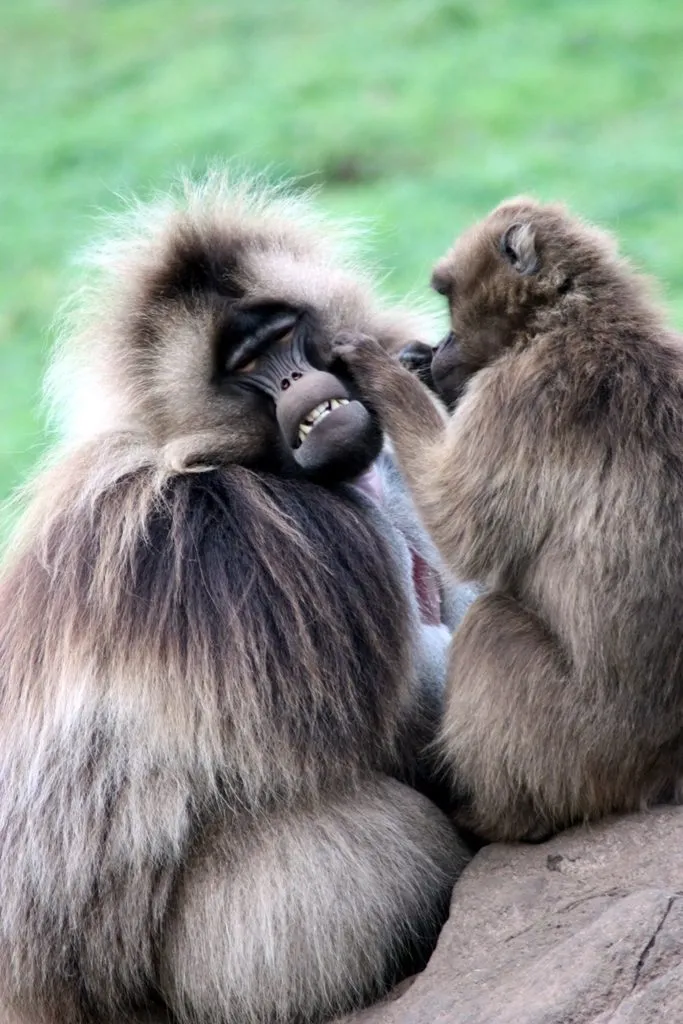
UC Berkeley researchers spent more than 800 hours watching 26 chimpanzees at the Ngamba Island Chimpanzee Sanctuary in Uganda, noting who groomed whom, who spent time together, and who stayed within arm's reach 94.

two chimpanzees grooming
Pictured two chimpanzees grooming · Unknown (via rawpixel)

Then they built a theft: a "victim" chimp sat in one room with three trays of pineapple, and a rope ran to a second room where the "thief" could yank the trays away or leave the rope alone 94. Chimps stole in 70% of trials with non-friends and 61% of trials with friends 94. Victims got angrier at first when a friend took the fruit but calmed down faster, and thieves showed less hostility when the victim was a bonded pal 94. "Ours is the first study to show that they're able to hold back antisocial behavior with their friends," said first author Oded Ritov 94.

03/07 Natural Sci.

A burst from the young universe got its origin story from a small galaxy

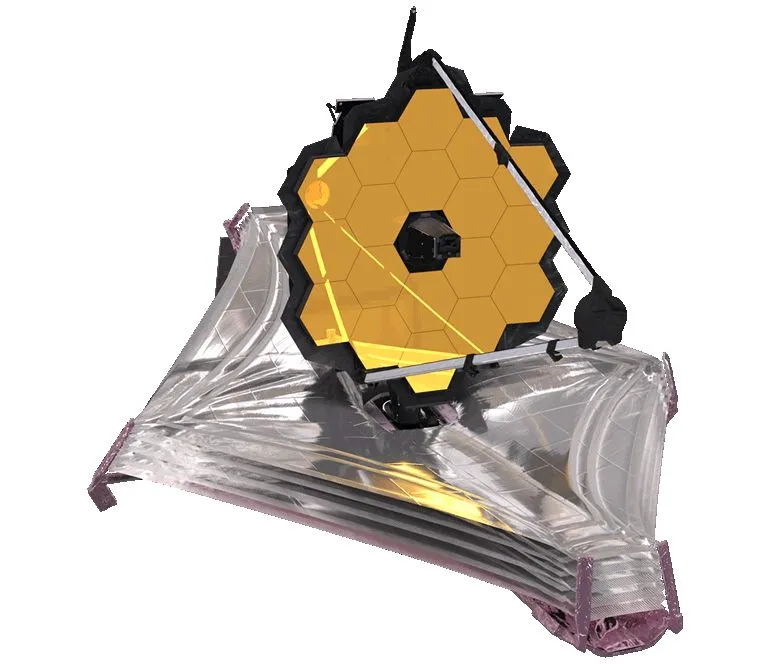
In 2024 the MeerKAT radio array caught a fast radio burst, FRB 20240304B, and pinned its position closely, yet optical images of that spot showed no object 71. A team pointed the James Webb Space Telescope at it and found a small galaxy 71.

James Webb Space Telescope
Pictured James Webb Space Telescope · Wikimedia Commons / James Webb Space Telescope

Its spectrum shows we see it when the universe was only about 3 billion years old, which makes this the most distant burst observed, and most of its stars formed within about 30 million years, so the galaxy is full of young ones 71.

04/07 Social Sci.

Data center heat, saved in rock until winter

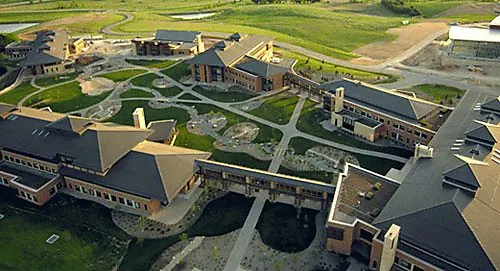
In Verona, Wisconsin, the health software company Epic Systems has spent two decades drilling roughly 6,100 wells, 300 to 800 feet deep, that heat and cool about 40 buildings on its campus using waste heat from a 3.5-megawatt data center 125.

Epic Systems campus in Verona, Wisconsin
Pictured Epic Systems campus in Verona, Wisconsin · Wikimedia Commons / Epic Systems

The unusual part is the timing: Epic pushes heat into the ground in summer and takes it back out months later 125. In July, server-warmed water goes down a pipe and warms the surrounding rock; in January, water pumped back through the same pipe returns to the surface warmer than it left 125. There is no buried tank and no battery, only rock, which conducts heat poorly and so keeps the warmth near where it was put 125. The article compares it to the plow-pile of snow that survives in the corner of a parking lot until April: less surface for its volume, so less exposed 125.

05/07 Life Sciences

A gene for anorexia that lives in fat and muscle, not the brain

Researchers supported by Michigan State University sequenced people with severe anorexia nervosa and found that about 11% of them (17 of 154) carried rare variants predicted to damage a gene called PLIN4, against roughly 3% in a healthy reference population 74.

a doctor talking with a patient
Pictured a doctor talking with a patient · Direct Media (via stocksnap)

PLIN4 is mostly active in body fat and skeletal muscle, where it helps package lipid droplets for energy storage, not in neural circuits 74. Six patients had highly disruptive variants, and in four families the identical variant tracked through affected first-degree relatives 74. The work was published in Frontiers in Psychiatry, led by psychiatrist Michael Lutter 74. "This new finding flies in the face of the dogma that the genes that contribute to this disease are expressed in the brain," said MSU's A.J. Robison 74.

06/07 Good News

Two captive-bred bustards take their first flight into the Thar

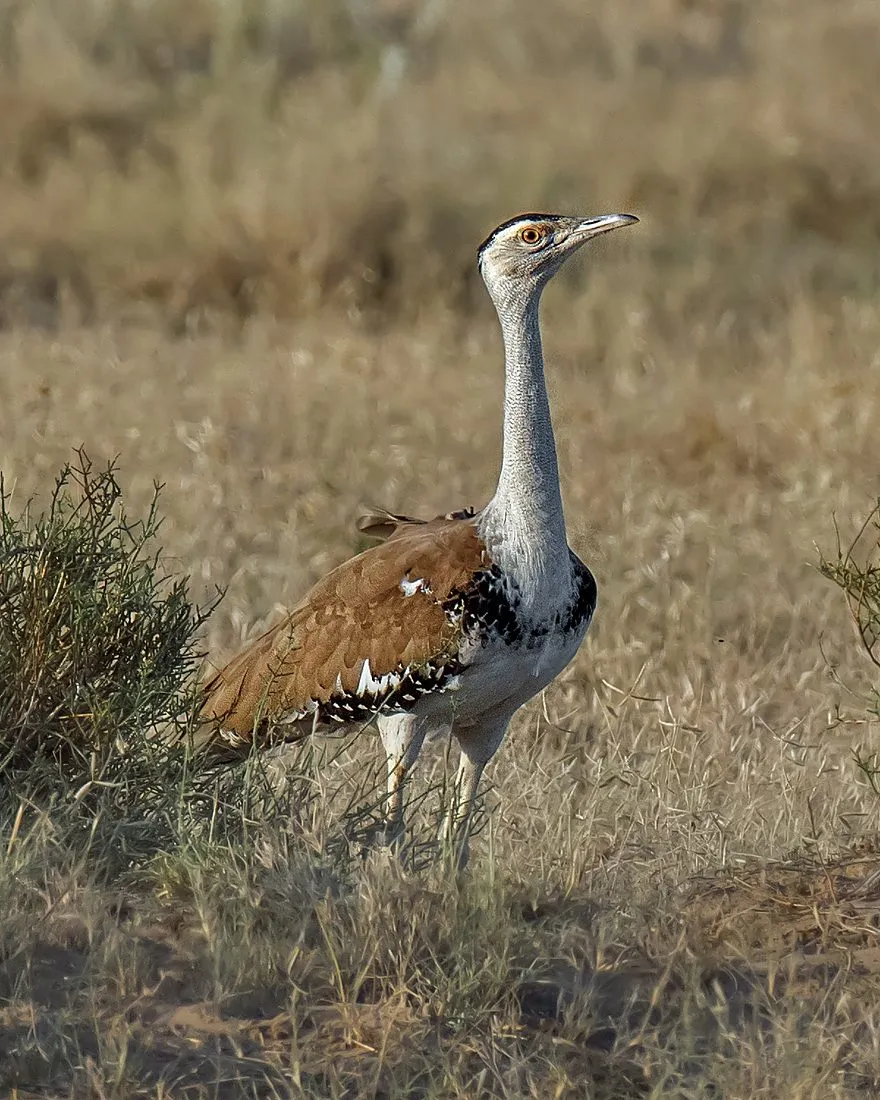
On Sunday morning, two male Great Indian Bustards, a critically endangered species, were released into Desert National Park at Sam in Rajasthan by Union Environment Minister Bhupender Yadav 205.

Great Indian Bustard
Pictured Great Indian Bustard · Wikimedia Commons / Great Indian bustard

The birds came from a conservation-breeding program in Jaisalmer: eggs were collected from wild nests starting in 2019, artificially incubated and hand-reared, and in March 2023 a chick hatched from an egg laid by captive birds, the first recorded captive breeding of the species 205. The Ramdevra and Sam facilities now hold 97 birds, 40 from wild eggs and 57 bred in captivity; the program produced 24 live chicks in 2025 and 29 in 2026 205. Chicks stay with their mothers for four to five months, a period lead veterinarian Dr. Tushna Karkariya says is used to judge whether a bird is ready for release 205.

07/07 Good News

Conservation succeeds where locals run it

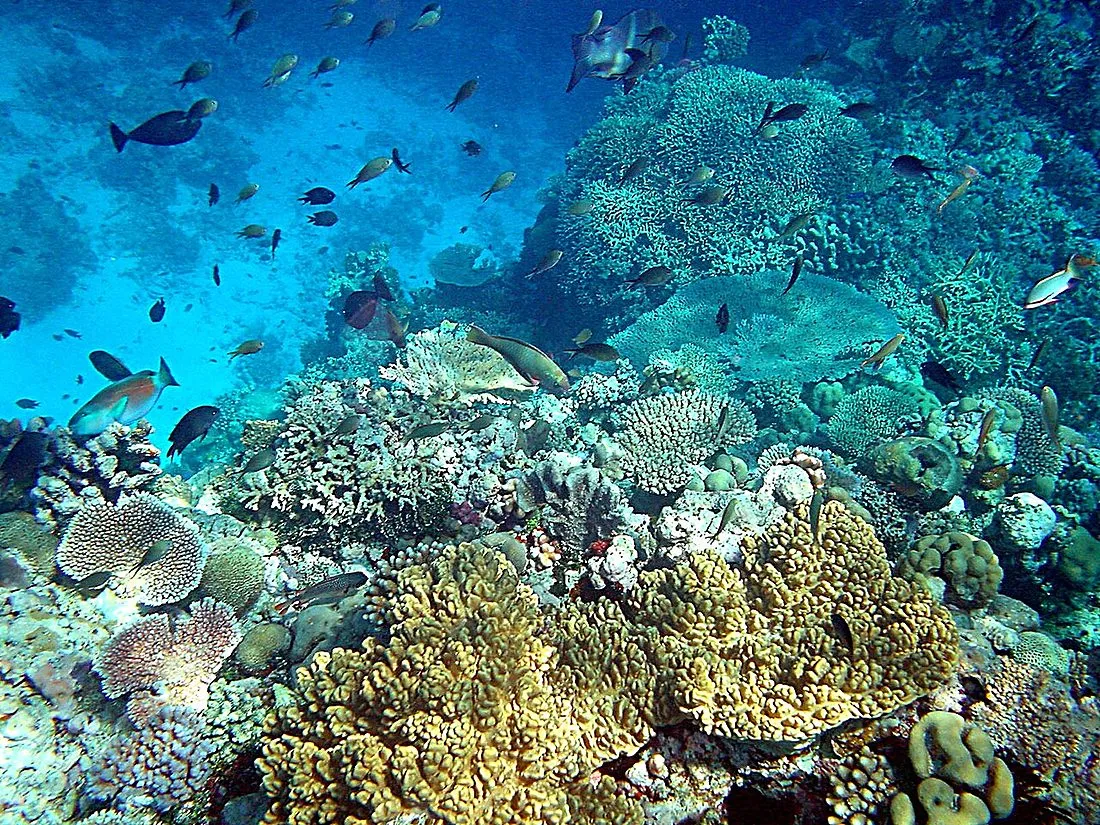
A University of Sydney team led by Dr. Bing Lin reviewed more than 70 studies of "bright spots," places and species doing better than expected despite hard circumstances, including coral reefs in Papua New Guinea, chimpanzees in West Africa, grizzly bears in Canada and albatross colonies off Tasmania 194.

a coral reef off Papua New Guinea
Pictured a coral reef off Papua New Guinea · Brocken Inaglory (Brocken Inaglory) (Wikimedia Commons)

Three things recurred: local knowledge was valued alongside science, communities played a central role in decisions, and management adapted to local social and environmental conditions 194. According to the report on the work, the deciding factor was the actions of locals, not money 194. Co-author Josh Cinner said the Papua New Guinea site surfaced in his 2016 Nature analysis of nearly 1,700 coral reefs as a global bright spot 194.

Quick notes

Shorter discoveries from this morning, worth knowing but not a full story.

Australia Announces 3 New National Parks to Protect Gliders, Owls, and Other Victoria Wildlife Three new parks totaling more than 250 square miles take effect in central Victoria, the state's first substantial new national parks in 15 years, protecting platypuses, greater gliders and powerful owls, after a volunteer campaign that began in 2010 193. Good News Network
A 9-billion-year-old signal could help explain dark energy Canada's CHIME telescope detected the faint radio glow of hydrogen from the distant universe using only its own observations, which gives astronomers a faster, cheaper route to test dark energy ideas 5. ScienceDaily
Cool chemistry trick allows new tattoos to 'turn on and off' PhotoTat's three inks, encased in medical-grade plastic nanoparticles, light up under a 365-nanometer UV LED in two to three seconds and vanish in bright sunlight, and they stayed switchable in skin for 1.4 to 2.2 years 12. Live Science
IBM's 100-qubit chip advances self-correcting quantum computers with 5,000 operations Alternating scrambling with measure-and-reset steps, nearly 5,000 each on a chain of up to 100 qubits, flipped the system from chaotic to controllable near a 50-50 balance, a sharp phase transition that sharpened in larger systems 158. Interesting Engineering
A Cray-1 supercomputer replica from 30 "obsolete" Mac Minis A Spanish computing museum built a 1:1 visual replica of the Cray-1 from 30 Mac Minis, mostly from 2012, that reaches about 1.3 teraflops against the original's roughly 160 megaflops, and it is cooled passively, so it is nearly inaudible 129. Ars Technica
Deep learning model using ECGs during sleep studies can predict cardiovascular outcomes Sleep studies already record ECGs that are rarely analyzed, and a model trained on 15,809 patients and tested on 9,810 and 12,576 more sorted people by long-term risk of atrial fibrillation, heart failure and death 72. NIH
World's Largest 'Glacial Archeology' Expedition Recovers 48 Stone Age Arrowheads and Shafts Norway's "Secrets of the Ice" project has pulled more than 5,000 artifacts from 73 sites since 2006, including a mussel-shell arrowhead on an intact wooden shaft about 3,600 years old 195. Good News Network
Check Out the Mouthparts on This New Prehistoric Insect A 99-million-year-old insect in Burmese amber had a proboscis more than twice its body length, ridged like a vacuum hose so it could bend without kinking, probably to reach sap deep in bark 231. Nautilus
Did These Microbes Eat A Lot of the Fossil Record? By tracing collagen-eating enzymes across 700 bacterial genomes, researchers found they first arose in oxygen-free microbes, which may explain why the Ediacaran's squishy animals fossilized so well until aerobic microbes learned to eat collagen 232. Nautilus
Teen Gives Stranger His Shoes, Then Goes Above and Beyond to Help Him Eighteen-year-old Jordan Hope handed his size 13 slides to a man with worn-out shoes in Maricopa, Arizona, then helped him collect a prescription, bought his favorite peanut M&Ms and followed the ride home, where he learned the man's wife had died two weeks earlier 198. Sunny Skyz
With 10,000 Strawberry Plants, Mizoram’s Pi Mari-i Earns a Place Among UN’s 100 Women Heroes ZT Lalrithangi learned farming from late-night YouTube tutorials, planted 1,000 strawberry saplings in 2024, now tends more than 10,000, and was named one of the FAO's 100 Women Heroes from more than 600 nominees 208. The Better India
Whole Foods Gets Vegan Steak, a New Fishless Caviar Hits the Market, and More in This Week's Food News MyForest Foods' mycelium steak has landed in more than 500 Whole Foods stores, and Pearle's seaweed caviar took two years to develop as an alternative to sturgeon roe from threatened species 183. VegNews.com
Stella McCartney makes waves at Paris Fashion Week with wool-free collection McCartney's ocean-themed runway used no wool, leather, fur or feathers, and showed Brewed Protein, a fermented cashmere alternative made with Spiber, under the slogan "Sea life, not sea food" 191. Vegan Food & Living
Why fall yard care could start with doing less – but not nothing Up to 70% of native bee species nest in the ground, so leaving fallen leaves in place shelters bumblebee queens, firefly larvae that spend up to two years under damp litter, and predatory ground beetles 117. The Conversation

Our process. Your trust.

Every discovery above traces back to an article we read in full. This is the whole corpus behind this morning, and what it was made of.

  • 47 Sources scanned
  • 238 Articles read
  • 8 Fields covered
  • 7 Discoveries

The sources that carried this morning

  1. 1 PLOS One 20 articles
  2. 2 Phys.org 14 articles
  3. 3 Ars Technica - All content 14 articles
  4. 4 STAT 12 articles
  5. 5 The Conversation Articles 11 articles
  6. 6 Futurism 10 articles
  7. 7 Interesting Engineering 10 articles
  8. 8 New Atlas 10 articles
How an edition is made

Everything we read today

Natural Sciences 71 articles
PLOS One
Life Sciences & Medicine 22 articles
Psychology & Behavioral Science 11 articles
Social Sciences 22 articles
Technology & Innovation 52 articles
Plant-Based & Vegan 13 articles
Solutions & Good News 28 articles
Human Stories & Ideas 19 articles
The long view · not today’s news, the story behind it

Today’s discoveries didn’t come from nowhere. Here’s the older, ongoing story they belong to, a moment from this day in history, and a question to test what stuck.

Where the story stands

On this day in science

1846 Neptune's big moon Triton is found Just seventeen days after Neptune itself was discovered, the English astronomer William Lassell spotted a large moon circling it, later named Triton. It turned out to be one of the strangest moons in the solar system, orbiting backward and, we would learn much later, spouting geysers of nitrogen from a frozen surface. More from the Almanac →

Before you go: today’s quiz

The daily quiz

Between 1985 and 2020, the global risk of a mother dying in childbirth roughly...

Reveal the answer

Halved

The global maternal mortality ratio fell from 429 deaths per 100,000 live births in 1985 to 212 in 2020, roughly a halving.

See the number →

Previous editions

Every morning we have published, newest first. Nothing expires.

View the full archive

Get this every morning.

Liked today’s? Tomorrow’s reaches your inbox before breakfast.

  • One email each morning, never more
  • The day’s real discoveries across 8 fields
  • One calm read with your coffee

The full letter, every morning, free for good.

Same free letter, plus the reason it stays that way: no ads, no investors, no agenda but the good news itself.

A single gift of any amount. No account, never a recurring charge.