


The daily brief · November 24, 2026

Leukemia's 50-year fuse, wasps that know faces, a walrus refuge

Today's best news is about timing: what starts decades early, what the brain does a quarter-second before we speak, and what an hour saved can do for a stroke patient.

  • 7 Discoveries
  • 267 Articles read
  • 44 Sources
  • 9 Min read

Today’s discoveries

Everything this morning found, in the order we would read it.

7 stories
  1. 01 Natural Sci. Leukemia can start 50 years before anyone knows Acute myeloid leukemia can begin more than 50 years before diagnosis. Source: ScienceDaily 1 min read
  2. 02 Natural Sci. Babies born under sugar rationing had fewer cancers as adults In January 1940 the UK rationed sugar, and the limits lasted until September 1953, after which average consumption quickly doubled. Source: ScienceAlert 1 min read
  3. 03 Life Sciences A wasp with a rice-grain brain keeps a face directory Female Northern paper wasps (Polistes fuscatus) tell nestmates apart by the yellow, brown and black markings on their faces. Source: Neuroscience News 1 min read
  4. 04 Life Sciences The brain drafts a word a quarter-second before you say it For roughly 150 years the textbook split has been tidy. Source: Neuroscience News 1 min read
  5. 05 Life Sciences An AI alert gave an Alaskan stroke patient an extra hour A man in his mid-60s arrived at an interior Alaska ER after a morning fall, suddenly weak on his left side. Source: STAT 1 min read
  6. 06 Good News Walrus get an Arctic beach that can't be sold A conservation easement now protects 47,000 acres (74 square miles) around the barrier islands off Point Lay and the Kasegaluk Lagoon on Alaska's Bering Sea coast. Source: Good News Network 1 min read
  7. 07 Good News India's TB deaths are down 38%, and the screening numbers show why The WHO's Global Tuberculosis Report 2026 estimates that India's TB mortality fell from 28 deaths per 100,000 people in 2015 to 18 in 2025, a 38% drop against a global decline of 35%. Source: The Better India 1 min read

The feel-good story of the day

a volunteer searcher with a flashlight at night Andrea Booher (Wikimedia Commons)
Pictured a volunteer searcher with a flashlight at night

A grandfather's flashlight found a lost two-year-old in the Arizona desert

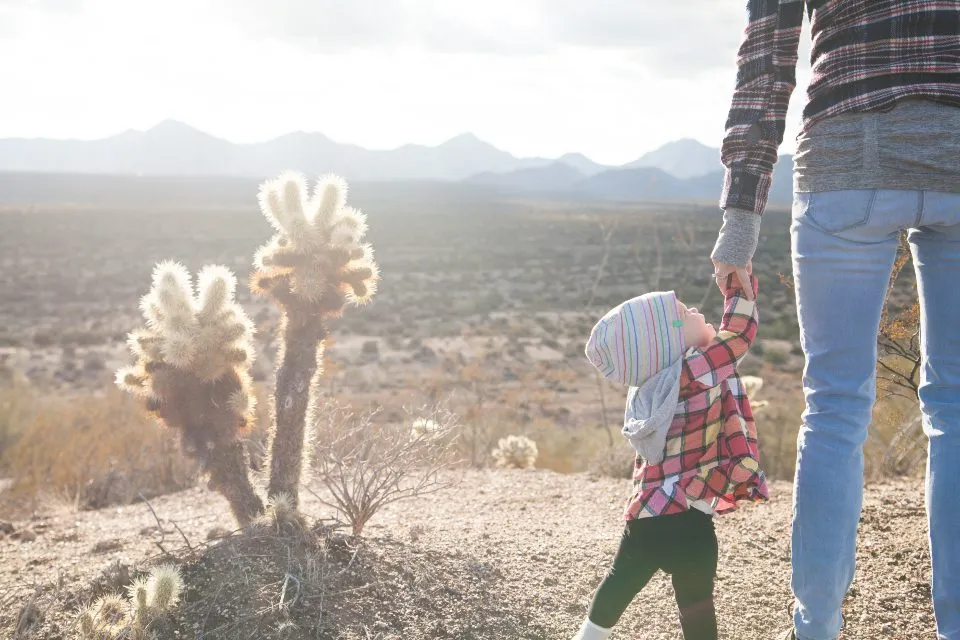
On the evening of November 17, two-year-old Vella Campillo wandered away from her siblings in the desert around Eloy, Arizona, wearing only a diaper. Pinal County deputies and volunteers began searching as the temperature dropped toward 50°F. Drones and a helicopter joined in, but her tiny heat signature defeated the thermal cameras.

Jay Stewart, a father and grandfather, was one of the volunteers walking the dark with a flashlight. Seven hours in, just after midnight, he checked a line of bushes beside a ditch and found her curled up there. She had no injuries and no hypothermia. She was reluctant to let go of him, and it took some persuading to get her to the hospital.

The sheriff gave Stewart an outstanding citizen certificate and made him an honorary member of the rescue posse. He said he was searching for the same reason everyone else was: "she may not be our child, but she could be."

Today’s complete edition

The discoveries, in full

Read the evidence, what it changes, and the reporting behind each of today’s 7 discoveries.

01/07 Natural Sci.

Leukemia can start 50 years before anyone knows

Acute myeloid leukemia can begin more than 50 years before diagnosis. A Cambridge and UCL team reported in Nature that in two-thirds of the cases they studied, the first cancer-driving mutation appeared before age 20 9.

Leukemia can start 50 years before anyone knows
Unknown (via rawpixel)

They treated stored blood as a genetic fossil record. The samples came from the UK Collaborative Trial of Ovarian Cancer Screening, in which about 50,000 women gave blood every year for up to 11 years, and some samples were drawn as long as 15 years before diagnosis 9. Sensitive DNA sequencing and mathematical models let the team work backward to when each mutation appeared and how fast the mutated cells multiplied. The growth followed predictable patterns, then accelerated sharply as more mutations accumulated 9.

02/07 Natural Sci.

Babies born under sugar rationing had fewer cancers as adults

In January 1940 the UK rationed sugar, and the limits lasted until September 1953, after which average consumption quickly doubled 61. A PNAS paper by health economists Chen Zhu and Weilong Zhang used that cliff edge.

a mother holding a baby in 1950s Britain
Pictured a mother holding a baby in 1950s Britain · Josh Willink (via stocksnap)

They analyzed 64,761 UK Biobank participants born between 1951 and 1956 61. Babies who spent their first 1,000 days, conception to age two, under rationing were 69% less likely to develop liver cancer as adults than babies born just after. Prostate cancer was 52% lower, lung 41%, rectal 40% and breast 36% 61. The rationed group also tended to have longer telomeres, the caps at the ends of chromosomes 61.

03/07 Life Sciences

A wasp with a rice-grain brain keeps a face directory

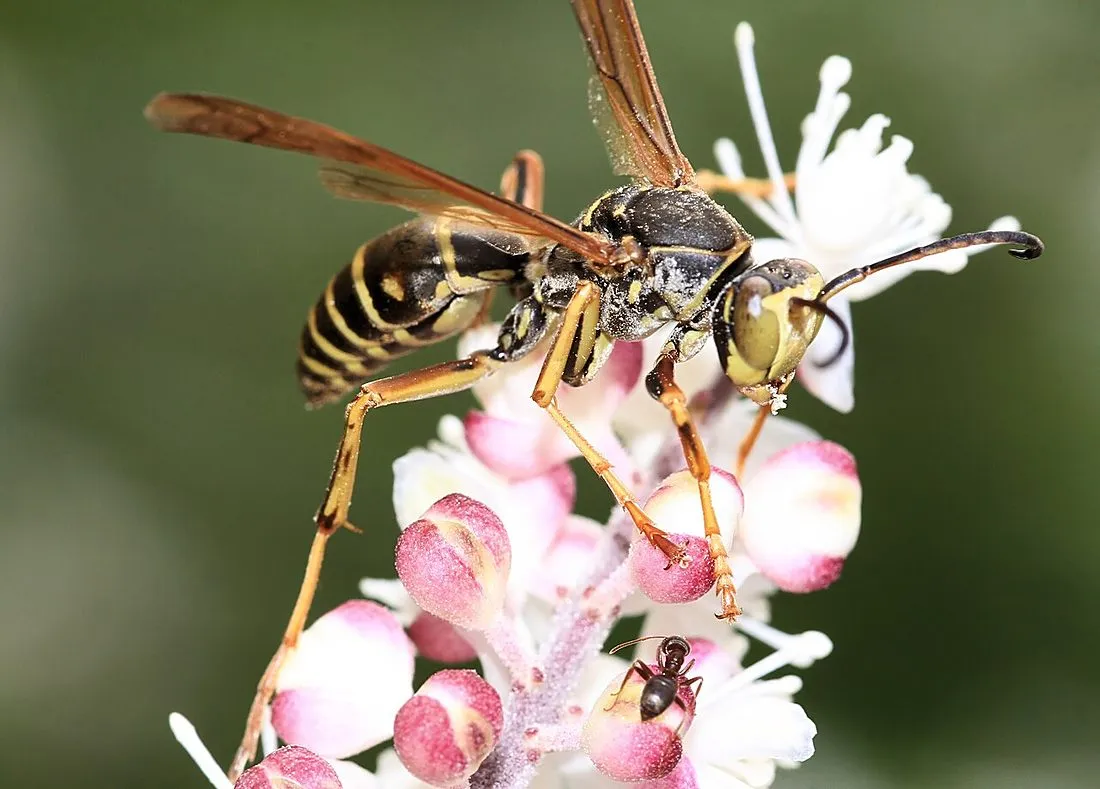
Female Northern paper wasps (Polistes fuscatus) tell nestmates apart by the yellow, brown and black markings on their faces. A new Cell paper has found the neurons that do the work 79.

Polistes fuscatus, Northern paper wasp
Pictured Polistes fuscatus, Northern paper wasp · ImagePerson (Wikimedia Commons)

Christopher Jernigan of Wake Forest, working with Cornell's Michael Sheehan and Lorenz Mammen and Rockefeller's Winrich Freiwald, recorded neural responses while showing wasps images of other wasp faces. They found a population of cells tuned to facial identity 79. No single cell holds one individual. Groups of neurons fire together, each tuned a little differently to variations in color pattern, much as primate face circuits are organized, though insects and primates split hundreds of millions of years ago 79. The organ doing this is about the size of a grain of rice.

04/07 Life Sciences

The brain drafts a word a quarter-second before you say it

For roughly 150 years the textbook split has been tidy. Wernicke's area understands speech, and frontal motor circuits produce it.

The brain drafts a word a quarter-second before you say it
Unknown (via rawpixel)

A Science paper from UCSF neurosurgeon Edward Chang's team says part of Wernicke's area, the left posterior superior temporal gyrus, does both 76. About 250 milliseconds before a person speaks, neurons there assemble a plan for the intended word. They encode abstract features such as word length, syllable count and word frequency, then pass the plan forward to frontal planning areas and the motor cortex 76. The work draws on 15 years of high-resolution intracranial recordings plus targeted experiments 76.

05/07 Life Sciences

An AI alert gave an Alaskan stroke patient an extra hour

A man in his mid-60s arrived at an interior Alaska ER after a morning fall, suddenly weak on his left side. Anchorage was 300 miles away 85.

Providence Alaska Medical Center, Anchorage
Pictured Providence Alaska Medical Center, Anchorage · Wikimedia Commons / Providence Alaska Medical Center

Every minute of a blocked brain artery costs 2 million brain cells, and the entire state has five neurointerventionalists who can pull a clot 85. Normally, sending his head CT to Anchorage for review could take 45 minutes. This time, software from RapidAI flagged a suspected large vessel occlusion seconds after the scan finished, through an app shared across a small hospital network that began using it in 2023 85. The team called Providence for a transfer less than half an hour after he arrived, two minutes before their on-call radiologist delivered the official report. Four hours and 23 minutes later the clot was out. Without the AI assist, it would have taken at least an extra hour 85.

06/07 Good News

Walrus get an Arctic beach that can't be sold

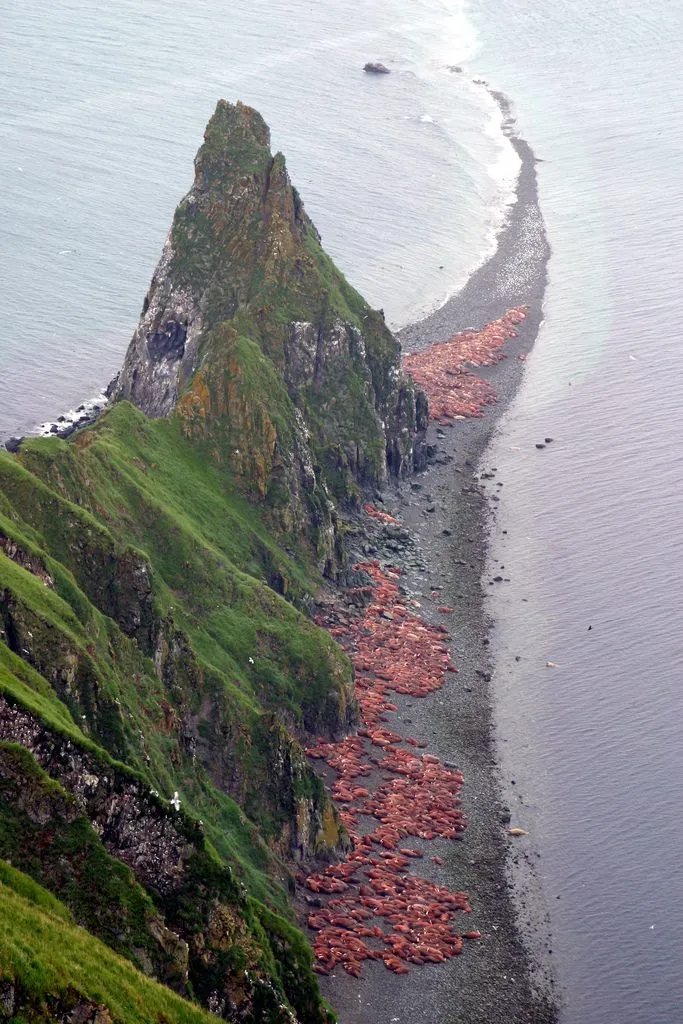
A conservation easement now protects 47,000 acres (74 square miles) around the barrier islands off Point Lay and the Kasegaluk Lagoon on Alaska's Bering Sea coast. The Interior Alaska Land Trust holds it, and the work took a decade with The Conservation Fund and Alaska tribal nations 223.

Pacific walrus hauled out on a beach
Pictured Pacific walrus hauled out on a beach · Department of the Interior. U.S. Fish and Wildlife Service. (Wikimedia Commons)

The islands hold the largest concentrations of Pacific walrus in North America. They were not a haul-out until 2007, when inconsistent sea ice changed the animals' migration. One year an estimated 200,000 walrus came ashore, and they have returned every year since. The Fund says that includes every female and juvenile Pacific walrus 223.

07/07 Good News

India's TB deaths are down 38%, and the screening numbers show why

The WHO's Global Tuberculosis Report 2026 estimates that India's TB mortality fell from 28 deaths per 100,000 people in 2015 to 18 in 2025, a 38% drop against a global decline of 35% 229.

a community health worker in India
Pictured a community health worker in India · DFID - UK Department for International Development (Wikimedia Commons)

The TB Mukt Bharat Abhiyaan, launched in November 2024, took screening into communities. The Health Ministry says that by November 2026 it had screened more than 250 million people, including over 110 million chest X-rays and 30 million molecular tests 229. It reported about 4.86 million cases found, nearly 1.5 million of them in people without symptoms. Rapid tests were used for 46% of notified cases in 2025, up from 38% in 2024 229.

Quick notes

Shorter discoveries from this morning, worth knowing but not a full story.

New gum disease treatment kills bad bacteria while sparing the good A Nagoya University team pairs egg yolk antibodies with near-infrared light to destroy Porphyromonas gingivalis without wiping out the mouth's helpful microbes, and in mice it significantly reduced the bone loss of periodontitis 1. ScienceDaily
Why We Slow Down With Age: Brain Serotonin Blocks Movement In aged mice, blocking a serotonin pathway that brakes dopamine-driven movement restored youthful activity and walking speed and improved lean muscle mass and grip strength, though it has not been tried in people 78. Neuroscience News
Two monster black holes from the dawn of time defy explanation JWST and Gemini North found a quasar pair, with black holes of 1.5 billion and 400 million solar masses, only 900 million years after the Big Bang, and its Hawaiian name, Nāpōwawāʻenakaulua, is longer than most theories of how they grew that fast 3. ScienceDaily
BepiColombo ends 8-year interplanetary journey to Mercury. What's next for the ambitious spacecraft? The European-Japanese pair of probes is now only the second mission ever to orbit Mercury, though a software glitch cut the engine burn short of its planned 37 minutes and the craft is safe while ESA investigates 11. Live Science
71% of 27,000 Orchids Survived: How Kerala Researchers Rescued Plants That Were Marked for Felling After road-widening put their host trees on the chopping list, researchers moved 27,324 native orchids of 21 species to three Kozhikode sites, and 19,511 of them were still alive after 12 to 24 months 237. The Better India
STAT+: Kymera Therapeutics reports mid-stage eczema trial success for would-be Dupixent rival In a Phase 2 trial, 62% of eczema patients on a moderate dose of the pill KT-621 reached a 75% or better improvement in disease severity, versus 22% on placebo, with mild-to-moderate pink eye the only side effect more common on the drug 93. STAT
Researchers Engineer Vegan Honey With Similar Antimicrobial Properties To Mānuka Aston University researchers built a bee-free honey from methylglyoxal and enzyme systems that make hydrogen peroxide, and the best formulations killed drug-resistant Mycobacterium abscessus outright in the lab 213. Plant Based News
In Australia, Plant-Based Lunches Can Cut Heart Disease Risk by 27% & Grocery Costs by A$600 A modeling report by Bryant Research and ProVeg Australia estimates that swapping in plant-based lunches could save a household up to A$611 a year, lower heart disease risk by 27% and cut dietary emissions by 29% 199. Green Queen
Mala Leche: Starbucks, Tim Hortons Hit with Legal Complaint Over Non-Dairy Milk Surcharge in Mexico Mercy for Animals filed a discrimination complaint over the 11-to-15-peso plant milk surcharge, noting that Starbucks has already dropped it in the UK, France, Germany, Argentina, Uruguay and Chile 197. Green Queen
A fungus that can survive in Chernobyl could help create materials that trap and break down nerve agents and pesticides Some Chernobyl fungi even grow toward radiation, and their pigment, allomelanin, is full of built-in pores under a billionth of a meter wide that act like a sponge for toxic small molecules, which is the property one lab is building on 147. The Conversation
Why a Viagra-like blood flow drug may open a new front against Alzheimer's In a phase 3 trial, the once-daily tablet AR1001 slowed cognitive decline by 31% over a year in the 604 early-Alzheimer's participants taking no other Alzheimer's drug, though the effect did not reach significance across the full trial 241. The Optimist Daily
“I Heard a Barnacle”: How Paying Attention to Nature's Background Noise Can Reveal Animal Secrets A Tufts biologist on Washington's Olympic Peninsula heard an acorn barnacle at low tide, clickety-clack, clickety-clack, pop, and argues that noticing what an animal is doing needs no lab, only a relaxed gaze 227. Nice News

Our process. Your trust.

Every discovery above traces back to an article we read in full. This is the whole corpus behind this morning, and what it was made of.

  • 44 Sources scanned
  • 267 Articles read
  • 8 Fields covered
  • 7 Discoveries

The sources that carried this morning

  1. 1 Psychology Today: The Latest 20 articles
  2. 2 PLOS One 18 articles
  3. 3 STAT 17 articles
  4. 4 Phys.org 14 articles
  5. 5 Nature 12 articles
  6. 6 Ars Technica 12 articles
  7. 7 One Green Planet 11 articles
  8. 8 The Better India : Latest Posts 11 articles
How an edition is made

Everything we read today

Natural Sciences 74 articles
PLOS One
Life Sciences & Medicine 24 articles
STAT
Psychology & Behavioral Science 31 articles
Psyche | Know Your Self
The latest from psychological science Association for Psychological Science APS
Social Sciences 24 articles
Technology & Innovation 43 articles
Plant-Based & Vegan 24 articles
Solutions & Good News 31 articles
Human Stories & Ideas 16 articles
The long view · not today’s news, the story behind it

Today’s discoveries didn’t come from nowhere. Here’s the older, ongoing story they belong to, a moment from this day in history, and a question to test what stuck.

Where the story stands

On this day in science

1859 Darwin publishes On the Origin of Species Charles Darwin's On the Origin of Species went on sale in London, setting out how living things change over time through natural selection. The entire first printing sold out that day, and the whole of modern biology has been built on the idea since. More from the Almanac →

Before you go: today’s quiz

The daily quiz

Filtering and chlorinating city water caused a huge fall in deaths in early 1900s America. About what share of the urban mortality decline did it explain?

Reveal the answer

About 43 percent

Economists Cutler and Miller calculated clean water was responsible for about 43 percent of the total fall in death rates across 13 US cities from 1900 to 1936.

See the Lifesaver →

Previous editions

Every morning we have published, newest first. Nothing expires.

View the full archive

Get this every morning.

Liked today’s? Tomorrow’s reaches your inbox before breakfast.

  • One email each morning, never more
  • The day’s real discoveries across 8 fields
  • One calm read with your coffee

Free from tomorrow morning, for good.

Same letter. Your $5 a month keeps it free for everyone else.

Any amount, charged once.