




The daily brief · November 21, 2026

Voyager is a light-day away, and immune aging comes in two bursts

Where and when: a spacecraft a full day of light away, and two ages at which the immune system shifts gears.

  • 7 Discoveries
  • 269 Articles read
  • 47 Sources
  • 11 Min read

Today’s discoveries

Everything this morning found, in the order we would read it.

7 stories
  1. 01 Natural Sci. Voyager 1 is now a full day of light away On November 18 at 2:16 a.m. Source: ScienceDaily 1 min read
  2. 02 Natural Sci. The immune system ages in two bursts, around 40 and after 60 Researchers at Duke-NUS Medical School in Singapore read the gene activity of 3.8 million immune cells from 1,828 healthy people aged 19 to 97. Source: ScienceAlert 1 min read
  3. 03 Life Sciences A million genomes sharpen the map of endometriosis An NIH-supported team pooled 14 biobanks representing more than 1 million people, over 30% of them of non-European ancestry, and published the analysis in Nature Genetics. Source: NIH News Releases 1 min read
  4. 04 Natural Sci. Entangled light proves where someone is standing Physicists at the National Institute of Standards and Technology in Boulder, Colorado, used pairs of entangled photons to verify that a participant stood at a specific spot between two… Source: Live Science 1 min read
  5. 05 Natural Sci. A triple star 28 light-years away that shouldn't exist Étienne Artigau's team at the Université de Montréal was watching a red dwarf called Welopō‘ai Aa, 8.46 parsecs from the Sun, for the wobble a planet would cause. Source: Universe Today 1 min read
  6. 06 Social Sci. Uruguay made care a public service and kept it through a change of government A little over a decade ago, Uruguay passed a law declaring that care for children, seniors, people with disabilities and caregivers themselves is a right, and it has been building the… Source: Future Perfect | Vox 1 min read
  7. 07 Plant-Based Cities are rewriting the rules for how animals are treated A bill sponsored by New York City Council members Oswald Feliz and Harvey Epstein would bar restaurants from boiling lobsters, crabs and other crustaceans alive. Source: Mercy For Animals 1 min read

The feel-good story of the day

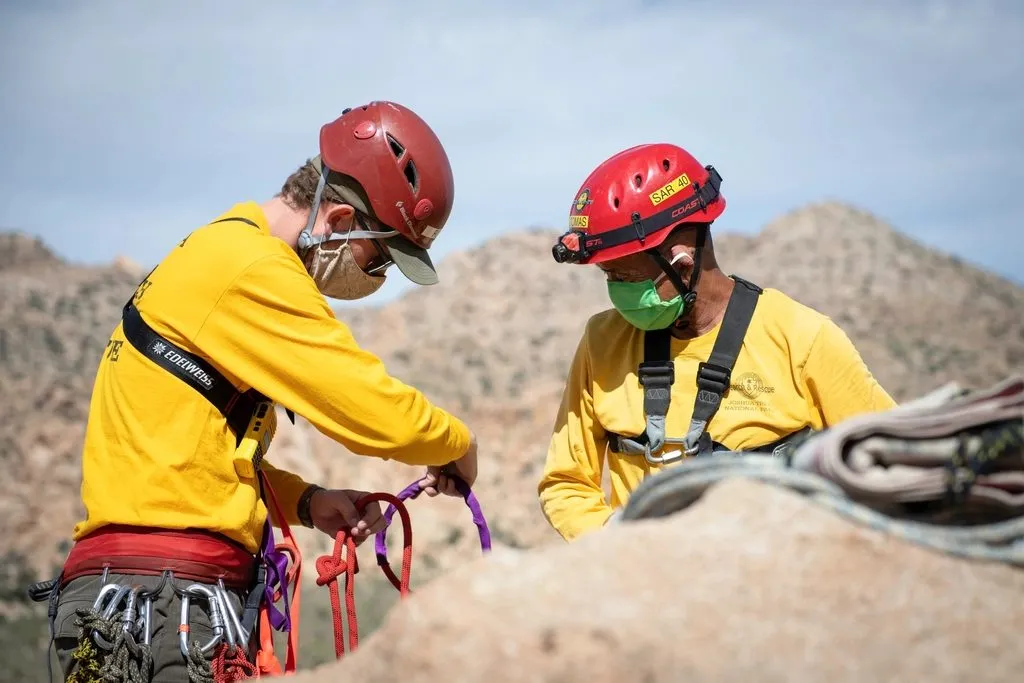
a search and rescue volunteer in the desert National Park Service (via rawpixel)
Pictured a search and rescue volunteer in the desert

A volunteer heard a small voice in the dark

On Tuesday evening, just before sunset, two-year-old Vella Campillo wandered out of her family's yard near Eloy, Arizona, wearing only a diaper. The Pinal County Sheriff's Office got the call around 6:30 p.m., and more than 100 people searched the rugged desert on foot, with drones and helicopters overhead. The drones could not find her. As Sheriff Ross Teeple put it, she is "a small body producing very little heat."

Near midnight, a volunteer named Jay Stewart, who had already walked for three hours, was calling her name when a voice answered. His flashlight found her curled up under a bush about a mile and a half from home. She clung to him so tightly that he tucked her inside his jacket to keep her warm until help arrived. After roughly seven hours alone in the cold desert, she was uninjured.

The sheriff told Stewart that he might not think of himself as a hero but that the body camera footage made clear what he was to that little girl. Stewart turned the credit back toward her parents, saying he couldn't imagine what they were going through. When they thanked him, he said they didn't need to: "It's what we do."

Today’s complete edition

The discoveries, in full

Read the evidence, what it changes, and the reporting behind each of today’s 7 discoveries.

01/07 Natural Sci.

Voyager 1 is now a full day of light away

On November 18 at 2:16 a.m. PST, Voyager 1 became the first spacecraft to reach a distance of one light-day from Earth: about 16.1 billion miles (25.9 billion kilometers) 1.

Voyager 1 spacecraft
Pictured Voyager 1 spacecraft · NASA (Wikimedia Commons)

NASA's Jet Propulsion Laboratory received a signal from the probe early Thursday, exactly 24 hours after the crossing 1. For scale, sunlight takes about 1.3 seconds to reach the Moon and roughly four hours to reach Neptune, and then another 20 hours to cover the distance from Neptune out to Voyager 1. Sending a command now takes 24 hours, and the reply takes another 24, so asking the spacecraft a question and hearing the answer is a two-day affair 1.

02/07 Natural Sci.

The immune system ages in two bursts, around 40 and after 60

Researchers at Duke-NUS Medical School in Singapore read the gene activity of 3.8 million immune cells from 1,828 healthy people aged 19 to 97 89. Aging did not arrive at a steady rate.

The immune system ages in two bursts, around 40 and after 60
Unknown (via rawpixel)

Two prominent peaks of change showed up, one around age 40 and another after 60, and each came with more inflammation and a decline in how immune cells maintain RNA and proteins 89. T cells played a major role, according to senior author Jacques Behmoaras 89. The timing differed a little by sex: females showed sustained activation of some cancer-fighting T cells, then aging signatures in B cells, natural killer cells and T helper cells later in life, while males showed early-life fluctuations in T helper cells 89. The work appeared in Nature Communications 89.

03/07 Life Sciences

A million genomes sharpen the map of endometriosis

An NIH-supported team pooled 14 biobanks representing more than 1 million people, over 30% of them of non-European ancestry, and published the analysis in Nature Genetics 96.

a woman talking with her doctor
Pictured a woman talking with her doctor · Gabriel Santiago (via stocksnap)

They found 58 genomic regions linked to endometriosis, 27 of which had not been recognized before 96. Including people of African ancestry and Admixed-American ancestry turned up genetic links that earlier studies, built mostly on European and some East Asian populations, had not seen 96. The condition shares genetic links with 135 other health conditions or traits, and multi-omic analyses flagged 314 genes that may be associated with it 96.

04/07 Natural Sci.

Entangled light proves where someone is standing

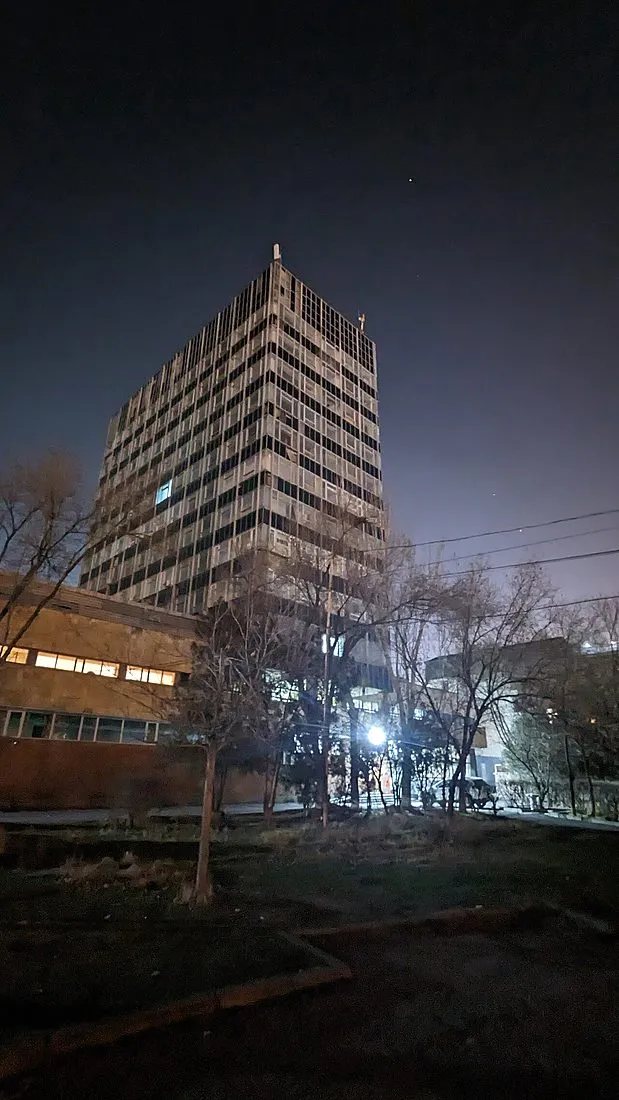
Physicists at the National Institute of Standards and Technology in Boulder, Colorado, used pairs of entangled photons to verify that a participant stood at a specific spot between two stations, in a study published November 18 in Nature 19.

National Institute of Standards and Technology Boulder laboratories
Pictured National Institute of Standards and Technology Boulder laboratories · Vano111ru (Wikimedia Commons)

It is the first complete demonstration of quantum position verification 19. Two trusted "verifiers" sat 640 feet (195 meters) apart, linked by cables and optical fibers through the hallways of a NIST building, with the "prover" somewhere in between 19. Ordinary location checks time how long signals take to return, and colluding hackers can spoof that. A single quantum particle can't be copied, which closes that gap 19.

05/07 Natural Sci.

A triple star 28 light-years away that shouldn't exist

Étienne Artigau's team at the Université de Montréal was watching a red dwarf called Welopō‘ai Aa, 8.46 parsecs from the Sun, for the wobble a planet would cause 92.

Canada-France-Hawaii Telescope
Pictured Canada-France-Hawaii Telescope · Generic1139 (Wikimedia Commons)

After almost five years of SPIRou data, it showed a near-constant acceleration of about 5 meters per second per day, roughly 1,800 meters per second per year 92. Even a Jupiter-mass planet on a few-year orbit would produce at most about 40 to 130 meters per second per year, so something much heavier was tugging 92. It was a white dwarf, and a second, more distant white dwarf completes a hierarchical triple with "no known analogue within 30 pc" 92. Patrick Dufour of the Université de Montréal said, "The system should not exist" 92. The paper is in Astronomy and Astrophysics 92.

06/07 Social Sci.

Uruguay made care a public service and kept it through a change of government

A little over a decade ago, Uruguay passed a law declaring that care for children, seniors, people with disabilities and caregivers themselves is a right, and it has been building the system ever since 146.

Montevideo
Pictured Montevideo · Wikimedia Commons / Montevideo

In a country of about 3.4 million people, the National Integrated Care System now provides early childhood care for some 78,000 children and subsidized home assistants for more than 6,000 people with severe disabilities 146. It also runs day centers and emergency call services for older adults, through community-run childcare centers, certified care workers and a national coordinating agency 146. A typical case: an 82-year-old who can no longer bathe or dress himself gets a personal assistant the government mostly pays for, 80 hours a month 146. It took decades of feminist organizing, so the plan was ready when a sympathetic government took power, and writing it into law helped it survive a later change of government 146.

07/07 Plant-Based

Cities are rewriting the rules for how animals are treated

A bill sponsored by New York City Council members Oswald Feliz and Harvey Epstein would bar restaurants from boiling lobsters, crabs and other crustaceans alive 228.

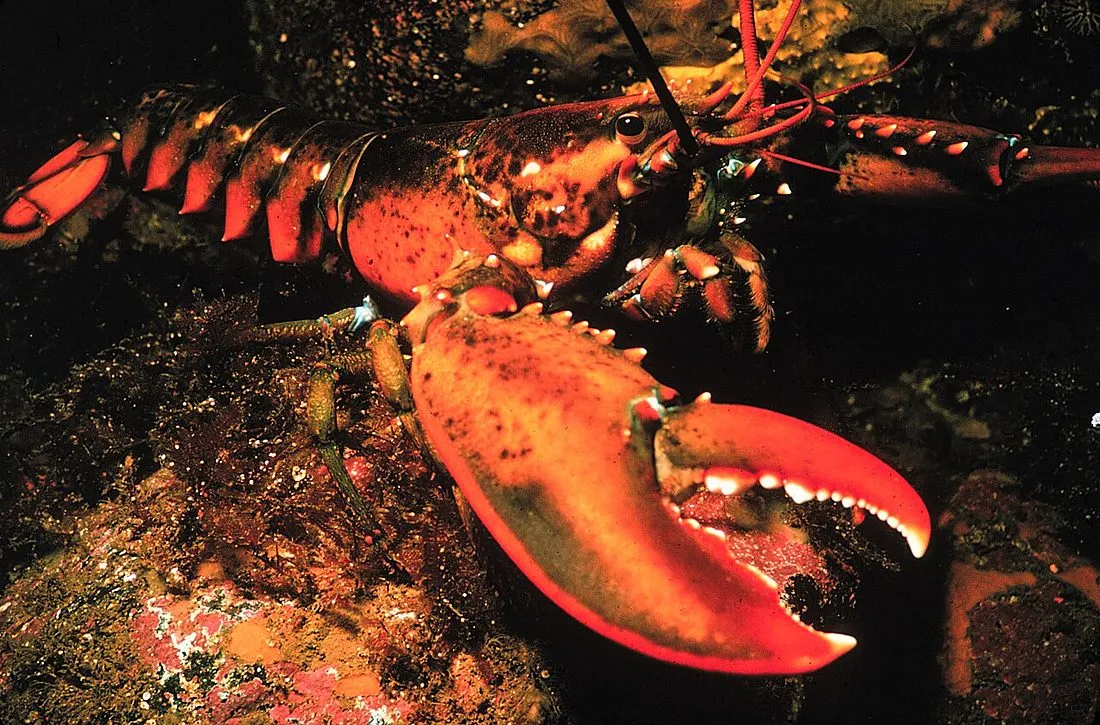
American lobster
Pictured American lobster · Wikimedia Commons / American lobster

A first violation would bring a warning, and later ones civil penalties of up to $100 each 228. The sponsors' memo cites studies indicating crustaceans experience significant pain when boiled alive 228. It arrives in a busy month: on November 19 Mayor Zohran Mamdani signed a ban on horse-drawn carriages, giving the industry until June 2028 to wind down, with protections meant to keep the horses from being sold for slaughter 228. Voters in Washington, DC, and Denver approved bans on selling foie gras 213. Switzerland, Norway and New Zealand already restrict boiling lobsters alive without first stunning them, and the UK has announced plans to prohibit it 228.

Quick notes

Shorter discoveries from this morning, worth knowing but not a full story.

After 8 years in space, a groundbreaking X-ray telescope finally opens its eyes After eight years and 10 billion kilometers, the UK-built MIXS X-ray telescope on BepiColombo caught the Crab Nebula's X-rays during a 39-hour campaign and is performing better than scientists expected, just as the spacecraft prepares to enter Mercury orbit on November 21 3. ScienceDaily
Network Researchers Nail Down Theory of ‘Perfect Resilience’ Two researchers proved there are exactly four minimal network structures that block perfect resilience, so in any network without them, routers can be given rules that deliver packets through any pattern of link failures short of a total cutoff 80. Quanta Magazine
Mathematicians are amazed by ‘holy grail’ proof of Riemann hypothesis Levent Alpöge at Anthropic says AI helped him prove the Riemann hypothesis, and one mathematician called it "the Holy Grail" if correct, but the proof is over 250,000 pages and has not been reviewed, so the checking has barely begun 34. New Scientist
This simple habit is linked to a 33% lower risk of Alzheimer's A Cambridge review of reading for pleasure links it with better memory, less stress and a 33% lower Alzheimer's risk, an association rather than a proven cause, and the authors say the enjoyment matters more than the format 10. ScienceDaily
Brains of people with PTSD have unique epigenetic marks, study finds In 302 donated brains, those from people with PTSD showed distinct DNA methylation in the prefrontal cortex, different from the amygdala-centered pattern seen in depression, which makes a hard-to-see condition more legible 14. Live Science
Severe PMS May Actually Be Three Different Subtypes, Researchers Suggest Uppsala researchers tracked 90 women with PMDD and 44 without across two cycles and found three different symptom timelines, which could make diagnosis and treatment more personal, though the symptoms were self-reported 83. ScienceAlert
Prolonged mask exposure changes how we process facial emotions Among 128 Canadian adults tested three to four months apart, people got better at reading emotions on masked faces, so our visual systems adjusted to the missing half of the face 116. PsyPost
Patients have little say in how brain implant trials are done. Ian Burkhart wants to change that Trial participants who have had brain implants, led by Ian Burkhart, published 13 recommendations on post-trial care, informed consent and neural data privacy for startups, researchers and regulators 110. STAT
Preventable vision loss affects more than a billion people globally - and uneven access to care is the major culprit About 80% of vision loss can be reversed or prevented, mostly with glasses or cataract surgery, and every dollar low- and middle-income countries spend on eye health returns US$28 to their economies 160. The Conversation
A Rope Bridge Camera Just Discovered a New Species of Howler Monkey A camera trap on a rope bridge built to keep forest connected in Brazil's Alta Floresta region photographed Alouatta matogrossensis, a howler monkey long filed under the Purus red howler, and the team thinks it has been a separate species for some 500,000 years 268. Nautilus
Rhino Dung Paper Is How This Family Makes Money and Protects These Amazing Animals In Assam, home to some 2,900 greater one-horned rhinos, a father and daughter pay local communities for rhino dung and turn it into paper, so a crop-trampling neighbor becomes a source of income, and the first tests were done in a kitchen blender 242. Good News Network
Every Tuesday, This Chef Cooks for 100 People in Need Using Random Food Bank Ingredients Toronto-area chef Maddy Goldberg has spent years turning whatever Fort York Food Bank has on the shelf into restaurant-quality lunches for 100 people, such as lentil fritters with caramelized onion and curry powder 243. Good News Network
I CAN Earthshot Challenge | How TN Students Turned Old Newspapers Into Waste Bags and Won $2,000 Students at a Tamil Nadu middle school made waste bags from old newspaper coated with melted crayons, won $2,000, and saw their local panchayat require waste segregation before collection from 1 October 2026 252. The Better India
33 Kids Wrote Letters to a Wounded Veteran. 60 Years Later, His Son Is Searching to Thank Each One In 1967, 33 schoolchildren wrote to Navy corpsman Russell Jacobson, who had 12 gunshot wounds and had stopped eating, and his son Dave has so far found 18 of them to tell them the letters, including one about a pet lizard, made a difference 240. Good News Network
Podcast Transcript November 20th, 2026— A Tourette’s wristband, a trash map and why you dread your plans A University of Nottingham wristband sends small electrical pulses to a nerve in the wrist, and for some people with Tourette's the tics settle within moments of switching it on 253. The Optimist Daily

Our process. Your trust.

Every discovery above traces back to an article we read in full. This is the whole corpus behind this morning, and what it was made of.

  • 47 Sources scanned
  • 269 Articles read
  • 8 Fields covered
  • 7 Discoveries

The sources that carried this morning

  1. 1 PLOS One 20 articles
  2. 2 Psychology Today: The Latest 20 articles
  3. 3 Ars Technica 16 articles
  4. 4 Phys.org 15 articles
  5. 5 Nature 14 articles
  6. 6 Latest Science News -- ScienceDaily 13 articles
  7. 7 STAT 13 articles
  8. 8 New Atlas 11 articles
How an edition is made

Everything we read today

Natural Sciences 95 articles
PLOS One
Life Sciences & Medicine 18 articles
Psychology & Behavioral Science 31 articles
Psyche | Know Your Self
Social Sciences 18 articles
Technology & Innovation 50 articles
Plant-Based & Vegan 26 articles
Solutions & Good News 20 articles
Human Stories & Ideas 11 articles
The long view · not today’s news, the story behind it

Today’s discoveries didn’t come from nowhere. Here’s the older, ongoing story they belong to, a moment from this day in history, and a question to test what stuck.

Where the story stands

On this day in science

1783 The first humans rise into the sky Jean-Francois Pilatre de Rozier and the Marquis d'Arlandes lifted off from a garden in Paris in a Montgolfier hot air balloon, the first people to fly free of the ground. They drifted over the rooftops for around twenty-five minutes, and the old dream of human flight finally came true. More from the Almanac →

Before you go: today’s quiz

The daily quiz

Who developed the first widely used polio vaccine, declared safe in 1955?

Reveal the answer

Jonas Salk

Jonas Salk's injected vaccine was declared safe and effective in 1955. He never patented it. Albert Sabin later developed the oral vaccine used in global eradication.

See the Lifesaver →

Previous editions

Every morning we have published, newest first. Nothing expires.

View the full archive

Get this every morning.

Liked today’s? Tomorrow’s reaches your inbox before breakfast.

  • One email each morning, never more
  • The day’s real discoveries across 8 fields
  • One calm read with your coffee

Free from tomorrow morning, for good.

Same letter. Your $5 a month keeps it free for everyone else.

Any amount, charged once.