




The daily brief · November 14, 2026

A gentler CRISPR for autism genes, and one baby's seizures stop

Several of today's best findings come from aiming at one specific cause: a single gene copy, a single ion channel, a single receptor in the nose.

  • 7 Discoveries
  • 264 Articles read
  • 45 Sources
  • 10 Min read

Today’s discoveries

Everything this morning found, in the order we would read it.

7 stories
  1. 01 Life Sciences A CRISPR dimmer dial for autism-linked genes About 15% of the genetic risk for autism comes from de novo mutations, new changes that appear in a child and not in either parent. Source: Neuroscience News 1 min read
  2. 02 Good News A baby with a seizure every 13 minutes goes seizure-free From his first day of life, a baby named Adnan had a seizure roughly every 13 minutes. Source: Good News Network 1 min read
  3. 03 Natural Sci. Which anti-aging fixes actually move the clock Yale researchers pooled 51 studies and checked which interventions shifted biological age, as measured by DNA-based blood tests. Source: ScienceDaily 1 min read
  4. 04 Natural Sci. Weight-loss shots and surprise pregnancies, sorted by reason for use A team led by Henriette Svarre Nielsen at Copenhagen University Hospital Hvidovre examined more than 750,000 pregnancies for what happens when a woman is exposed to semaglutide (Ozempic,… Source: ScienceDaily 1 min read
  5. 05 Life Sciences Your sneeze may be the virus talking to your nerves Textbooks blame the immune system for the misery of respiratory infection: infected cells and immune cells release inflammatory chemicals, which then irritate nearby nerve endings. Source: Neuroscience News 1 min read
  6. 06 Natural Sci. Dark energy may have flipped sign 9.5 billion years ago Cosmologists have generally assumed dark energy, the component thought to drive the Universe's accelerating expansion, stayed constant. Source: ScienceDaily 1 min read
  7. 07 Social Sci. Most people like their jobs, and not mainly for the pay In a new paper, Julian Jacobs surveyed 8,234 working-age adults in the UK, US, Denmark and India about what motivates them at work. Source: Marginal REVOLUTION 1 min read

The feel-good story of the day

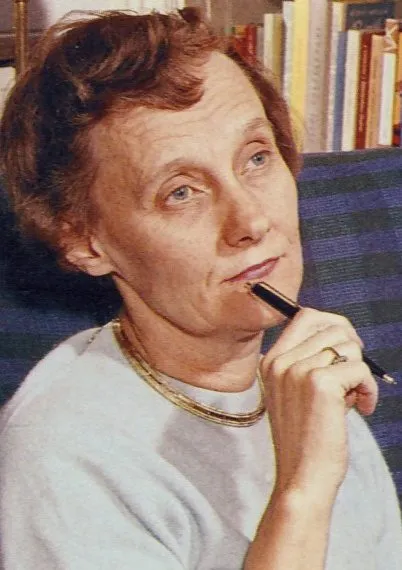
Astrid Lindgren Wikimedia Commons / Astrid Lindgren
Pictured Astrid Lindgren

The author who wrote Pippi for a sick child, and later wrote for the cows

Astrid Lindgren was born on November 14, 1907, in Vimmerby, Sweden. In 1941 her young daughter Karin was ill in bed and asked for a story about someone called Pippi Longstocking, a name Karin made up on the spot. Lindgren told the stories, wrote them down, and Pippi Longstocking was published in 1945. A strong, unbossable girl who lived without grown-ups became one of the most loved characters in children's literature.

Lindgren used her fame for animals later in life. In the 1980s she campaigned in Swedish newspapers for better treatment of farm animals, and Sweden's 1988 animal welfare law, which tightened protections for livestock, became known as Lex Lindgren. She died in 2002 at the age of 94. She is a reminder that the right audience for a good idea is sometimes one sick child, and sometimes a whole country.

Today’s complete edition

The discoveries, in full

Read the evidence, what it changes, and the reporting behind each of today’s 7 discoveries.

01/07 Life Sciences

A CRISPR dimmer dial for autism-linked genes

About 15% of the genetic risk for autism comes from de novo mutations, new changes that appear in a child and not in either parent 88. Many of them disable one copy of a key developmental gene, and the healthy copy can't make enough protein on its own 88.
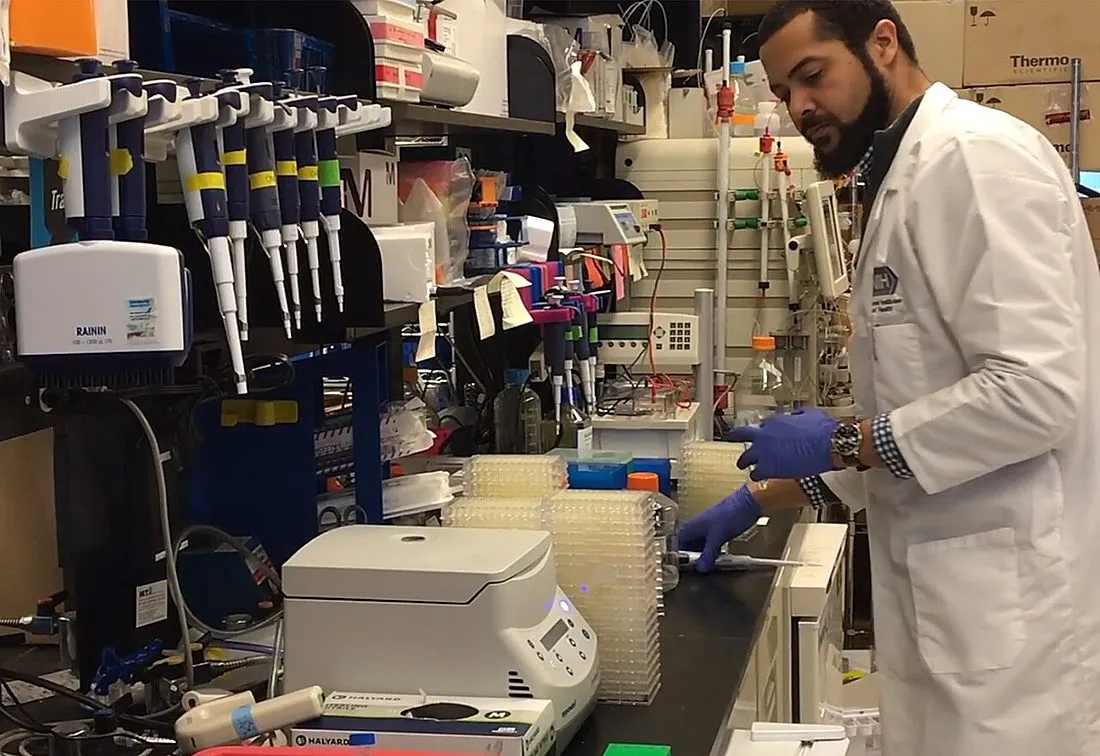
a scientist pipetting in a research lab
Pictured a scientist pipetting in a research lab · National Institute of Allergy and Infectious Diseases (NIAID (Wikimedia Commons)

A UCLA Health team led by Daniel Geschwind and George Chen skipped the usual repair job. They used a modified CRISPR tool that turns genes up instead of cutting DNA, and pointed it at the enhancers of two autism-linked genes, CHD8 and SCN2A, to push the healthy copy harder 88. In human stem cell-derived neurons and 3D cortical organoids, the overgrown tissue in CHD8 mutants was reversed, and SCN2A mutant neurons fired normally again, according to the Nature Neuroscience paper 88. Cells without the mutations stayed unchanged, and neighboring genes were left alone 88.

02/07 Good News

A baby with a seizure every 13 minutes goes seizure-free

From his first day of life, a baby named Adnan had a seizure roughly every 13 minutes 225. At a Dubai hospital, sequencing his entire genome turned up a gene variant tied to an extremely rare genetic epilepsy, which pointed the team to ABS-1230, an experimental oral drug that targets abnormal activity in an ion channel 225.

a parent holding a newborn baby
Pictured a parent holding a newborn baby · Direct Media (via stocksnap)

The Dubai Health Authority allowed it through a compassionate-use pathway, and the first dose went in on September 14 225. Adnan went home about a week later without a recorded seizure, had none at his October 11 follow-up, and was still seizure-free as of November 2 225. He is also beginning to reach early developmental milestones 225.

03/07 Natural Sci.

Which anti-aging fixes actually move the clock

Yale researchers pooled 51 studies and checked which interventions shifted biological age, as measured by DNA-based blood tests 1. Certain prescription drugs, healthy diets and exercise reduced it measurably 1.

Which anti-aging fixes actually move the clock
Unknown (via rawpixel)

The popular over-the-counter anti-aging supplements they examined showed little evidence of doing the same 1. The work, published in Nature Medicine, was led by Raghav Sehgal in Albert Higgins-Chen's lab at the Yale School of Medicine 1. Sehgal came to aging by way of cancer research, after his Ph.D. adviser asked why not study the process behind many diseases instead of one at a time 1.

04/07 Natural Sci.

Weight-loss shots and surprise pregnancies, sorted by reason for use

A team led by Henriette Svarre Nielsen at Copenhagen University Hospital Hvidovre examined more than 750,000 pregnancies for what happens when a woman is exposed to semaglutide (Ozempic, Wegovy) or liraglutide (Saxenda) shortly before or in early pregnancy without planning it 9.

a pregnant woman
Pictured a pregnant woman · Skitter Photo (via stocksnap)

Among women using the drugs for weight management, there was no significant association with premature birth or the other complications examined 9. Among women prescribed them for existing diabetes, premature birth was more likely 9. Because the same drugs gave different answers depending on why they were taken, the authors suggest diabetes itself, rather than the medication, may be behind the early deliveries 9. The results appeared in Human Reproduction Open 9.

05/07 Life Sciences

Your sneeze may be the virus talking to your nerves

Textbooks blame the immune system for the misery of respiratory infection: infected cells and immune cells release inflammatory chemicals, which then irritate nearby nerve endings 86.

Your sneeze may be the virus talking to your nerves
Unknown (via rawpixel)

A Neuron paper from Diana Bautista's lab at UC Berkeley reports that SARS-CoV-2 proteins reach the nerves directly 86. When the virus kills an infected airway cell, two enzymes it uses to slice up its own proteins, PLpro and Mpro, spill into surrounding tissue and contact pain- and irritant-sensing neurons 86. Purified PLpro activates TRPA1, the receptor that registers pungent compounds in wasabi and garlic (Bautista's earlier work identified it), and triggers sneezing, coughing and mechanical pain 86.

06/07 Natural Sci.

Dark energy may have flipped sign 9.5 billion years ago

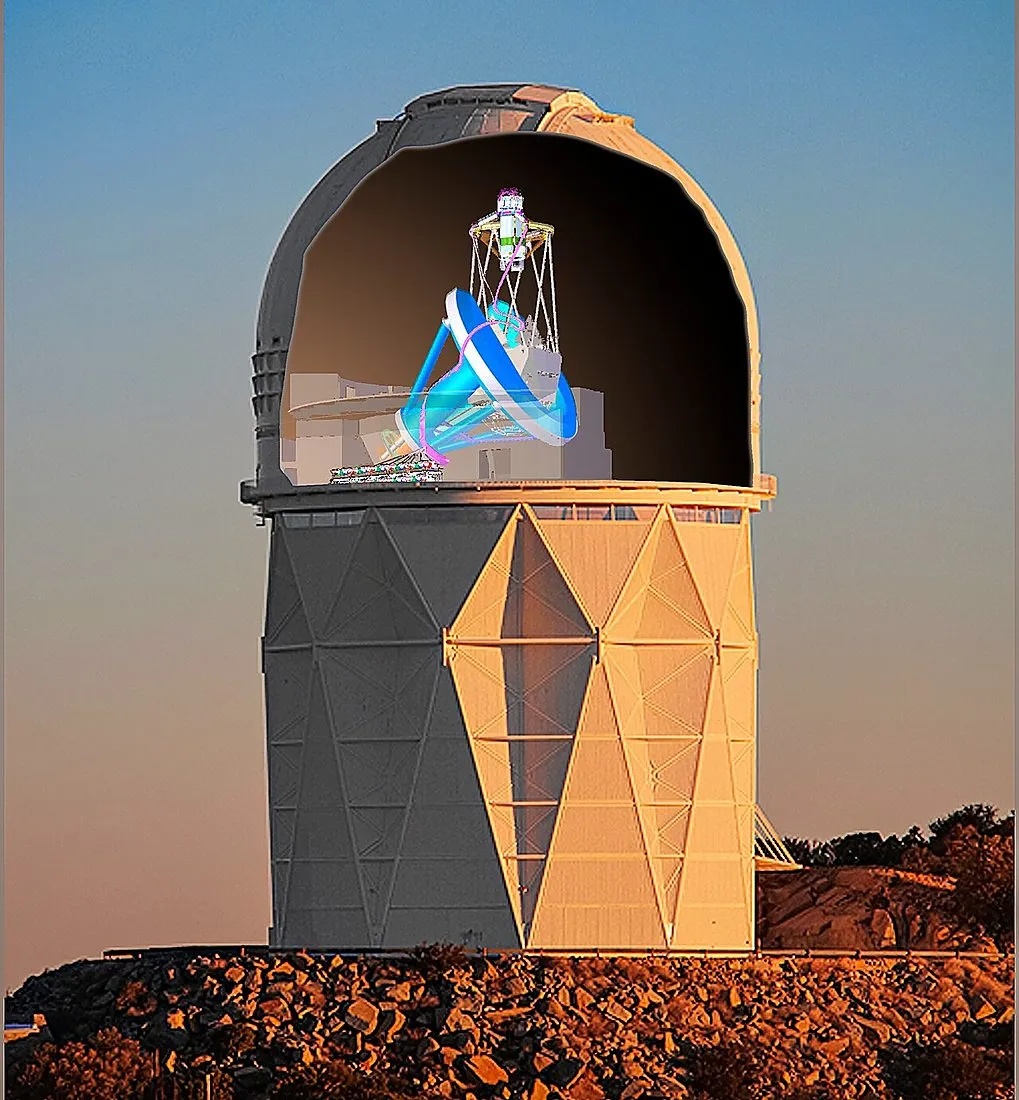
Cosmologists have generally assumed dark energy, the component thought to drive the Universe's accelerating expansion, stayed constant 11. Observations from the Dark Energy Spectroscopic Instrument (DESI), which is building the largest 3D map of the Universe, hint that its influence may have changed, though not yet strongly enough to count as a discovery 11.

Dark Energy Spectroscopic Instrument
Pictured Dark Energy Spectroscopic Instrument · Wikimedia Commons / Dark Energy Spectroscopic Instrument

A team at Istanbul Technical University led by Özgür Akarsu, with collaborators at Doğuş University and Kyoto University's Yukawa Institute, revisited teleparallel f(T) gravity, which describes gravity through torsion instead of spacetime curvature 11. Earlier work on an exponential version of the theory had concentrated on one set of mathematical solutions 11. The overlooked branch they examined has dark energy's effective density negative in the early Universe, then positive, with the flip about 9.5 billion years ago 11. It was published in Physical Review D in 2025 11.

07/07 Social Sci.

Most people like their jobs, and not mainly for the pay

In a new paper, Julian Jacobs surveyed 8,234 working-age adults in the UK, US, Denmark and India about what motivates them at work 145. Some 81% said they are satisfied with their job, and a majority in all four countries were strongly motivated by non-monetary parts of it 145.

coworkers talking in an office
Pictured coworkers talking in an office · Direct Media (via stocksnap)

His "Work Values" Index sorts workers this way: one third are driven by the role itself, nearly a quarter by social and community aspects, 17% by status, and just over a quarter by financial benefits 145.

Quick notes

Shorter discoveries from this morning, worth knowing but not a full story.

Evaluating Bright Light Therapy for Nonseasonal Depression: A Systematic Review and Meta-Analysis Across 11 randomized trials and 858 people, bright light therapy lifted remission rates to 40.7% versus 23.5% for controls, and response rates to 60.4% versus 38.6% 95. Psychiatric Times
Common ADHD classroom accommodations may not help students succeed, study finds In 255 children with ADHD, extra time, breaks, standing desks and quiet spaces made no significant difference, while behavioral interventions cut rule violations by 37% and stimulant medication by 61%, so the study at least shows what does work 59. Phys.org
STAT+: Pharmalittle: We're reading about Lilly conflict questions, a DEA OK for a narcolepsy pill, and more Takeda's Orzeyful, the first narcolepsy treatment aimed at the underlying cause, is now available in the U.S. after the DEA cleared its last regulatory hurdle, though the list price is $16,500 per 60-tablet bottle 104. STAT
Soil Association Drops Scottish Salmon Farms Over Persistent Welfare Failings The UK's largest organic certifier walked away from Scottish salmon after a two-year review found welfare and environmental outcomes short of its bar, even as the industry body says the farms will still be assessed against organic standards 211. Plant Based News
A Vegan Diet Could Cut Your Environmental Impact by 50%, Research Finds At 2,000 calories a day, a University of Granada comparison found a vegan menu produced 2.1 kg of carbon emissions against 3.8 kg for the omnivorous one, a 46% cut, and only vitamin D, iodine and B12 needed extra attention 217. VegNews.com
Water-induced degradation and small-strain dynamic characteristics of tremella fuciformis polysaccharide treated loess In lab tests, a 2% dose of a Tremella fuciformis polysaccharide more than doubled the stiffness of wet loess, from 63.12 to 139.93 MPa, as a bio-based way to stabilize soil that weakens in water 36. PLOS One
WWII Tryst at the Center of 80+Year Mystery That's Now United Two Families After a niece in Canada searched from 2008 and a commercial DNA test flagged a match, 81-year-old Rodney Anderson learned who his father was, and found that he had the "same ears" and the same trade, auto mechanic 226. Good News Network
Missing Teen Found Alive After Six Days in Australian Wilderness A 17-year-old with Level 2 autism, missing near Walhalla since a camping weekend, woke to a police helicopter, gave the crew a thumbs up and was winched to safety 228. Sunny Skyz
In 1949, This Bombay Doctor Showed How an Indian Plant Could Lower High BP Dr Rustom Jal Vakil's trial of Rauwolfia serpentina in 50 patients found systolic pressure fell in 85% and diastolic in 81%, which helped bring a traditional Indian plant into international medicine 238. The Better India
How a Mumbai Museum Is Teaching 9000+ Children AI by Breaking It First Between July 2025 and June 2026, the Museum of Solutions reached 9,087 children through AI workshops, ran a 10-hour pilot for 313 more and trained 80 teachers across six districts of Maharashtra, with some students starting from learning the laptop touchpad 230. The Better India
Dr. King's Lost Draft of 'I Have a Dream' Emerges from a Desk Drawer Seven yellow pages of blue-ink revisions, found in an envelope marked "Speech" in a late aide's desk, show King crossing out words and then crossing out the replacements 223. Good News Network
The Areni-1 Cave Shoe in Yerevan, Armenia A single-piece cowhide shoe from 3600-3500 BC, stuffed with grass and still laced, survived in a cave sealed by layers of sheep dung and measures about a modern US size 7 251. Atlas Obscura
Trends and causes of maternal mortality in Taiyuan, China, 2016–2024: A population-based observational study Taiyuan recorded 33 maternal deaths among 424,392 live births (7.76 per 100,000) and urban mortality fell significantly, though the rural rate did not change and remains higher 33. PLOS One
Scientists studied thousands of conversations and found the repeatable pattern behind 'chemistry' Dartmouth researchers found that the best conversations drift in and out of agreement at a comfortable pace, a "pink noise" pattern that people rated highest for enjoyment, connection and engagement 242. Upworthy

Our process. Your trust.

Every discovery above traces back to an article we read in full. This is the whole corpus behind this morning, and what it was made of.

  • 45 Sources scanned
  • 264 Articles read
  • 8 Fields covered
  • 7 Discoveries

The sources that carried this morning

  1. 1 PLOS One 20 articles
  2. 2 Psychology Today: The Latest 20 articles
  3. 3 Phys.org 16 articles
  4. 4 STAT 16 articles
  5. 5 Ars Technica 14 articles
  6. 6 Latest Science News -- ScienceDaily 12 articles
  7. 7 The Better India : Latest Posts 11 articles
  8. 8 ScienceAlert 10 articles
How an edition is made

Everything we read today

Natural Sciences 85 articles
PLOS One
Life Sciences & Medicine 26 articles
Psychology & Behavioral Science 33 articles
Social Sciences 16 articles
Technology & Innovation 49 articles
Plant-Based & Vegan 13 articles
Solutions & Good News 27 articles
Human Stories & Ideas 15 articles
The long view · not today’s news, the story behind it

Today’s discoveries didn’t come from nowhere. Here’s the older, ongoing story they belong to, a moment from this day in history, and a question to test what stuck.

Where the story stands

On this day in science

1971 The first spacecraft to orbit another planet NASA's Mariner 9 slipped into orbit around Mars, the first craft ever to circle a planet other than Earth. It waited out a global dust storm, then mapped almost the whole surface, revealing giant volcanoes and a canyon system that dwarfs any on Earth. More from the Almanac →

Before you go: today’s quiz

The daily quiz

Who is credited with discovering penicillin?

Reveal the answer

Alexander Fleming

Alexander Fleming noticed a mould killing bacteria on a lab plate in 1928. Howard Florey and Ernst Chain later turned it into a usable drug.

See the Lifesaver →

Previous editions

Every morning we have published, newest first. Nothing expires.

View the full archive

Get this every morning.

Liked today’s? Tomorrow’s reaches your inbox before breakfast.

  • One email each morning, never more
  • The day’s real discoveries across 8 fields
  • One calm read with your coffee

Free from tomorrow morning, for good.

Same letter. Your $5 a month keeps it free for everyone else.

Any amount, charged once.