


The daily brief · November 12, 2026

Necks weren't for looking around, and a cave hid 280 carvings

Old assumptions took a beating today, and most of what replaced them was better news.

  • 7 Discoveries
  • 253 Articles read
  • 48 Sources
  • 11 Min read

Today’s discoveries

Everything this morning found, in the order we would read it.

7 stories
  1. 01 Natural Sci. Our ancestors got necks without being able to turn their heads The first animals to crawl out of the water, nearly 380 million years ago, had stiff necks and could barely turn their heads. Source: ScienceDaily 1 min read
  2. 02 Life Sciences Nearly everyone carries a gene variant that changes how a drug works Researchers analyzed the whole genome sequences and health records of nearly 100,000 participants in the NIH's All of Us program, looking at 16 genes with well-established links to drug… Source: STAT 1 min read
  3. 03 Natural Sci. A telescope that is already beating its own specs NASA's $4 billion Nancy Grace Roman Space Telescope launched on August 30, more than a decade after construction began, and it is about 85% of the way to its working position at Lagrange… Source: Live Science 1 min read
  4. 04 Psychology Good conversations wander off and come back A Dartmouth team led by doctoral candidate Katie O'Nell and senior author Emily Finn tracked how closely conversation partners' word meanings line up from moment to moment, and found… Source: PsyPost 1 min read
  5. 05 Good News A Spanish cave full of carvings that thousands of visitors walked past Researchers working in Cova de la Font Major, in Catalonia, have documented 280 engravings, including 55 separate animals such as horses, wild oxen, bears, goats, and deer, about 250… Source: Good News Network 1 min read
  6. 06 Good News Los Angeles ends oil drilling inside the city On October 28 the LA City Council voted to ban new oil drilling immediately, bar the deepening or redrilling of existing wells, and require all active operations within city limits to… Source: The Optimist Daily 1 min read
  7. 07 Life Sciences Keeping an artificial sense of touch from fading Biomedical engineers at Penn State led by Xiaogang Hu found a stimulation pattern that kept an artificial sense of touch from fading: 5 seconds of mild electrical nerve stimulation… Source: Neuroscience News 1 min read

The feel-good story of the day

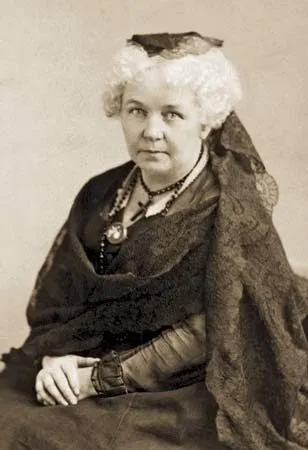
Elizabeth Cady Stanton Wikimedia Commons / Elizabeth Cady Stanton
Pictured Elizabeth Cady Stanton

Born on this day: the woman who put "women" into the Declaration

Elizabeth Cady Stanton was born on November 12, 1815, in Johnstown, New York. Her father, Daniel Cady, was a lawyer, and she grew up around his law office, picking up how the legal system treated women by listening to clients who had no protection from it.

In 1848 she helped organize the Seneca Falls Convention, where she wrote the Declaration of Sentiments, which rewrote the opening of the Declaration of Independence to say that all men and women are created equal. Her resolution calling for women's right to vote was the only one at the convention that did not pass unanimously, and it carried narrowly. She went on to work for decades alongside Susan B. Anthony and helped found the National Woman Suffrage Association in 1869.

She died in 1902, eighteen years before the 19th Amendment gave American women the vote. She wrote the demand down early, and kept making it long enough for others to finish the job.

Today’s complete edition

The discoveries, in full

Read the evidence, what it changes, and the reporting behind each of today’s 7 discoveries.

01/07 Natural Sci.

Our ancestors got necks without being able to turn their heads

The first animals to crawl out of the water, nearly 380 million years ago, had stiff necks and could barely turn their heads. An international team led in part from Penn State reached that conclusion by combining new fossil evidence, experiments on living fish, and computer models of ancient anatomy 14.
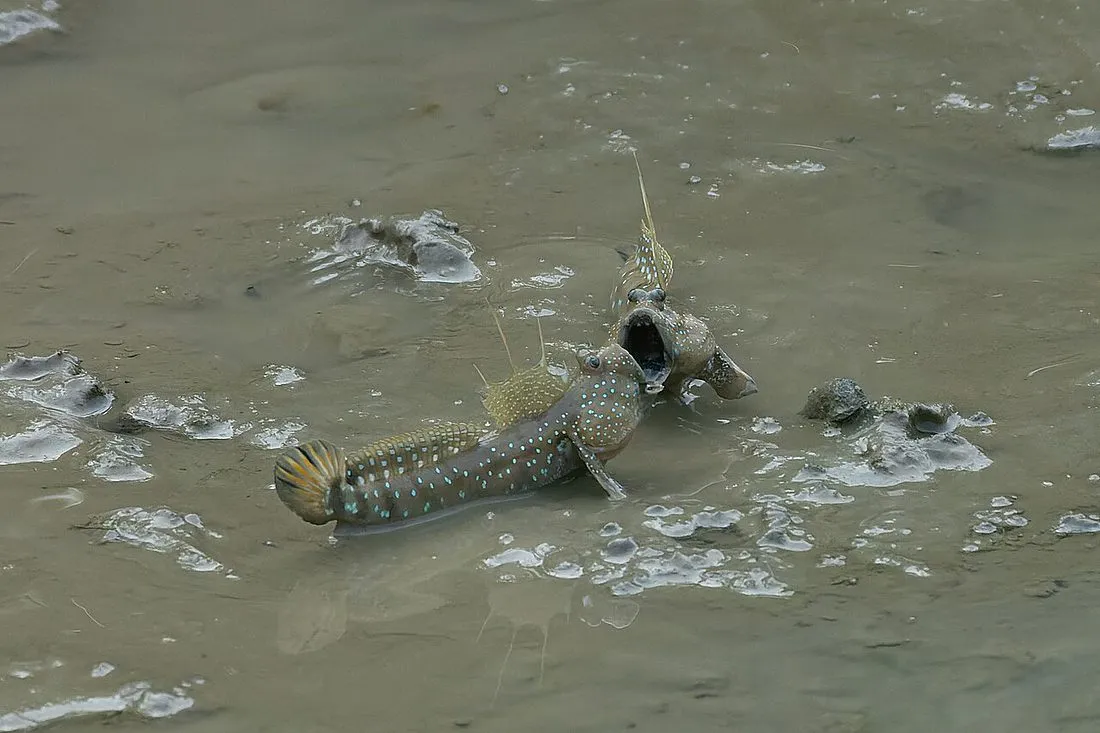
a mudskipper
Pictured a mudskipper · Tisha Mukherjee (Wikimedia Commons)

For decades the standard explanation was that necks evolved so early land animals could look down, scan side to side, and spot prey or threats without repositioning the whole body. Fish don't have this problem solved either: their shoulder girdle connects straight to the skull, so they turn their bodies to look elsewhere 14. The study, published October 14 in Nature, argues that the neck instead arrived as part of the skeletal changes that let animals move using their front limbs 14.

02/07 Life Sciences Social Sci.

Nearly everyone carries a gene variant that changes how a drug works

Researchers analyzed the whole genome sequences and health records of nearly 100,000 participants in the NIH's All of Us program, looking at 16 genes with well-established links to drug response 153.

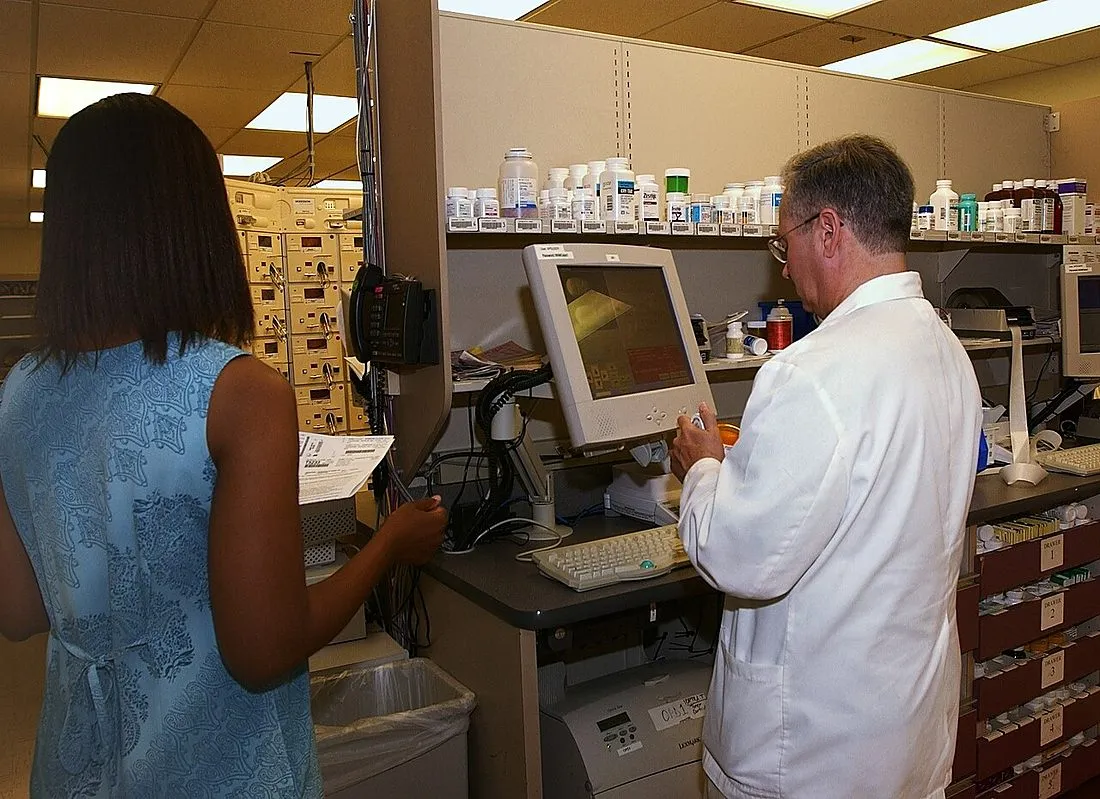
a pharmacist handing a prescription to a customer
Pictured a pharmacist handing a prescription to a customer · U.S. Navy photo by Chief Warrant Officer 4 Seth Rossman. (Wikimedia Commons)

Every participant carried at least one relevant variant. About 99.5% carried one for which the FDA or medical guidelines recommend a different drug or dose for certain medications, and about 24% had already taken a drug their variant affects, including the acid reducers omeprazole and pantoprazole and cholesterol-lowering statins 153. The team also found 17,704 previously unreported variants in the protein-coding regions of these genes, and computer models predict about a quarter of them may have significant effects on how the body handles drugs 153. The paper was published Wednesday in Science Translational Medicine 104. Most earlier pharmacogenomic work drew on people of European ancestry, so the program's more diverse volunteers surfaced variants that databases like the U.K. Biobank had not 104153.

What each field noticed (2)
03/07 Natural Sci.

A telescope that is already beating its own specs

NASA's $4 billion Nancy Grace Roman Space Telescope launched on August 30, more than a decade after construction began, and it is about 85% of the way to its working position at Lagrange point 2, over a million miles from Earth 20.

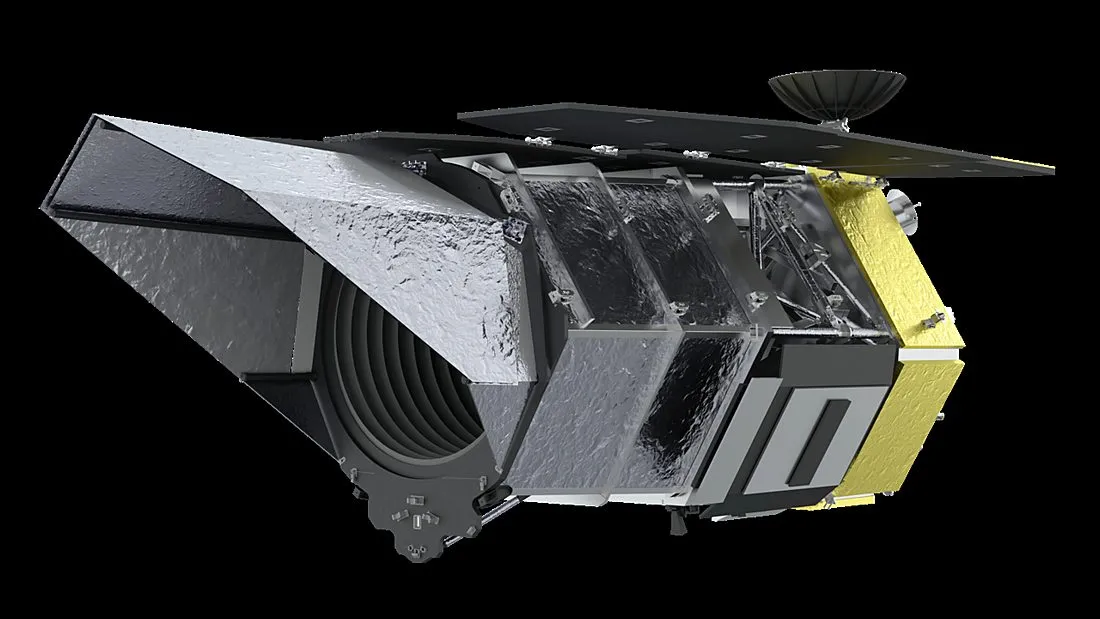
Nancy Grace Roman Space Telescope
Pictured Nancy Grace Roman Space Telescope · Wikimedia Commons / Nancy Grace Roman Space Telescope

Two things have happened since launch. Near-perfect rocket burns during and shortly after liftoff saved more than a decade's worth of fuel, which can now extend the mission to more than twice its planned length 20. And after the team remotely adjusted the mirror, they found the telescope should be able to take images with around 30% more detail than engineers predicted 20. The telescope is over 42 feet long and weighs about as much as a full-grown Tyrannosaurus rex, which is a lot of hardware to coax into place by remote control 20. Commissioning of its instruments during the trip has gone, in the article's words, without a hitch 20.

04/07 Psychology

Good conversations wander off and come back

A Dartmouth team led by doctoral candidate Katie O'Nell and senior author Emily Finn tracked how closely conversation partners' word meanings line up from moment to moment, and found that the more rewarding chats carried a stronger version of a pattern physicists call pink noise 120.

two friends talking over coffee at a cafe
Pictured two friends talking over coffee at a cafe · Saddam19 (Wikimedia Commons)

In practice the speakers align on a topic, drift apart to bring in fresh ideas, then reconnect 120. Stronger pink noise in the study, published in Science Advances, was linked to greater enjoyment among both strangers and friends, a deeper sense of connection among strangers, and a higher chance that speed daters agreed to a second date 120. O'Nell's summary of the problem with the older view: "no one wants to hold a conversation with a parrot" 120.

05/07 Good News

A Spanish cave full of carvings that thousands of visitors walked past

Researchers working in Cova de la Font Major, in Catalonia, have documented 280 engravings, including 55 separate animals such as horses, wild oxen, bears, goats, and deer, about 250 yards from the cave entrance 210.

a cave entrance with rock walls in Catalonia
Pictured a cave entrance with rock walls in Catalonia · Unknown (via rawpixel)

People have been visiting the cave since the 12th century, it was widely frequented from 1957, and it became a tourist attraction with a museum in 1993, yet the carvings went unrecognized 210. "For more than six decades, thousands of visitors passed directly in front of the engraved surfaces, and in some cases inscribed names and dates over them, without the Paleolithic origin of the figures being recognized," said researcher Josep Maria Vergès 210. The cave had long been judged unsuitable for art because its walls are irregular in shape and color, according to the study in Antiquity 210. Radiocarbon dating of organic material shows people used the cave from as far back as 40,000 BCE through the Bronze Age 210.

06/07 Good News

Los Angeles ends oil drilling inside the city

On October 28 the LA City Council voted to ban new oil drilling immediately, bar the deepening or redrilling of existing wells, and require all active operations within city limits to phase out over 20 years 228.

Los Angeles City Hall
Pictured Los Angeles City Hall · Wikimedia Commons / Los Angeles City Hall

That makes Los Angeles the largest US city to ban oil extraction, and the first to end it entirely 228. The campaign took more than a decade; Wendy Miranda, a policy director at Esperanza Community Housing, has worked on it with the STAND-LA coalition for most of that time, and she and her mother both have asthma 228. The council passed a phase-out in 2022, but oil companies won in court by arguing the city lacked the authority; California then passed legislation giving local governments broader power, and the October vote is built on that 228.

07/07 Life Sciences

Keeping an artificial sense of touch from fading

Biomedical engineers at Penn State led by Xiaogang Hu found a stimulation pattern that kept an artificial sense of touch from fading: 5 seconds of mild electrical nerve stimulation through the skin, then 40 seconds of rest 94.

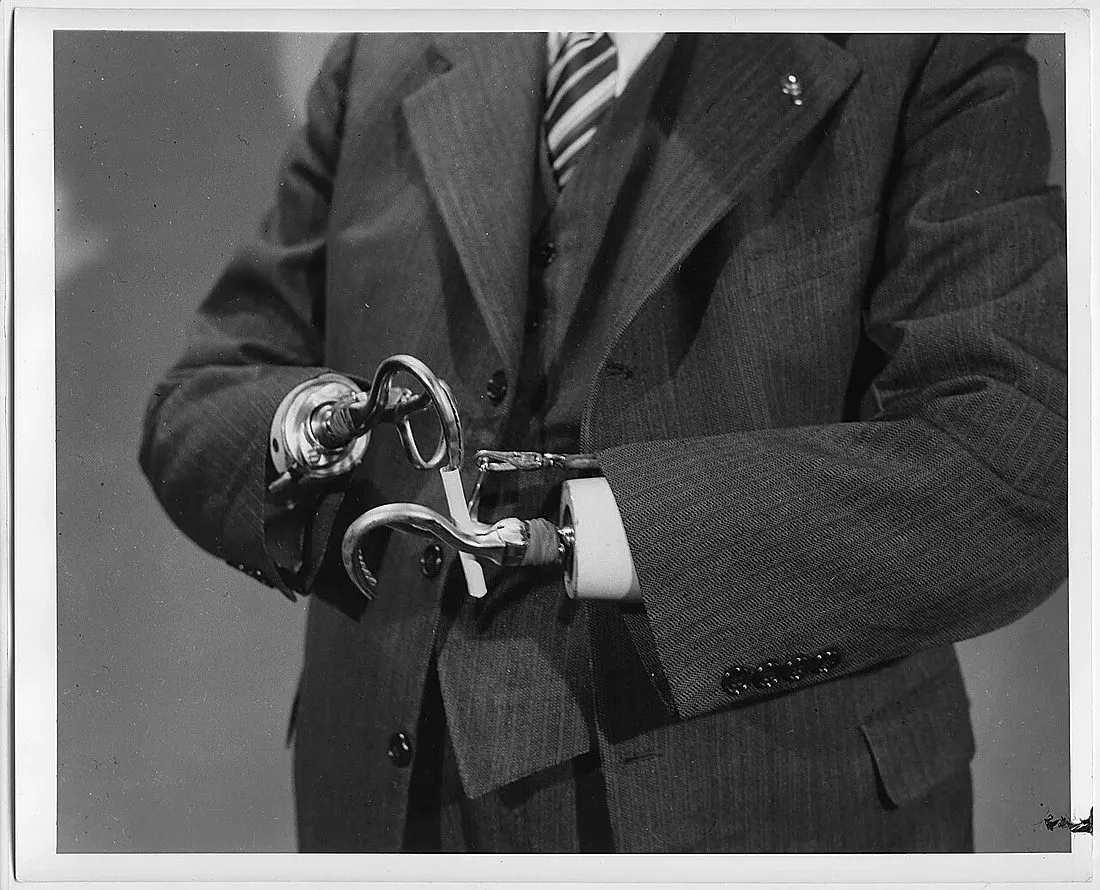
a prosthetic hand holding a ceramic mug
Pictured a prosthetic hand holding a ceramic mug · National Museum of Health and Medicine (Wikimedia Commons)

Using that pattern, they held the sensation steady across 60 trials over 45 minutes, while the usual problem, the brain gradually tuning out constant stimulation, did not appear 94. Brain imaging with functional near-infrared spectroscopy showed that although the feeling stayed the same, the active brain regions drifted over time from the primary touch area to broader networks 94. The work was published in IEEE Transactions on Medical Imaging 94.

Quick notes

Shorter discoveries from this morning, worth knowing but not a full story.

Brown Bear Population in Spain Doubles With Incredible Increase of its Breeding Range Cantabrian brown bears have gone from as few as 140 to about 370 in 20 years and now roam about 6,500 square miles, helped by new protected areas, stiff fines for killing them, and rural depopulation 211. Good News Network
STAT+: BMI alternative would flip obesity diagnosis for millions, study finds A Nature study out Wednesday finds that adding waist measurements to BMI would detect obesity more precisely, with more people correctly diagnosed and fewer misdiagnosed, and millions would see their label change 10719. STAT
Scientists Find Evidence of Primordial Water Hidden at The Edge of The Solar System Twelve dust grains of 10 to 30 micrometers, scooped from the stratosphere by NASA aircraft, carry traces of heavy water from beyond the gas giants, a reservoir that seems to have stayed isolated from the inner solar system 84. ScienceAlert
Salvador Dalí used a peculiar nap trick to capture ideas. Scientists now think he was onto something. In a 2021 Science Advances study, 20 of the 24 people who drifted into light sleep during a rest found the hidden shortcut in a math puzzle, compared with 15 of 49 who stayed awake 235. Upworthy
What Could Go Right? A Toothbrush That Zaps Bacteria and the First Episode of Sesame Street Among the week's numbers: 3.7 minutes of vigorous daily activity, like stair climbing or rushing for a bus, was linked to a 48% lower dementia risk across more than 22,000 adults over about eight years, though the study can't show cause and effect 230. The Progress Network
COP31 Expected To Serve Mostly Plant-Based Meals And Have A Plant-Based Café The climate conference in Antalya is reportedly set for 60 percent vegetarian catering, a fully plant-based café, and two local vegan businesses 198. Plant Based News
Del Monte Invests in Good Protein’s $90M Funding Round for Plant-Based Shake Growth The Montreal maker of plant-based protein shakes raised C$128M ($90M), the largest sum raised by an alternative protein company this year 195. Green Queen
Chimp Gets Food Delivered by Drone After Floodwaters Leave Him Stranded When floodwater left a 38-year-old chimpanzee named Kaleb stranded on a small island at the Save the Chimps sanctuary in Florida, staff flew food and blankets to him by drone, and every animal stayed safe 216. Sunny Skyz
Paralysis Could Not Stop Her: How This 84-year-old Made Good on Her Musical Promise Bonnie Fay, 84, was a patient at Bryn Mawr Village after Guillain-Barré syndrome left her paralyzed, and she now plays the same piano there for residents recovering from illness and surgery 213. Good News Network
A Viral Video Changed Everything for This Struggling Family Restaurant A video about Greek's Grill in Chandler, Arizona passed a million views, lines formed out the door, and a fundraiser started by the creator had topped $18,000 217. Sunny Skyz
This Scientist Showed a Goa Town How to Turn 1 Tonne of Kitchen Scraps Into Compost in 2 Days The Nisargruna system, developed by BARC scientist Dr Sharad P Kale, turns a tonne of kitchen waste into around 150 kg of manure in 24 to 48 hours at the spot where the waste is collected, and Goa plans more units 226. The Better India : Latest Posts
T-Mobile illegally imposed 50GB cap on low-income home Internet plan, NY says Under a settlement with New York, T-Mobile must drop the data cap and speed limit on its required low-income home Internet plans and widen availability within 120 days, without admitting a violation 156. Ars Technica
Oracle-powered programs deliver record 1 GW in peak demand cuts for US utilities Oracle says its utility programs reached 4.3 million customers across 73 demand response events in 2026 and cut peak demand by a record 1 gigawatt, by asking households to use less power at the busiest hours 181. Interesting Engineering
Google DeepMind just mathematically verified key parts of Signal In a four-week project, DeepMind's AI formally verified key cryptographic guarantees of the Signal protocol and found no new vulnerabilities, though it did correctly flag old, already-fixed ones in earlier versions 165. Ars Technica

Our process. Your trust.

Every discovery above traces back to an article we read in full. This is the whole corpus behind this morning, and what it was made of.

  • 48 Sources scanned
  • 253 Articles read
  • 8 Fields covered
  • 7 Discoveries

The sources that carried this morning

  1. 1 Nature 20 articles
  2. 2 PLOS One 20 articles
  3. 3 Psychology Today: The Latest 19 articles
  4. 4 Phys.org 15 articles
  5. 5 Latest Science News -- ScienceDaily 13 articles
  6. 6 Ars Technica 11 articles
  7. 7 Interesting Engineering 10 articles
  8. 8 The Better India : Latest Posts 10 articles
How an edition is made

Everything we read today

Natural Sciences 93 articles
Knowable Magazine
PLOS One
Life Sciences & Medicine 18 articles
Psychology & Behavioral Science 29 articles
Social Sciences 14 articles
Technology & Innovation 40 articles
Plant-Based & Vegan 13 articles
Solutions & Good News 33 articles
Human Stories & Ideas 13 articles
The long view · not today’s news, the story behind it

Today’s discoveries didn’t come from nowhere. Here’s the older, ongoing story they belong to, a moment from this day in history, and a question to test what stuck.

Where the story stands

On this day in science

1980 Voyager 1 sweeps past Saturn NASA's Voyager 1 made its closest approach to Saturn, returning the sharpest views yet of its rings and a first close look at the hazy moon Titan. The encounter filled in our picture of the outer solar system before the probe headed for interstellar space. More from the Almanac →

Before you go: today’s quiz

The daily quiz

Pamela Bjorkman's Caltech lab built a nanoparticle vaccine, “mosaic-8,” studded with pieces of how many different SARS-like viruses?

Reveal the answer

Eight

The mosaic-8 nanoparticle carries fragments of eight different SARS-like viruses at once, and in animals it raised antibodies that neutralized coronaviruses it had never been shown, the aim of a pan-sarbecovirus shot.

Follow the tracker →

Previous editions

Every morning we have published, newest first. Nothing expires.

View the full archive

Get this every morning.

Liked today’s? Tomorrow’s reaches your inbox before breakfast.

  • One email each morning, never more
  • The day’s real discoveries across 8 fields
  • One calm read with your coffee

Free from tomorrow morning, for good.

Same letter. Your $5 a month keeps it free for everyone else.

Any amount, charged once.