






The daily brief · November 10, 2026

Acorns can predict tick years, and a robot built in orbit

Today's best findings come from patience: 35 years of counting ticks, six months of a robot working in orbit, and a ten-year dredging ban that let a Scottish seabed recover.

  • 8 Discoveries
  • 225 Articles read
  • 46 Sources
  • 10 Min read

Today’s discoveries

Everything this morning found, in the order we would read it.

8 stories
  1. 01 Natural Sci. Alzheimer's mutations may hit the nerves that move muscles, not just the brain At the University of Central Florida, James Hickman and Xiufang "Nadine" Guo built small laboratory systems from human cells and put inherited Alzheimer's mutations into the motor neurons. Source: ScienceDaily 1 min read
  2. 02 Natural Sci. A robot assembles part of a structure in orbit, with no astronauts A Caltech robot spent six months in orbit trying to build a reflector antenna 1.4 meters across, and it assembled the first section on its own. Source: ScienceDaily 1 min read
  3. 03 Natural Sci. Acorns, mice and 35 years of ticks For more than 35 years, scientists at the Cary Institute of Ecosystem Studies in Millbrook, New York, have tracked ticks, mice, oak trees, predators and weather. Source: ScienceDaily 1 min read
  4. 04 Natural Sci. Fossil carbon emissions dip for the first time since 2020 The 2026 Global Carbon Budget projects fossil CO₂ emissions of 38.2 billion metric tons this year, down 0.4%, the first fall since the pandemic year of 2020. Source: Phys.org 1 min read
  5. 05 Natural Sci. Fish keep inventing schooling, and keep giving it up Across 350 million years of fish evolution, species gained the ability to move together as a school about 60 times and lost it about 320 times, according to a PNAS paper published Nov. Source: Phys.org 1 min read
  6. 06 Life Sciences A new stroke drug is approved that prevents clots without the usual bleeding risk The FDA approved Bayer's Sunharbo on Monday to reduce recurrence of stroke, the first drug in a new class that blocks a protein called XIa. Source: STAT 1 min read
  7. 07 Human Stories A bedroom air filter flattened blood sugar spikes in people with prediabetes A team at New York University recruited 150 adults with prediabetes: half got bedroom air purifiers with HEPA filters, and half got purifiers with no filter, which makes them fans. Source: Nautilus 1 min read
  8. 08 Good News A Scottish dredging ban gave pink seaweed beds ten years to recover A citizen-led campaign got industrial scallop dredging banned inside a 150,000-acre protected area off northwest Scotland, and the ban has now held for ten years. Source: Good News Network 1 min read

The feel-good story of the day

Halloween skeleton decorations in a front yard Holiday Scenes (via stocksnap)
Pictured Halloween skeleton decorations in a front yard

The skeleton yard that became a landmark on one woman's way to radiation

Bill Pyle of Oxford, Ohio, fills his front yard with skeletons every fall. Some raise the flag at Iwo Jima, one keeps bees, one rides a skeleton horse, and two tourists take a selfie. The decorations did not win him much goodwill by mail: year after year he received accusations of devil worship and promises that he would end up in hell.

Then one letter stopped him. Tammy Wyche had been driving past his house on her way to radiation treatments for breast cancer, and she wrote that checking on the "bone family" was a highlight of her journey. Her final treatment was Wednesday, Sept. 11, and she signed off with thanks for the diversion. Pyle told CBS News the letter touched his heart.

On the morning of her last treatment, Wyche drove by and found the whole skeleton crew holding signs cheering her on. She said it was touching that someone would go to that effort for a stranger. After the story ran, Pyle says, for every person with a bone to pick with him there are now 30 sending thanks, some from as far away as Australia.

Today’s complete edition

The discoveries, in full

Read the evidence, what it changes, and the reporting behind each of today’s 8 discoveries.

01/08 Natural Sci.

Alzheimer's mutations may hit the nerves that move muscles, not just the brain

At the University of Central Florida, James Hickman and Xiufang "Nadine" Guo built small laboratory systems from human cells and put inherited Alzheimer's mutations into the motor neurons 1.

Alzheimer's mutations may hit the nerves that move muscles, not just the brain
Unknown (via rawpixel)

The connections between nerve and muscle were disrupted anyway, with no brain and no spinal cord anywhere in the dish 1. The work was funded by the National Institute on Aging, done alongside the company Hesperos, and published in Alzheimer's & Dementia 1. The target was familial Alzheimer's, a rare inherited form that typically starts between 40 and 65 1.

02/08 Natural Sci.

A robot assembles part of a structure in orbit, with no astronauts

A Caltech robot spent six months in orbit trying to build a reflector antenna 1.4 meters across, and it assembled the first section on its own 6. Its arm pulls structural tubes and connecting joints out of nearby dispensers and joins them into repeating units called bays, which form a truss 6.

California Institute of Technology campus
Pictured California Institute of Technology campus · Ken Lund from Reno, Nevada, USA (Wikimedia Commons)

The parts are composite fiber tubes, aluminum connectors and a Kapton reflective surface 6. Sergio Pellegrino, who leads the project, called it "the first time that a structure has been autonomously constructed in space" 6. DARPA, which funds it through its NOM4D program, compares the job to building with K'Nex or Tinkertoys, which is accurate until the toys have to work in orbit 6. The team hit technical difficulties and scheduling constraints and did not finish the whole antenna 6.

03/08 Natural Sci.

Acorns, mice and 35 years of ticks

For more than 35 years, scientists at the Cary Institute of Ecosystem Studies in Millbrook, New York, have tracked ticks, mice, oak trees, predators and weather 9. A new paper in PNAS collects nine surprises from that record 9.

oak tree with acorns
Pictured oak tree with acorns · Nature's Beauty (via stocksnap)

Mice, more than deer, can drive a 40% increase in tick numbers the following year 9. Acorn production can predict tick surges two years ahead 9. Extreme temperatures may kill far fewer ticks than scientists assumed 9. Lead author Richard Ostfeld says the long record was needed to separate real patterns from coincidence 9.

04/08 Natural Sci.

Fossil carbon emissions dip for the first time since 2020

The 2026 Global Carbon Budget projects fossil CO₂ emissions of 38.2 billion metric tons this year, down 0.4%, the first fall since the pandemic year of 2020 1129.

wind turbines and solar panels
Pictured wind turbines and solar panels · Unknown (via rawpixel)

Forty countries, including the US, Japan, the UK and about 30 EU members, have cut emissions over the past decade while their economies grew 11. This year China is projected down 0.9%, the US 1.3%, the EU 1.5% and Japan 1%; India is projected up 4.4% 11. Oil emissions fall 1.9%, which the authors think is a short-term response to the energy shock from the Iran conflict 1129.

05/08 Natural Sci.

Fish keep inventing schooling, and keep giving it up

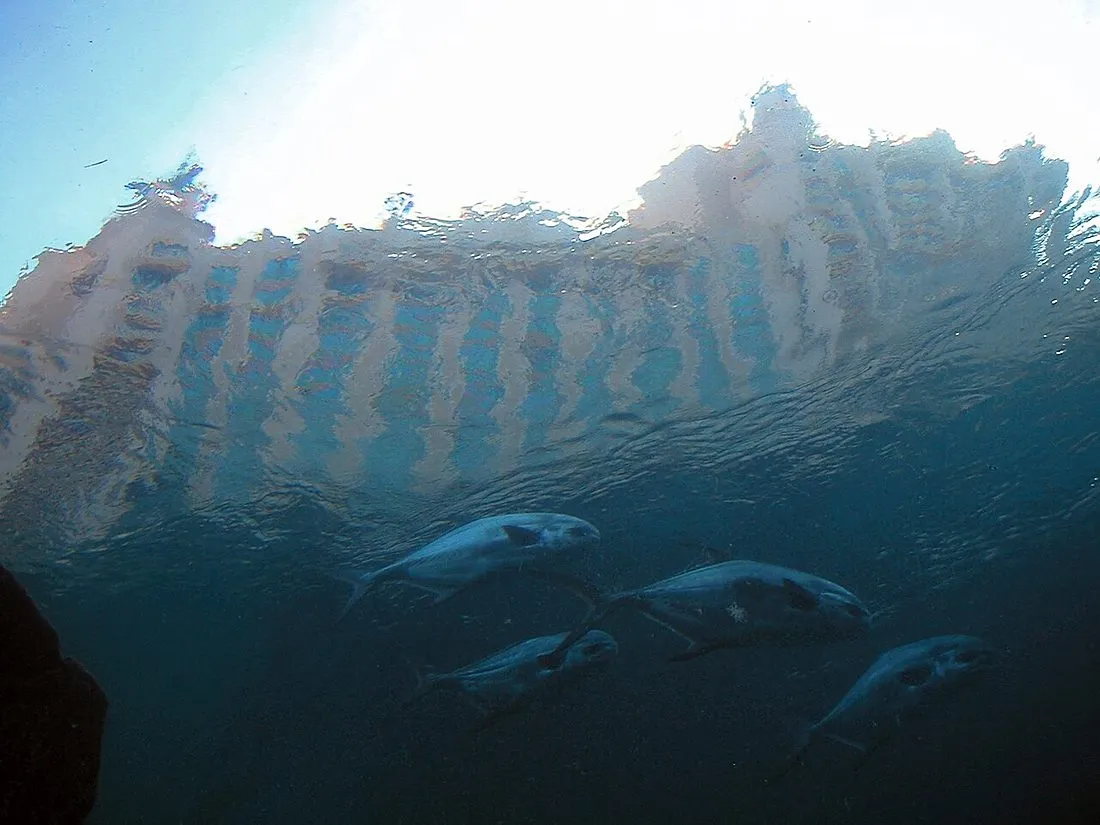
Across 350 million years of fish evolution, species gained the ability to move together as a school about 60 times and lost it about 320 times, according to a PNAS paper published Nov.

school of fish underwater
Pictured school of fish underwater · Fred Hsu (Wikipedia:User:Fredhsu on en.wikipedia) (Wikimedia Commons)

6 42. The team trained a text transformer, the same kind of model behind large language models, to read written descriptions of species, and used machine learning on iNaturalist photos and videos to judge how individual fish were oriented 42. Senior author Andrew Hein said he and other behavior-evolution experts would have predicted losses were rare: "that's simply not true" 42. Earlier studies, with one or two species each, added up to a few dozen species; this one covers thousands 42.

06/08 Life Sciences

A new stroke drug is approved that prevents clots without the usual bleeding risk

The FDA approved Bayer's Sunharbo on Monday to reduce recurrence of stroke, the first drug in a new class that blocks a protein called XIa 73. In a Phase 3 trial of people who had already had a stroke and were on standard treatments, 8.4% on placebo had another stroke, against 6.2% on Sunharbo, a 26% relative reduction 73.

a doctor talking with an older patient
Pictured a doctor talking with an older patient · AnonymousUnknown author (Wikimedia Commons)

Put another way, 53 patients need to be treated for a year to prevent one recurrent stroke 73.

07/08 Human Stories

A bedroom air filter flattened blood sugar spikes in people with prediabetes

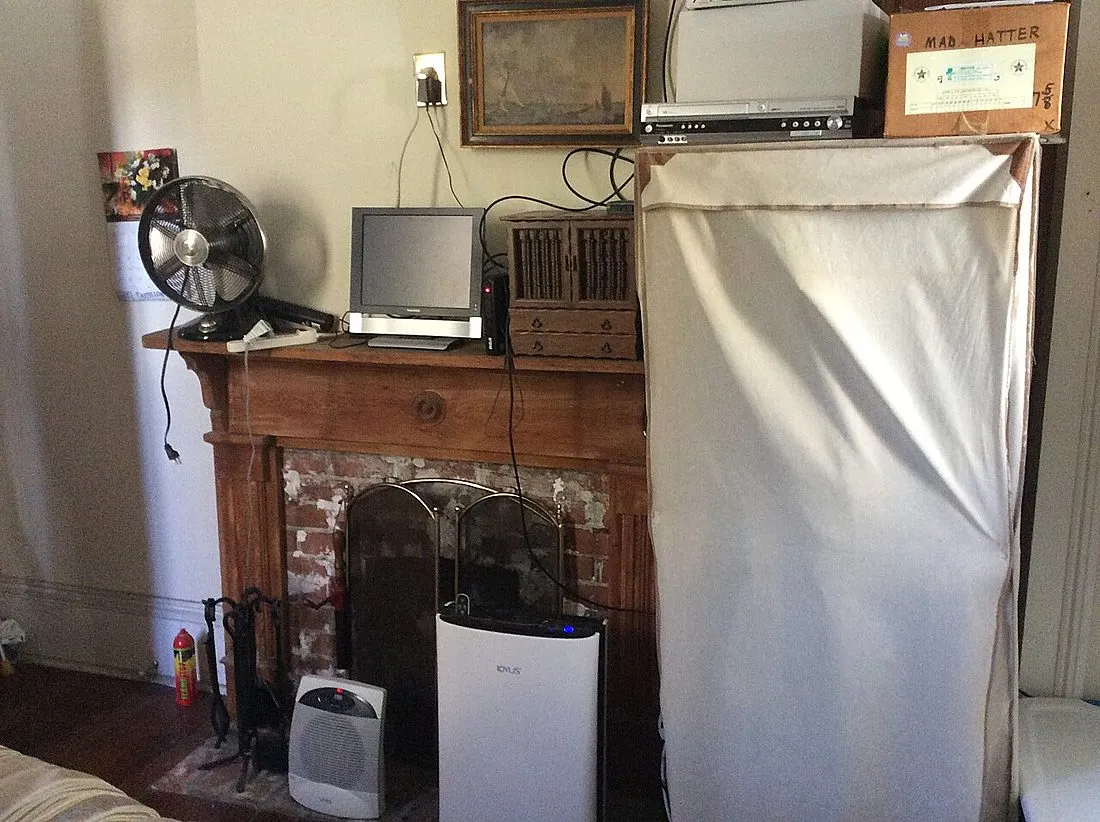
A team at New York University recruited 150 adults with prediabetes: half got bedroom air purifiers with HEPA filters, and half got purifiers with no filter, which makes them fans 219.

a bedroom with an air purifier
Pictured a bedroom with an air purifier · Infrogmation of New Orleans (Wikimedia Commons)

Everyone wore a blood sugar monitor, and room sensors checked that the filters worked 219. After a month, glucose swings were about 8% more muted in the HEPA group 219. After breakfast, their total extra glucose fell by roughly 17% and their peak by 13% 219. The results were presented at the American Heart Association Scientific Sessions 219.

08/08 Good News

A Scottish dredging ban gave pink seaweed beds ten years to recover

A citizen-led campaign got industrial scallop dredging banned inside a 150,000-acre protected area off northwest Scotland, and the ban has now held for ten years 179.

Summer Isles, Scotland
Pictured Summer Isles, Scotland · Wikimedia Commons / Summer Isles

The area contains all of the Summer Isles' maerl beds, a magenta seaweed that forms hard, chalky nodules like coral, including two beds over a mile long that have been growing in the same place for 9,000 years 179. Locals report that whales, dolphins, porpoises and key fish stocks have thrived since 179. Scallop diver Alasdair Hughson says the change has been like "night to day," and the benefit is spilling over to herring, cod and haddock breeding among the maerl 179.

Quick notes

Shorter discoveries from this morning, worth knowing but not a full story.

Scientists Reach a Record Temperature: 280 Billion Times Colder Than The Universe Aboard China's Tiangong space station, physicists reached an equivalent temperature of 9.7 picokelvins, beating the 38 picokelvins from a German drop tower in 2021, and the reason they went to orbit is that gravity is what limits this work on Earth 50. ScienceAlert
Water Fluoridation Does Not Impair Brain Function A Trinity College Dublin study that reconstructed lifetime water exposure for 2,495 older adults, average age 65, found no link between fluoridated water and cognitive test scores 60. Neuroscience News
AI-Powered Precision Brain Stimulation Reduces PTSD in Weeks In a randomized study of 73 veterans, ten sessions over two weeks of stimulation personalized to each person's alpha rhythm were linked to a 34% drop in PTSD severity and 44% fewer sleep disturbances, though 73 people is a small trial 96. Psychology Today: The Latest
STAT+: Eli Lilly’s GLP-1 pill Foundayo helped alleviate sleep apnea in studies Patients on the pill cut 17.8 breathing events per hour versus 4.5 on placebo, and 28% reached remission or mild disease versus 13%, although it looks less effective than Lilly's injectable Zepbound 80. STAT
NDA Submission Complete: COMP360 Psilocybin for Treatment-Resistant Depression Compass Pathways has submitted its FDA application after two positive Phase 3 trials with more than 1,000 participants, and in the second trial 39% of people on two 25 mg doses had a clinically meaningful response by week 6 that held through week 26 68. Psychiatric Times
How Fleeting Moments With Strangers Combat Loneliness A University of Georgia sociologist has given a name, "evanescent interactions," to the brief smile or kind word between strangers that makes someone feel seen, and earlier work of his tied such moments to whether students stayed in school 61. Neuroscience News
Two cities just voted to get Flock cameras out. It’s only the beginning. Voters in York, Maine, backed a ban on license plate readers 5,386 to 2,043 (73%), and the measure takes effect immediately and requires voter approval before any future installation 100. Future Perfect | Vox
Solar Foods Inches Closer to EU Approval of Solein Gas Protein Europe's food safety authority found Solein, a protein grown from microbes fed on carbon dioxide, hydrogen and oxygen, safe under proposed conditions, with EU market approval expected in seven to nine months 160. Green Queen
Danish Government Pursues Ban On ‘Turbo Chickens’ After a TV2 documentary, Denmark's animal welfare minister said the government will work for a national ban on fast-growing Ross 308 chickens and for one across the EU, though he said the legal and economic questions still need investigating 164. Plant Based News
33 Villagers Are Training to Keep People & Tigers Safe When Their Paths Cross in the Sundarbans The Wildlife Trust of India trained 33 new local volunteers, ten of them women, to be first responders when a tiger wanders into a village, building on a 2023 operation that guided a tiger back across the Makri River without capturing it 186. The Better India : Latest Posts
Interpreting Autistic Cues Is Difficult, a Teen Built an App That’s Helping Hundreds of Families New Jersey high schooler Shashank Madala built Kora, a free app with more than 700 users in 12 countries that offers several possible readings of an autistic child's emotions instead of one confident answer, and flags when it is unsure 178. Good News Network
Beyond Cubbon Park: Why Even a 6-Acre Park Could Help Bengaluru Fight Rising Urban Heat A study of 15 Bengaluru green spaces found parks cool their surroundings by over 1°C, with the effect reaching roughly 186 to 246 meters beyond their edges, and pointed to 2.49 hectares as an efficient size 190. The Better India : Latest Posts
Electric ferries that fly above water are arriving in the US Hydrofoils lift the hull out of the water, and Vessev says that cuts drag by about 66%, which is what lets a battery-powered ferry carry a smaller battery, with a first US route planned for Lake Tahoe 193. The Optimist Daily: Making Solutions the News
A New Species Emerges From a 9.5 Million-Year-Old Whale Carcass Researchers in a Danish clay pit identified a brittle star, Ophiura huebnerjenseni, near a 9.5-million-year-old whale fall, and named it for the founders of the Wacken heavy metal festival, which the article describes as notorious for its mud 222. Nautilus

Our process. Your trust.

Every discovery above traces back to an article we read in full. This is the whole corpus behind this morning, and what it was made of.

  • 46 Sources scanned
  • 225 Articles read
  • 8 Fields covered
  • 8 Discoveries

The sources that carried this morning

  1. 1 Phys.org 15 articles
  2. 2 The Conversation Articles 12 articles
  3. 3 STAT 11 articles
  4. 4 Ars Technica - All content 10 articles
  5. 5 Interesting Engineering 10 articles
  6. 6 Upworthy 10 articles
  7. 7 Latest Science News -- ScienceDaily 9 articles
  8. 8 Nature 9 articles
How an edition is made

Everything we read today

Natural Sciences 57 articles
Life Sciences & Medicine 25 articles
Psychology & Behavioral Science 17 articles
Social Sciences 20 articles
Technology & Innovation 40 articles
Plant-Based & Vegan 15 articles
Solutions & Good News 29 articles
Human Stories & Ideas 22 articles
The long view · not today’s news, the story behind it

Today’s discoveries didn’t come from nowhere. Here’s the older, ongoing story they belong to, a moment from this day in history, and a question to test what stuck.

Where the story stands

On this day in science

1969 Sesame Street begins teaching the world's children Sesame Street premiered on public television in the United States, built on research into how young children actually learn. It went on to reach children in more than 150 countries and changed what television could do for a classroom-aged mind. More from the Almanac →

Before you go: today’s quiz

The daily quiz

Which mammal can lose a patch of skin to a predator and regrow it, hair follicles and glands included, with barely a scar?

Reveal the answer

The African spiny mouse

African spiny mice regenerate lost skin, complete with hair follicles, glands and cartilage, almost scar-free, the clearest case of true regeneration in a mammal and a clue to switching it on elsewhere.

Follow the tracker →

Previous editions

Every morning we have published, newest first. Nothing expires.

View the full archive

Get this every morning.

Liked today’s? Tomorrow’s reaches your inbox before breakfast.

  • One email each morning, never more
  • The day’s real discoveries across 8 fields
  • One calm read with your coffee

Free from tomorrow morning, for good.

Same letter. Your $5 a month keeps it free for everyone else.

Any amount, charged once.