




The daily brief · November 9, 2026

Four minutes of hustle, and a stronger flu shot, tied to less dementia

Small, ordinary things keep turning out to carry more weight than their size suggests: a dash for the bus, a three-day theater workshop for police officers.

  • 7 Discoveries
  • 153 Articles read
  • 28 Sources
  • 10 Min read

Today’s discoveries

Everything this morning found, in the order we would read it.

7 stories
  1. 01 Natural Sci. A stronger flu shot, and a lower Alzheimer's risk Researchers at UTHealth Houston analyzed nearly 200,000 adults aged 65 and older and found that those who got the high-dose flu vaccine had a nearly 55% lower risk of Alzheimer's than… Source: ScienceDaily 1 min read
  2. 02 Natural Sci. Under four minutes of hustle, half the dementia risk University of Sydney researchers pulled data on 22,618 UK Biobank adults, mostly in their early 60s, who wore wrist accelerometers for a week between 2013 and 2015. Source: New Scientist 1 min read
  3. 03 Natural Sci. Immune cells reprogrammed inside the body to fight cancer Daniel Anderson's lab at MIT built fat-based nanoparticles that carry messenger RNA into natural killer cells while those cells are still inside the body, teaching them to hunt specific… Source: ScienceDaily 1 min read
  4. 04 Social Sci. Twenty years of poverty programs, and they got better at it Economists pooled 49 studies, covering 81 variations, of "graduation" programs that bundle consumption support, savings, skills training, coaching, and a lump-sum transfer. Source: National Bureau of Economic Research Working Papers 1 min read
  5. 05 Social Sci. A three-day theater workshop changed how police treated victims Researchers partnered with the Bihar Police and ran a randomized trial across 417 police stations and roughly 2,500 senior field officers. Source: National Bureau of Economic Research Working Papers 1 min read
  6. 06 Technology The coldest atoms ever, made in orbit On China's Tiangong space station, researchers coaxed about 20,000 rubidium atoms into expanding with an energy equivalent to 9.7 trillionths of a degree above absolute zero, four times… Source: New Atlas 1 min read
  7. 07 Natural Sci. Why small dogs outlive big ones, in the DNA Across species, bigger animals live longer: mice a few years, humans and elephants into their 60s, bowhead whales two centuries. Source: ScienceAlert 1 min read

The feel-good story of the day

Hedy Lamarr Wikimedia Commons / Hedy Lamarr
Pictured Hedy Lamarr

Hedy Lamarr, born 112 years ago today, and the idea that outlived her film career

Hedy Lamarr was born in Vienna on November 9, 1914, and became one of the best-known film actresses of her day. She was also a self-taught inventor. Before leaving Europe she had spent years in the company of her first husband, an arms manufacturer, and had heard how weapons were discussed. She never forgot it.

In the early 1940s, working with the composer George Antheil, she designed a radio guidance system for torpedoes that jumped between frequencies so an enemy could not jam it. Antheil, who had once scored a piece for synchronized player pianos, supplied the mechanism: a paper-roll scheme that kept transmitter and receiver hopping in step. They were granted a patent in 1942.

The Navy did not use it at the time. The core idea, spreading a signal across many frequencies, later became part of the family of techniques behind modern wireless communication. She did not get rich from it, and recognition came late. It still counts as one of the better answers to the question of what a famous face is allowed to be good at.

Today’s complete edition

The discoveries, in full

Read the evidence, what it changes, and the reporting behind each of today’s 7 discoveries.

01/07 Natural Sci.

A stronger flu shot, and a lower Alzheimer's risk

Researchers at UTHealth Houston analyzed nearly 200,000 adults aged 65 and older and found that those who got the high-dose flu vaccine had a nearly 55% lower risk of Alzheimer's than those who got the standard dose.

A stronger flu shot, and a lower Alzheimer's risk
Unknown (via rawpixel)

Earlier work had linked the standard-dose shot to a 40% reduction 8. The study appeared in the journal Neurology. It began in a meeting room, not a lab. Public health officials had seen neurologist Paul Schulz's 2022 vaccine research and invited him to come talk it through, and the questions that followed became this follow-up 8. The background number explains the interest: in 2025, more than 7 million Americans over 65 were living with Alzheimer's, about 1 in 9 people in that age group 8.

02/07 Natural Sci.

Under four minutes of hustle, half the dementia risk

University of Sydney researchers pulled data on 22,618 UK Biobank adults, mostly in their early 60s, who wore wrist accelerometers for a week between 2013 and 2015. The team then looked for short bursts of hard effort in the data: stairs, heavy shopping, a run for the bus.

a woman climbing stairs carrying shopping bags
Pictured a woman climbing stairs carrying shopping bags · Kalen Emsley (via stocksnap)

About eight years of follow-up later, 170 people had been diagnosed with dementia 23. Among people who did no exercise at all, 2.5% developed it. Among those who skipped workouts but managed a few daily bursts of vigorous routine movement, 0.71% did. Among those who did both, 0.59% did 23. An accumulated 3.7 minutes a day of vigorous routine movement went with a 48% lower risk, plus larger grey matter volumes in several brain regions and fewer abnormal white matter patches 23.

03/07 Natural Sci.

Immune cells reprogrammed inside the body to fight cancer

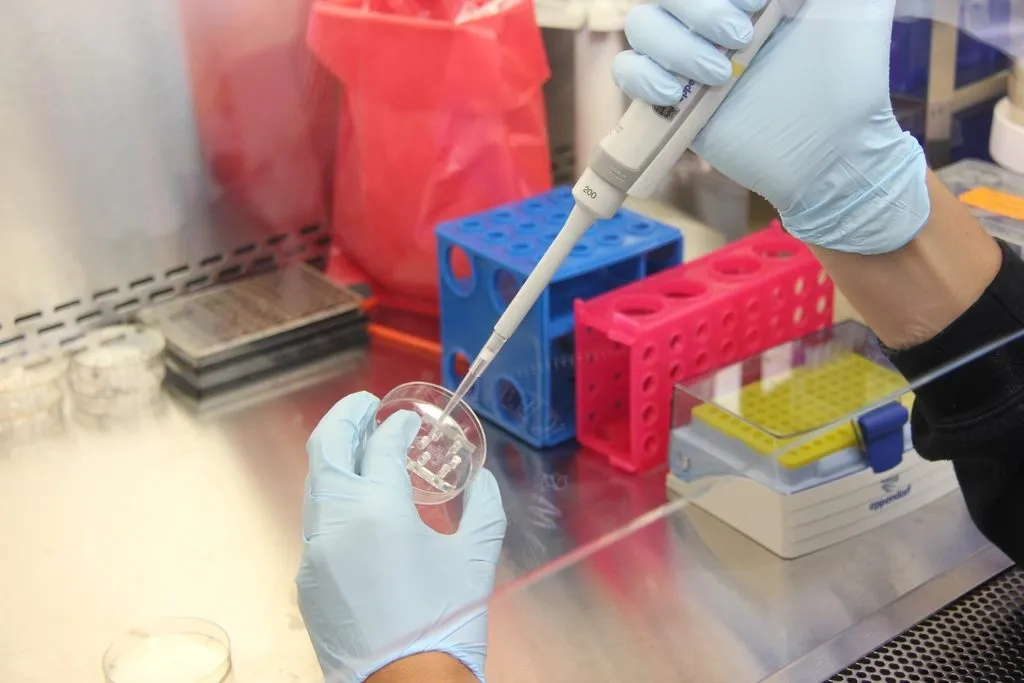
Daniel Anderson's lab at MIT built fat-based nanoparticles that carry messenger RNA into natural killer cells while those cells are still inside the body, teaching them to hunt specific targets.

a research lab scientist at a bench
Pictured a research lab scientist at a bench · Unknown (via rawpixel)

In mice, the resulting CAR NK cells eliminated tumors made of cancerous T cells and reversed liver damage caused by T cells attacking healthy tissue, a model of autoimmune hepatitis 12. The work was published in Nature Biotechnology 12. Current cell therapies need a patient's cells taken out, engineered in a lab, and put back. The FDA has approved seven such CAR T therapies in the past decade, and the manufacturing is the hard part 12. Anderson's summary is short: deliver a nanoparticle that modifies your own NK cells and teaches them to attack 12.

04/07 Social Sci.

Twenty years of poverty programs, and they got better at it

Economists pooled 49 studies, covering 81 variations, of "graduation" programs that bundle consumption support, savings, skills training, coaching, and a lump-sum transfer.

a woman farmer with goats in a village
Pictured a woman farmer with goats in a village · Vladimir Kudinov (via stocksnap)

On average, monthly consumption rose by 38 PPP dollars (11%) and income by 28 (15%), with gains in savings, assets, food security, mental health, and women's empowerment 78. Bigger transfers and pricier programs produced bigger effects, but not in proportion to the cost, so cheaper programs tended to be more cost-effective 78. The surprise is the trend: programs run from 2016 onward return a benefit-cost ratio of 5.39, against 2.89 for those through 2015 78.

05/07 Social Sci.

A three-day theater workshop changed how police treated victims

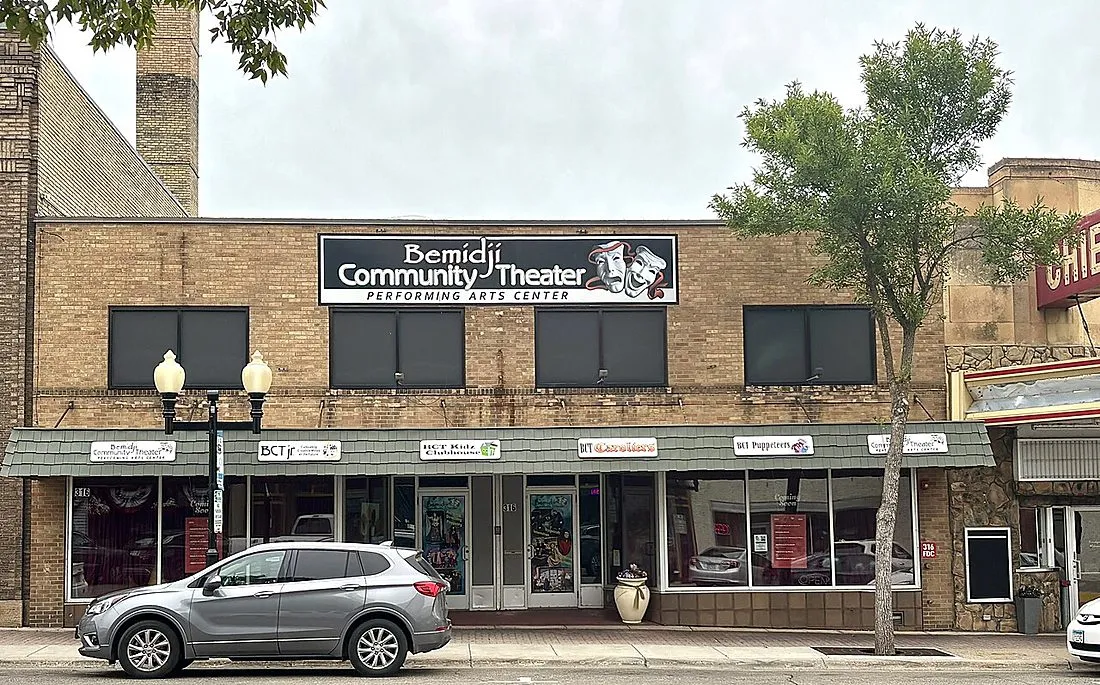
Researchers partnered with the Bihar Police and ran a randomized trial across 417 police stations and roughly 2,500 senior field officers. The treatment was a three-day expressive arts workshop grounded in the Theatre of the Oppressed, aimed at how officers respond to gender-based violence 73.

a community street theater performance in India
Pictured a community street theater performance in India · Myotus (Wikimedia Commons)

About seven months later, treated officers showed more favorable attitudes, more empathy, and stronger legal knowledge. A year later, in standardized victim audits, officers in treated stations were 15 percentage points less likely to blame victims, dismissed fewer complaints, and made more referrals. Administrative records showed a 41% reduction in registration delays, and over a longer horizon, more reports of gender-based violence from citizens 73.

06/07 Technology

The coldest atoms ever, made in orbit

On China's Tiangong space station, researchers coaxed about 20,000 rubidium atoms into expanding with an energy equivalent to 9.7 trillionths of a degree above absolute zero, four times lower than the 38 picokelvin record set in 2021 113.

Tiangong space station
Pictured Tiangong space station · Wang Xiang, Zhang Qiao, Wang Wei (Wikimedia Commons)

That earlier record came from a drop tower in Bremen, where weightlessness lasts seconds. Orbit gives much longer. The team held atoms in an optical dipole trap, which does not disturb their magnetic properties the way a magnetic trap does. They then used a gentle magnetic gradient to expel the faster atoms and tracked the remaining cloud's expansion far longer than in previous experiments 113.

07/07 Natural Sci.

Why small dogs outlive big ones, in the DNA

Across species, bigger animals live longer: mice a few years, humans and elephants into their 60s, bowhead whales two centuries. Within a species the rule can flip, and dogs run it backward, with large breeds growing faster, getting age-related diseases earlier, and dying younger 29.

Researchers analyzed DNA methylation across the genomes of 894 dogs in the Dog Aging Project and saw a broad decline in methylation as dogs aged, especially in mobile "jumping gene" sequences called transposons. Differences in aging may arise partly from LINE1 elements, which can damage DNA as they move and are normally held in check by methylation. More than 40% of LINE1-associated genome regions lost methylation as dogs aged 29.

Quick notes

Shorter discoveries from this morning, worth knowing but not a full story.

Parkinson's may be driven by 'vicious cycle' that disrupts brain waste drainage Brain-border drainage vessels in seven people with severe Parkinson's held alpha-synuclein clumps that seven controls lacked, and in mice the clumps halved drainage speed, which gives researchers a new place to look, not just deep inside the brain 24. New Scientist
Knee osteoarthritis pain relief – and massive weight loss – from new GLP-1 In two phase 3 trials of more than 1,000 adults, retatrutide produced up to 25% weight loss and about two-thirds of recipients reported at least a 50% cut in knee pain, though the placebo group reported a 38% cut and some authors work for Eli Lilly 116. New Atlas
Beyond Overdose Prevention: Naloxone Coprescription Laws and the Path to Treatment States that required doctors to prescribe or offer naloxone with risky opioids saw naloxone prescribing rise 275%, with no increase in opioid prescribing and more addiction-treatment admissions 83. National Bureau of Economic Research Working Papers
How Does Mindfulness Change the Brain in Drug Addiction? In a randomized trial of 86 people in inpatient opioid treatment, eight weeks of mindfulness-oriented recovery enhancement changed brain responses to drug cues, and bigger responses while savoring food pictures went with bigger drops in craving 63. Psychology Today: The Latest
She Kept His Coat for 30 Years, Then Finally Found the Boy Who Gave It to Her After Racial Attack A Korean schoolgirl whose uniform had been slashed was given a new winter coat by Norihisa Koyama, then a Japanese teenager; she kept it, name tag and all, for three decades and returned it this year after reading about his charity work 130. Good News Network
Dogs Can Sniff-Out Invasive Plant Species With High Accuracy to Curb Their Destruction Of 12 German volunteer dog-and-handler teams that completed a field test, 11 passed, finding Himalayan balsam, ragweed, and knotweed with 75% average accuracy 129. Good News Network
2 Chennai Engineers Helped 130+ Buildings Save 5 Billion Litres of Water by Spotting Hidden Leaks The startup EarthFokus began with a tap that cuts flow from 10-12 litres a minute to as little as 0.5, and says its monitoring has now helped over 130 commercial buildings save more than five billion litres 135. The Better India : Latest Posts
Real-Life 'Babe': Newborn Piglet Rescued From Roadside Is Now a Beloved Resident at Farm Animal Sanctuary A piglet found at one day old, small enough for the palm of a hand, was bottle-raised with hot water bottles by an 82-year-old retired vet nurse and now weighs 330 to 450 pounds and comes when called 132. Nice News
In India, Plant-Based Foods Have Higher Protein Bioavailability Than Meat Cooked plant-based burgers showed 57-58% protein bioavailability against 21% for beef, though the analysis tested only five commercial products and came from researchers including GFI India 119. Green Queen
A Crane, a Duck & a Bird From the Arctic: What Happens When India's Wetlands Disappear? Two men used bamboo poles to save a flooded Sarus Crane nest in Uttar Pradesh, and the eggs hatched 31 days later, just as experts began assessing all 1,211 bird species regularly found in India 134. The Better India : Latest Posts
Self-perception might matter more than observable social skills for autistic teens' well-being Among 117 autistic teens in Taiwan, feeling socially capable and having less social anxiety went with a better quality of life regardless of observable social skills, a pointer toward what programs might focus on 45. PsyPost Psychology News
Fitter kids face a lower risk of depression decades later, study suggests In more than 1,000 Australians tracked over three decades, faster childhood running speeds and better endurance went with lower odds of adult depression, particularly among women, while strength showed weaker ties 46. PsyPost Psychology News
A nuclear blast could save Earth from an asteroid, but there's a catch A new Sandia simulation found that the side of an asteroid that takes the X-ray blast changes the push nearly fivefold, on an algorithm over 1,600 times faster than earlier models, so planners can now check their aim on realistic lumpy shapes 4. ScienceDaily
Lucky Bird Found in Storm Drain a Mile From Home After Passing Driver Happens to Spot it Hopping in A budgie blown out of a Northampton kitchen window by a storm was spotted hopping into a drain by a passing driver, and her owner found her after posting online 131. Good News Network

Our process. Your trust.

Every discovery above traces back to an article we read in full. This is the whole corpus behind this morning, and what it was made of.

  • 28 Sources scanned
  • 153 Articles read
  • 8 Fields covered
  • 7 Discoveries

The sources that carried this morning

  1. 1 National Bureau of Economic Research Working Papers 20 articles
  2. 2 Psychology Today: The Latest 16 articles
  3. 3 Latest Science News -- ScienceDaily 13 articles
  4. 4 New Scientist 10 articles
  5. 5 Interesting Engineering 10 articles
  6. 6 Upworthy 10 articles
  7. 7 PsyPost Psychology News 9 articles
  8. 8 Futurism 8 articles
How an edition is made

Everything we read today

Natural Sciences 36 articles
Life Sciences & Medicine 5 articles
Psychology & Behavioral Science 25 articles
Social Sciences 26 articles
National Bureau of Economic Research Working Papers
Works in Progress RSS Feed
Technology & Innovation 25 articles
Plant-Based & Vegan 10 articles
Solutions & Good News 23 articles
Human Stories & Ideas 3 articles
The long view · not today’s news, the story behind it

Today’s discoveries didn’t come from nowhere. Here’s the older, ongoing story they belong to, a moment from this day in history, and a question to test what stuck.

Where the story stands

On this day in science

1989 The Berlin Wall opens East Germany opened the checkpoints in the Berlin Wall, letting people cross freely for the first time in decades. Crowds celebrated a peaceful turning point toward a more open world. More from the Almanac →

Before you go: today’s quiz

The daily quiz

In 2025 a Johns Hopkins robot learned, by watching videos of surgeries, to perform which operation start-to-finish on lifelike tissue?

Reveal the answer

Removing a gallbladder

Trained on videos of the procedure, a Johns Hopkins robot removed a gallbladder through the whole operation on lifelike tissue, succeeding on all eight it attempted and adjusting as it went.

Follow the tracker →

Previous editions

Every morning we have published, newest first. Nothing expires.

View the full archive

Get this every morning.

Liked today’s? Tomorrow’s reaches your inbox before breakfast.

  • One email each morning, never more
  • The day’s real discoveries across 8 fields
  • One calm read with your coffee

Free from tomorrow morning, for good.

Same letter. Your $5 a month keeps it free for everyone else.

Any amount, charged once.