





The daily brief · October 27, 2026

AI spots pancreatic cancer 475 days early; a 709 BCE eclipse times Earth

Today's good news is about looking harder at what was already there: the hidden texture in a CT scan, and a 2,700-year-old eclipse record that turned out to be a clock.

  • 7 Discoveries
  • 258 Articles read
  • 50 Sources
  • 11 Min read

Today’s discoveries

Everything this morning found, in the order we would read it.

7 stories
  1. 01 Life Sciences An AI reads the texture of a pancreas, 475 days before the diagnosis A CT scan can look normal and still carry a warning. Source: ScienceDaily 1 min read
  2. 02 Natural Sci. A 2,700-year-old eclipse fixes how fast Earth was spinning On July 17, 709 BCE, observers at the court of the Lu Duchy watched the Sun go dark, and the "Spring and Autumn Annals" recorded it a couple of centuries later. Source: ScienceDaily 1 min read
  3. 03 Life Sciences Daily steps loosen the grip of depression genes A team led by Kansas State University used the NIH's All of Us Research Program, which pairs genetic profiles and health records with continuous data from participants' Fitbits. Source: Neuroscience News 1 min read
  4. 04 Natural Sci. A jumping spider pays back lost sleep In a dark corner of an enclosure, a fringed jumping spider, Portia fimbriata, sleeps, and as the night goes on his limbs twitch, his chelicerae tremble, and his retinas flutter as though… Source: ScienceAlert 1 min read
  5. 05 Life Sciences The first personalized cancer vaccine clears a Phase 3 trial At the European Society for Medical Oncology Congress, a Phase 3 study showed that the "cancer vaccine" intismeran autogene reduced the risk of recurrence or death by 42% compared with… Source: STAT 1 min read
  6. 06 Good News A Scottish island of 170 people digs up its own monastery Lismore, a nine-mile-long island in the Inner Hebrides, has about 170 residents, and a sizable portion of them crowdfunded an excavation beside the island's 13th-century cathedral. Source: Good News Network 1 min read
  7. 07 Plant-Based Denmark gives up its mink exemption for good Denmark, once the world's top mink exporter, has confirmed that mink fur farming will end permanently. Source: Vegan Food & Living 1 min read

The feel-good story of the day

Vasily Arkhipov Wikimedia Commons / Vasily Arkhipov
Pictured Vasily Arkhipov

The officer who said no on a submarine

On October 27, 1962, at the height of the Cuban Missile Crisis, the Soviet submarine B-59 was being circled by American destroyers dropping signaling depth charges near Cuba. Cut off from Moscow for days, the crew had no way to know whether war had already begun. Captain Valentin Savitsky concluded it might have and wanted to fire a nuclear torpedo.

Launching the "Special Weapon" normally needed the captain and the political officer to agree. But B-59 also carried Vasily Arkhipov, chief of staff of the submarine flotilla, so three officers had to say yes. Two of them did. Arkhipov did not, and after an argument he persuaded Savitsky to surface and wait for orders from Moscow.

The story stayed secret for decades. Russian officials only declassified that B-59 had carried nuclear torpedoes in 2002. Arkhipov went on to become a rear admiral, and his wife Olga later described him as intelligent, polite, and very calm. In 2017 he received the first Future of Life Award, presented to his family after his death. It is a reminder that some of the best days in history were the ones where one person on a bad day declined to hurry.

Today’s complete edition

The discoveries, in full

Read the evidence, what it changes, and the reporting behind each of today’s 7 discoveries.

01/07 Life Sciences

An AI reads the texture of a pancreas, 475 days before the diagnosis

A CT scan can look normal and still carry a warning. An AI model called REDMOD, described in the journal Gut 8, analyzes fine patterns in the texture of pancreatic tissue that conventional scans don't show to the eye.

Today Got Better

It flagged early signs of pancreatic ductal adenocarcinoma an average of 475 days before diagnosis, and it was nearly twice as sensitive as experienced radiologists 8. The researchers examined abdominal CT scans from 219 patients treated at multiple hospitals 8. REDMOD also finds and outlines the pancreas by itself, which removes a step where different people trace the organ differently 8.

02/07 Natural Sci.

A 2,700-year-old eclipse fixes how fast Earth was spinning

On July 17, 709 BCE, observers at the court of the Lu Duchy watched the Sun go dark, and the "Spring and Autumn Annals" recorded it a couple of centuries later 3. The record had a problem.

a total solar eclipse with the corona visible
Pictured a total solar eclipse with the corona visible · Brucewaters (Wikimedia Commons)

When the team calculated the eclipse's path from existing estimates of Earth's ancient rotation, a total eclipse should not have been visible from where the chronicle put it 3. The fix was a map correction: the location of the ancient capital, Qufu, was off by eight kilometers 3. With that repaired, the researchers reconstructed the eclipse and got a more accurate measurement of how fast Earth spun at the time, in a paper in Astrophysical Journal Letters 3. A later addendum in the "Hanshu," written about seven centuries after the event, describes the eclipsed Sun as "completely yellow above and below." That may be one of the earliest written descriptions of the solar corona 3.

03/07 Life Sciences Psychology

Daily steps loosen the grip of depression genes

A team led by Kansas State University used the NIH's All of Us Research Program, which pairs genetic profiles and health records with continuous data from participants' Fitbits 66.

a woman walking in a park
Pictured a woman walking in a park · Michael Slaten (Wikimedia Commons)

In the study, published in Nature Mental Health, higher daily step counts and more minutes of moderate-to-vigorous activity weakened the statistical link between high genetic susceptibility to major depression and the severity of symptoms 66. The researchers scored severity on a spectrum rather than as a yes-or-no diagnosis, so the buffering showed up in milder and moderate symptoms too 66.

What each field noticed (2)
Psychology Today

A Forgotten Remedy for Depression

This essay asks why exercise isn't prescribed more. It says exercise can match antidepressants and may beat them in some studies, and that most mental health professionals have had no formal training in prescribing it. It offers a framework called FITT for building a routine 108.

Read the story
04/07 Natural Sci.

A jumping spider pays back lost sleep

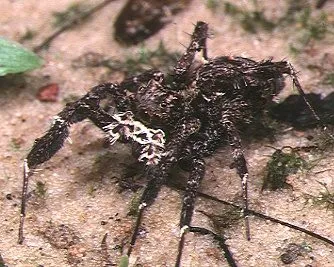
In a dark corner of an enclosure, a fringed jumping spider, Portia fimbriata, sleeps, and as the night goes on his limbs twitch, his chelicerae tremble, and his retinas flutter as though tracking something that isn't there 51.

Portia fimbriata
Pictured Portia fimbriata · Wikimedia Commons / Portia fimbriata

Behavioral ecologists Nadja Geiger and Daniela Rößler at the University of Bonn report the first evidence of sleep rebound in an invertebrate. Sleep rebound is the body's habit of repaying a sleep debt, and it is one of the tests that separates real sleep from motionless resting 51. A 2022 study by Rößler's group had recorded REM-like twitching in another jumping spider, Evarcha arcuata, but could not yet show those spiders were truly asleep 51.

05/07 Life Sciences

The first personalized cancer vaccine clears a Phase 3 trial

At the European Society for Medical Oncology Congress, a Phase 3 study showed that the "cancer vaccine" intismeran autogene reduced the risk of recurrence or death by 42% compared with pembrolizumab (Keytruda) alone 73.

an oncology nurse with a patient
Pictured an oncology nurse with a patient · The White House (Wikimedia Commons)

The writers of this STAT opinion piece call it the first neoantigen and mRNA therapy to meet a Phase 3 endpoint in oncology 73. Their question is what happens next. They point to BRCA testing: the first gene was located in 1990, a commercial test arrived in 1996, and thirty years later the test costs a few hundred dollars yet still doesn't reach most of the patients who could benefit 73.

06/07 Good News

A Scottish island of 170 people digs up its own monastery

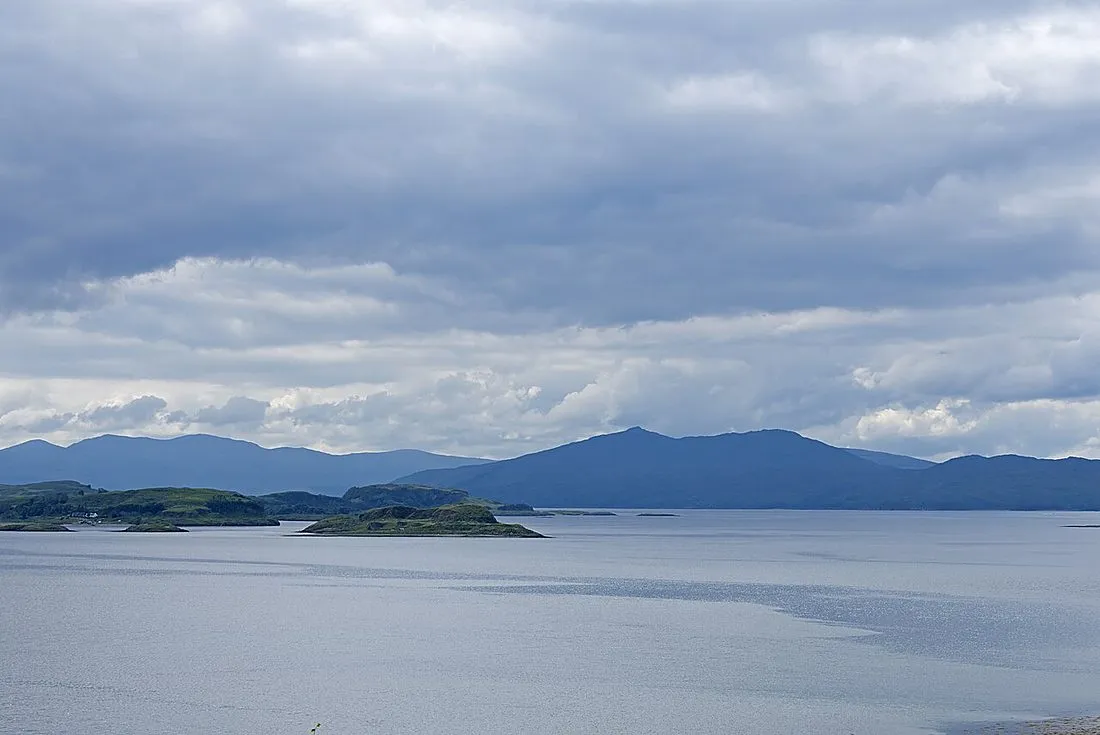
Lismore, a nine-mile-long island in the Inner Hebrides, has about 170 residents, and a sizable portion of them crowdfunded an excavation beside the island's 13th-century cathedral 201.

Lismore, Inner Hebrides
Pictured Lismore, Inner Hebrides · Ymblanter (Wikimedia Commons)

The Lismore Historical Society hired Dr. Clare Ellis of Argyll Archaeology to find out whether the site was also home to the early monastery of Lios Mòr, founded by Saint Mo Luóc in the 6th century 201. The dig turned up six burials dated between 650 and 1040 CE among large carved stone cross fragments, an oval building with a limestone-paved foundation, handmade pottery, and toolmaking remains 201. A trench produced more than 1,000 pieces of debris pointing to precious metalwork, along with small crucibles and casts for melting what was likely copper, silver, and gold 201. The findings were published in Antiquity on October 1 220.

07/07 Plant-Based

Denmark gives up its mink exemption for good

Denmark, once the world's top mink exporter, has confirmed that mink fur farming will end permanently 198. After national elections in June, the new coalition government dropped the plan to seek an exemption from the EU-wide prohibition on keeping mink, which the EU classified as an invasive species in 2025 198.

an American mink
Pictured an American mink · Wikimedia Commons / An American in Paris (film)

The ban takes effect on August 7 next year, and a two-year transition window ends all remaining operations by August 2029 198. Nature Minister Christian Rabjerg Madsen said a business "should not continue just because it has existed for a long time. It should also make sense for society, for the economy and for the animals" 198.

Quick notes

Shorter discoveries from this morning, worth knowing but not a full story.

Chinese scientists discover “D-rex,” a giant fungus with roots stretching back 65 million years Surveying Yunnan forests, researchers found Dianjunus rex, whose fruiting bodies grow up to 50 cm tall and 2.2 kg from the woody roots of Chinese cork oak, the largest known in its fungal phylum, and it was different enough to need a whole new family 7. ScienceDaily
Nose Spray Made From Toad Venom Compound Quickly Eases Depression For Weeks in Clinical Trial In a phase 2b trial of 193 people whose depression hadn't responded to two to five antidepressants, a single nasal dose of mebufotenin from the Sonoran Desert toad eased symptoms, with the psychedelic effects fading in about an hour, though it's still a Schedule 1 drug and well short of clinical use 53. ScienceAlert
Numbers of Endangered and Sacred River Dolphin Grow by 6 After Successful Breeding Season Six new calves bring Cambodia's Mekong Irrawaddy dolphins to 118, the world's largest river population, in a place where locals regard the animals as reincarnated ancestors and will confront illegal fishing to protect them 202. Good News Network
Scientists left cinderblocks in a barren part of the sea. 3 months later they were ecstatic. Concrete pyramids set off Grenada in 2013 drew algae, sponges, lobsters, and juvenile fish within three months, and the roughly 100 pyramids now hold over 30 fish species and 14 coral types, though a 2024 study found the algae cover still differs from a natural reef 238. Upworthy
Daily Digest — October 27, 2026 A two-year pilot paid 211 adults in the Peruvian Amazon about two pounds a day with no spending rules, and households that couldn't afford nutritious food fell from 73 percent to 26 percent, though that comes from a survey of 82 people, not a randomized trial 220. The Bright Side
The Buses Almost a kilometer of Oxford Street, from Orchard Street to Great Portland Street, closed to cars, buses, taxis, and bicycles on October 26 while Regent Street still crosses at Oxford Circus, with the layout temporary through spring 2027 and Westminster council objecting over displaced traffic 225. The Bright Side
Why Amur Falcons Choose to Stop in Northeast India: The Answer Lies in the Termites Found in the Region Three 150-gram falcons tagged in Manipur fatten up on a mass termite emergence, then fly nonstop across the Arabian Sea for nearly 3,000 km, since they can't land on water 209. The Better India
Why do people still get polio in some countries and not in others? Since 1988, when polio paralyzed about 350,000 children in 125 countries, cases have dropped by more than 99%, and wild polio now spreads in only two countries, Afghanistan and Pakistan, where it paralyzed 52 children in 2025 127. The Conversation
The 4 stages of women’s heart health: New framework for doctors and patients Four medical societies, including the American Heart Association and the American College of Obstetricians and Gynecologists, published a shared framework in Circulation that follows women's hearts from adolescence through perimenopause, which they call a cardiovascular inflection point 86. STAT
Scientists identify rare mutations in 36 genes that sharply raise the odds of OCD and tic disorders By roughly doubling earlier sample sizes, a Nature Neuroscience study went from four confirmed high-confidence risk genes for these conditions to 36, which gives researchers a direct path from a specific gene to changes in brain development 106. PsyPost
New perovskite solar cells endure 1,000 hours of extreme heat, retain 95% efficiency A nickel oxide catalyst that pulls out the lithium ions behind perovskite cells' early wear let them hold 95 percent of their efficiency after 1,000 hours at 85°C and 85 percent humidity, a lab result against a usual lifespan of two to ten years 168. Interesting Engineering
The antibacterial and antifungal activity of honey and propolis from the Australian stingless bee Tetragonula carbonaria In lab tests against 16 pathogens, this stingless bee's honey worked against every bacterium tested and its propolis against a subset, and the usual suspects (hydrogen peroxide, phenolics) didn't fully explain why 28. PLOS One
Amyloid Fibrils Protect the Father’s Genetic Message The same kind of protein fibers behind Alzheimer's plaques turn out to escort fragile RNA into sperm, and in a test of the idea, embryos expressed over ten times more of a delivered protein than controls 67. Neuroscience News
Vegan Mānuka Honey, With All the Benefits, May Be on Its Way to Shelves Aston University researchers added methylglyoxal and hydrogen peroxide to build a bee-free honey alternative that worked against Mycobacterium abscessus in the lab, with wound care as the likely first use 191. VegNews.com
Fishermen Rescue Exhausted Kangaroo Found 2 Miles Out at Sea A crew in Boston Bay, South Australia, lifted a waterlogged kangaroo through the boat's sea door, and Jake Murray cradled him while he rested before he hopped off the beach 208. Sunny Skyz

Our process. Your trust.

Every discovery above traces back to an article we read in full. This is the whole corpus behind this morning, and what it was made of.

  • 50 Sources scanned
  • 258 Articles read
  • 8 Fields covered
  • 7 Discoveries

The sources that carried this morning

  1. 1 PLOS One 20 articles
  2. 2 STAT 15 articles
  3. 3 The Conversation Articles 13 articles
  4. 4 Ars Technica - All content 12 articles
  5. 5 eLife: latest articles 10 articles
  6. 6 Interesting Engineering 10 articles
  7. 7 The Better India : Latest Posts 10 articles
  8. 8 Upworthy 10 articles
How an edition is made

Everything we read today

Natural Sciences 61 articles
PLOS One
Life Sciences & Medicine 35 articles
Psychology & Behavioral Science 17 articles
Social Sciences 23 articles
Works in Progress RSS Feed
Technology & Innovation 44 articles
Plant-Based & Vegan 18 articles
Solutions & Good News 41 articles
Human Stories & Ideas 19 articles
The long view · not today’s news, the story behind it

Today’s discoveries didn’t come from nowhere. Here’s the older, ongoing story they belong to, a moment from this day in history, and a question to test what stuck.

Where the story stands

On this day in science

1904 The New York City Subway opens New York opened its first underground railway, carrying riders from City Hall up to Harlem beneath the crowded streets. On its first day, tens of thousands paid a nickel to ride. The subway let a great city grow upward and outward at once. More from the Almanac →

Before you go: today’s quiz

The daily quiz

In a drug's clinical trials, which phase is the large, controlled study, often thousands of people, that confirms a drug works before approval?

Reveal the answer

Phase 3

Phase 1 checks safety in a few dozen people and phase 2 checks whether a drug does anything useful. Phase 3 is the big, controlled test that produces the evidence regulators use to approve it.

Read the explainer →

Previous editions

Every morning we have published, newest first. Nothing expires.

View the full archive

Get this every morning.

Liked today’s? Tomorrow’s reaches your inbox before breakfast.

  • One email each morning, never more
  • The day’s real discoveries across 8 fields
  • One calm read with your coffee

Free from tomorrow morning, for good.

Same letter. Your $5 a month keeps it free for everyone else.

Any amount, charged once.