


The daily brief · October 31, 2026

54% in diabetes remission, and a Mars rock over 4 billion years old

Today's best findings come from looking harder at things we thought we understood: a childhood tumor, a night of dreaming, a meteorite, a garden.

  • 7 Discoveries
  • 252 Articles read
  • 48 Sources
  • 11 Min read

Today’s discoveries

Everything this morning found, in the order we would read it.

7 stories
  1. 01 Natural Sci. Over half of younger adults put type 2 diabetes into remission in six months In a randomized trial run at three centers in England and Canada (Leicester, McGill and Alberta), 54% of adults under 45 with early-onset type 2 diabetes reached remission after 24 weeks… Source: ScienceDaily 1 min read
  2. 02 Natural Sci. Hidden aggressive cells explain why some "lower-risk" childhood cancers turn deadly Rhabdomyosarcoma, a cancer of muscle tissue, is among the most common soft tissue cancers in children under 15, with about 55 diagnoses a year in the UK. Source: ScienceDaily 1 min read
  3. 03 Natural Sci. A month of VR and meditation taught students to lucid dream Lucid dreaming, being aware you are dreaming and sometimes steering the plot, has resisted training. Source: Live Science 1 min read
  4. 04 Natural Sci. A Martian meteorite from the planet's earliest crust A Martian meteorite named Teghaza 001, found in the Sahara in Mali in 2022, formed at least 4.1 billion years ago, according to a team led by Yang Liu at NASA's Jet Propulsion Laboratory… Source: Universe Today 1 min read
  5. 05 Plant-Based The UK proposes ending CO2 stunning for pigs At the end of October the UK government opened an eight-week consultation on phasing out CO2 stunning of pigs "to prevent further suffering." It proposes a two-to-three-year transition… Source: Plant Based News 1 min read
  6. 06 Good News A 16-year-old's gardens doubled the pollinator species in Ludhiana Gunisha Kaur, 16, of Ludhiana, Punjab, has built more than 20 pollinator gardens and restoration projects across Ludhiana, Meerut, Mumbai and partner communities through her initiative… Source: The Better India 1 min read
  7. 07 Social Sci. Kidney policy changes are tied to thousands of extra transplants A new report estimates that the policies launched under a 2019 executive order on kidney health, Executive Order 13879, are associated with 1,055 to 2,110 additional kidney transplants a… Source: Marginal REVOLUTION 1 min read

The feel-good story of the day

A Texas school district named a new elementary school after its custodian

Marilyn Hampton, known as "Miss Marilyn," was the first of her seven siblings to graduate high school and spent 39 years working for Aubrey Independent School District in Texas 208. Never having gone to college, she sometimes felt like "a failure." The job in her hands was bigger than the job description. She bought and delivered school supplies, helped struggling students study for tests, ran the ticket booth at football games, and was a constant presence in students' lives 208. Superintendent Shannon Saylor put it this way: "She is truly Aubrey ISD" 208.

At 76, Hampton still works, caring for infants and toddlers at the district's Early Bird Learning Center. When the board invited her to a meeting about challenges with opening a new K-5 school, she asked to speak at the podium and was asked to roll out a "red carpet." Stitched into it were the words "Marilyn Hampton Elementary School" 208. "It's an honor that I never thought in my lifetime I would have seen," she said afterward 208.

She is not the first custodian to be honored this way. In late 2024 a Missouri district passed over famous natives to name a new K-8 building for its custodian, Claudene Wilson 208. Both schools now carry the name of someone who spent years making the building work for everyone in it.

Today’s complete edition

The discoveries, in full

Read the evidence, what it changes, and the reporting behind each of today’s 7 discoveries.

01/07 Natural Sci.

Over half of younger adults put type 2 diabetes into remission in six months

In a randomized trial run at three centers in England and Canada (Leicester, McGill and Alberta), 54% of adults under 45 with early-onset type 2 diabetes reached remission after 24 weeks of a low-calorie diet paired with supervised exercise.

a young adult exercising in a gym
Pictured a young adult exercising in a gym · Unknown (via rawpixel)

Among those receiving usual care, 4% did 4. Everyone enrolled was 18 to 45, had obesity, and was not using insulin. The results were presented at the European Association for the Study of Diabetes meeting and published in The Lancet Regional Health Americas 4. Remission here has a strict meaning: blood sugar falls below the diagnostic threshold and stays there without glucose-lowering drugs. The researchers are explicit that this does not necessarily mean a permanent cure 4.

02/07 Natural Sci.

Hidden aggressive cells explain why some "lower-risk" childhood cancers turn deadly

Rhabdomyosarcoma, a cancer of muscle tissue, is among the most common soft tissue cancers in children under 15, with about 55 diagnoses a year in the UK 9. Doctors sort it by whether a tumor carries a gene fusion, and children with the fusion have much lower survival.

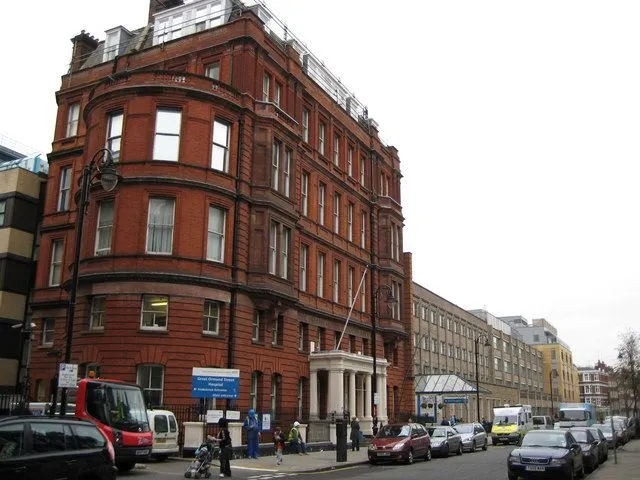
Great Ormond Street Hospital
Pictured Great Ormond Street Hospital · Wikimedia Commons / Great Ormond Street Hospital

The sorting has a gap, though: some children whose tumors lack the fusion still develop fatal cancers, and nobody could say why 9. Researchers from the Wellcome Sanger Institute, Cambridge, Great Ormond Street Hospital and University College London compared tumor samples from 16 children: four whose fusion-negative cancers proved fatal, four with fusion-positive tumors, and eight fusion-negative children who survived. They found hidden populations of highly aggressive cancer cells inside tumors that had been classed as less threatening 9. The work appeared in Cancer Research.

03/07 Natural Sci.

A month of VR and meditation taught students to lucid dream

Lucid dreaming, being aware you are dreaming and sometimes steering the plot, has resisted training. The standard trick is to ask yourself during the day whether you are dreaming, but ordinary days rarely look strange enough to make the question feel real 13.

a person wearing a virtual reality headset
Pictured a person wearing a virtual reality headset · InclusiveGameLab (Wikimedia Commons)

A team at the University of Trento in Italy built the strangeness in. University students meditated, then moved through virtual reality scenes where objects broke the laws of physics and settings switched abruptly, running a reality check each time 13. Afterward they wrote in a dream diary every morning. They reported lucid dreams four times more often than a group that did reality checks without the meditation or VR 13. Another comparison group practiced in realistic VR rather than dream-like scenes. Participants who had no memory of a lucid dream in the past three years developed the skill after twice-weekly sessions for one month. The study was published Sept. 28 in Frontiers in Psychology 13.

04/07 Natural Sci. Technology

A Martian meteorite from the planet's earliest crust

A Martian meteorite named Teghaza 001, found in the Sahara in Mali in 2022, formed at least 4.1 billion years ago, according to a team led by Yang Liu at NASA's Jet Propulsion Laboratory and published in Science 71156.

Mars
Pictured Mars · Wikimedia Commons / Mars

It is only the third genuinely ancient Martian meteorite known, after Allan Hills 84001 and Black Beauty. The three main classes of Martian meteorites are all 2.4 billion years old or younger 156. Eight stones weighing just under 800 grams in total were bought through the desert meteorite trade by a private collector, who sent a piece to the University of New Mexico. Oxygen isotopes matched Mars, and at first the rock was filed as a common, young shergottite until Carl Agee noticed oddities 156. Unlike Black Beauty, which is a mix of soil and small fragments, Teghaza 001 is a single, intact igneous rock made mostly of feldspar 156.

What each field noticed (2)
05/07 Plant-Based

The UK proposes ending CO2 stunning for pigs

At the end of October the UK government opened an eight-week consultation on phasing out CO2 stunning of pigs "to prevent further suffering." It proposes a two-to-three-year transition to more humane methods 196.

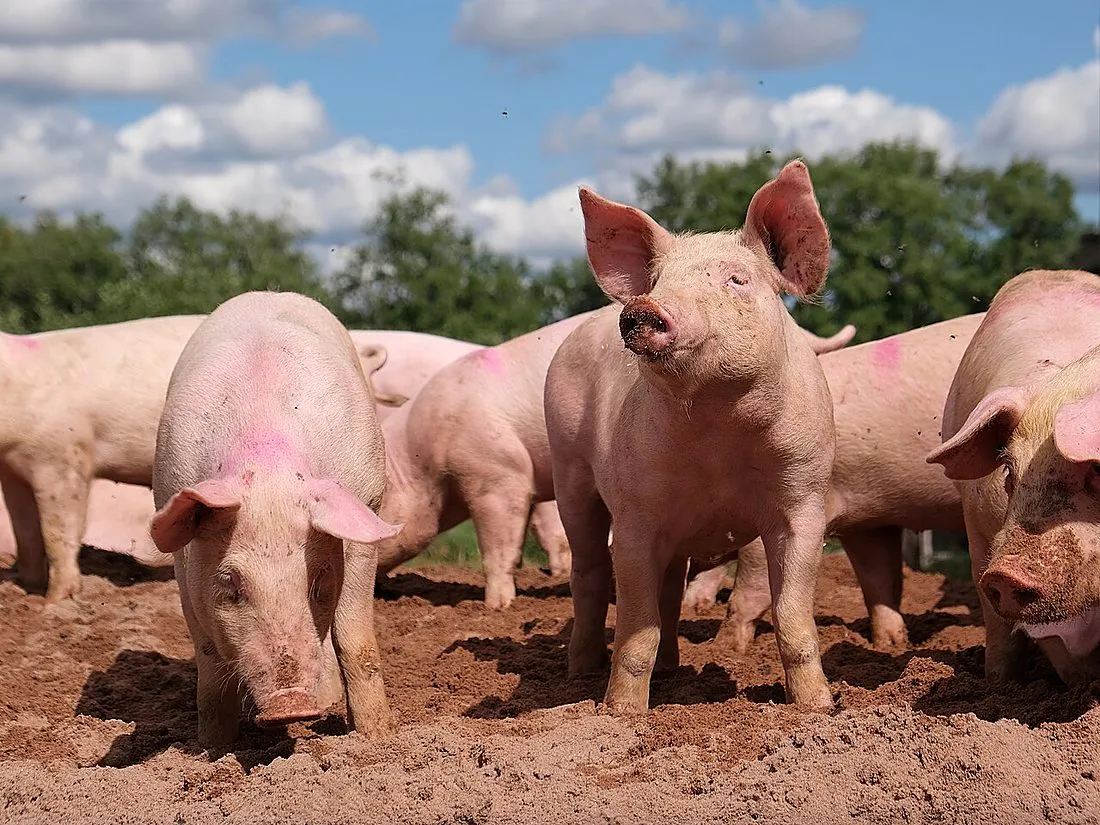
a pig on a farm
Pictured a pig on a farm · kallerna (Wikimedia Commons)

The proposal describes pigs as "highly sentient and intelligent animals" capable of pain and fear. The UK slaughters more than 10 million pigs a year, and according to Compassion in World Farming, CO2 stunning rose from 52% of them in 2013 to 90% in 2025 196. About a year ago the independent Animal Welfare Committee found "significant" evidence that CO2 causes avoidable pain, respiratory distress and fear, and recommended ending the practice within five years at most 196.

06/07 Good News

A 16-year-old's gardens doubled the pollinator species in Ludhiana

Gunisha Kaur, 16, of Ludhiana, Punjab, has built more than 20 pollinator gardens and restoration projects across Ludhiana, Meerut, Mumbai and partner communities through her initiative Buzzing Blooms, launched on 5 March 2023 214.

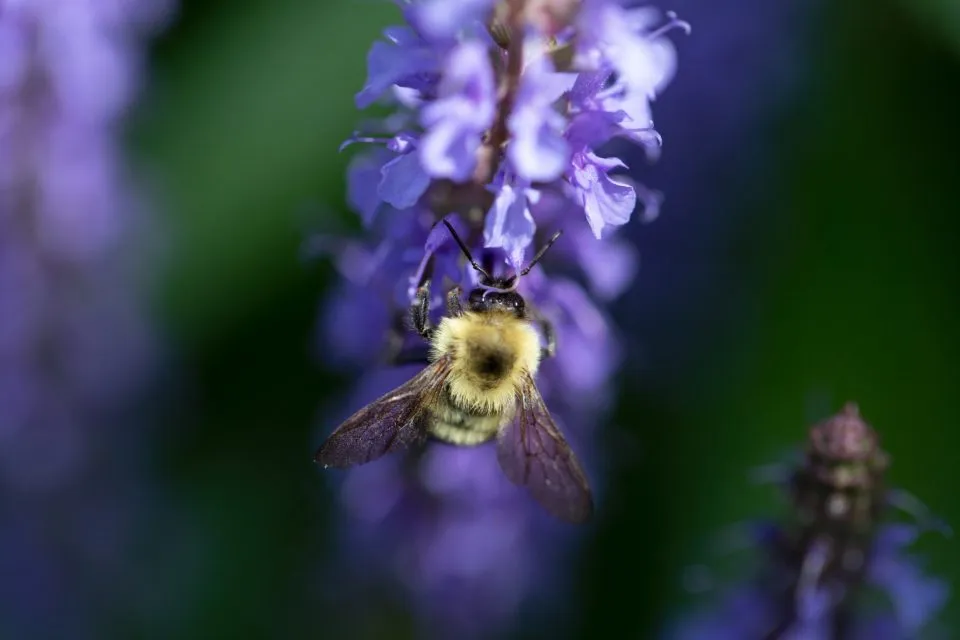
a pollinator garden with bees on flowers
Pictured a pollinator garden with bees on flowers · Free Nature Stock (via stocksnap)

Over 24 months of monitoring, the gardens recorded pollinator species rising from 18 to 46, a 155% increase, and bee visits up nearly 200%, according to Action For Nature, which named her third at its 2026 International Young Eco-Hero Awards 214. The idea came partly from watching her younger autistic brother and noticing how few outdoor spaces suit neurodivergent children. The gardens use layers of native plants and chemical-free cultivation, with structured pathways, non-thorny touch-safe plants and bee- and butterfly-watching zones 214.

07/07 Social Sci.

Kidney policy changes are tied to thousands of extra transplants

A new report estimates that the policies launched under a 2019 executive order on kidney health, Executive Order 13879, are associated with 1,055 to 2,110 additional kidney transplants a year, depending on which counterfactual is used 130.

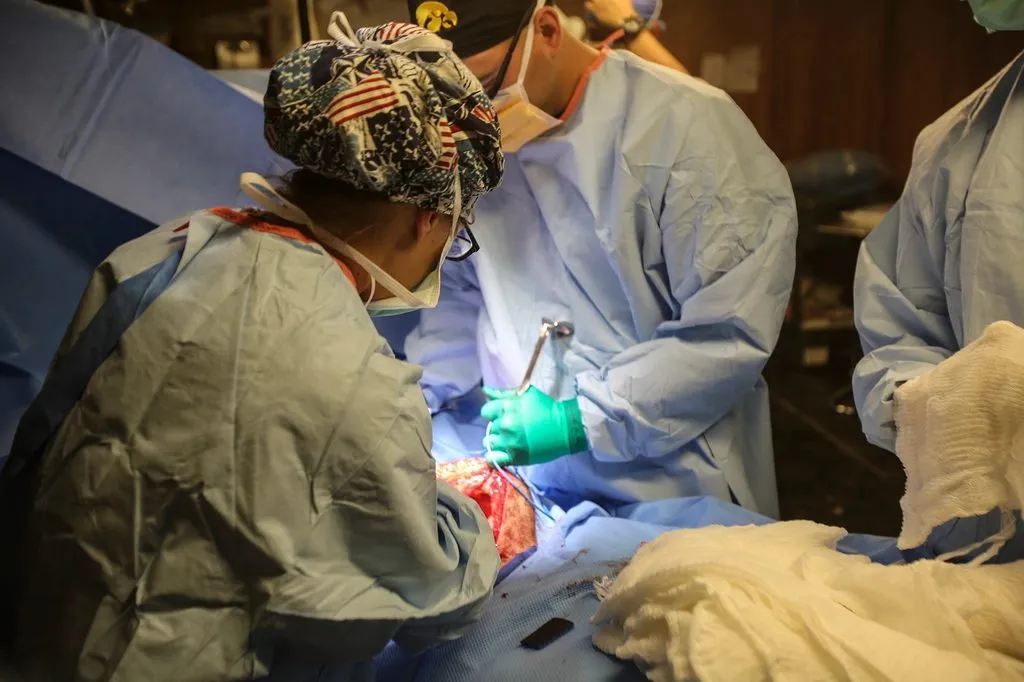
a hospital surgical team in an operating room
Pictured a hospital surgical team in an operating room · U.S. Forest Service (source) (via rawpixel)

Over 2019 to 2040, the range is roughly 23,214 to 46,428 extra transplants, producing about 147,410 to 294,819 life-years gained 130. The system it targets was clumsy. A 2024 interview quoted in the post says organs were 15 times more likely to be lost or damaged in transit than an airline suitcase, and 17% of kidneys were offered to at least one patient who had already died 130. Many organ procurement organizations now GPS-track kidney transfers 130.

Quick notes

Shorter discoveries from this morning, worth knowing but not a full story.

Scientists discover why chronic back pain feels so personal At UC San Diego, movement-triggered pain in people with chronic low back pain switched on the brain's default mode network, the "self network" that usually goes quieter during ordinary pain, which may help explain why pain drugs often fall short and why fear and memory can amplify it 11. ScienceDaily
Two Different Kinds of Gamma-Ray Bursts Erupted 4 Minutes Apart. Astronomers Have Never Seen This Before. A 1.7-second burst and a 51.2-second burst, normally from different kinds of cosmic events, arrived four minutes apart from a galaxy 5.5 billion light-years away, and the authors offer five possible explanations, each one "challenging" 65. ScienceAlert
A New Map of ‘Empty’ Space Challenges a Tranquil Picture of the Galaxy New maps spanning thousands of light-years show much of the thin gas between stars is unstable, contradicting the 1969 textbook model of two calm states, and that could help explain how quickly stars form 58. Quanta Magazine
Record-breaking retraction: scholarly publisher pulls 1,400 conference papers on one day After an outside study traced paper-mill advertisements, IEEE retracted 1,417 conference papers in a day, and 1,622 of the 2,062 flagged papers are now gone, which integrity sleuth Anna Abalkina called "unbelievable. They're so fast" 23. Nature
When It Comes to Climate, Fermentation-Derived Proteins Blow Meat & Dairy Out of the Water The Good Food Institute, an alternative-protein think tank, reviewed more than 30 life-cycle assessments and found biomass-fermented proteins cut emissions 98% against beef and 75% against chicken 193. Green Queen
5th Grade Girl Saves Bus Driver's Life After Recognizing Something Was Wrong Bella Scott, a fifth grader in Cedar Rapids, noticed her driver wheezing, called her dad several times and told him exactly where the bus was, and he got help for Christine Huston's severe asthma attack 213. Sunny Skyz
Best Spud Harvest in a Decade Clears the Gloom of Crops Failing from Scorching Summer Hokkaido, which grows 80% of Japan's potatoes, had its best year in a decade after Sapporo saw only 4 days above 86°F, compared with 16 last year 207. Good News Network
A Farmer Didn’t Know His Cell Number Was on an Exam Question, Now Uses the Calls He Gets as Opportunities to Inspire A Beijing strawberry grower's phone number appeared in an English test, and 10 to 20 students still call him every year; one of them, He Ziqi, followed his advice to study hard, got into university in Beijing, and was treated to Peking duck 209. Good News Network
Once Artists, Now Teachers Too: This Delhi Diwali Mela Will Put Neurodivergent Children in the Lead Three young neurodivergent artists will teach abstract painting to more than 50 signed-up students, and the Arts and Dreams initiative behind it has paid 20% royalties on product sales to 20 of its 55 artists 219. The Better India
MIT researchers fine-tune viral particles to develop personalized cancer vaccines A harmless bacteria-infecting virus coated with cancer antigens protected mice better at 35% antigen density than at 6%, so how densely the antigen is packed matters; this is mouse work only 175. Interesting Engineering
“Zombie Bacteria” Might One Day Lurk in the Sewers Starved bacteria at Aarhus University burst open and their spilled contents kept making DNA, including enzyme-like structures that the team thinks could be coaxed into cleaning wastewater, which remains a possibility, not a demonstration 244. Nautilus
This Bizarre Jurassic “Squid” Swam the Ancient Seas of Wyoming Wyoming's landlocked rocks were once an inland sea, and a belemnite called Wyoteuthis linsterorum, the chunkiest ever found, sat unrecognized in museum collections until paleontologists noticed it 247. Nautilus
Overlooked Blood Cell May Tracks Parkinson’s Brain Changes Platelets tracked molecular changes in one patient with a rare genetic form of Parkinson's over three years, and key changes were echoed in 15 early-onset patients versus 18 controls, an early sign that a blood draw might one day follow progression 77. Neuroscience News

Our process. Your trust.

Every discovery above traces back to an article we read in full. This is the whole corpus behind this morning, and what it was made of.

  • 48 Sources scanned
  • 252 Articles read
  • 8 Fields covered
  • 7 Discoveries

The sources that carried this morning

  1. 1 PLOS One 20 articles
  2. 2 Psychology Today: The Latest 20 articles
  3. 3 Ars Technica - All content 17 articles
  4. 4 Latest Science News -- ScienceDaily 12 articles
  5. 5 The Conversation Articles 12 articles
  6. 6 New Scientist 10 articles
  7. 7 Interesting Engineering 10 articles
  8. 8 Upworthy 10 articles
How an edition is made

Everything we read today

Natural Sciences 73 articles
PLOS One
Life Sciences & Medicine 20 articles
Psychology & Behavioral Science 32 articles
Social Sciences 22 articles
Technology & Innovation 45 articles
Plant-Based & Vegan 13 articles
Solutions & Good News 27 articles
Human Stories & Ideas 20 articles
The long view · not today’s news, the story behind it

Today’s discoveries didn’t come from nowhere. Here’s the older, ongoing story they belong to, a moment from this day in history, and a question to test what stuck.

Where the story stands

On this day in science

2000 People start living in space, and never stop A Soyuz rocket carried the first long-stay crew up to the International Space Station, three men who would live and work in orbit for months. Someone has been living aboard the station every single day since. For a quarter century now, there has not been a moment when all of humanity was on Earth at once. More from the Almanac →

Before you go: today’s quiz

The daily quiz

What is a “preprint”?

Reveal the answer

A study shared before independent experts have reviewed it

A preprint is posted before peer review, the step where independent experts vet the work, so it deserves extra caution until that review has happened.

Read the explainer →

Previous editions

Every morning we have published, newest first. Nothing expires.

View the full archive

Get this every morning.

Liked today’s? Tomorrow’s reaches your inbox before breakfast.

  • One email each morning, never more
  • The day’s real discoveries across 8 fields
  • One calm read with your coffee

Free from tomorrow morning, for good.

Same letter. Your $5 a month keeps it free for everyone else.

Any amount, charged once.