




The daily brief · October 30, 2026

Prime editing reaches its first patient; mice reveal a sleep counter

The vague things, like feeling sleepy, living longer in the cold and fighting over the thermostat, turn out to have specific cells and molecules behind them.

  • 7 Discoveries
  • 254 Articles read
  • 51 Sources
  • 11 Min read

Today’s discoveries

Everything this morning found, in the order we would read it.

7 stories
  1. 01 Technology A gene editor that rewrites DNA gets its first patient Prime Medicine, in Cambridge, Massachusetts, has given the first dose of a prime editor to a patient in a global clinical trial for Wilson disease. Source: SingularityHub 1 min read
  2. 02 Psychology The brain appears to keep a counter for how long you have been awake A new Nature study kept mice awake for six hours during the part of the day when they would normally rest, then mapped brain activity. Source: Psychology Today 1 min read
  3. 03 Life Sciences Why the office thermostat fight has a molecular answer Across most mammals and birds studied, females pick warmer surroundings than males. Source: Neuroscience News 1 min read
  4. 04 Natural Sci. Cold seems to tell a worm's body to live longer, through a signal from muscle Biologists have known for more than a century that cooler temperatures lengthen life in worms, flies, fish and rodents. Source: ScienceAlert 1 min read
  5. 05 Technology The largest battery-electric ship in service now crosses the River Plate The China Zorrilla, a 426-foot (130 m) aluminum catamaran, is the largest fully battery-electric vessel in commercial service anywhere. Source: New Atlas 1 min read
  6. 06 Social Sci. Chattanooga built its own internet, and the city kept it In 2010, Chattanooga's public power utility, EPB, finished a $220 million fiber network that delivered one gigabit per second to homes. Source: Vox Future Perfect 1 min read
  7. 07 Good News Romans made glass that changes color, and a team has now reproduced it The Lycurgus Cup, from the 4th century CE, looks opaque green when light bounces off it and glows red and orange when light shines through it. Source: Good News Network 1 min read

The feel-good story of the day

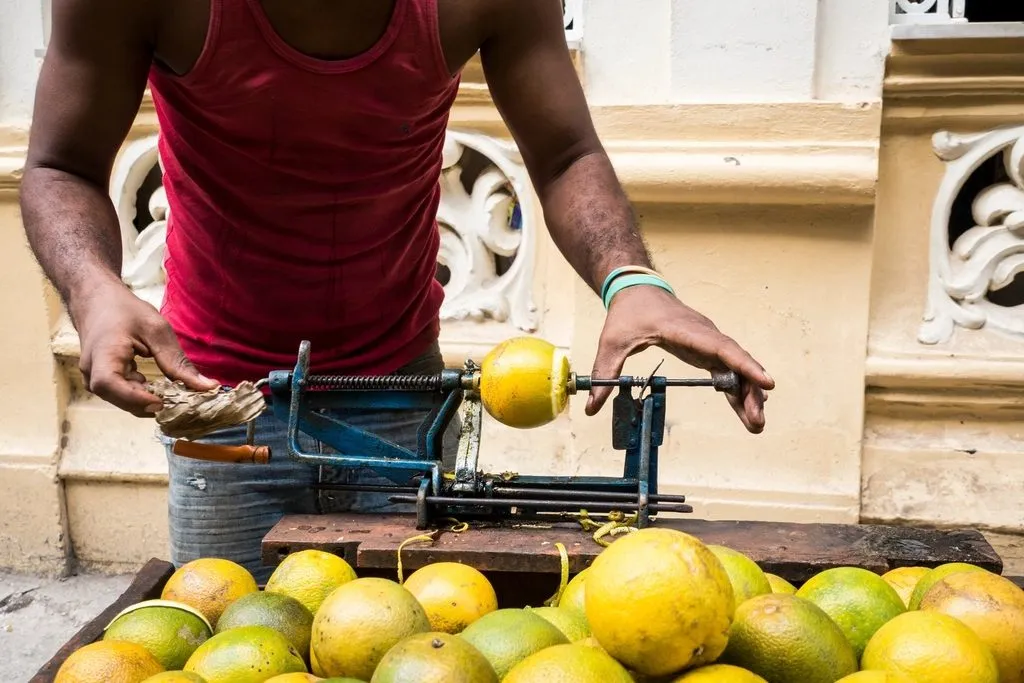
a street food vendor with a cart Jakub Kapusnak (via rawpixel)
Pictured a street food vendor with a cart

The bank that brought the elote cart inside

Hilario Cruz Cruz has sold elotes, the Mexican street corn dish, and fresh fruit from a customized cart along Peoria Avenue in Phoenix for years. Some of his regular customers work at a nearby PNC Bank. When a powerful storm came through with fierce winds and hail, the bank's employees did not leave him to it.

Cruz Cruz was sure the cart would not fit through the door. He remembers saying so, and the manager answering, "I know it will." He held the door against the wind with one hand and pulled the cart with the other, while an employee did the same from the other side, and the cart went in.

A video of the moment has been viewed more than a million times on TikTok. Cruz Cruz was soaked and cold-footed on the walk home past fallen trees and branches, and he was back selling a week later. "If I had been anywhere else, maybe they wouldn't have been able to help me like that," he said. He had been a regular long enough that the bank's staff already knew him.

Today’s complete edition

The discoveries, in full

Read the evidence, what it changes, and the reporting behind each of today’s 7 discoveries.

01/07 Technology

A gene editor that rewrites DNA gets its first patient

Prime Medicine, in Cambridge, Massachusetts, has given the first dose of a prime editor to a patient in a global clinical trial for Wilson disease. The infusion went in earlier this month, and the editor works directly on DNA inside liver cells 181.

Today Got Better

Introduced in 2019, prime editing can swap single DNA letters, insert new genetic instructions or delete chunks, with minimal damage to the genome. In theory it could correct up to 89 percent of known disease-linked variants 181. The gene-editing treatment approved in 2024, Casgevy, edits blood stem cells outside the body instead. Last year a baby named KJ Muldoon got a custom base editor, a gentler relative of the original CRISPR cutter, and his symptoms eased within weeks 181.

02/07 Psychology

The brain appears to keep a counter for how long you have been awake

A new Nature study kept mice awake for six hours during the part of the day when they would normally rest, then mapped brain activity 107. Some regions fired at the start, probably in response to novelty, and others during recovery sleep.

a person sleeping in bed
Pictured a person sleeping in bed · Mike Burns (Wikimedia Commons)

A third set rose or stayed high as the hours of wakefulness piled up, then dropped once the mice slept. Two of those regions were the median raphe, deep in the brainstem, and the anterior medial preoptic area, which sits farther forward and is involved in sleep regulation. Their activity also followed the mice's ordinary daily rhythm, rising when the animals had been awake longer 107. When researchers turned these cells on in rested mice, the animals slept two to three times more, and the sleep was deeper. Suppressing the cells sharply reduced sleepiness even after hours awake. When two populations were chronically suppressed, the mice slept nearly 70 percent less 107.

03/07 Life Sciences

Why the office thermostat fight has a molecular answer

Across most mammals and birds studied, females pick warmer surroundings than males. Researchers at King's College London now have a candidate mechanism, reported in The Journal of Physiology 61.

a thermostat on a wall
Pictured a thermostat on a wall · Unknown (via rawpixel)

They tested adult mice on two adjacent metal plates, one fixed at 33°C and one adjustable. Two temperature-sensing ion channels in peripheral nerves, TRPM2 (warmth) and TRPM8 (coolness), turned out to activate at higher temperatures in females than in males. Core body temperature and paw skin temperature were the same in both sexes, so the difference sits in the sensors rather than in how much heat the body holds 61. Testosterone moved the dial. Lowering it in males shifted their preference toward warmer plates, and giving it to females made them more averse to heat. Estrogen and progesterone showed no direct effect 61.

04/07 Natural Sci.

Cold seems to tell a worm's body to live longer, through a signal from muscle

Biologists have known for more than a century that cooler temperatures lengthen life in worms, flies, fish and rodents. Why was never settled 43.

University of Cologne
Pictured University of Cologne · UzK (Wikimedia Commons)

A new Nature study from David Vilchez's lab at the University of Cologne traces a relay in the roundworm Caenorhabditis elegans. At a mild 15°C (59°F), muscle makes more of an enzyme called CAT-4, which drives production of a metabolite called BH2. Muscle makes, stores and then releases the BH2, and other tissues convert it to BH4, which lets an enzyme called PAH-1 make the amino acid tyrosine 43. Breaking the chain reduced the lifespan benefit, which argues against the older idea that cold just slows everything down. In a worm model of Huntington's disease, the same pathway also suppressed clumping of harmful proteins 43.

05/07 Technology

The largest battery-electric ship in service now crosses the River Plate

The China Zorrilla, a 426-foot (130 m) aluminum catamaran, is the largest fully battery-electric vessel in commercial service anywhere. It carries up to 2,100 passengers and 225 vehicles across the 34-mile (55 km) River Plate route between Buenos Aires and Colonia del Sacramento 179.

Buquebus
Pictured Buquebus · Wikimedia Commons / Buquebus

Incat Tasmania built it for the operator Buquebus, and the design started as a dual-fuel ship running on liquefied natural gas and diesel before being switched to all-electric partway through the project. The power comes from a 43-megawatt-hour storage system from Wärtsilä and Corvus Energy: more than 5,000 lithium-ion batteries weighing about 286 tons, feeding eight electric motors and eight waterjets 179. The article's estimate is that a comparable diesel ferry on a route like this could burn over a million gallons of marine diesel a year. By that estimate the Zorrilla saves US$4.5 million in fuel and avoids 37,545 tons of carbon dioxide equivalents annually 179.

06/07 Social Sci.

Chattanooga built its own internet, and the city kept it

In 2010, Chattanooga's public power utility, EPB, finished a $220 million fiber network that delivered one gigabit per second to homes. At launch that was as fast as Hong Kong and over 200 times faster than the average top-tier offering in the US 117.

Chattanooga, Tennessee
Pictured Chattanooga, Tennessee · Wikimedia Commons / Chattanooga, Tennessee

A city of about 200,000 people had put its own cables in the ground, not Comcast or Spectrum. The network has since been linked to billions of dollars in economic benefits and hundreds of new startups. EPB says it is the single largest source of funding for local public schools 117. It brought 70 percent of households online at the lowest price per megabit in the area, and Consumer Reports regularly ranks EPB among America's best providers. Hundreds of other cities have followed, though many were stymied by opposition from major cable companies 117.

07/07 Good News

Romans made glass that changes color, and a team has now reproduced it

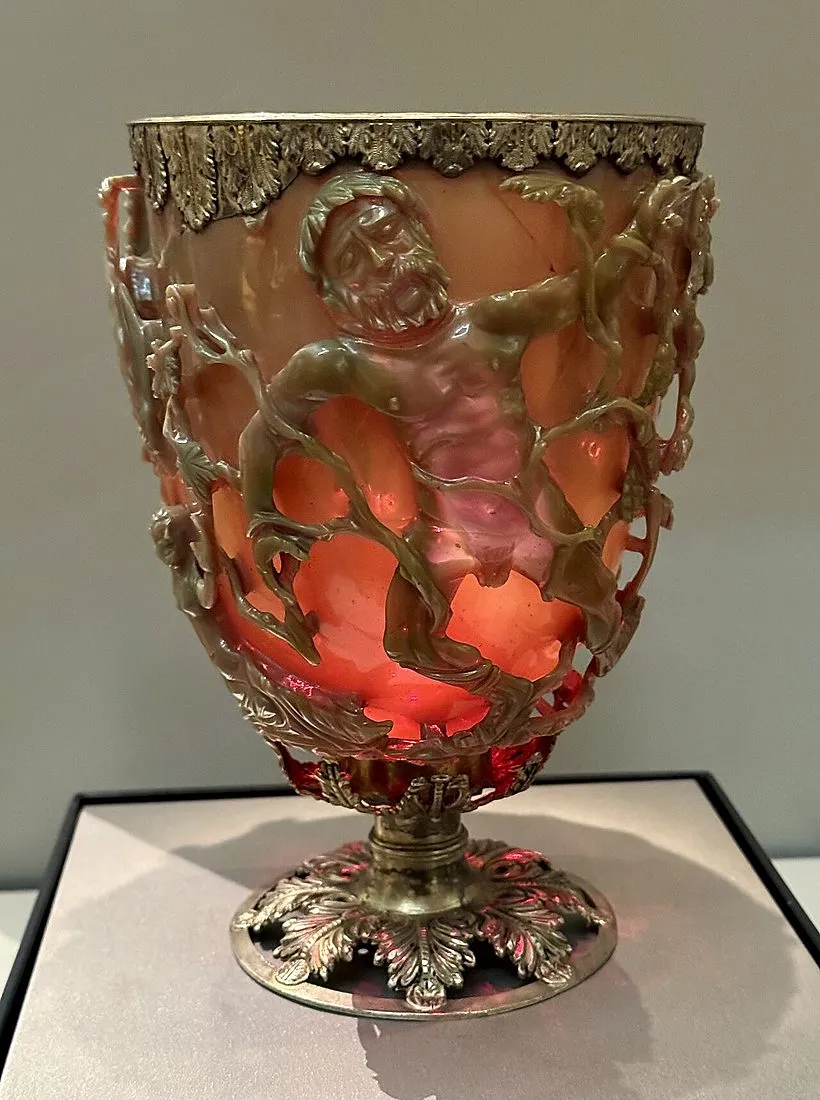
The Lycurgus Cup, from the 4th century CE, looks opaque green when light bounces off it and glows red and orange when light shines through it. That is dichroic glass: the craftsmen embedded nanoparticles of gold and silver, smaller than the wavelengths of light they distort.

Lycurgus Cup
Pictured Lycurgus Cup · Wikimedia Commons / Lycurgus Cup

In transmitted light the particles block blue and green and let reds and oranges through; in reflected light they scatter it 203. Lisa Hollands, a glass technical specialist at the University of Sheffield, led an effort to reproduce it. The team first made glass from materials available in Roman times, then spent a long stretch varying oxygen levels, furnace temperatures and other conditions 203. NASA made dichroic glass in the 1960s, but this version is much closer to the cup 203.

Quick notes

Shorter discoveries from this morning, worth knowing but not a full story.

Lateral opening site of human oligopeptide transporter 2 plays a key role in the interaction with polymyxins Polymyxins are last-line antibiotics against multidrug-resistant bacteria, limited by kidney damage, and a version with an alanine swapped in at one position (Dab3) reduced kidney toxicity in mice while keeping its antibacterial activity 83. eLife: latest articles
Revealing the benefit of eye motion for acuity under emulated cone loss In healthy eyes made to mimic cone loss, constant tiny eye movements let the surviving cones sample more of each letter, so at the highest dropout the eye performed like a static one with nearly twice as many cones 82. eLife: latest articles
How EV fleets are shielding Europe from oil price volatility Six European countries avoided close to $2.2 billion in oil imports between March and August 2026, and Denmark's EV fleet displaced 6.4 million barrels a year, 13 percent of its 2025 oil use 222. The Optimist Daily: Making Solutions the News
Behold a Prehistoric Lizard Tail Trapped in Amber A discarded tail in a fingertip-sized piece of 98.8-million-year-old amber shows that lizards were already using the shed-the-tail escape trick while dinosaurs were around 252. Nautilus
What Conversations in Dreams Say About Our Sleeping Minds Lucid dreamers who quizzed their dream characters found them right on only about a third of arithmetic questions, and asked to solve 8+2, one answered "Gray zone" 102. Psychology Today: The Latest
German Cell-Based Milk Startup Senara Expands to Netherlands with Govt Funding Senara takes its cells from milk rather than from the cows, grows them in a 100-litre pilot bioreactor, and plans an industrial-scale one by 2028 182. Green Queen
Vivienne Westwood’s plant-based plumage steals the spotlight at Paris Fashion Week The plant-fibre feather alternative FEVVERS appeared in three Vivienne Westwood looks for Spring/Summer 2027, after debuting on a Stella McCartney runway in 2025 197. Vegan Food & Living
Vegan Restaurants Are Still Opening, and This Celeb-Owned Café Is One to Watch Despite a run of closures, Plnt Cafe plans to open in Washington, DC at the end of 2026, with a Chik'n Funguy sandwich built on battered oyster mushrooms 191. VegNews.com
What went right this week: the good news that matters Almost a kilometre (0.6 miles) of London's Oxford Street is now closed to vehicles, bicycles and scooters, and an impact assessment projects £82 million for the local economy and 700 new jobs 207. Positive News
Faculty and students show how reporting is done when a university partners with local news A newspaper in Solon, Iowa, kept its staff, with raises promised, after the nonprofit behind the University of Iowa's student paper stepped in to take over the Solon Economist and its sister weekly 137. The Conversation Articles
Effect of nutrition counseling on complementary feeding practices among mothers with children aged 6–23 months in West Gojjam Zone, Northwest Ethiopia: A cluster-randomized controlled trial Across 30 villages and 802 mothers, nine months of monthly counseling from local leaders made appropriate feeding about 2.5 times more likely than routine education 21. PLOS One
‘Panther Pat’ Shines a Light on the Nearly Forgotten First Woman to Play Pro Football Filmmaker Ashley Brandon told the story of 1970 pro player Pat Palinkas with Barbie dolls and stop-motion, and the 12-minute film won the Grand Jury Prize for Documentary Short at Slamdance 2026 199. Good News Network
Designer Tiles Made From Old Tyres? This Mumbai Architect Is Using Carbon Waste to Beautify Homes Carbon Craft Design presses recovered black carbon from tyre recycling into tiles, which the company says use about a fifth of the energy of fired tiles 218. The Better India : Latest Posts
10cc’s ‘I’m Not in Love’ sounds like a huge choir. The way they made it is astonishing. There was no choir: the band layered their own voices into roughly 250 recorded loops and played the mixing desk like a keyboard, and the studio secretary talked them out of abandoning the song 233. Upworthy
No Comets Required? How the Growing Earth May Have Created Its Own Water Lab experiments in a hot, hydrogen-rich atmosphere over a planet capturing millimetre-to-centimetre pebbles produced water, which suggests virtually any Earth-sized planet could make its own 54. Universe Today

Our process. Your trust.

Every discovery above traces back to an article we read in full. This is the whole corpus behind this morning, and what it was made of.

  • 51 Sources scanned
  • 254 Articles read
  • 8 Fields covered
  • 7 Discoveries

The sources that carried this morning

  1. 1 PLOS One 20 articles
  2. 2 Psychology Today: The Latest 20 articles
  3. 3 STAT 15 articles
  4. 4 The Better India : Latest Posts 12 articles
  5. 5 The Conversation Articles 10 articles
  6. 6 Interesting Engineering 10 articles
  7. 7 Upworthy 10 articles
  8. 8 Ars Technica - All content 9 articles
How an edition is made

Everything we read today

Natural Sciences 56 articles
PLOS One
Life Sciences & Medicine 30 articles
Psychology & Behavioral Science 30 articles
Social Sciences 25 articles
Technology & Innovation 40 articles
Plant-Based & Vegan 16 articles
Solutions & Good News 37 articles
Human Stories & Ideas 20 articles
The long view · not today’s news, the story behind it

Today’s discoveries didn’t come from nowhere. Here’s the older, ongoing story they belong to, a moment from this day in history, and a question to test what stuck.

Where the story stands

On this day in science

1895 Gerhard Domagk is born Gerhard Domagk was born in what is now Poland. He discovered that a red dye called Prontosil could cure deadly bacterial infections, the first of the sulfa drugs and the first medicine that reliably beat blood poisoning. He first proved it in desperation on his own daughter, and saved her arm. More from the Almanac →

Before you go: today’s quiz

The daily quiz

A drug is said to “cut your risk by 50 percent.” What should you ask to know if that matters?

Reveal the answer

What the risk went from and to in real numbers

A 50 percent relative cut can mean a fall from 2 in 100 to 1 in 100, a tiny absolute change. Always ask for the before-and-after real numbers.

Read the explainer →

Previous editions

Every morning we have published, newest first. Nothing expires.

View the full archive

Get this every morning.

Liked today’s? Tomorrow’s reaches your inbox before breakfast.

  • One email each morning, never more
  • The day’s real discoveries across 8 fields
  • One calm read with your coffee

Free from tomorrow morning, for good.

Same letter. Your $5 a month keeps it free for everyone else.

Any amount, charged once.