Lifesavers · No. 13
HIV treatment
Antiretroviral therapy turned an HIV diagnosis from a near-certain death sentence into a manageable condition, and helped cut annual AIDS-related deaths by about 74% from their 2004 peak.
Updated
A share of the decline in yearly deaths, not a cumulative lives-saved count. The drop from about 2.1 million deaths in 2004 to around 570,000 in 2025 tracks the global scale-up of antiretroviral therapy.
How it saves lives
HIV attacks the immune system, and left untreated it strips the body of its ability to fight off other infections. Antiretroviral therapy is a daily combination of drugs that blocks the virus from copying itself, so the amount of virus in the blood falls until a test can no longer find it. A person whose virus is suppressed stays healthy and, the evidence now shows, cannot pass HIV to a sexual partner. It is treatment rather than a cure, so it has to be taken for life.
The story
In the 1980s and early 1990s an HIV diagnosis was widely understood as a death sentence, and AIDS killed a rising number of people around the world. Then, in 1996, researchers showed that a combination of drugs could hold the virus down for good. Getting those medicines from wealthy clinics to the countries with the most infections took another two decades of activism, price fights, and funding. It worked. Annual AIDS-related deaths fell from about 2.1 million at their peak in 2004 to around 570,000 in 2025, a reduction of roughly 74%. HIV has still claimed an estimated 44.1 million lives to date, and about 40.8 million people are living with it now, most of them on treatment that keeps them alive and well.
From the record
AIDS-related deaths have been reduced by 74% since the peak in 2004
From the record
having claimed an estimated 44.1 million lives to date
From the record
HIV infection has become a manageable chronic health condition, enabling people living with HIV to lead long and healthy lives
Asked often
How many lives has HIV treatment saved?
There is no single global lives-saved tally, but the effect is clear in the death toll. UNAIDS reports that AIDS-related deaths have fallen by about 74% since their peak in 2004, from roughly 2.1 million that year to around 570,000 in 2025, as antiretroviral therapy reached tens of millions of people.
Is an HIV diagnosis still a death sentence?
No. The WHO states there is no cure, but that with treatment HIV has become a manageable chronic health condition, and people on effective antiretroviral therapy can lead long and healthy lives. Someone whose virus is fully suppressed also cannot transmit HIV to a sexual partner.
Further reading
Read the whole story
Paid link. If you buy a book through this link, Bookshop.org pays us a small commission and sends a share of the sale to independent bookstores.
-
The history
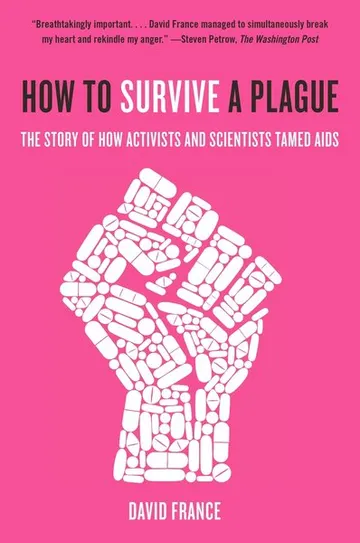
How to Survive a Plague (opens Bookshop.org)
David France · 2016
Journalist David France covers ACT UP and the Treatment Action Group, whose pressure on researchers and regulators led to the combination therapy of 1996. He reported on the epidemic from 1981.
The next one is being invented now.
We send you the day's real progress every morning: the breakthroughs, the wins nobody headlined, the proof it's still happening. Free, forever.
Free for good. One click to leave.