






A planet that orbits its star backward
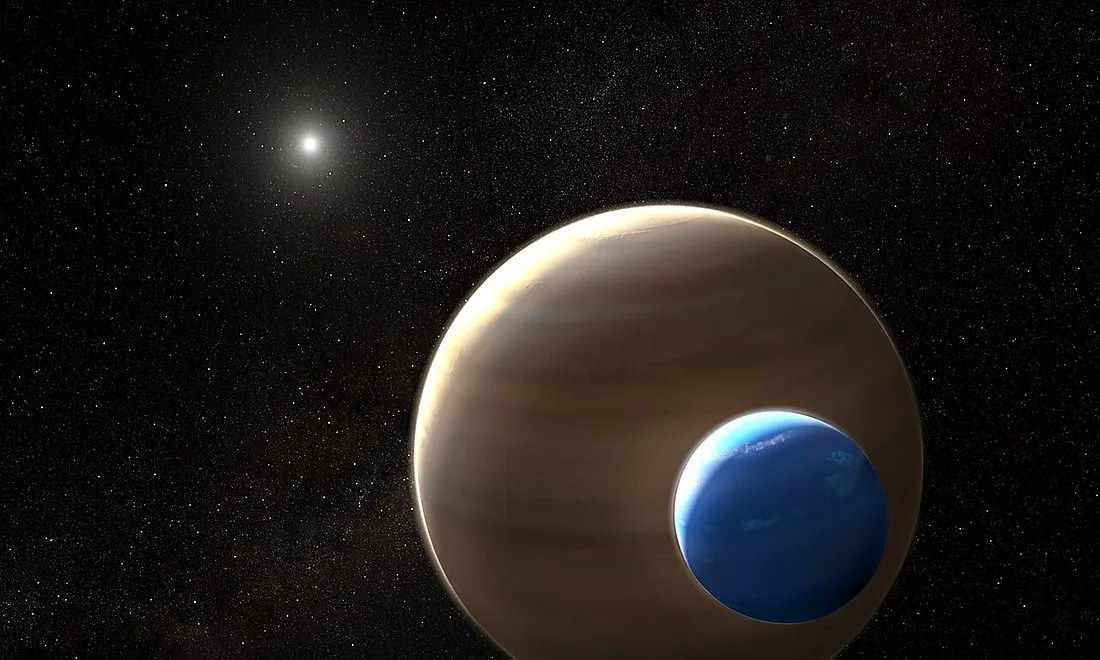
GJ 3090 b is a sub-Neptune, about 2.2 times Earth's width and 4.5 times its mass, circling a cool red dwarf 73 light-years away in the constellation Phoenix once every 2.9 days.
A team led by Yann Carteret, a PhD student at the University of Geneva, watched the planet cross its star five separate times with the 3.6-meter telescope at the European Southern Observatory in Chile, tracking the Rossiter-McLaughlin effect, the subtle reddening and bluing of starlight as a transiting planet blocks first one spinning hemisphere of the star, then the other. In a normal system the planet crosses in the same direction the star spins. Every single time, GJ 3090 b did the opposite 41. That works out to an orbital tilt of roughly 136 degrees, compared with about 7 degrees of wobble among our own eight planets.