

The daily brief · September 20, 2026

A 50-year blood mystery is solved, and pregnancy brain earns a rewrite

The through-line today is hidden resilience, systems and bodies turning out to be built for more than anyone gave them credit for.

  • 8 Discoveries
  • 97 Articles read
  • 20 Sources
  • 11 Min read

Today’s discoveries

Everything this morning found, in the order we would read it.

8 stories
  1. 01 Natural Sci. A 50-year blood mystery finally has a name In 1972, a lab technician found a strange marker sitting on the surface of red blood cells and had no idea what put it there. Source: ScienceDaily 1 min read
  2. 02 Psychology Pregnancy doesn't shrink the brain, it fine-tunes it For years, brain scans showing gray matter loss during pregnancy read like bad news, evidence of something being worn away. Source: PsyPost 1 min read
  3. 03 Psychology What looked like a brain signature for IQ was actually your zip code Neuroscientists have spent years hunting for the brain's fingerprint of intelligence, the pattern of activity or cortical thickness that maps cleanly onto IQ. Source: PsyPost 1 min read
  4. 04 Natural Sci. This single cell contracts faster than you can blink Spirostomum ambiguum is one cell, no muscles, no nerves, and it can yank its entire body down to a quarter of its length in under five milliseconds, then do it again almost immediately,… Source: ScienceDaily 1 min read
  5. 05 Natural Sci. A chemical that only works on things that molt Drywood termites are hard to fight because they're hard to find, spending nearly their whole lives inside the wood they're eating. Source: ScienceDaily 1 min read
  6. 06 Technology An electric van just drove around the entire world German long-distance driver Rainer Zietlow left Hanover on July 1, 2025, in a series-production Volkswagen ID. Source: Interesting Engineering 1 min read
  7. 07 Good News The Chesapeake's blue crabs are finally bouncing back This year's winter dredge survey counted 349 million blue crabs across the Chesapeake Bay, a 46 percent jump over last year and the highest total since 2019. Source: Good News Network 1 min read
  8. 08 Good News Park Avenue is getting its park back Park Avenue had an actual park running down its median until the 1920s, before cars took over. Source: Good News Network 1 min read

The feel-good story of the day

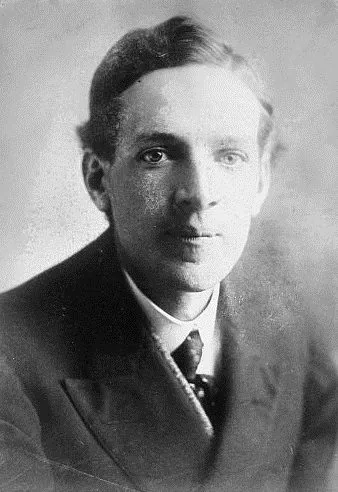
Upton Sinclair Bain Collection (Wikimedia Commons)
Pictured Upton Sinclair

The novelist who changed what's on your plate

Upton Sinclair was born on September 20, 1878, in Baltimore, and by his twenties he was a struggling writer taking on the worst conditions he could find. In 1906 he spent seven weeks working undercover in Chicago's meatpacking plants, gathering material for a novel meant to make readers care about the exploited immigrant laborers inside them.

The novel, The Jungle, did something else instead. Readers were horrified less by the labor conditions Sinclair wanted them to notice and more by what he'd described happening to the meat itself. President Theodore Roosevelt read it, ordered his own investigation, and within months Congress passed the Pure Food and Drug Act and the Meat Inspection Act of 1906, the foundation of federal food safety oversight in the United States. Sinclair himself summed up the mismatch with characteristic bluntness: "I aimed at the public's heart, and by accident I hit it in the stomach."

He went on to write dozens more books, run for governor of California, and win a Pulitzer Prize in 1943. But it's that one accidental hit that still shapes what happens before food reaches a plate, a reminder that the story you set out to tell isn't always the one that ends up mattering most.

Today’s complete edition

The discoveries, in full

Read the evidence, what it changes, and the reporting behind each of today’s 8 discoveries.

01/08 Natural Sci.

A 50-year blood mystery finally has a name

In 1972, a lab technician found a strange marker sitting on the surface of red blood cells and had no idea what put it there. Researchers called it AnWj, filed it away, and spent the next half century unable to say which gene made it 6.
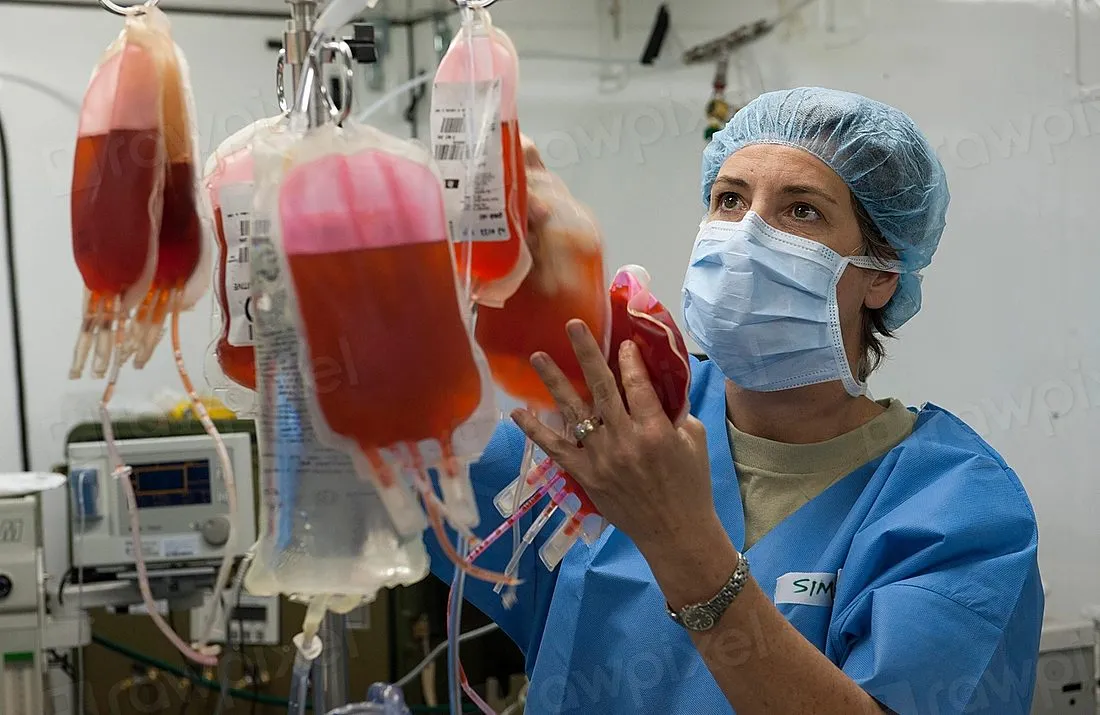
a nurse preparing a blood transfusion bag
Pictured a nurse preparing a blood transfusion bag · U.S. Department of Defense (via rawpixel)

This year a team at NHS Blood and Transplant in Bristol, working with the University of Bristol, finally ran it down: a gene called MAL, hiding in plain sight the whole time. More than 99.9 percent of people carry AnWj without ever knowing it exists. The tiny sliver who don't, either from an inherited change or a disease that silences it, are the ones who need this discovery. Give an AnWj-negative patient AnWj-positive blood and the body can mount a dangerous immune attack against the very transfusion meant to save it. MAL is now the newest official human blood group system, joining ABO and Rh on a list most people assume closed decades ago.

02/08 Psychology

Pregnancy doesn't shrink the brain, it fine-tunes it

For years, brain scans showing gray matter loss during pregnancy read like bad news, evidence of something being worn away. A new study in Nature Communications, led by Sophie R. van 't Hof at Amsterdam UMC's Pregnancy Brain Lab, compared scans across three of the biggest hormonal transitions a female brain goes through: puberty, pregnancy, and menopause 26.

a pregnant woman
Pictured a pregnant woman · Skitter Photo (via stocksnap)

Puberty and pregnancy share a strikingly similar signature of widespread gray matter reduction. Menopause looks nothing like either one. Rather than speeding up the brain's aging, it appears to pause the typical rate of age-related change altogether. "That was interesting, as when we found the gray matter reduction during pregnancy, people often assumed it as something bad," van 't Hof told PsyPost. Her lab's working idea now is the opposite: this is neural fine-tuning, the same kind of optimization adolescent brains go through on the way to adulthood 26.

03/08 Psychology

What looked like a brain signature for IQ was actually your zip code

Neuroscientists have spent years hunting for the brain's fingerprint of intelligence, the pattern of activity or cortical thickness that maps cleanly onto IQ. A team led by Scott Marek at Washington University School of Medicine tried something broader: instead of testing one trait against brain scans, they ran 649 different variables, covering health, parenting, and screen time among them, against MRI data from thousands of 9- and 10-year-olds in the Adolescent Brain Cognitive Development Study 28.

a child doing homework at home
Pictured a child doing homework at home · Shixart1985 (Wikimedia Commons)

The single strongest predictor of a child's brain organization wasn't a cognition or mental health score at all. It was the socioeconomic opportunity tied to their home zip code, school quality, environmental toxins, and access to resources bundled into one number. Sleep duration and screen time ranked high too. Traditional cognitive and clinical measures fell well behind 28.

04/08 Natural Sci.

This single cell contracts faster than you can blink

Spirostomum ambiguum is one cell, no muscles, no nerves, and it can yank its entire body down to a quarter of its length in under five milliseconds, then do it again almost immediately, contracting at a rate equal to 100 times its own body length every second 8.

a research lab
Pictured a research lab · U.S. Navy Medicine (via rawpixel)

Mary Elting's team at North Carolina State used electron and immunofluorescence microscopy to find out how a single cell pulls that off, and the answer is a structure built like a fishnet: calcium-binding proteins called centrin and Sfi1, woven into a web wrapped around the organism's exterior that cinches inward the instant calcium ions flood in. Human muscle can shorten by a comparable fraction, but it takes roughly ten times longer to do it. "The fishnet geometry is unique because it lets Spirostomum contract uniformly, which protects its internal organelles," Elting says 8.

05/08 Natural Sci.

A chemical that only works on things that molt

Drywood termites are hard to fight because they're hard to find, spending nearly their whole lives inside the wood they're eating. Researchers at UC Riverside, led by doctoral student Nicholas Poulos, found the crack in that armor anyway: termites have to molt, shedding one exoskeleton for a bigger one, about seven times over a lifetime 5.

a pest control technician inspecting a wooden house
Pictured a pest control technician inspecting a wooden house · Senior Airman Austin Harvill (Wikimedia Commons)

A compound called bistrifluron blocks the chitin their new exoskeleton needs to form, so the next molt simply fails. In lab trials it killed 95.7 percent of colonies when termites had a choice between treated and untreated wood, and close to 99 percent when they didn't. Because chitin only exists in insects, fungi, and a few other invertebrates, not in anything with a spine, the chemical has nothing to grab onto in a human body. "It's specific to insects and can't harm humans," Poulos says 5.

06/08 Technology

An electric van just drove around the entire world

German long-distance driver Rainer Zietlow left Hanover on July 1, 2025, in a series-production Volkswagen ID. Buzz and didn't stop until he'd covered 99,767 kilometers, roughly 62,000 miles, through 92 countries and six continents, 445 days later 63.

Volkswagen ID. Buzz electric van
Pictured Volkswagen ID. Buzz electric van · Wikimedia Commons / Volkswagen ID. Buzz

The van needed more than 300 charging stops and 16 container-ship crossings to cross the oceans in between, and across parts of Zambia and Tanzania the team charged straight off national power substations because nothing else was available. Guinness now credits the trip with the record for most countries visited in a continuous journey by a battery-powered vehicle. Volkswagen says it finished without a single technical breakdown. Afterward, TÜV Nord tested the high-voltage battery and found it still held 95.75 percent of its original health, after nearly 100,000 kilometers and more than 300 charging cycles 63.

07/08 Good News

The Chesapeake's blue crabs are finally bouncing back

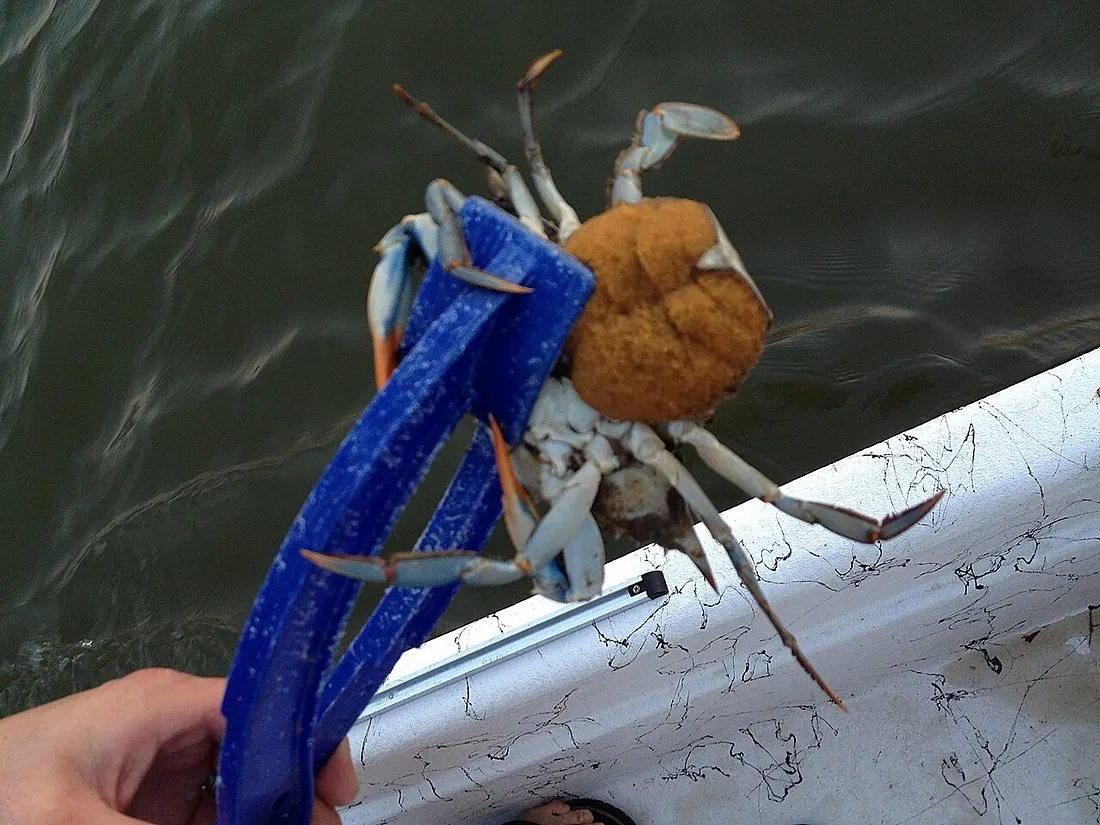
This year's winter dredge survey counted 349 million blue crabs across the Chesapeake Bay, a 46 percent jump over last year and the highest total since 2019 87. Juvenile numbers hit 228 million, also the best since 2019.

a blue crab in Chesapeake Bay
Pictured a blue crab in Chesapeake Bay · Mdcrabwiki (Wikimedia Commons)

The Maryland Department of Natural Resources and the Virginia Institute of Marine Science run the count together every winter, and after years of decline this is the first survey that reads like the turnaround conservationists have been chasing. Catch limits in both states appear to be working: a separate assessment confirmed no overfishing in the bay. Underwater seagrass, which crabs and countless other species depend on, expanded nearly 13 percent in a single year, from 36,799 acres to 41,419 87.

08/08 Good News

Park Avenue is getting its park back

Park Avenue had an actual park running down its median until the 1920s, before cars took over. New York City just unveiled a plan to give eleven blocks of it back, from 46th to 57th Street, with wider medians for trees, seating, and public art, plus a two-way protected bike lane carved out of what used to be a southbound car lane 85.

Today Got Better

The project rides on top of a bigger piece of infrastructure work already underway: the MTA is rebuilding the century-old Grand Central Terminal train shed that sits directly beneath the avenue, so the city timed its redesign to land right as the street had to be dug up anyway. "New Yorkers asked us to make more room for people to walk, bike and enjoy their city, and we listened," said Mayor Mamdani 85.

Quick notes

Shorter discoveries from this morning, worth knowing but not a full story.

Has the Narcissism Epidemic Really Come to an End? A meta-analysis of nearly 550,000 people across international samples found the "narcissism epidemic" once pinned on millennials never actually existed, so an entire generation gets its reputation back 39. Psychology Today
3-Year-Old Boy's Cancer Disappears After He Gets Experimental Immunotherapy A 3-year-old given a round of CAR T-cell therapy is still cancer-free at the 12-month mark, without the dangerous immune overdrive that treatment usually risks 74. Gizmodo, via SingularityHub
AGV helmet flips MIPS-style tech inside out with micro-sphere shell A new MotoGP helmet lined with more than 1,600 tiny bearings cuts the rotational force behind concussions by a factor of six, with practically no added weight 69. New Atlas
Rings around a tiny body have changed over the past decade Watching a 250-kilometer-wide space rock called Chariklo pass in front of a star, astronomers caught its two faint rings changing in real time, one thickening, the other nearly gone, proof that even the solar system's smallest ring system keeps evolving 48. Ars Technica
Scientists discover the first diplodocus ever found outside North America Fourteen tail vertebrae dug out of a Spanish hillside turned out to belong to a Diplodocus, the first ever found outside the American West, evidence these giants crossed a land bridge over the proto-Atlantic 150 million years ago 10. Taylor & Francis Group
Heartbroken After College Shutdown, Teacher Started Mushroom Farming; Earns Rs 1.5 Lakh/Month When her college was demolished out from under her, microbiology professor Nidhi Katare started growing oyster mushrooms in a spare room instead, and now runs a business clearing roughly Rs 1.5 lakh, about $1,800, a month 94. The Better India
He Was 14 When an Accident Left Him Paralysed — Now He's Building Tools to Help Others Recover After eleven days in a coma and paralysis on his dominant side, 17-year-old Arnav Maharshi built an app that turns a phone camera into a tool measuring rehab progress finger by finger, now being tested with real patients 96. The Better India
This Coffee Grows Under Forest Canopies in Odisha Coffee grown under full forest cover in the tribal hills of Koraput, India, just made its international debut in the media kits of the 2026 BRICS Summit, a shade-grown crop turning a century-old plantation into a livelihood for the region 92. The Better India
Fox Left For Dead After Being Run Over is Now Recovering Thanks to Swimming Lessons A fox cub named Chance, found with both back legs paralyzed after being hit by a car, is regaining movement through hydrotherapy sessions in a dog pool, with caretakers keeping human contact minimal so he can still be released back to the wild 86. Good News Network
47-Year-Old Father of 3 Makes His College Football Debut Thirty years after injuries ended his shot at playing in college, pastor Justin Buzzard suited up for San Jose City College at 47 on his son's suggestion, and finally got his snaps on the defensive line 91. Sunny Skyz
Experts Design Week Of Balanced, Plant-Based Meals For Dutch Hospitals A 16-person team of chefs and dietitians built a full week of plant-based hospital menus, from soy quark bowls to chickpea curry, hitting 90 to 97 grams of protein a day for under 13 euros, a working blueprint for the Netherlands' push toward mostly plant-based hospital food by 2030 75. Plant Based News
The polity that is Singapore Singapore is now paying citizens roughly a dollar for every fifty 15-minute reading sessions logged on a government site, a reward small enough that behavioral scientists think its real power is the daily streak, not the cash 43. Marginal Revolution
Cheap smartphone add-on pinpoints hidden cameras to shut down spies A $7 LED array clipped onto a phone case can now tell a hidden camera lens from an ordinary shiny object by sweeping light across it and reading how the reflection changes, a cheap way to check a hotel room or rental for spy cameras 71. New Atlas

Our process. Your trust.

Every discovery above traces back to an article we read in full. This is the whole corpus behind this morning, and what it was made of.

  • 20 Sources scanned
  • 97 Articles read
  • 8 Fields covered
  • 8 Discoveries

The sources that carried this morning

  1. 1 PsyPost Psychology News 12 articles
  2. 2 Latest Science News -- ScienceDaily 11 articles
  3. 3 Psychology Today: The Latest 11 articles
  4. 4 Interesting Engineering 10 articles
  5. 5 Futurism 9 articles
  6. 6 VegNews.com 7 articles
  7. 7 New Atlas 6 articles
  8. 8 Marginal REVOLUTION 5 articles
How an edition is made

Everything we read today

Natural Sciences 16 articles
Life Sciences & Medicine 1 articles
Psychology & Behavioral Science 23 articles
Social Sciences 6 articles
Technology & Innovation 28 articles
Plant-Based & Vegan 10 articles
Solutions & Good News 12 articles
Human Stories & Ideas 1 articles
The long view · not today’s news, the story behind it

Today’s discoveries didn’t come from nowhere. Here’s the older, ongoing story they belong to, a moment from this day in history, and a question to test what stuck.

Where the story stands

On this day in science

1519 The first voyage around the world sets sail Ferdinand Magellan set sail from Spain on the expedition that would become the first to circumnavigate the globe. It proved beyond doubt that the Earth could be sailed all the way around. More from the Almanac →

Before you go: today’s quiz

The daily quiz

On 16 October 1846, surgeons in Boston first publicly demonstrated what, making painless surgery possible?

Reveal the answer

Surgical anaesthesia

The public demonstration of ether anaesthesia at Massachusetts General Hospital, later called Ether Day, opened the era of painless surgery.

See the day →

Previous editions

Every morning we have published, newest first. Nothing expires.

View the full archive

Get this every morning.

Liked today’s? Tomorrow’s reaches your inbox before breakfast.

  • One email each morning, never more
  • The day’s real discoveries across 8 fields
  • One calm read with your coffee

The full letter, every morning, free for good.

Same free letter, plus the reason it stays that way: no ads, no investors, no agenda but the good news itself.

A single gift of any amount. No account, never a recurring charge.