
The daily brief · September 14, 2026

A sunless flower thrives in the dark, and elephants resist temptation

Today's discoveries share a quiet trick: holding back, whether it's a flower giving up sunlight, an elephant overriding its own impulse, or a country choosing not to cash in a rainforest, and it keeps paying off.

  • 7 Discoveries
  • 132 Articles read
  • 29 Sources
  • 10 Min read

Today’s discoveries

Everything this morning found, in the order we would read it.

7 stories
  1. 01 Natural Sci. A black flower that gave up on sunlight entirely On the shaded floor of Thong Pha Phum National Park in western Thailand, botanists found a plant small enough to miss and strange enough not to. Source: ScienceAlert 1 min read
  2. 02 Natural Sci. Alzheimer's has a hidden layer, folded into the shape of the genome itself DNA does not sit inside a cell like a straight thread. Source: ScienceDaily 1 min read
  3. 03 Psychology A hard night's sleep, undone by twenty minutes on a bike Researchers led by Madhura S. Source: PsyPost 1 min read
  4. 04 Social Sci. A stranger in the hallway can change a kid's whole trajectory Communities In Schools places a coordinator inside high-poverty schools whose entire job is matching struggling students to whatever they actually need, tutoring, mental health… Source: National Bureau of Economic Research Working Papers 1 min read
  5. 05 Technology Desert sand, glued together with living bacteria Only about 5 percent of the United Arab Emirates is farmable land, and sand's basic problem is that it doesn't hold together or hold water, so irrigation mostly just drains straight… Source: New Atlas 1 min read
  6. 06 Good News Colombia locked 42 percent of its Amazon away from mining, days before a new president took over Three days before leaving office, President Gustavo Petro signed a resolution placing 186,500 square miles of the Colombian Amazon off-limits to any new mining concessions, oil and gas… Source: The Optimist Daily 1 min read
  7. 07 Human Stories You don't just think with your brain, you think with your hands, your walk, and the room you're standing in Writing about Annie Murphy Paul's book The Extended Mind, Maria Popova traces a century of neuroscience that, in its rush to locate love, grief, and imagination inside specific brain… Source: The Marginalian 1 min read

The feel-good story of the day

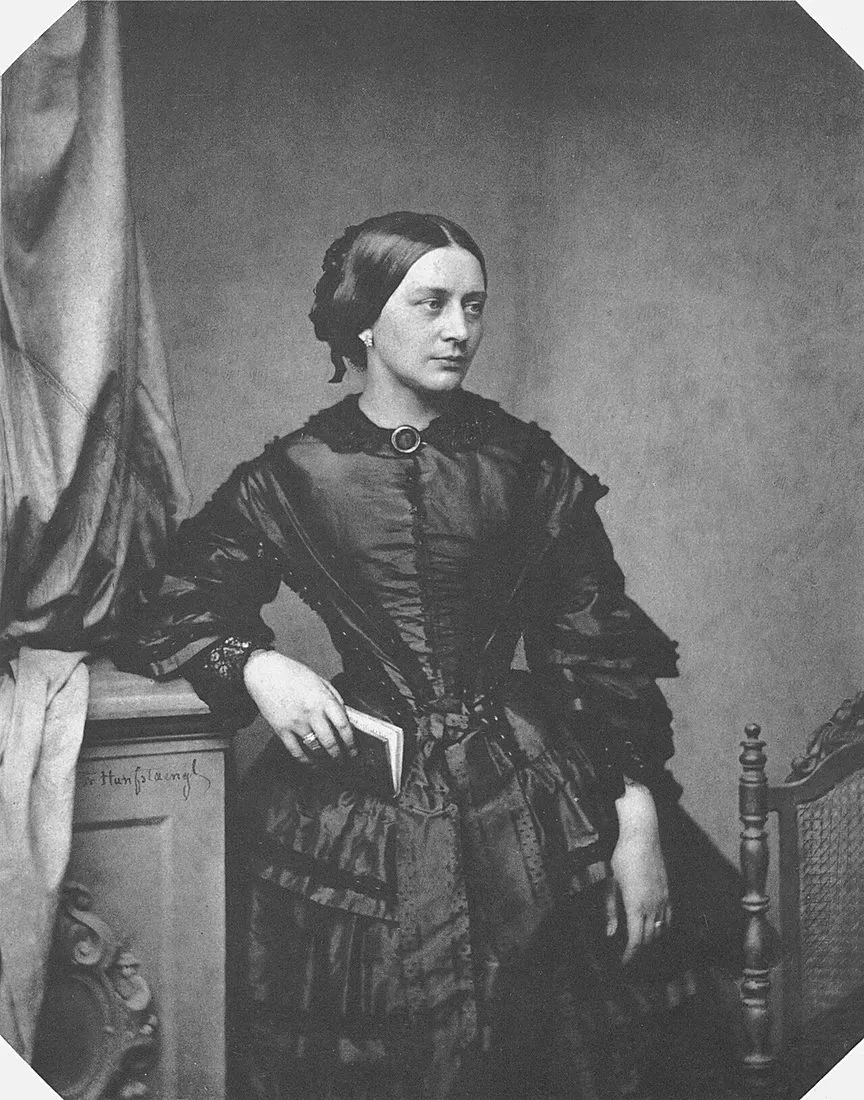
Clara Schumann Wikimedia Commons / Clara Schumann
Pictured Clara Schumann

The pianist who decided the music mattered more than the showmanship

Clara Schumann was born in Leipzig 207 years ago today, into a family of pianists, and was performing in public by age eleven. She went on to tour Paris and Vienna as a child prodigy and built a concert career that ran 61 years, at a time when almost no women had one at all.

What made her unusual wasn't just the length of the career. Nineteenth-century audiences prized flashy, virtuoso showpieces, and Clara Schumann pushed back against that, steering what counted as great piano playing toward the music itself rather than the display of skill behind it. Alongside the performing, she composed a piano concerto, chamber music, choral works, and songs, while also raising a family and helping shepherd her husband Robert Schumann's compositions into the world.

She didn't just play the Romantic era's music. She helped decide what people should expect a great pianist to sound like, and more than two centuries later, that expectation is still recognizably hers.

Today’s complete edition

The discoveries, in full

Read the evidence, what it changes, and the reporting behind each of today’s 7 discoveries.

01/07 Natural Sci.

A black flower that gave up on sunlight entirely

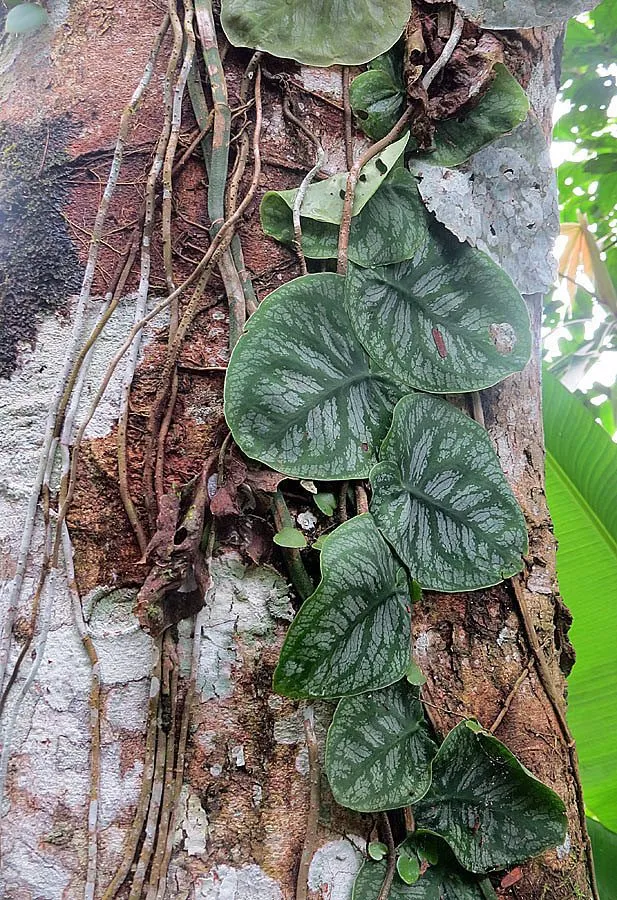
On the shaded floor of Thong Pha Phum National Park in western Thailand, botanists found a plant small enough to miss and strange enough not to 16. Thismia daemona, the "devil flower," stands about 12.5 centimeters tall, with a nearly black bloom, translucent blue stamens, three curling horns, and reddish-orange patches that read like a pair of eyes.

A black flower that gave up on sunlight entirely
Unknown (via rawpixel)

It has no chlorophyll at all, so it cannot use sunlight for energy the way almost every other plant does. Instead it plugs into fungi living in the soil and pulls carbon straight from them, a lifestyle called mycoheterotrophy that lets it spend most of its life hidden under leaf litter, surfacing only to flower. Researchers from Chulalongkorn University and Prince of Songkla University, who described it in PhytoKeys, found it growing nearly 1,000 meters up a seasonal mountain forest, not the constantly humid lowland rainforest where its relatives usually turn up.

02/07 Natural Sci.

Alzheimer's has a hidden layer, folded into the shape of the genome itself

DNA does not sit inside a cell like a straight thread. It folds into an intricate three-dimensional shape, and that shape helps decide which genes get switched on.

a neuroscience research lab
Pictured a neuroscience research lab · Sturm (Wikimedia Commons)

Researchers at Carnegie Mellon, the University of Pittsburgh, and the University of Washington examined postmortem prefrontal cortex tissue from people who had, and had not, donated their brains after taking part in a long-term dementia study, and found that this folding pattern is disrupted in several types of brain cells affected by Alzheimer's 2. Using a technique called GAGE-seq, which reads gene activity and genome folding from the same individual cell, combined with spatial maps that preserve where in the tissue each change happens, the team connected altered genome architecture to shifts in gene activity and to the physical organization of the tissue itself. "Alzheimer's disease cannot be understood one layer at a time," said Jian Ma, who led the study, arguing that genome folding is a fundamental regulatory layer on top of amyloid and tau.

03/07 Psychology

A hard night's sleep, undone by twenty minutes on a bike

Researchers led by Madhura S. Lotlikar kept 53 healthy young adults awake for 30 straight hours in a lab, then split them into three groups: one exercised for 20 minutes on a stationary bike at 80 percent of max heart rate, one napped for 90 minutes, and one just sat on the bike without pedaling 29.

a person exercising on a stationary bike
Pictured a person exercising on a stationary bike · Unknown (via rawpixel)

After a half-hour buffer to shake off any grogginess, everyone viewed 150 images and rated how emotionally intense each felt, then had their memory for those images tested three days later while wearing EEG caps. Both the brief workout and the long nap protected memory about equally well against the usual toll of sleep deprivation, but the EEG recordings showed the two strategies were doing it through completely different brain mechanisms, not the same shortcut in disguise.

04/07 Social Sci.

A stranger in the hallway can change a kid's whole trajectory

Communities In Schools places a coordinator inside high-poverty schools whose entire job is matching struggling students to whatever they actually need, tutoring, mental health counseling, a stable place to live, and it now reaches 2 million students a year, making it the largest program of its kind in the country 60.

a teacher mentoring a student in a school hallway
Pictured a teacher mentoring a student in a school hallway · Unknown (via rawpixel)

Economists tracking its staggered rollout across districts found it raises test scores for struggling kids, and those gains hold up long enough to lift high school graduation rates and adult earnings. Test scores only explain about half of that graduation boost; the rest comes from harder-to-measure shifts like showing up to class more and behaving differently once there. Coordinators tailor their help to each kid's specific gap, yet students with very different needs, housing instability versus a reading deficit versus a mental health crisis, end up with comparably strong long-term outcomes.

05/07 Technology

Desert sand, glued together with living bacteria

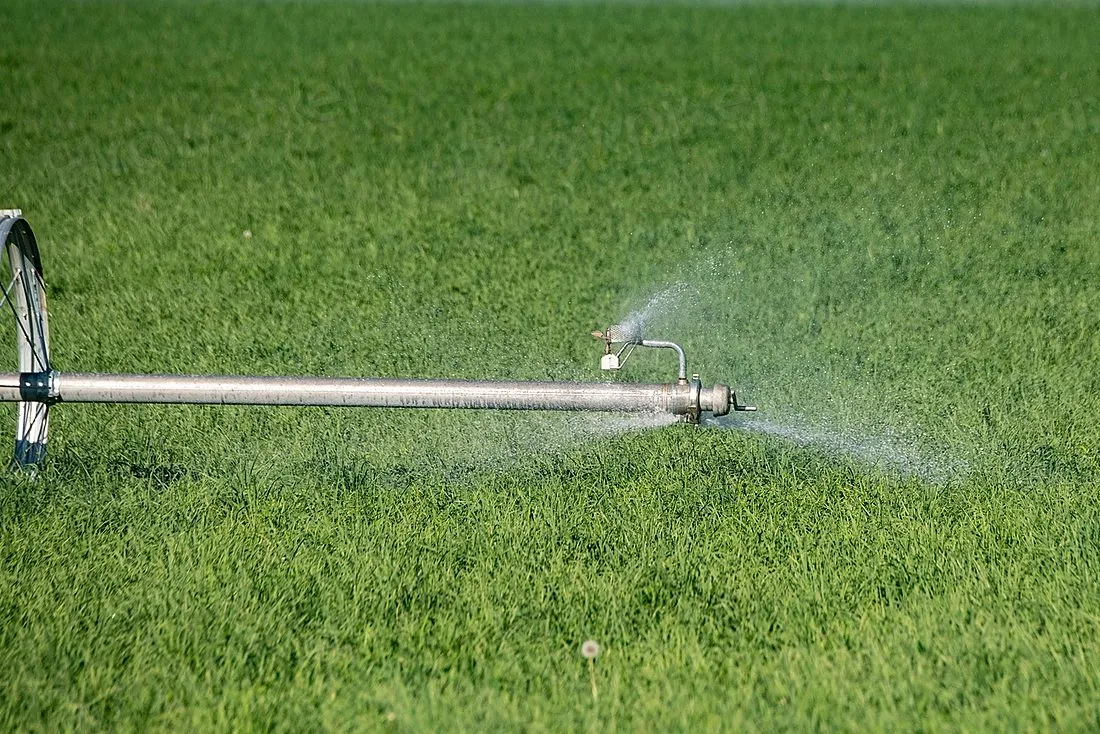
Only about 5 percent of the United Arab Emirates is farmable land, and sand's basic problem is that it doesn't hold together or hold water, so irrigation mostly just drains straight through it 88.

irrigated farmland at the edge of a desert
Pictured irrigated farmland at the edge of a desert · U.S. Department of Agriculture (via rawpixel)

Researchers at Switzerland's Empa institute and Khalifa University in Abu Dhabi introduced specific bacteria and fungi into both lab sand and real dune sand collected in Abu Dhabi, and the microbes spun out networks of fibers and biopolymers between the grains, essentially a natural glue. In one version, the treated sand slowed water movement sixfold; in a second approach, bacteria that produce nanocellulose formed thin sheets layered into the sand, and that version slowed water seepage by a factor of 28. The microbes need food too, but the researchers point out that sugars from organic waste could supply it, so the fuel for the process is already sitting around.

06/07 Good News

Colombia locked 42 percent of its Amazon away from mining, days before a new president took over

Three days before leaving office, President Gustavo Petro signed a resolution placing 186,500 square miles of the Colombian Amazon off-limits to any new mining concessions, oil and gas contracts, or the environmental permits either would need 120.

the Colombian Amazon rainforest
Pictured the Colombian Amazon rainforest · Dick Culbert from Gibsons, B.C., Canada (Wikimedia Commons)

He reached back more than 50 years to a statute, Article 47 of the Natural Resources Code, that lets the state exclude a region from private extraction rights, and applied it to the whole Colombian Amazon at once for the first time. The 164 active mining titles and 39 oil and gas contracts already running can finish out their terms, but none can be renewed, and one narrow carve-out for small-scale road-repair material remains, except inside indigenous territories. Between 2016 and 2023 the Colombian Amazon lost 1.95 million acres of forest, three-fifths of all deforestation nationwide, largely through what officials call the "fishbone effect": one road cut in for an extraction project branches into a spreading lattice of side roads and settlement.

07/07 Human Stories

You don't just think with your brain, you think with your hands, your walk, and the room you're standing in

Writing about Annie Murphy Paul's book The Extended Mind, Maria Popova traces a century of neuroscience that, in its rush to locate love, grief, and imagination inside specific brain regions, ended up shrinking our sense of what a mind even is 132.

Today Got Better

Paul's counter-argument, built from both scientific studies and the working habits of real scientists, artists, and inventors, is that thinking regularly happens outside the skull: in the gestures we learn to make before we can speak, in the physical spaces we work in, in the minds of the people around us. Babies build a language of sensemaking gestures long before words arrive. Time spent in nature appears to fuel the brain's associative networks in ways sitting at a desk doesn't. None of this is mysticism; it's an argument that reaching for the whiteboard, the walk, or the collaborator isn't a workaround for thinking, it is thinking.

Quick notes

Shorter discoveries from this morning, worth knowing but not a full story.

Elephants Can Think Before They Act and Resist Impulsive Behavior, Shows Study Asian elephants at Thailand's National Elephant Institute, tested with a see-through box of fruit, consistently ignored the obvious-but-blocked opening and used the side door they'd been taught instead, the first evidence of this kind of impulse control in elephants 105. Good News Network
She 'Asked for a Sign' and Suddenly a Kingfisher Darts Up and Sits in Her Hand for 10 Minutes A park ranger in Somerset was watering flowers when a wild Eurasian kingfisher, a notoriously shy bird, flew up and perched on her gloved hand for ten straight minutes before heading back to the river 103. Good News Network
His Fields Flooded Every Year. He Turned the Water Into Fish Farms Nazrul Haque grew up watching his family's Assam paddy fields drown every monsoon, so instead of fighting the flooding he built a fish farm around it, turning water that used to ruin the season into the thing that pays for it 111. The Better India
Punjab Farmer Gave Up Wheat Farming to Grow Exotic Flowers, Earns Rs 1 Lakh/Acre Gurwinder Singh Sohi swapped his family's generations-old wheat fields for 40 varieties of exotic flowers, from California poppy to delphinium, and now earns roughly two to three times what wheat ever paid him 112. The Better India
India's Pothole Problem Gets a Danish Fix Andhra Pradesh is testing a Danish fiber, already proven at Heathrow and on German highways, mixed into asphalt at under a kilogram per ton, and early tests show it cuts rut depth by more than half 113. The Better India
Just A Photo, a Problem & a Solution A free AI app called FarmerChat let a Uttar Pradesh nursery owner photograph his sick mango saplings and get a diagnosis and treatment plan in seconds, saving the crop; it's now reached nearly a million Indian farmers 116. The Better India
Teachers Took Nail Cutters, Not Textbooks, to This Tribal Hamlet in Tamil Nadu An 82-year-old educator who still teaches daily brought a free Saturday school to a remote tribal settlement in Kodaikanal, and over two years it grew from 25 kids to more than 52 first-generation learners now headed somewhere other than the fields 118. The Better India
With Adapted Sailing, the Sea Is for Everyone César Maquieira thought his degenerative muscle disease had closed off the ocean he loved, until a Spanish sailing club built custom accessible boats and hoists so wheelchair users could get out on the water themselves 109. Reasons to be Cheerful
Researchers Use Math to Ensure a Wordle Win 99% of the Time Binghamton University researchers applied Shannon entropy, the math of uncertainty, to Wordle and found that guessing the most informative word, not the most likely answer, solves the puzzle 99% of the time versus 90% for a standard strategy 104. Good News Network
Stanford researchers find a single question could be the key to changing someone's mind Two studies found that simply asking "could you tell me more about that?" during a disagreement makes both people more open-minded, and the person doing the asking ends up with a more favorable view of the opposing side too 127. Upworthy
There Is Power in Being Grateful A meta-analysis of 15 studies covering 229,000 patients found optimism measurably lowers the odds of cardiovascular events and death, adding to a growing body of evidence that gratitude isn't just a nice feeling but a real biological lever 36. Psychology Today
NASA-backed scientists turn plastic waste into edible cookies Southern Illinois University researchers engineered yeast to turn PET plastic bottles and farm waste into protein, fats, and even vanilla flavoring for 3D-printed cookies called µBites, work partly funded through NASA's Deep Space Food Challenge 5. ScienceDaily
The 10,000-Steps Myth Is Dead. Here's What Science Says Works Instead Tracking more than 64,000 middle-aged adults for eight years, University of Sydney researchers found people walking under 5,000 brisk steps a day got the same lower mortality risk as those walking 7,500 slower ones, so the old 10,000-step number, borrowed from a 1960s pedometer ad campaign, was never gospel 18. ScienceAlert

Our process. Your trust.

Every discovery above traces back to an article we read in full. This is the whole corpus behind this morning, and what it was made of.

  • 29 Sources scanned
  • 132 Articles read
  • 8 Fields covered
  • 7 Discoveries

The sources that carried this morning

  1. 1 National Bureau of Economic Research Working Papers 20 articles
  2. 2 Interesting Engineering 10 articles
  3. 3 Upworthy 10 articles
  4. 4 The Better India : Latest Posts 9 articles
  5. 5 Latest Science News -- ScienceDaily 8 articles
  6. 6 Futurism 8 articles
  7. 7 ScienceAlert 7 articles
  8. 8 Psychology Today: The Latest 7 articles
How an edition is made

Everything we read today

Natural Sciences 21 articles
Life Sciences & Medicine 4 articles
Psychology & Behavioral Science 13 articles
Social Sciences 27 articles
Future Perfect | Vox
National Bureau of Economic Research Working Papers
Technology & Innovation 25 articles
Plant-Based & Vegan 11 articles
Solutions & Good News 29 articles
Human Stories & Ideas 2 articles
The long view · not today’s news, the story behind it

Today’s discoveries didn’t come from nowhere. Here’s the older, ongoing story they belong to, a moment from this day in history, and a question to test what stuck.

Where the story stands

On this day in science

2015 Gravitational waves are detected at last The twin LIGO detectors in the United States felt a faint ripple pass through spacetime, the first direct detection of gravitational waves. It came from two black holes that spiraled together more than a billion years ago. Einstein had predicted such waves a century earlier, and the catch opened a new way to listen to the universe. More from the Almanac →

Before you go: today’s quiz

The daily quiz

What single tool did the most to prevent malaria cases in Africa since 2000?

Reveal the answer

Insecticide-treated bed nets

A 2015 Nature study found that of an estimated 663 million malaria cases averted, insecticide-treated bed nets were the single largest contributor, at 68 percent.

See the Lifesaver →

Previous editions

Every morning we have published, newest first. Nothing expires.

View the full archive

Get this every morning.

Liked today’s? Wake up to tomorrow’s, in one short letter.

  • One email each morning, never more
  • The day’s real discoveries across 8 fields
  • One calm read with your coffee

The full letter, every morning, free for good.

Same free letter, plus the reason it stays that way: no ads, no investors, no agenda but the good news itself.

A single gift of any amount. No account, never a recurring charge.