



The daily brief · September 13, 2026

The body's own brake on inflammation, and cash that slowed a baby's aging

Today's discoveries share a quiet thread: bodies, brains, and budgets already hold more fixes than we give them credit for, they just need the right nudge to use them.

  • 8 Discoveries
  • 106 Articles read
  • 23 Sources
  • 11 Min read

Today’s discoveries

Everything this morning found, in the order we would read it.

8 stories
  1. 01 Natural Sci. The body has an off switch for inflammation, and scientists just found it Inflammation is supposed to end. Source: ScienceDaily 1 min read
  2. 02 Natural Sci. Cash payments to new mothers slowed their babies' biological aging The Baby's First Years study is one of the few experiments that can actually test whether poverty causes worse health, rather than just correlating with it, because it randomly assigns cash. Source: ScienceAlert 1 min read
  3. 03 Natural Sci. A drug built by AI made damaged lungs, and blood, look biologically younger Rentosertib was designed to treat idiopathic pulmonary fibrosis, a disease that scars the lungs, but researchers from Insilico Medicine and Harvard Medical School went back to blood… Source: ScienceAlert 1 min read
  4. 04 Good News A teacher with a new knee found the first-ever adult T. rex trackway Kent Hups teaches science at Northglenn High School in Colorado and volunteers on paleontology digs in his spare time. Source: Good News Network 1 min read
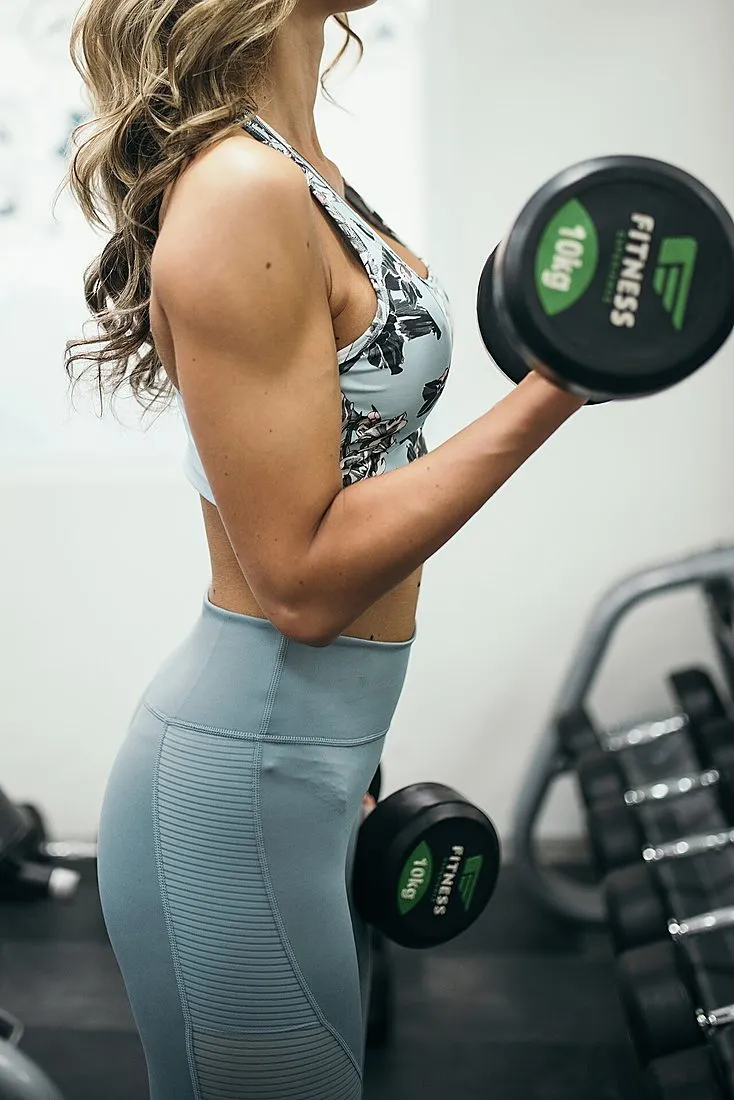
  5. 05 Psychology Lifting weights eased depression in anxious young women, no matter how hard they pushed Exercise psychology researcher Darragh O'Sullivan at the University of Limerick wanted to answer a nagging question about a previous finding: was it the lifting that helped anxious young… Source: PsyPost 1 min read
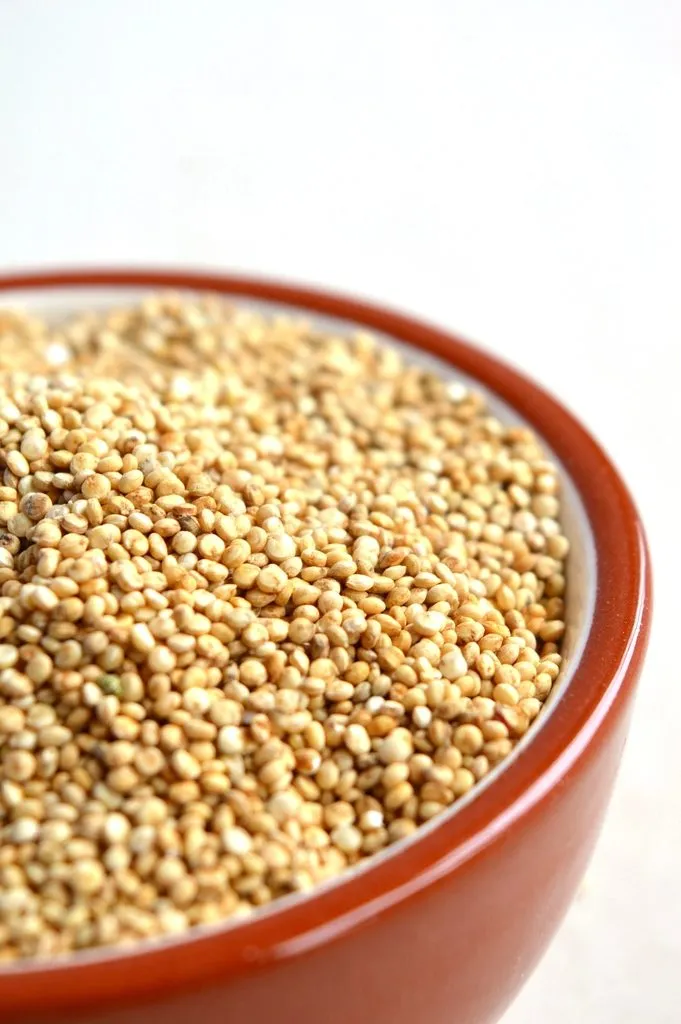
  6. 06 Plant-Based A century-old kitchen trick turns lentils into something with real bite Scientists at ETH Zurich's Institute of Food, Nutrition, and Health took red lentils, black lentils, mung beans, soybeans, and black beans and turned them into fibrous, meat-like gels… Source: Plant Based News 1 min read
  7. 07 Good News An engineer built a wearable that unfreezes Parkinson's patients mid-step Amey Desai studied electrical engineering at BITS Pilani, then watched his own maternal grandfather live with Parkinson's disease, including the specific, disorienting symptom called… Source: The Better India 1 min read
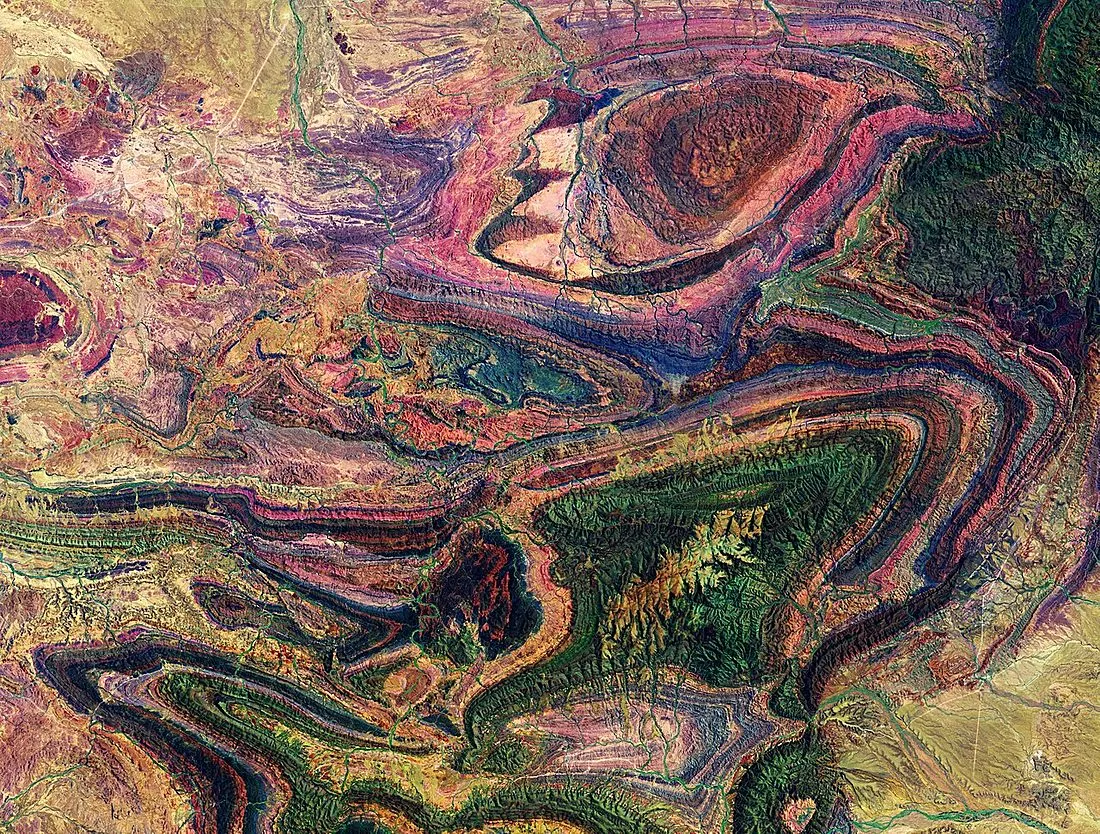
  8. 08 Natural Sci. Australia's iron-rich outback may be sitting on a hydrogen goldmine Western Australia sits on enormous reserves of iron ore, and iron ore contains magnetite, a mineral that produces hydrogen gas when hot water hits it. Source: ScienceAlert 1 min read

The feel-good story of the day

a man playing piano in a church Unknown (via rawpixel)
Pictured a man playing piano in a church

The night church pianist who turned a cold January performance into $54,000 for charity

Rhys Wynne-Jones had been homeless for a decade in England when he walked into St. Mary's Church in Penzance one cold January night, one of Britain's "Night Churches" that stay open around the clock for people with nowhere else to go. He asked a volunteer if he could sit at the church piano and play. "There is a lot of noise in my head, but when I play piano my head goes quiet, I feel calm," he said. He played Queen's Bohemian Rhapsody, a volunteer filmed it on a phone, and the video spread far beyond Penzance.

Two years later, Rhys has a home through a Coastline Housing development in west Cornwall, has shared a stage with Ronnie Wood and Peter Andre, and has raised more than £40,000, about $54,000, for homeless charities and causes he cares about. He recites the countries of the world and the first hundred digits of pi as part of his act, but he's clear about what actually matters to him. "I don't see myself as a professional pianist or a celebrity figure," he said. "I only need enough money to cover my expenses. I just love to play the piano to raise money for homeless charities and good causes."

Today’s complete edition

The discoveries, in full

Read the evidence, what it changes, and the reporting behind each of today’s 8 discoveries.

01/08 Natural Sci.

The body has an off switch for inflammation, and scientists just found it

Inflammation is supposed to end. Researchers at University College London just showed how the body actually calls it off 2.
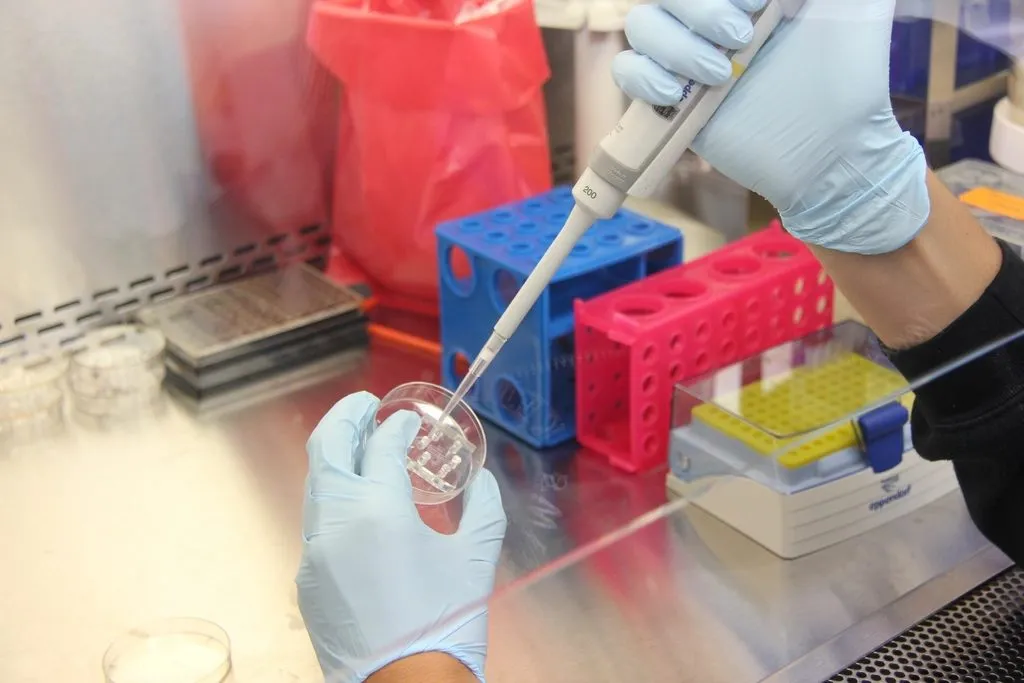
a scientist in a research lab
Pictured a scientist in a research lab · Unknown (via rawpixel)

They injected healthy volunteers in the forearm with UV-killed E. coli, dead bacteria that can't cause infection but still trigger the redness, heat, and swelling of a real immune response, then gave some of them a drug called GSK2256294 that blocks an enzyme responsible for breaking down a family of fat-derived molecules called epoxy-oxylipins. Block the enzyme, and those molecules stick around longer, acting like brakes on the immune system. In a group of 24 volunteers who got the drug two hours before the trigger, and another group who got it four hours after inflammation had already started, the drug reduced the buildup of a white blood cell called intermediate monocytes, the type that helps healing short-term but drives chronic inflammation when it lingers, and sped up how fast pain eased.

02/08 Natural Sci.

Cash payments to new mothers slowed their babies' biological aging

The Baby's First Years study is one of the few experiments that can actually test whether poverty causes worse health, rather than just correlating with it, because it randomly assigns cash 22.

a mother holding her baby
Pictured a mother holding her baby · Unknown (via rawpixel)

A thousand low-income mothers were split into two groups: 400 got $333 a month, 600 got $20 a month, for the child's first 76 months. That's roughly $4,000 a year extra, about an 18 percent income bump, for the higher group. When the children turned four, researchers swabbed saliva from both kids and moms and measured DunedinPACE, an epigenetic marker of how fast the body is aging. Children in the higher-cash families showed a pace of biological aging 0.17 standard deviations slower than children in the low-cash group. "The fact that we already see differences in four-year-old children in their biological aging is striking," said co-author Kathryn Paige Harden, a behavioral geneticist at the University of Texas at Austin.

03/08 Natural Sci.

A drug built by AI made damaged lungs, and blood, look biologically younger

Rentosertib was designed to treat idiopathic pulmonary fibrosis, a disease that scars the lungs, but researchers from Insilico Medicine and Harvard Medical School went back to blood samples from its original 71-person trial to check something else entirely 23.

A drug built by AI made damaged lungs, and blood, look biologically younger
Unknown (via rawpixel)

They measured nearly 3,000 proteins in blood from 42 participants, average age 67, and ran the results through six separate biological aging clocks, each built differently, each estimating age from a different angle. All six pointed the same direction: people on the drug's 60-milligram daily dose showed blood profiles reading 2.71 to 3.46 years younger after four weeks, while the placebo group's clocks, if anything, ticked up. The researchers were careful not to name one definitive number, since the six clocks disagreed on the size of the effect even as they agreed on its direction.

04/08 Good News

A teacher with a new knee found the first-ever adult T. rex trackway

Kent Hups teaches science at Northglenn High School in Colorado and volunteers on paleontology digs in his spare time. In 2025, fresh off knee replacement surgery and too slow on the steep terrain to keep up with the rest of the crew, he wandered off at his own pace near Marmarth, North Dakota, and spotted something 23 feet away that everyone else had walked past 8791.

Today Got Better

Four three-toed footprints, each about three feet long, sat connected in the Hell Creek Formation, dated to roughly 66.5 million years ago. Before this, scientists had confirmed only two isolated adult T. rex footprints anywhere in the world, neither connected to another, neither able to show how the animal moved. This trackway let paleontologist Tyler Lyson's team calculate a walking speed: 3.5 to 4.5 miles per hour, about a brisk human pace, across a 13-foot stride. "Bones tell us an enormous amount about these animals, but footprints capture a moment of behavior," Lyson said. "With a trackway, we can actually follow an animal as it moved across the landscape."

05/08 Psychology

Lifting weights eased depression in anxious young women, no matter how hard they pushed

Exercise psychology researcher Darragh O'Sullivan at the University of Limerick wanted to answer a nagging question about a previous finding: was it the lifting that helped anxious young women's mood, or just the social contact and expectation of feeling better 30?

a young woman lifting weights in a gym
Pictured a young woman lifting weights in a gym · Nenad Stojkovic (Wikimedia Commons)

So his team compared standard-intensity resistance training against a genuinely low-effort strength program, rather than a waitlist that controls for nothing. Both groups of young women with elevated anxiety saw large drops in depressive symptoms, regardless of whether they were straining under real weight or barely working at all. "We also expanded on our previous research by focusing on anxious young women, as women are generally less involved in muscle-strengthening exercise, and therefore may have greater potential for improvement," O'Sullivan told PsyPost.

06/08 Plant-Based

A century-old kitchen trick turns lentils into something with real bite

Scientists at ETH Zurich's Institute of Food, Nutrition, and Health took red lentils, black lentils, mung beans, soybeans, and black beans and turned them into fibrous, meat-like gels using nothing but water, heat, and a freezer 76.

a bowl of red lentils
Pictured a bowl of red lentils · Unknown (via rawpixel)

The method, called directional freezing, blends soaked legumes into a purée, heats it into a gel, then freezes it from one side only, so ice crystals grow in parallel lines instead of every direction at once. When it thaws, the ice melts away but the fibrous structure stays behind. Red lentils, black lentils, and mung beans produced the strongest, most stable fibers; soybeans and black beans came out softer. "This method is so simple that it can be performed easily by anyone in a household kitchen," said PhD student Andrea Bach, who worked on the research published in npj Science of Food.

07/08 Good News

An engineer built a wearable that unfreezes Parkinson's patients mid-step

Amey Desai studied electrical engineering at BITS Pilani, then watched his own maternal grandfather live with Parkinson's disease, including the specific, disorienting symptom called freezing of gait, where the legs are physically able to move but the brain suddenly can't start the step 96.

Today Got Better

He founded Lifespark Technologies and built WALK, a wearable device designed to intervene in that exact frozen moment, alongside PATHFINDER, a platform that tracks movement patterns to flag fall risk for doctors. "As I interacted with patients, clinicians, physiotherapists and researchers, I realised that mobility is not restricted to only movement," Desai said. "It is independence, dignity, confidence and participation in society."

08/08 Natural Sci.

Australia's iron-rich outback may be sitting on a hydrogen goldmine

Western Australia sits on enormous reserves of iron ore, and iron ore contains magnetite, a mineral that produces hydrogen gas when hot water hits it 18. A team led by Edith Cowan University tested that reaction directly, cooking magnetite and water together at 200 degrees Celsius for 60 days to mimic underground conditions.

Australian outback red dirt landscape
Pictured Australian outback red dirt landscape · European Space Agency (Wikimedia Commons)

Magnetite powder produced roughly five times more hydrogen per gram than a solid slab of the same mineral, pointing to fractured, porous rock as the best place to look for it in the real world. "Australia could be sitting on a massive, untapped energy reserve, and the potential is enormous," said chemical engineer Alireza Keshavarz. "There is enough hydrogen for Australia to benefit for generations, and potentially enough for us to become a major exporter of clean energy to the rest of the world."

Quick notes

Shorter discoveries from this morning, worth knowing but not a full story.

Therapeutic gardening improves mental health for adults with chronic conditions A review of 23 studies and 4,535 people found that planting and tending community gardens measurably eases depression and anxiety in adults living with chronic illness, no pharmacy required 29. PsyPost
Having multiple partners does not compromise sexual health, large study finds Across two large datasets, people in openly non-monogamous relationships reported sexual health and satisfaction comparable to, and sometimes better than, strictly monogamous couples 34. PsyPost
Researchers find a Wordle strategy that wins 99% of the time Binghamton University researchers used Shannon entropy, a measure built for information theory, to solve Wordle 99 percent of the time by picking guesses that reveal the most, not guesses most likely to be right 10. ScienceDaily
Nuclear reactor material testing cut from days to hours with new US technology A new X-ray station at Brookhaven National Laboratory combines four separate imaging tests into one setup, cutting reactor material analysis from multiple days down to about six hours 67. Interesting Engineering
This Music Festival Turns Ziro Valley's Paddy Fields Into a Bamboo Wonderland Every September, Arunachal Pradesh's Ziro Valley builds an entire music festival, stages and all, out of bamboo cut nearby, then lets the paddy fields quietly return to farmland once the last set ends 92. The Better India
No POP or Paper Mâché: This Family Celebrates Ganesh Chaturthi With Wheat, Mud & a Growing Idol One Maharashtra family grows their Ganesh idol from wheat seeds planted in mud, watching the god's outline fill in with living green shoots over five days instead of buying a plaster one bound for a river 93. The Better India
8 Unexpected Places in India Where You Can Spot Flamingos, Pelicans & Rare Birds From Menar's village wetlands to Kolkata's eastern lakes, ordinary Indian wetlands are quietly hosting Sarus Cranes, Lesser Flamingos, and a Sharp-tailed Sandpiper recorded only a handful of times in the country 95. The Better India
The Blackout of '65 Left 800K Trapped in NYC Subway, 6 Hours Later People Were Inspired by Each Other Trapped in a dark subway car for six hours during the 1965 blackout, strangers shared half a doughnut and a peanut butter sandwich, and the city logged its lowest crime night on record since it started keeping count 86. Good News Network
Autistic individuals might be somewhat better at reading emotions of other autistic people A study of 235 people found autistic participants read the emotions of other autistic people more accurately than non-autistic people did, evidence that empathy gaps run in both directions, not just one 28. PsyPost
A 19-yr-old built a beautiful tiny home on her parents' property Annie Rose built a 300-square-foot home on family land for $45,000 and no rent, one small, replicable answer to a housing market where prices have grown roughly 2.5 times faster than wages 97. Upworthy
The intriguing reason why people in the past looked a lot older than people today US life expectancy has more than doubled in 200 years, and clean water, safer food, and dental care are a big part of why your grandfather's yearbook photo looks older than he actually was 98. Upworthy
Forget the names of people you just met? Psychologists say it says something good about you Forgetting a new acquaintance's name may mean you were too busy reading their whole personality to file away one word, a quirk called the Fan Effect that tracks with higher empathy, not worse memory 101. Upworthy
Research Says These Are the Best Foods to Lower Cholesterol Naturally A European Heart Journal meta-analysis found vegetarian and vegan diets cut total cholesterol by 7 percent and LDL by 10 percent, with some studies showing plant-based eating rivaling statins for LDL reduction 84. VegNews

Our process. Your trust.

Every discovery above traces back to an article we read in full. This is the whole corpus behind this morning, and what it was made of.

  • 23 Sources scanned
  • 106 Articles read
  • 7 Fields covered
  • 8 Discoveries

The sources that carried this morning

  1. 1 Latest Science News -- ScienceDaily 12 articles
  2. 2 Interesting Engineering 10 articles
  3. 3 Futurism 9 articles
  4. 4 ScienceAlert 8 articles
  5. 5 Upworthy 8 articles
  6. 6 PsyPost Psychology News 7 articles
  7. 7 VegNews.com 7 articles
  8. 8 Psychology Today: The Latest 6 articles
How an edition is made

Everything we read today

Natural Sciences 27 articles
Psychology & Behavioral Science 13 articles
Social Sciences 8 articles
Technology & Innovation 27 articles
Ars Technica - All content
Plant-Based & Vegan 10 articles
Solutions & Good News 19 articles
Human Stories & Ideas 2 articles
The long view · not today’s news, the story behind it

Today’s discoveries didn’t come from nowhere. Here’s the older, ongoing story they belong to, a moment from this day in history, and a question to test what stuck.

Where the story stands

On this day in science

1959 The first spacecraft reaches the Moon The Soviet probe Luna 2 crashed into the Moon as planned, becoming the first human-made object to reach the surface of another world. It carried no camera, but its arrival proved a craft could be aimed across a quarter million miles of space and hit its mark. The Moon was suddenly within reach. More from the Almanac →

Before you go: today’s quiz

The daily quiz

The Haber-Bosch process makes fertilizer out of nitrogen in the air. Roughly what share of people does it help feed?

Reveal the answer

About half the world

Synthetic nitrogen fertilizer supports roughly half of the global population, about 48 percent as of 2008. Without it, today's food supply could not feed everyone.

See the Lifesaver →

Previous editions

Every morning we have published, newest first. Nothing expires.

View the full archive

Get this every morning.

Liked today’s? Wake up to tomorrow’s, in one short letter.

  • One email each morning, never more
  • The day’s real discoveries across 8 fields
  • One calm read with your coffee

The full letter, every morning, free for good.

Same free letter, plus the reason it stays that way: no ads, no investors, no agenda but the good news itself.

A single gift of any amount. No account, never a recurring charge.