
The daily brief · September 5, 2026

A sea squirt molecule turned back aging in mice, and salmon came home

Today's discoveries share a quiet theme: things we assumed were one-way, an aging brain, a vanished species, a lonely city block, turned out to have a way back.

  • 8 Discoveries
  • 210 Articles read
  • 42 Sources
  • 11 Min read

Today’s discoveries

Everything this morning found, in the order we would read it.

8 stories
  1. 01 Natural Sci. A seafood compound and a weight-loss drug both nudged old mouse brains toward acting young again Sea squirts, eaten raw in Korea as meongge and in Japan as hoya, are packed with fat molecules called plasmalogens, the kind that make up cell membranes and run especially thick through… Source: ScienceDaily 1 min read
  2. 02 Natural Sci. Scientists found the two signals a fetal brain uses to decide what kind of cells to build Before birth, a stem cell called radial glia produces most of the cerebral cortex, the tissue behind thought, memory, and language, and UCLA's Aparna Bhaduri says plainly: "Radial glia… Source: ScienceDaily 1 min read
  3. 03 Life Sciences Two kidney patients traded a pig organ for a human one, and it worked Two of eGenesis's first recipients of genetically engineered pig kidneys have now successfully received kidneys from human donors, the company announced. Source: STAT 1 min read
  4. 04 Psychology A slowly rocking bed helped adults with insomnia sleep through the night Researchers at the University of Geneva already knew that healthy sleepers on a gently rocking bed spend more time in deep sleep, likely because the vestibular system in the inner ear… Source: PsyPost 1 min read
  5. 05 Social Sci. The same 20 people at a dog park are quietly doing what the corner bar used to do A University of Pennsylvania pediatrician describes Harford Park in Wayne, Pennsylvania, 30 acres set aside for off-leash dogs since 1997, where the same 15 or 20 regulars show up most… Source: The Conversation 1 min read
  6. 06 Good News Coho salmon returned to California's coast in numbers nobody thought they'd live to see Roughly 30,000 coho salmon returned to central California's Mendocino coast rivers last season, ten times the decade average of 3,000, and double the count from the year before. Source: Good News Network 1 min read
  7. 07 Psychology A mushroom with no known hallucinogen in it has been making people see tiny people for centuries University of Utah researchers sequenced DNA from a mushroom called Lanmaoa asiatica, collected in Yunnan, China and separately in the Philippines under different local names, and… Source: Psychology Today 1 min read
  8. 08 Technology A phone built to be taken apart, not thrown away Dutch phone maker Fairphone just entered the US market with the $650 Gen 6+, a 6.31-inch OLED phone designed so an owner, not just a technician, can swap the screen, the battery, or the… Source: Ars Technica 1 min read

The feel-good story of the day

a bride and groom at their wedding Brocken Inaglory (Wikimedia Commons)
Pictured a bride and groom at their wedding

The boy who saved a stranger's life is about to become her brother-in-law

In 2003, 18-month-old Brooklyn Dotson was dying of a rare liver condition, with doctors giving her family days, not weeks. A donor liver arrived just in time. It came from Michael Waters, a 10-year-old from Dayton, Ohio, killed by a car days earlier, who had once told his family that if anything ever happened to him, he wanted to be an organ donor. His parents honored that wish, and Michael's organs went on to help several people, Brooklyn among them.

The two families met in 2005 and kept in touch for years. Brooklyn grew up as friends with Michael's younger brother, Noah, who stood by her through a later surgery as a teenager. Neither of them set out to fall in love. But in 2025, something shifted, and Noah drove from Ohio to Kentucky to tell Brooklyn he'd always felt more for her than friendship. By Christmas Eve, he'd proposed. They're marrying on September 26.

"I get to enjoy life because of him," Brooklyn says of Michael, "and I get to live and hopefully honor his memory the best way that I can." Noah puts it more simply: he had no idea his brother would save his future wife's life 20 years before he met her.

Today’s complete edition

The discoveries, in full

Read the evidence, what it changes, and the reporting behind each of today’s 8 discoveries.

01/08 Natural Sci.

A seafood compound and a weight-loss drug both nudged old mouse brains toward acting young again

Sea squirts, eaten raw in Korea as meongge and in Japan as hoya, are packed with fat molecules called plasmalogens, the kind that make up cell membranes and run especially thick through the brain, heart, and immune cells, and that quietly drain away as we age.

A seafood compound and a weight-loss drug both nudged old mouse brains toward acting young again
Unknown (via rawpixel)

Researchers from Xi'an Jiaotong-Liverpool University, Stanford, and two other institutions fed plasmalogen supplements to aged mice and watched them relearn a maze faster, grow stronger connections between brain cells, calm down inflammation, and, almost as an afterthought, sprout new hair that came in thicker, glossier, and darker than their untreated peers 7. "Our research suggests that plasmalogens may not just stop cognitive decline, but may reverse cognitive impairments in the aging brain," says lead researcher Lei Fu. Days later, a separate study out of biologist Danica Chen's lab found that semaglutide, the GLP-1 drug sold as Wegovy, made older female mice live longer and dulled several signs of aging like inflammation, and the treated mice outperformed untreated ones on cognitive tests even under an identical strict diet, meaning the benefit wasn't just about eating less 24.

What each field noticed (2)
02/08 Natural Sci.

Scientists found the two signals a fetal brain uses to decide what kind of cells to build

Before birth, a stem cell called radial glia produces most of the cerebral cortex, the tissue behind thought, memory, and language, and UCLA's Aparna Bhaduri says plainly: "Radial glia are the coolest cells that have ever existed.

a neuroscience research lab with a technician at a microscope
Pictured a neuroscience research lab with a technician at a microscope · Sturm (Wikimedia Commons)

They're really key to making us human." Two new studies, one in Cell and one in Science, mapped out how these cells actually make their choices 5. The Cell study, built from donated human tissue and lab-grown brain organoids, found that radial glia lean hard on a specific metabolic pathway, meaning the way a cell burns sugar can steer which neurons it ultimately becomes, not just fuel the process quietly in the background. The companion study found the cells also respond to physical touch signals arriving from the thalamus, and that this contact can shift them toward producing the upper-layer neurons especially abundant in human cortex.

03/08 Life Sciences

Two kidney patients traded a pig organ for a human one, and it worked

Two of eGenesis's first recipients of genetically engineered pig kidneys have now successfully received kidneys from human donors, the company announced 61. The whole point of pig-to-human transplants, or xenografts, is that there simply aren't enough human organs for everyone who needs one, and many people die waiting.

a surgical team in an operating room
Pictured a surgical team in an operating room · SnowBink (Wikimedia Commons)

The open question hanging over the field was whether living with a temporary pig kidney would prime a patient's immune system to reject a human kidney later. STAT's Eric Boodman reports the early returns as promising, "though not without hiccups." The milestone traveled well beyond the medical trade press, too: an economics blog rounding up the week's links simply noted, "The pig kidney worked" 106.

04/08 Psychology

A slowly rocking bed helped adults with insomnia sleep through the night

Researchers at the University of Geneva already knew that healthy sleepers on a gently rocking bed spend more time in deep sleep, likely because the vestibular system in the inner ear feeds a rhythmic physical signal straight to the thalamus, the brain region that generates the slow, rolling waves and quick spindle bursts of deep sleep 77.

an adult sleeping in bed at night
Pictured an adult sleeping in bed at night · Content Providers(s): CDC/ Harvard University, Dr. Gary Alpe (Wikimedia Commons)

So Aurore Perrault, Sophie Schwartz, and Laurence Bayer tried it on people who actually struggle to sleep: 16 young adults with mild to moderate insomnia, tracked for three weeks at home, then wired up in a sleep lab. Continuous, slow rocking through the night cut nighttime awakenings and improved overall sleep quality, according to the results published in the Journal of Sleep Research.

05/08 Social Sci.

The same 20 people at a dog park are quietly doing what the corner bar used to do

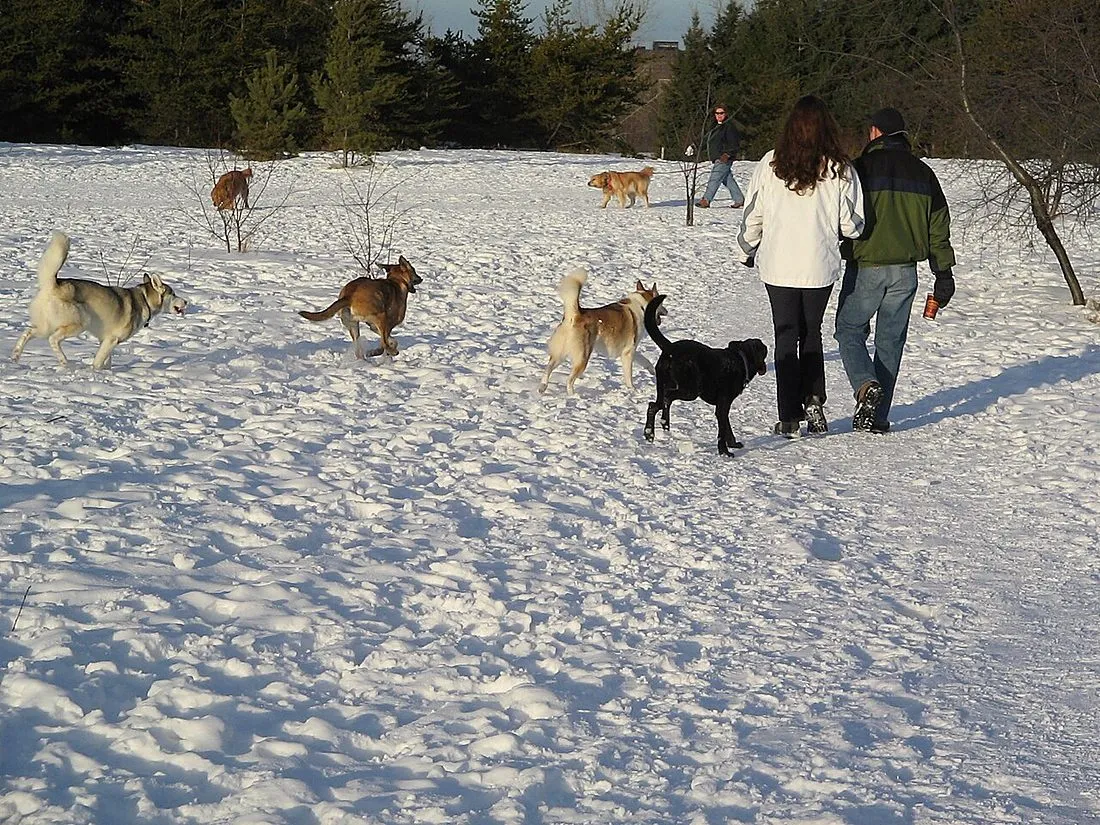
A University of Pennsylvania pediatrician describes Harford Park in Wayne, Pennsylvania, 30 acres set aside for off-leash dogs since 1997, where the same 15 or 20 regulars show up most afternoons 115.

a dog park with people and their dogs
Pictured a dog park with people and their dogs · sarah n (Wikimedia Commons)

On one visit, tangled in someone else's leash, she caught two conversations running at once: a regular having a rough year getting gently ribbed by four people about the weight he'd put on against doctor's orders, and an argument about a public health official that people took sides on freely. Sociologist Ray Oldenburg had a name for spaces like this decades ago: third places, "public places that host the regular, voluntary, informal, and happily anticipated gatherings of individuals beyond the realms of home and work." The regulars don't share politics, income, or age. They share a dog that needs to run in the morning.

06/08 Good News

Coho salmon returned to California's coast in numbers nobody thought they'd live to see

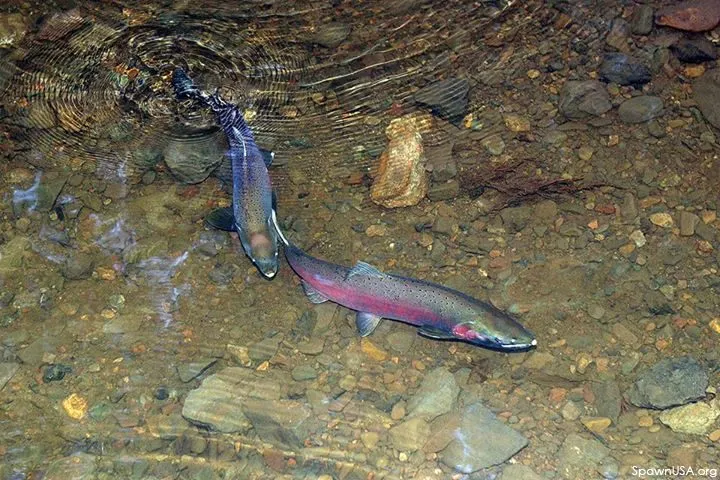
Roughly 30,000 coho salmon returned to central California's Mendocino coast rivers last season, ten times the decade average of 3,000, and double the count from the year before 182.

a coho salmon swimming upstream in a river
Pictured a coho salmon swimming upstream in a river · Joannatirn (Wikimedia Commons)

NOAA's Joe Pecharich has supported restoration work in these watersheds for 20 years: "I am overjoyed, everybody's just ecstatic about how many coho there are. We have conducted intensive sampling since 2009 in these watersheds and many of us never thought we'd see something like this in our lifetime." The recovery didn't happen by accident. Since before the millennium, NOAA pulled together tribes, NGOs, timber companies, and the fishing nonprofit Trout Unlimited on more than 100 small fixes across the North Fork Navarro, Noyo, Garcia, and Big river watersheds, widening undersized road culverts, clearing log jams, and coaxing straightened waterways back into their natural meandering shape.

07/08 Psychology

A mushroom with no known hallucinogen in it has been making people see tiny people for centuries

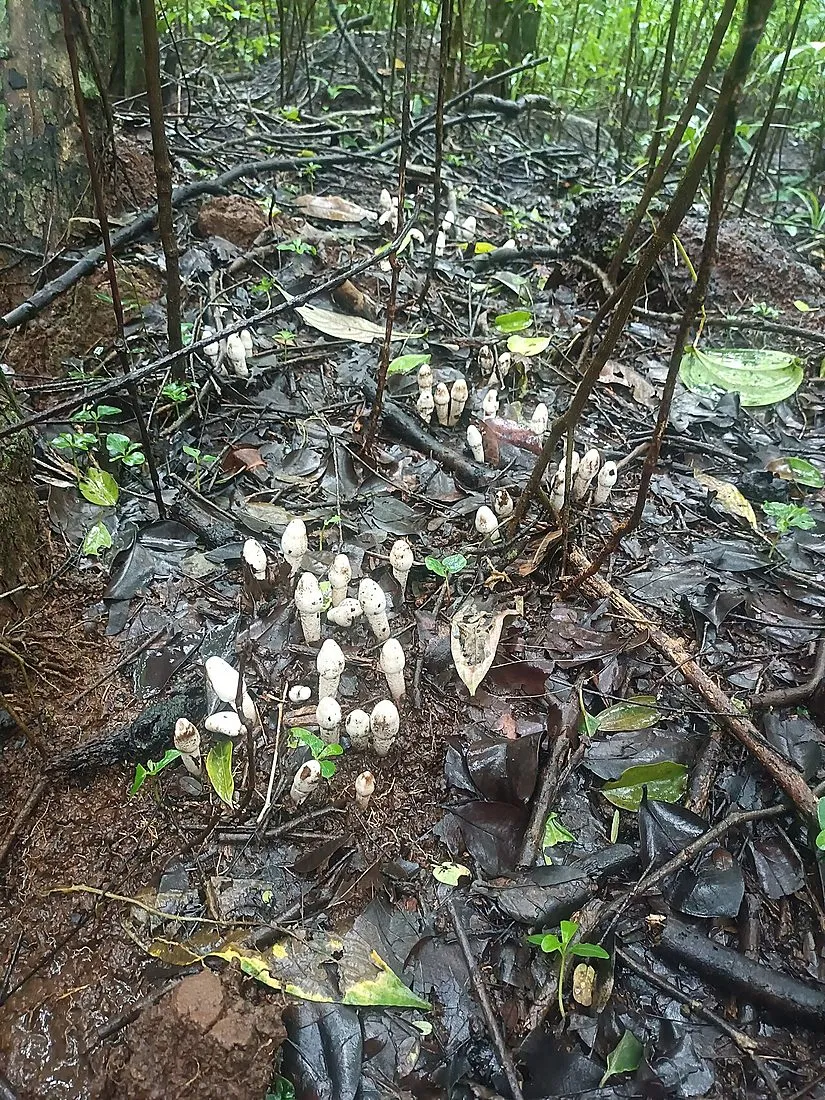
University of Utah researchers sequenced DNA from a mushroom called Lanmaoa asiatica, collected in Yunnan, China and separately in the Philippines under different local names, and confirmed both are the same species 93.

wild mushrooms growing on a forest floor
Pictured wild mushrooms growing on a forest floor · Satarker samiksha (Wikimedia Commons)

They also checked it for the usual suspects, psilocybin, ibotenic acid, and found neither. And yet for hundreds of years, people across southwestern China and the Philippines have reported the same thing after eating it raw or undercooked: tiny people, jumping, climbing, running around them, a condition researchers have nicknamed a Lilliputian hallucination. Neuroscientist Lisa Feldman Barrett's favorite illustration of how perception actually works involves a soldier in a civil war who nearly shoots a ten-year-old herding cows, his brain having built a rifle out of a stick from pure prediction, corrected only at the last second by a comrade's hand on his arm.

08/08 Technology

A phone built to be taken apart, not thrown away

Dutch phone maker Fairphone just entered the US market with the $650 Gen 6+, a 6.31-inch OLED phone designed so an owner, not just a technician, can swap the screen, the battery, or the USB port themselves 132.

Today Got Better

"We're doing something that was long thought to be nearly impossible," CTO Chandler Hatton told Ars Technica, "which is delivering high-performing modular smartphones that can last for a very long time." The company avoids conflict minerals, uses recycled materials, and pays workers a living wage, and it tracks something unusual as a company metric: it wants every buyer to keep using the same phone for at least five years.

Quick notes

Shorter discoveries from this morning, worth knowing but not a full story.

From 6 to 194: How Assam Is Bringing the World's Smallest Pig Back to the Wild Fifteen more captive-bred pygmy hogs, the world's smallest wild pig, were released this June into the same Assam grasslands their ancestors were pulled from in 1996 to save the species, and wild-born hogs may now outnumber captive ones for the first time since the program began 191. The Better India
Karnataka Vet Spends Life Savings to Build a 600-Tree Gene Bank for Rare Mangoes Veterinary surgeon Dr. P Manohara Upadhya spent his savings planting 600 mango trees on 5.4 acres in Karnataka, each one a named local variety on the verge of vanishing along with the family stories attached to it 189. The Better India
Steakholder Foods Rolls Out 3D-Printed Whole-Cut Meat at US Supermarkets Northeastern US grocery shelves now carry 3D-printed plant-based steak, chicken breast, and seafood under the Perfecta label, built fiber by fiber to mimic the marbling and flake of the real thing 165. Green Queen
The Most Underrated Food for Longevity, According to Experts Lentils have fed people since roughly 8,000 BC on the banks of the Euphrates, and a modern study found swapping half your rice or potatoes for cooked lentils meaningfully lowers post-meal blood sugar 175. VegNews
Why Iceland Chose Fish Over European Alliances Iceland voted against reopening EU membership talks this weekend specifically to protect its fish stocks, which are healthier today than their EU-managed neighbors precisely because Iceland doesn't set quotas above what its scientists recommend 171. Sentient
After 30 Years of Estranged Trains, Sweden and Finland Re-Connect Their Railway Lines A twice-daily train now runs between the Finnish town of Oulu and the Swedish town of Haparanda, the first time in 30 years these Arctic neighbors have been able to cross the border by rail 185. Good News Network
Neighbors Get Swept Up in Man's Viral Journey to Clean a NYC Street Block Every Day for 100 Days A Washington Heights resident named David filmed himself picking up litter on one city block for 100 straight days, and the block now has volunteer-planted flower beds where local businesses donate the soil and lumber 183. Good News Network
A Terrier Rescued After Spending 2 Days Underground Lost in a Badger Warren A parson Russell terrier named Cello got lost chasing curiosity into a badger tunnel in Nottinghamshire, and rescuers waited for a legal permit to protect the badgers before digging him out two days later, dirty-eyed but fine 184. Good News Network
He Quit CA Prep to Take His Mother's Dosa Recipe to Thane's Streets Ganesh Sathe walked away from accountant exams to sell his mother's benne dosa from a cart that once made just Rs 200 a day, and now feeds 400 customers daily on a recipe that started in his own kitchen 196. The Better India
A Wrong Injection Paralysed Him, He Became a Headmaster Narayan Jena lost the use of his legs to a bad reaction to an injection in third grade and crawled to school rather than stop attending, and he now runs the primary school in his rural Odisha village 194. The Better India
A Boat Ride Through a Forest? The New Ways Locals Are Earning While Protecting India's Mangroves Kayak tours through India's mangrove creeks, from Pichavaram to coastal Karnataka, are turning healthy forest into income for local boat operators and guides, giving communities a reason to keep the mangroves alive rather than clear them 198. The Better India
After Losing 2 Acres to Debt, Retired Teacher Rebuilt His Farm to Make Rs 35 Lakh/Year K T Francis sold two acres to cover farming debts, then retired from teaching, tore out his money-losing rubber trees, and replanted with coconut, pepper, and turmeric that now earn him more than Rs 35 lakh a year 199. The Better India

Our process. Your trust.

Every discovery above traces back to an article we read in full. This is the whole corpus behind this morning, and what it was made of.

  • 42 Sources scanned
  • 210 Articles read
  • 8 Fields covered
  • 8 Discoveries

The sources that carried this morning

  1. 1 Psychology Today: The Latest 20 articles
  2. 2 Ars Technica - All content 15 articles
  3. 3 Phys.org 14 articles
  4. 4 Latest Science News -- ScienceDaily 13 articles
  5. 5 The Better India : Latest Posts 11 articles
  6. 6 PsyPost Psychology News 10 articles
  7. 7 Interesting Engineering 10 articles
  8. 8 New Atlas 10 articles
How an edition is made

Everything we read today

Natural Sciences 55 articles
Life Sciences & Medicine 15 articles
Psychology & Behavioral Science 32 articles
Social Sciences 15 articles
Technology & Innovation 46 articles
Plant-Based & Vegan 18 articles
Solutions & Good News 19 articles
Human Stories & Ideas 10 articles
The long view · not today’s news, the story behind it

Today’s discoveries didn’t come from nowhere. Here’s the older, ongoing story they belong to, a moment from this day in history, and a question to test what stuck.

Where the story stands

On this day in science

1977 Voyager 1 begins its journey NASA launched Voyager 1 from Cape Canaveral on a tour of Jupiter and Saturn. It sent home close-up views of both giant planets and their moons, then kept going. Today it is the most distant human-made object, still sending faint signals from interstellar space. More from the Almanac →

Before you go: today’s quiz

The daily quiz

Long dismissed as passive support cells, which star-shaped brain cells are now shown to help store and recall memories?

Reveal the answer

Astrocytes

Astrocytes, star-shaped cells that make up roughly half the brain's cells, were long thought to be mere support. New work shows activating them can strengthen connections and is needed to retrieve memories.

Follow the tracker →

Previous editions

Every morning we have published, newest first. Nothing expires.

View the full archive

Get this every morning.

Liked today’s? Wake up to tomorrow’s, in one short letter.

  • One email each morning, never more
  • The day’s real discoveries across 8 fields
  • One calm read with your coffee

The full letter, every morning, free for good.

Same free letter, plus the reason it stays that way: no ads, no investors, no agenda but the good news itself.

A single gift of any amount. No account, never a recurring charge.