





The daily brief · September 8, 2026

Pikas help yaks thrive, and older brains keep their balance

So much of today's science is about things we had quietly written off, a burrowing "pest," an aging brain, a decades-old math puzzle, turning out to have more give in them than anyone expected.

  • 7 Discoveries
  • 155 Articles read
  • 34 Sources
  • 10 Min read

Today’s discoveries

Everything this morning found, in the order we would read it.

7 stories
  1. 01 Life Sciences The rabbit relative that turns out to help, not hurt, the herd On the Qinghai-Tibetan Plateau, ranchers have spent years treating the plateau pika, a small burrowing relative of rabbits, as a pest that steals grass from their yaks. Source: eLife 1 min read
  2. 02 Life Sciences The aging brain that still remembers how to balance Researchers put 50 young adults, 80 older adults in their late fifties and sixties, and 30 people over 80 through seven motor tasks and one cognitive task, all tied to the cerebellum,… Source: eLife 1 min read
  3. 03 Natural Sci. Laughing your way to easier breathing Chronic obstructive pulmonary disease traps stale air in the lungs and leaves millions of people breathless doing ordinary things. Source: New Scientist 1 min read
  4. 04 Natural Sci. Five illnesses that feel the same because, deep down, they might be Chronic fatigue syndrome, long COVID, PTSD, rheumatoid arthritis, and multiple sclerosis have almost nothing in common on paper: one follows a virus, one follows trauma, two are autoimmune. Source: ScienceAlert 1 min read
  5. 05 Natural Sci. Proving a quantum computer did something impossible, on purpose Quantum computers are supposed to outperform ordinary ones, but proving it has been oddly hard, because checking a quantum answer can itself require quantum-scale computation. Source: ScienceAlert 1 min read
  6. 06 Plant-Based Going plant-based just got cheaper, not just kinder ProVeg Netherlands priced a full plant-based grocery basket, mince, burgers, butter, milk, yogurt, cheese, against animal versions at nine major Dutch supermarkets, and found the… Source: Plant Based News 1 min read
  7. 07 Good News Digging for heat under the roof of the world At more than 14,000 feet in Ladakh's Puga Valley, India commissioned two 1,000-meter geothermal wells this past July, part of what's set to become the country's first demonstration-scale… Source: The Better India 1 min read

The feel-good story of the day

two young men shaking hands in a park Unknown (via rawpixel)
Pictured two young men shaking hands in a park

A backpack, a stranger, and a running back's second chance

Jasper Steinmetz was walking through a park in Austin when he noticed a stranger's backpack: Indiana University athletics, his own alma mater. He struck up a conversation on nothing more than that shared logo, and learned the man's name was Sampson James, that he'd been homeless for eight months, and that he was from Indiana too.

Curious, Steinmetz looked him up that night and found out James had once been a star running back for the Hoosiers, before a knee injury ended his NFL hopes and a bipolar disorder diagnosis unraveled the rest. Steinmetz set up a GoFundMe on nothing more than school pride and a chance encounter, and former IU teammates and strangers alike raised $20,000.

That money got James a rental apartment, clothes, food, and furniture, the foundation, as Steinmetz put it, to rebuild a life. "He told me he went to IU as well," James later recalled of that first conversation in the park. "So I was like, wow, that's amazing, go Hoosiers." Sometimes the whole difference is just someone deciding to say hello.

Today’s complete edition

The discoveries, in full

Read the evidence, what it changes, and the reporting behind each of today’s 7 discoveries.

01/07 Life Sciences

The rabbit relative that turns out to help, not hurt, the herd

On the Qinghai-Tibetan Plateau, ranchers have spent years treating the plateau pika, a small burrowing relative of rabbits, as a pest that steals grass from their yaks.
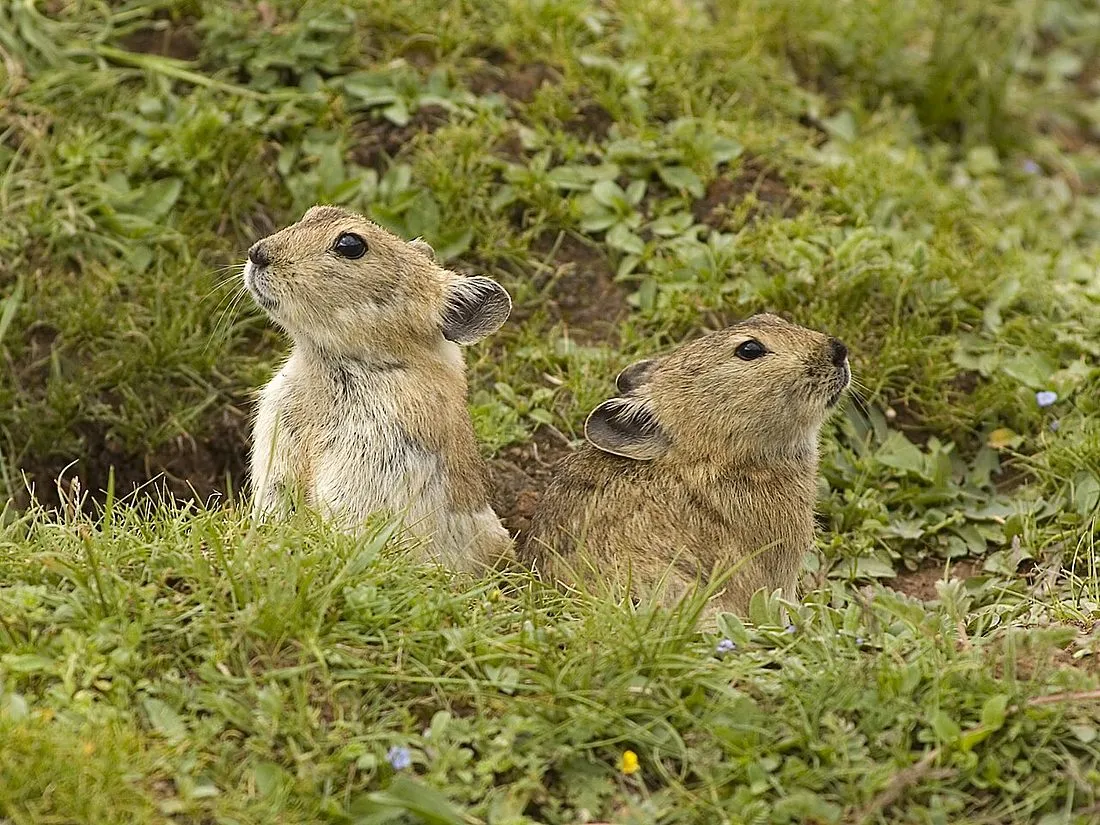
a plateau pika
Pictured a plateau pika · Kunsang (Wikimedia Commons)

A field experiment 40 just found the opposite. When researchers removed pikas from test plots, cover of a poisonous plant called Stellera doubled, crowding out the grasses and sedges yaks actually eat; yak foraging efficiency dropped, and their weight gain fell by as much as 42 percent. The relationship isn't simple generosity: at moderate densities, around 200 burrows per hectare, pikas kept the poisonous weed in check and yaks thrived, but above about 400 burrows per hectare the balance flipped and pikas became competitors again.

02/07 Life Sciences

The aging brain that still remembers how to balance

Researchers put 50 young adults, 80 older adults in their late fifties and sixties, and 30 people over 80 through seven motor tasks and one cognitive task, all tied to the cerebellum, the part of the brain that governs balance and coordination 43.

an older adult doing a balance exercise
Pictured an older adult doing a balance exercise · 4TO SPAIN (Wikimedia Commons)

Brain scans confirmed what's long been known: the cerebellum visibly shrinks with age, even in the healthiest agers. But the function it's supposed to lose right along with that structure barely budged. Cerebellar-specific motor skills held up in the over-80 group nearly as well as in the 20-somethings, while general sensorimotor measures, the ones not tied to this one brain region, declined exactly as expected.

03/07 Natural Sci.

Laughing your way to easier breathing

Chronic obstructive pulmonary disease traps stale air in the lungs and leaves millions of people breathless doing ordinary things. Researchers in Ankara split 63 people already being treated for COPD into three groups of 21: one did pursed-lip breathing exercises, one did structured laughter therapy (motorcycle-engine impressions, lion roars, rhythmic clapping, guided relaxation, 30 minutes three times a week), and one did neither 18.

Laughing your way to easier breathing
Unknown (via rawpixel)

After eight weeks, both the laughter group and the breathing-exercise group reported less difficulty breathing and better overall health than the control group, and the improvement was still holding a month after the program ended.

04/07 Natural Sci.

Five illnesses that feel the same because, deep down, they might be

Chronic fatigue syndrome, long COVID, PTSD, rheumatoid arthritis, and multiple sclerosis have almost nothing in common on paper: one follows a virus, one follows trauma, two are autoimmune.

a scientist analyzing DNA samples in a lab
Pictured a scientist analyzing DNA samples in a lab · Centers for Disease Control and Prevention (via rawpixel)

Yet patients across all five report nearly identical symptoms, crushing fatigue, brain fog, disturbed sleep, a body that just won't cooperate. Researchers from the University of East Anglia and Oxford BioDynamics mapped the genome's 3D architecture across all five conditions using a platform called EpiSwitch 26, and found something unexpected: the genes involved barely overlap directly, but they all funnel into the same small set of biological "hub" networks, like separate streams feeding one river.

05/07 Natural Sci.

Proving a quantum computer did something impossible, on purpose

Quantum computers are supposed to outperform ordinary ones, but proving it has been oddly hard, because checking a quantum answer can itself require quantum-scale computation.

a physics research laboratory with laser equipment
Pictured a physics research laboratory with laser equipment · See File:Front and back sides and write-up for photos of Chi (Wikimedia Commons)

A team led by Marcello Benedetti and Harry Buhrman at Quantinuum designed a game called complement sampling with a mathematically proven ceiling on how well any classical computer could ever play it 23. They ran the game on a trapped-ion quantum computer, and it sailed past that ceiling easily; as the game got harder, the gap between quantum and the best possible classical performance only grew.

06/07 Plant-Based

Going plant-based just got cheaper, not just kinder

ProVeg Netherlands priced a full plant-based grocery basket, mince, burgers, butter, milk, yogurt, cheese, against animal versions at nine major Dutch supermarkets, and found the plant-based basket cheaper at every single one, by an average of 18 percent and up to 30 percent 110.

a woman grocery shopping in a supermarket aisle
Pictured a woman grocery shopping in a supermarket aisle · libraryofcongress (via rawpixel)

Plant-based burgers ran 31 percent cheaper than beef ones, mince 21 percent cheaper. Meanwhile in the UK, Redefine Meat's 3D-printed meat alternatives just landed in nearly 400 Tesco stores less than a year after launching there 105, even as Tesco reports its biggest plant-based growth is coming from whole foods like beans, tofu, and lentils rather than meat lookalikes.

What each field noticed (2)
07/07 Good News

Digging for heat under the roof of the world

At more than 14,000 feet in Ladakh's Puga Valley, India commissioned two 1,000-meter geothermal wells this past July, part of what's set to become the country's first demonstration-scale geothermal power project 137.

Today Got Better

The wells have already measured temperatures of 135 degrees Celsius just 400 meters down, with testing ongoing. India's Ministry of New and Renewable Energy estimates the country holds a theoretical 10 gigawatts of geothermal potential, useful for heating homes, warming greenhouses through brutal winters, and drying crops, not just generating electricity.

Quick notes

Shorter discoveries from this morning, worth knowing but not a full story.

At-home urine test spots bladder cancer in nine of ten cases An NHS trial of nearly 1,000 patients across seven hospitals found a new urine test called Galeas catches 92 percent of bladder cancers, and clears a negative result with better than 99 percent confidence, which could spare tens of thousands of people an uncomfortable cystoscopy every year 140. The Optimist Daily
Fitted with a Berlin Heart, Little Macs Is 'Absolutely Thriving' While He Waits for a Heart Transplant Doctors told a British family to prepare for the worst after their baby's heart began failing; a briefcase-sized device called a Berlin Heart is now pumping his blood for him, and his parents say he's smiling and responding to them for the first time in months while he waits for a transplant 122. Good News Network
22-yo with Down Syndrome Becomes Certified Fitness Instructor, Leads Class of 60 at Local Gym Aubry Alldredge spent years quietly memorizing every routine from the back row of her favorite fitness class before becoming the first certified UpBeat Barre instructor with Down syndrome, and she taught her debut class of 60 people this week 120127. Good News Network
This Bengaluru VC Left Investing To Help 27,000 Farmers Earn From Restoring Their Land Cotton farmers near Nagpur used to burn their crop waste every season, choking the air; a startup called Equilibrium is now helping more than 27,000 farmers turn that same waste into biochar that goes back into their own soil instead 135. The Better India
From Cardboard to Purifier: Bihar PhD Student's Innovation Cuts Indoor Air Pollution by 85% in 20 Mins A PhD student who grew up moving through five Indian states, and noticed the air quality shift every time, built a low-energy purifier that started life as a literal cardboard box and now clears 85 percent of indoor pollution in twenty minutes 132. The Better India
New additive helps lithium-ion batteries retain 95.6% capacity after 1,000 cycles A single electrolyte additive developed in Japan builds a sturdier protective layer inside graphite batteries; treated cells kept 95.6 percent of their capacity after 1,000 charge cycles, compared to 62.7 percent for untreated ones 91. Interesting Engineering
Researchers find AI spontaneously develops a sense of facial beauty without training A neural network with completely random, untrained wiring still developed neurons that responded selectively to facial beauty, hinting that our own sense of what's attractive may be less a matter of culture than of basic visual wiring we're born with 46. PsyPost
Researchers discovered 1 phrase that can stop an argument before it spirals out of control University of Minnesota researchers found that saying "I'd actually like to focus on all the things we agree on" mid-argument reliably calms things down, turning an opponent into a collaborator in a single sentence 144. Upworthy
The neuroscience of motivation: what orexin neurons reveal about staying the course Nagoya University scientists identified brain cells that track effort against expected reward in real time, rising before a payoff arrives and staying elevated when it doesn't show, giving researchers a biological foothold for what breaks down in depression and addiction 139. The Optimist Daily
Workshops Educate African Researchers On How to Publish With IEEE More than 120 researchers and students across Kenya, Rwanda, and Uganda got hands-on training this year in how to write and submit scientific papers, closing a gap that had nothing to do with talent and everything to do with never having been shown the process 86. IEEE Spectrum
Firm Buys Texas Coal Plant to Leverage its Grid Connections for New Massive Solar Project A $1.7 billion solar-storage complex is going up next to an aging Texas coal plant specifically to reuse its existing grid connections, a faster and cheaper route to 1.2 gigawatts of new solar power than building from scratch on untouched land 121. Good News Network
I Long to Read More in the Book of You: Moomins Creator Tove Jansson's Tender and Passionate Letters to the Love of Her Life Newly published letters show Tove Jansson falling for the artist Tuulikki Pietilä after they both reached for the same record at a 1955 Christmas party in Helsinki; fifty years later, by all accounts, the tenderness in her letters hadn't faded an inch. The Marginalian
I made a free AI chatbot solve a decade-long maths problem in 13 minutes A journalist described an obscure, unsolved fair-dice puzzle to ChatGPT in plain English, and after 13 minutes of "thinking" it handed back a mathematically correct answer that had taken human researchers over a decade to work out for a simpler version of the same problem 15. New Scientist

Our process. Your trust.

Every discovery above traces back to an article we read in full. This is the whole corpus behind this morning, and what it was made of.

  • 34 Sources scanned
  • 155 Articles read
  • 8 Fields covered
  • 7 Discoveries

The sources that carried this morning

  1. 1 Psychology Today: The Latest 20 articles
  2. 2 The Better India : Latest Posts 11 articles
  3. 3 Interesting Engineering 10 articles
  4. 4 PsyPost Psychology News 9 articles
  5. 5 Nature 8 articles
  6. 6 ScienceAlert 8 articles
  7. 7 STAT 8 articles
  8. 8 Upworthy 8 articles
How an edition is made

Everything we read today

Natural Sciences 30 articles
Life Sciences & Medicine 14 articles
Psychology & Behavioral Science 30 articles
Social Sciences 6 articles
Technology & Innovation 24 articles
Plant-Based & Vegan 14 articles
Solutions & Good News 30 articles
Human Stories & Ideas 7 articles
The long view · not today’s news, the story behind it

Today’s discoveries didn’t come from nowhere. Here’s the older, ongoing story they belong to, a moment from this day in history, and a question to test what stuck.

Where the story stands

On this day in science

1966 Star Trek beams onto television Star Trek premiered on American television with its hopeful vision of the future: humans and aliens exploring the galaxy together, curiosity over conquest. It was nearly canceled for low ratings, but its fans would not let it die. Generations of scientists, astronauts, and engineers trace their spark to it. More from the Almanac →

Before you go: today’s quiz

The daily quiz

Who is credited with discovering penicillin?

Reveal the answer

Alexander Fleming

Alexander Fleming noticed a mould killing bacteria on a lab plate in 1928. Howard Florey and Ernst Chain later turned it into a usable drug.

See the Lifesaver →

Previous editions

Every morning we have published, newest first. Nothing expires.

View the full archive

Get this every morning.

Liked today’s? Wake up to tomorrow’s, in one short letter.

  • One email each morning, never more
  • The day’s real discoveries across 8 fields
  • One calm read with your coffee

The full letter, every morning, free for good.

Same free letter, plus the reason it stays that way: no ads, no investors, no agenda but the good news itself.

A single gift of any amount. No account, never a recurring charge.