


The daily brief · September 10, 2026

New heart-attack rules finally see women, and sleep science gets its due

A lot of today's best stories are about systems quietly getting rebuilt to fit the people they'd been missing, from hospital diagnostics to a Pennsylvania backyard to a Mumbai street dog's collar.

  • 7 Discoveries
  • 261 Articles read
  • 49 Sources
  • 10 Min read

Today’s discoveries

Everything this morning found, in the order we would read it.

7 stories
  1. 01 Natural Sci. The scientists who found sleep's missing switch, and the actor who fought for a cure The Lasker Foundation, whose awards are sometimes called America's Nobel Prizes, gave its top basic-research honor this week to Dr. Source: Live Science 1 min read
  2. 02 Good News New heart attack rules stop missing the ones that mostly happen to women For the first time, the world's four leading cardiovascular organizations, the European Society of Cardiology, the American College of Cardiology, the American Heart Association, and the… Source: The Optimist Daily 1 min read
  3. 03 Psychology Your grandmother's humming was doing something real to her nervous system The writer's grandmother, a domestic worker who spent decades cleaning and cooking in other people's homes, hummed spirituals through every long, exhausting day and hummed herself to… Source: Psychology Today 1 min read
  4. 04 Natural Sci. Marathon runners make their own cannabis-like chemicals, and the dose changes with the mile marker Psychiatrist Michael Siebers of the University of Duisburg-Essen and colleagues tracked 19 experienced runners through a full marathon around Lake Baldeney in Essen, Germany, then had… Source: ScienceAlert 1 min read
  5. 05 Good News One Pennsylvania farm, $100 in seeds, and 1,380 species of moths When entomologist Doug Tallamy and his wife bought a 300-year-old, 10-acre farm in rural Pennsylvania in 2000, it looked green but was actually smothered in invasive Japanese stiltgrass… Source: Reasons to be Cheerful 1 min read
  6. 06 Good News A viral dog on a desk becomes a citywide plan to track every stray In February 2026, a campus dog nicknamed Dogesh Bhai wandered into an IIT Bombay lecture hall, climbed onto a desk, and sat through class, racking up more than two million views online. Source: The Better India 1 min read
  7. 07 Good News A widely used arthritis drug is regrowing hair in people with severe alopecia A phase 3 trial tested the anti-inflammatory drug upadacitinib against placebo in 1,399 people, including 118 adolescents, all missing at least half their scalp hair to alopecia areata,… Source: Good News Network 1 min read

The feel-good story of the day

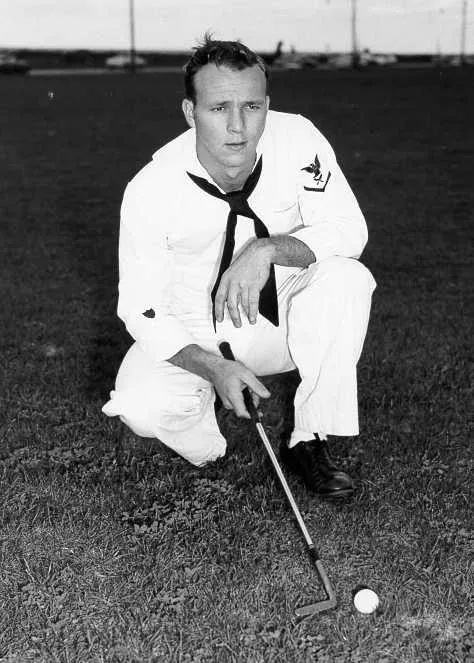
Arnold Palmer Wikimedia Commons / Arnold Palmer
Pictured Arnold Palmer

The King who spent his second act building hospitals

Arnold Palmer was born on September 10, 1929, in Latrobe, Pennsylvania, the son of a golf course groundskeeper and pro. He'd go on to become one of the most beloved athletes of the twentieth century, the golfer whose charisma and everyman swagger built the sport's first modern fanbase, the loyal "Arnie's Army" that followed him from tee to green.

What made Palmer more than a great golfer was what he did once the tournaments mattered less. He lent his name and his fundraising to a children's hospital in Orlando, the Arnold Palmer Hospital for Children, and later to a companion hospital for women and babies, institutions that have cared for hundreds of thousands of families since.

He died in 2016, but the hospitals still carry his name and still do the work. It's a reminder that the second half of a well-lived life can matter as much as the first, sometimes more.

Today’s complete edition

The discoveries, in full

Read the evidence, what it changes, and the reporting behind each of today’s 7 discoveries.

01/07 Natural Sci.

The scientists who found sleep's missing switch, and the actor who fought for a cure

The Lasker Foundation, whose awards are sometimes called America's Nobel Prizes, gave its top basic-research honor this week to Dr. Emmanuel Mignot of Stanford and Masashi Yanagisawa of the University of Tsukuba, who independently tracked down the brain chemical that keeps us awake and is missing in people with narcolepsy 13.
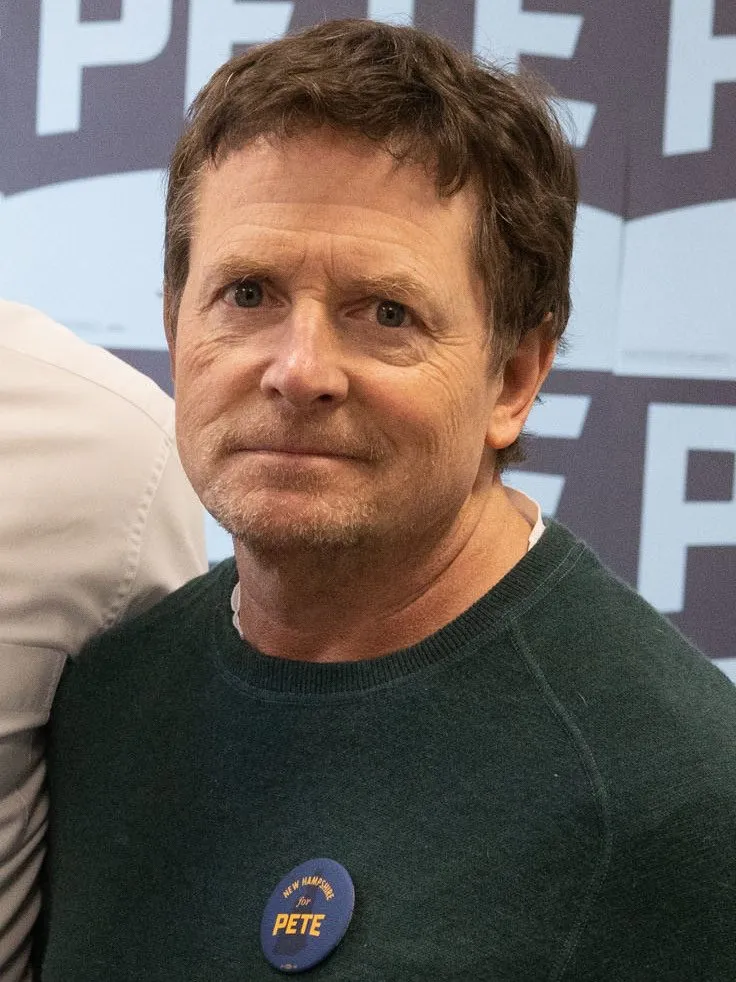
Michael J. Fox
Pictured Michael J. Fox · Wikimedia Commons / Michael J. Fox

Yanagisawa wasn't even looking for it. He was testing "orphan" receptors on brain cells, chemicals no one had matched to a trigger yet, when he and his team went fishing through rat brain tissue for the peptides that would switch them on. "We got very lucky, initially," he said. The fifth or sixth receptor they tried had a hit, and the trail led to two peptides made in the hypothalamus, the same region known for regulating hunger. A separate Lasker award for public service went to Michael J. Fox, honored for two decades of pushing Parkinson's research forward from the other side of the microscope, as a patient rather than a scientist 13. Each award carries a $250,000 honorarium, presented September 17 in New York.

02/07 Good News

New heart attack rules stop missing the ones that mostly happen to women

For the first time, the world's four leading cardiovascular organizations, the European Society of Cardiology, the American College of Cardiology, the American Heart Association, and the World Heart Federation, agreed on one universal definition of a heart attack 234.

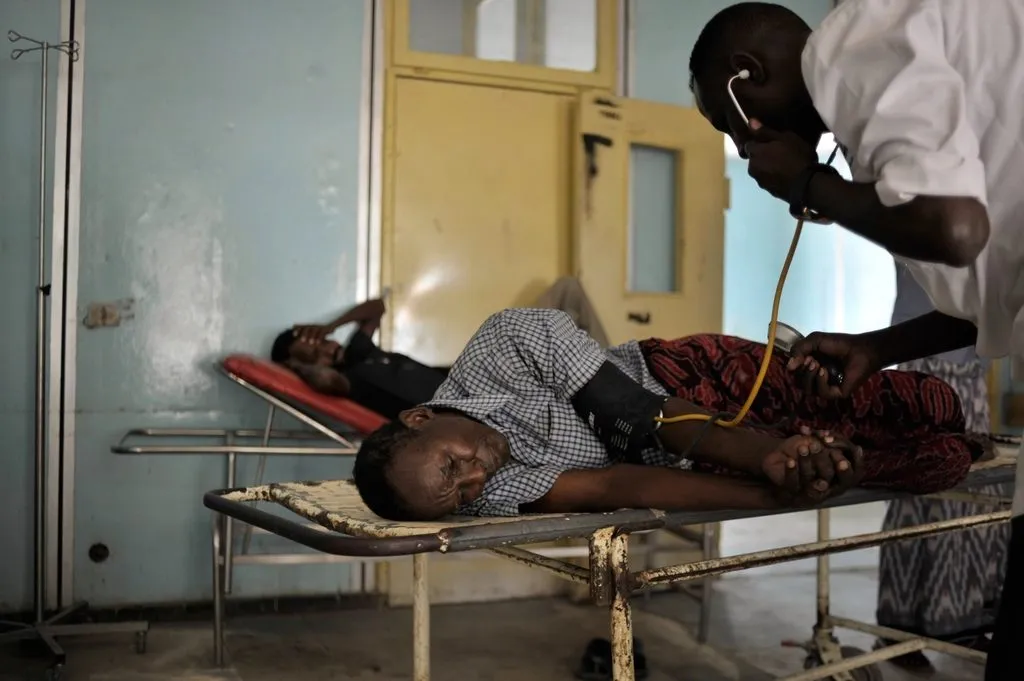
a doctor checking a patient's heart with a stethoscope
Pictured a doctor checking a patient's heart with a stethoscope · The African Union Mission in Somalia (via rawpixel)

The fix targets two blind spots. Three heart attack types that are up to ten times more common in women, coronary artery spasm, coronary embolism, and spontaneous coronary artery dissection (SCAD, a tear in the artery wall that happens mostly during or right after pregnancy), had been ranked below the classic clot-caused kind, so women with them often got care that didn't match what was actually wrong. Those three now sit in the same top tier. And the standard blood test for heart attacks, which measures a protein called troponin, gets sex-specific thresholds, because the old single cutoff was tuned to catch men and quietly missed some women. Prof. Nicholas Mills of the University of Edinburgh, who led the task force, called the old approach "unintended systematic bias against women" 234.

03/07 Psychology

Your grandmother's humming was doing something real to her nervous system

The writer's grandmother, a domestic worker who spent decades cleaning and cooking in other people's homes, hummed spirituals through every long, exhausting day and hummed herself to sleep at night.

Today Got Better

It turns out that habit lines up with real physiology 113. Humming vibrates the vocal cords in a way that stimulates the vagus nerve, the body's longest nerve and the main highway of the "rest and digest" system that counters chronic stress. A study in Applied Psychophysiology and Biofeedback found humming significantly increased heart rate variability, the standard measure of how well that system is working, compared to normal breathing. Within minutes, researchers have measured a drop in heart rate and blood pressure, lower cortisol, and a fifteen-fold spike in nasal nitric oxide 113.

04/07 Natural Sci.

Marathon runners make their own cannabis-like chemicals, and the dose changes with the mile marker

Psychiatrist Michael Siebers of the University of Duisburg-Essen and colleagues tracked 19 experienced runners through a full marathon around Lake Baldeney in Essen, Germany, then had the same people walk for exactly as long on a separate day, drawing blood before, twice mid-race, at the finish, and 45 minutes later 80.

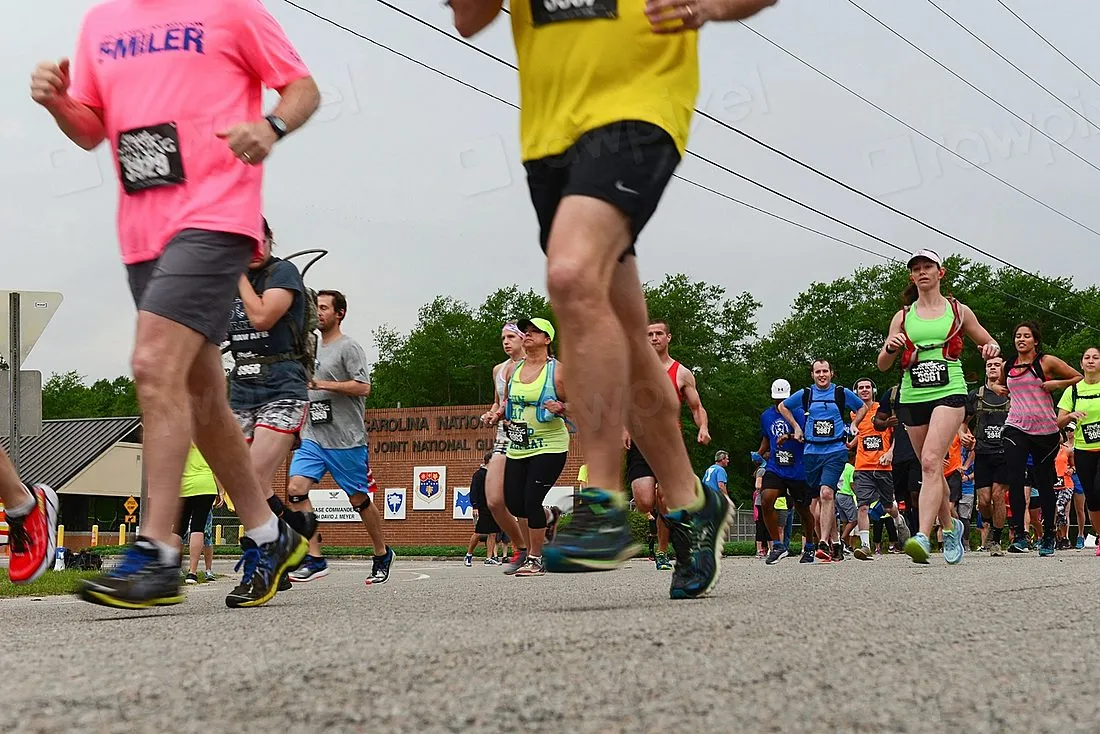
a marathon runner crossing the finish line
Pictured a marathon runner crossing the finish line · National Guard of the United States (via rawpixel)

Two endocannabinoids told different stories. Anandamide, named for the Sanskrit word for bliss, climbed steadily from the 14-kilometer mark onward and stayed elevated even after 45 minutes of rest, tracking closely with the mood boost researchers call the runner's high. 2-AG behaved differently, rising later, near the finish, and staying high through recovery, suggesting it's more about managing inflammation and repair than mood.

05/07 Good News

One Pennsylvania farm, $100 in seeds, and 1,380 species of moths

When entomologist Doug Tallamy and his wife bought a 300-year-old, 10-acre farm in rural Pennsylvania in 2000, it looked green but was actually smothered in invasive Japanese stiltgrass and mile-a-minute weed, plants that feed almost nothing 221.

Today Got Better

He weeded them out and let natives back in. Over 26 years, he says the whole project cost about $100, just seeds put in the ground. The payoff: more than 1,380 moth species documented on the property, 62 breeding bird species, luna moths at record numbers, wood thrushes nesting in what used to be hayfields. Tallamy's nonprofit, Homegrown National Park, now has over 52,000 people registered on a nationwide map, tending more than 187,000 acres of native habitat in their own yards 221. His math: 80% of land east of the Mississippi is privately owned, 135 million of those acres are residential, and if just 10 to 20% of landowners planted natives, that alone would add up to habitat larger than ten Yellowstones.

06/07 Good News

A viral dog on a desk becomes a citywide plan to track every stray

In February 2026, a campus dog nicknamed Dogesh Bhai wandered into an IIT Bombay lecture hall, climbed onto a desk, and sat through class, racking up more than two million views online 232.

a street dog wearing a reflective collar
Pictured a street dog wearing a reflective collar · PattayaPatrol (Wikimedia Commons)

The university's actual response was to fit its strays with reflective collars carrying a QR code linked to each dog's location history, vaccination record, and identity, essentially a digital ID a student or caretaker can scan before deciding how to treat the dog they've just met. On August 20, Mumbai's municipal corporation signed on with the Ridlan AI Foundation to roll the same system out across the entire city, building on a Supreme Court order from May 2026 that told municipalities every stray dog now needs to be sterilized, vaccinated, and recorded rather than managed ad hoc 232. The foundation's founder built the original version in 2020 after his own street dog went missing with no way for anyone to identify him.

07/07 Good News

A widely used arthritis drug is regrowing hair in people with severe alopecia

A phase 3 trial tested the anti-inflammatory drug upadacitinib against placebo in 1,399 people, including 118 adolescents, all missing at least half their scalp hair to alopecia areata, an autoimmune condition where the immune system attacks hair follicles 215.

a woman looking at her reflection and touching her hair
Pictured a woman looking at her reflection and touching her hair · Burst (via stocksnap)

Over 24 weeks, results showed up by week 8. By the trial's end, 44% of people on the lower dose and 55% on the higher dose had regrown enough hair to cover 80% of their scalp and eyebrows, and between 13% and 22.5% got their full head of hair back. Participants also scored better on quality of life measures, including depression, by the study's end.

Quick notes

Shorter discoveries from this morning, worth knowing but not a full story.

Yard Work Reveals Largest Trove of Viking Silver Ever Discovered in Denmark A Danish homeowner digging a new terrace hit metal after half an hour and pulled 700 objects, bracelets, 47 coins, a Thor's hammer amulet, out of his own backyard: the largest Viking-age silver hoard ever found in Denmark, nearly three times the size of the previous record 217. Good News Network
Scientists Recreated Chirps of Jurassic Insects, Simulating a 165 Million-yo Soundscape Researchers used fossilized grasshopper wings from Inner Mongolia, so precisely preserved the tooth spacing survived, to reconstruct what nine species sounded like 165 million years ago, the oldest sound ever recreated from the fossil record 216. Good News Network
Blackbirds Have the Prettiest Birdsong, New Study Finds Germans rated 123 bird calls on a five-point scale, and the common blackbird won with a 4.52 for being complex, higher-pitched, and not too loud; researchers think we may just be wired to relax around sounds like that 218. Nice News
The Women's Professional Baseball League is betting that women's baseball has a future in the US Over 70 years after the last women's pro baseball league folded, the WPBL just wrapped its inaugural season with a sellout crowd, a three-homer game, and a walk-off grand slam, and its playoffs start this week 148. The Conversation
Off-Duty NYPD Officer Saves Unconscious Driver and Prevents Potential Tragedy An off-duty officer in Brooklyn spotted a car run a red light with its driver slumped unconscious, pulled him out, and started CPR before anyone else even reacted, on his own time, on his day off 222. Sunny Skyz
This major American company started in 1925. It hasn't laid off a single employee since. Torani, the San Francisco syrup company behind your vanilla latte, has never laid off a worker through the Great Depression, World War II, or Covid, partly because its founder's widow kept the business alive as a single mother after her husband died in 1938 237. Upworthy
5 Baby Orangutans Found In Odisha Forest Villagers in coastal India spotted five young orangutans, a species that doesn't naturally exist anywhere near India, wandering a forest; forest officials moved fast to get them safely into veterinary care at a zoo while they investigate how they got there 233. The Better India
A woman found a mysterious typewriter in her dad's belongings. It turned out to be priceless. A machine pulled from an Arizona storage unit turned out to be the MingKwai, the only surviving prototype of a 1940s Chinese typewriter that used 72 keys and a "Magic Eye" viewfinder to type thousands of characters, long thought lost 242. Upworthy
Celebrating 10 years of the Nikon Comedy Wildlife Photography Awards A decade of the world's funniest wildlife photos, laughing dormice, a turtle mid-grin, is getting a full-scale immersive exhibit in London this fall, built around the idea that humor gets people to care about biodiversity too 219. Positive News
She Taught Seniors WhatsApp. Six Years Later, 10,000 of Them Are Learning AI, DigiYatra & More An 80-year-old who once only knew how to use an ATM card now plans multi-day trip itineraries with AI chatbots, one of 10,000 seniors who've been through Mahima Bhalotia's tech classes for older adults 227. The Better India
Her Mother Said, 'My Daughter Will Become an Officer.' After Years of Setbacks, Shivani Did Raised with the same expectations as her brother in a small Madhya Pradesh town, Shivani cleared India's grueling five-day officer selection process after multiple failed attempts and an eye surgery, becoming the officer her mother had predicted since childhood 229. The Better India
American women in communities with ample broadband access lose less time waiting for services A 10% jump in a community's broadband adoption saves the average woman there 1.5 hours a year in waiting time, and researchers estimate wider access could reclaim 36.5 million hours nationally, worth about $1.2 billion at average wages 150. The Conversation
When it comes to Beatles references, scientists can't let it be Researchers counted more than 3,000 scientific papers referencing Beatles lyrics, including a Long COVID paper called "The Lung and Winding Road" and a quantum computing paper titled "Here Comes the SU(N)" 157. Ars Technica
The right to play: displaced by conflict A Palestinian boy in a Lebanese refugee camp who'd never held a pencil at age six is now a confident student who dreams of becoming a dentist, after years in a Right To Play program that used storytelling and roleplay to help him process what he'd been through 220. Positive News

Our process. Your trust.

Every discovery above traces back to an article we read in full. This is the whole corpus behind this morning, and what it was made of.

  • 49 Sources scanned
  • 261 Articles read
  • 8 Fields covered
  • 7 Discoveries

The sources that carried this morning

  1. 1 Nature 20 articles
  2. 2 PLOS One 20 articles
  3. 3 Psychology Today: The Latest 20 articles
  4. 4 Ars Technica - All content 16 articles
  5. 5 Latest from Live Science 11 articles
  6. 6 Latest Science News -- ScienceDaily 11 articles
  7. 7 STAT 11 articles
  8. 8 The Better India : Latest Posts 11 articles
How an edition is made

Everything we read today

Natural Sciences 89 articles
PLOS One
Life Sciences & Medicine 13 articles
Psychology & Behavioral Science 30 articles
Psyche | Know Your Self
Social Sciences 20 articles
Technology & Innovation 45 articles
Plant-Based & Vegan 15 articles
Solutions & Good News 34 articles
Human Stories & Ideas 15 articles
The long view · not today’s news, the story behind it

Today’s discoveries didn’t come from nowhere. Here’s the older, ongoing story they belong to, a moment from this day in history, and a question to test what stuck.

Where the story stands

On this day in science

2008 The Large Hadron Collider switches on The first beam of protons circled the 17-mile ring of the Large Hadron Collider beneath the French and Swiss border. The largest machine ever built, it was designed to recreate conditions just after the Big Bang. Four years later it would help confirm the Higgs boson. More from the Almanac →

Before you go: today’s quiz

The daily quiz

A treatment made of just water, salt and sugar has saved tens of millions of children. What is it?

Reveal the answer

Oral rehydration therapy

Oral rehydration therapy treats the dehydration caused by diarrhoea. The glucose lets the gut absorb water and salt even during severe illness. It may have saved more than 70 million children.

See the Lifesaver →

Previous editions

Every morning we have published, newest first. Nothing expires.

View the full archive

Get this every morning.

Liked today’s? Wake up to tomorrow’s, in one short letter.

  • One email each morning, never more
  • The day’s real discoveries across 8 fields
  • One calm read with your coffee

The full letter, every morning, free for good.

Same free letter, plus the reason it stays that way: no ads, no investors, no agenda but the good news itself.

A single gift of any amount. No account, never a recurring charge.