Lifesavers · No. 04
Synthetic fertilizer
Synthetic nitrogen fertilizer, pulled from thin air by the Haber-Bosch process, now feeds roughly half of everyone alive.
Updated
Framed as people fed, not lives saved. Preventing famine at this scale is a lifesaver by another name.
How it saves lives
Plants need nitrogen to grow, but the vast supply in the air is locked in a form they cannot use. The Haber-Bosch process combines nitrogen from the air with hydrogen under heat and pressure to make ammonia, the basis of the fertilizer that lets farmers grow far more food on the same land.
The story
Before the 20th century, the amount of food humanity could grow was capped by how much usable nitrogen nature made available. Two German chemists broke that cap by learning to make fertilizer out of the air itself. It is a complicated legacy, tied up with industry and emissions, but the arithmetic is stark: roughly half the people alive are fed on crops grown with synthetic nitrogen, and without it billions could not eat.
From the record
nitrogen fertilizer now supports approximately half of the global population
From the record
rising to 48 percent in 2008
Asked often
How many people does synthetic fertilizer feed?
Our World in Data estimates that synthetic nitrogen fertilizer supports roughly half of the global population, about 48 percent as of 2008. Without it, food production could not sustain today's population.
Who invented synthetic fertilizer?
Chemists Fritz Haber and Carl Bosch developed the Haber-Bosch process between 1909 and 1913, which converts nitrogen from the air into ammonia for fertilizer.
Further reading
Read the whole story
Paid links. If you buy a book through these links, Bookshop.org pays us a small commission and sends a share of the sale to independent bookstores.
-
Biography
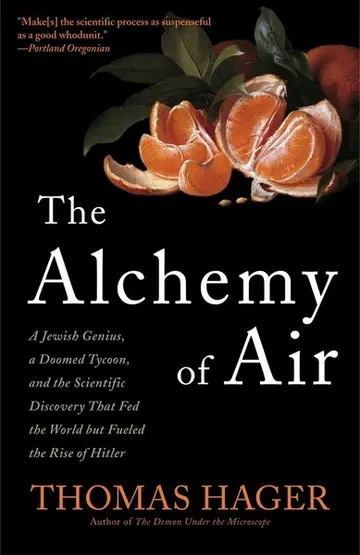
The Alchemy of Air (opens Bookshop.org)
Thomas Hager · 2008
Thomas Hager tells the parallel stories of Fritz Haber, who made ammonia from air in 1909, and Carl Bosch, who scaled it up at BASF, and what it did to the world.
-
The history
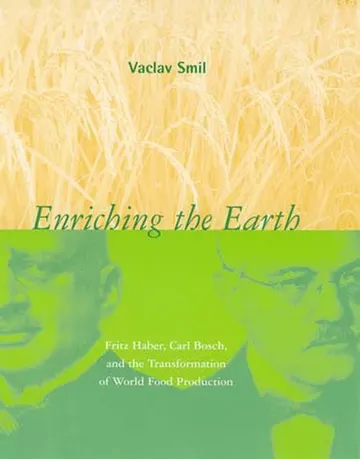
Enriching the Earth (opens Bookshop.org)
Vaclav Smil · 2001
Energy and food scholar Vaclav Smil covers the chemistry and industrial history of ammonia synthesis, and estimates how much of the world's food supply now depends on it.
The next one is being invented now.
We send you the day's real progress every morning: the breakthroughs, the wins nobody headlined, the proof it's still happening. Free, forever.
Free forever, no spam. One click to unsubscribe, and we never sell your email.