

The daily brief · September 23, 2026

A toddler's cancer disappeared, and one bird saved a forest

Everywhere today, something written off as permanent turned out not to be.

  • 8 Discoveries
  • 286 Articles read
  • 45 Sources
  • 11 Min read

Today’s discoveries

Everything this morning found, in the order we would read it.

8 stories
  1. 01 Technology A 3-year-old's liver cancer vanished after two shots of his own reprogrammed cells At three years old, the boy already carried a tumor the size of a large orange in his liver, and it had spread to his lungs. Source: SingularityHub 1 min read
  2. 02 Psychology Scientists found the human brain is really two ancient nervous systems fused into one Neuroscientists have long worked from one assumption: the brain is a single organ, with one progenitor cell line branching smoothly into forebrain, midbrain, and hindbrain as an embryo… Source: Psychology Today 1 min read
  3. 03 Good News One strange bird sparked a conservation network now protecting 300,000 acres of Ecuador In the late 1990s, birdwatchers in a remote Ecuadorian forest heard a call nobody could place, then found a large grey, black, and brown bird standing on stilted legs like nothing in… Source: Good News Network 1 min read
  4. 04 Natural Sci. MIT taught a tiny flying robot to fly like an actual insect MIT's insect-scale flying robots have always moved a little sadly compared to the bugs that inspired them: slow, simple flight paths, easily knocked off course. Source: ScienceDaily 1 min read
  5. 05 Plant-Based Cultivated meat took a step toward growing its own muscle structure, instead of being assembled by hand The hardest part of a convincing cultivated steak was never really the cells, it was the architecture: real muscle weaves together several cell types, and current methods grow each one… Source: Green Queen 1 min read
  6. 06 Good News Students turned oyster shell waste into a coral reef with a 100 percent survival rate Most artificial reefs are poured from concrete, which is smooth, and coral needs a rough surface to grip as it grows. Source: The Optimist Daily 1 min read
  7. 07 Life Sciences Scientists found a direct channel between your brain and your skull, and poor sleep slows it down For decades, biology treated the brain as sealed off from the rest of the body by the blood-brain barrier. Source: PsyPost 1 min read
  8. 08 Natural Sci. A machine-learning model found scent compounds that steer honeybees away from pesticides Honeybees smell the world through more than 170 different receptors, which makes finding a scent that reliably repels them without harming them a needle in a haystack too big for trial… Source: eLife 1 min read

The feel-good story of the day

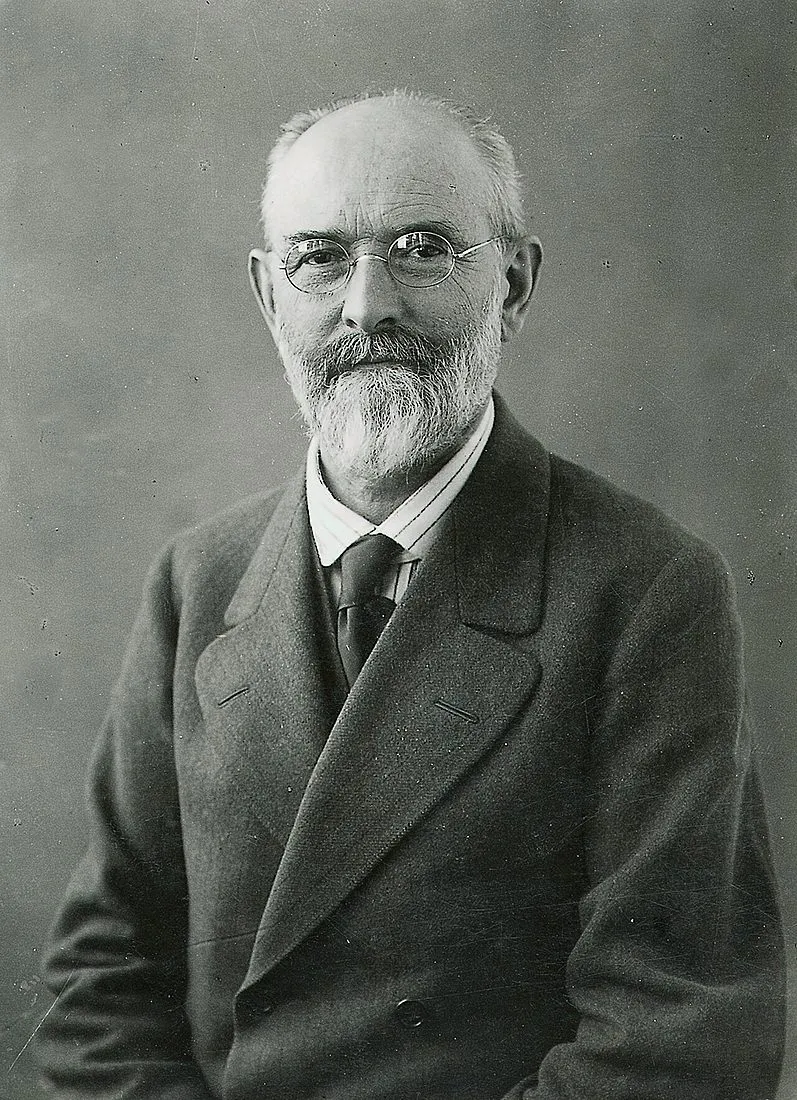
Robert Bosch Wikimedia Commons / Robert Bosch
Pictured Robert Bosch

The spark-plug inventor who gave his fortune away and hid people from the Nazis

Robert Bosch was born 165 years ago today, in 1861, in Ulm, Germany. He trained in precision machinery, worked briefly under Thomas Edison in New York, and came home to found what became one of the most important companies in German industrial history, pioneering the high-voltage ignition system that made the first reliable spark plug possible, and later diesel fuel injection.

What set him apart wasn't the engineering. Decades before it was standard practice, Bosch gave his workers an eight-hour day and other early employee benefits, and he donated the proceeds from his company's wartime weapons contracts to charity. When the Nazis shut down his public peace advocacy and pushed his armaments division deeper into the country, Bosch did the opposite of what they wanted anyway: he and his closest associates worked to save victims of Nazi persecution from deportation.

He structured the company so its earnings would keep funding charitable causes long after he was gone. By 2017, the foundation built on his will had given away 1.6 billion euros to social, cultural, and scientific causes. The company he started in a small Stuttgart workshop is worth $91 billion today, still the world's largest automotive parts maker, still carrying the habits its founder built into it before almost anyone else in his industry thought to try.

Today’s complete edition

The discoveries, in full

Read the evidence, what it changes, and the reporting behind each of today’s 8 discoveries.

01/08 Technology

A 3-year-old's liver cancer vanished after two shots of his own reprogrammed cells

At three years old, the boy already carried a tumor the size of a large orange in his liver, and it had spread to his lungs. Surgery and chemotherapy knocked it back twice, and twice it came back.
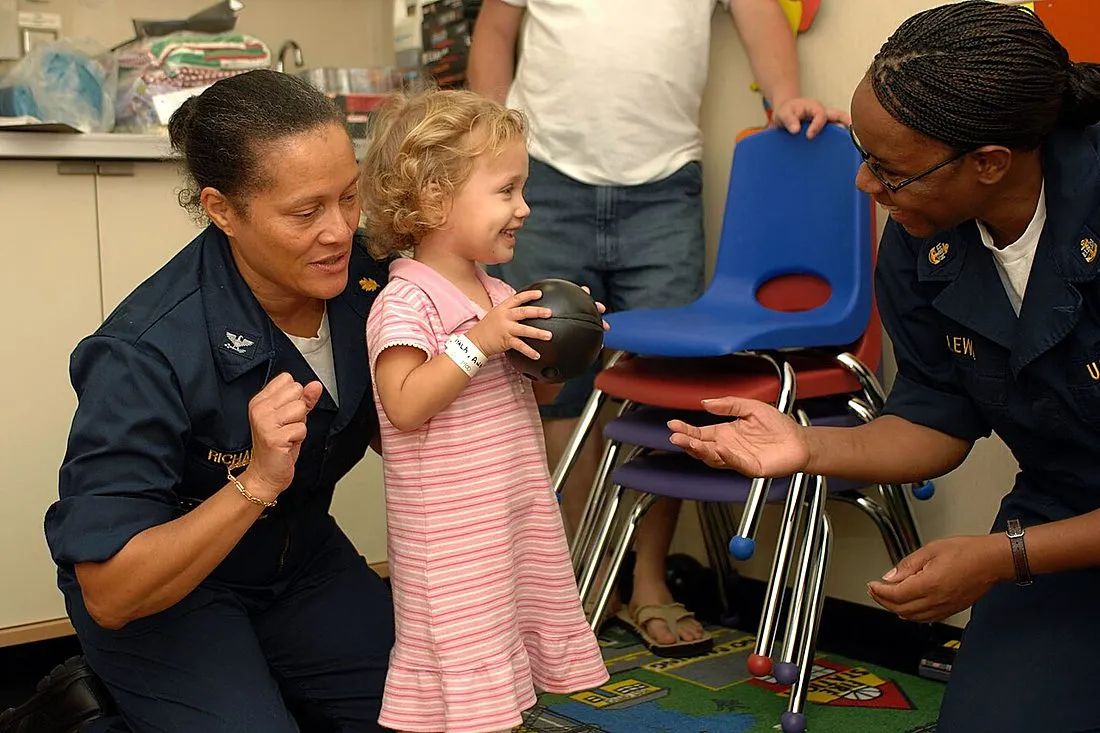
a young child in a hospital playroom
Pictured a young child in a hospital playroom · U.S. Navy photo by Mass Communication Specialist 2nd Class E (Wikimedia Commons)

So doctors at Baylor College of Medicine tried something built for exactly this kind of failure: CAR T cells engineered from the boy's own immune system, with a built-in "kill switch" in case they needed reining in 215. He got two infusions. The cancer-associated biomarker in his blood plummeted, the tumors disappeared, and a year later he remained cancer-free with no dangerous side effects, treated the whole way as an outpatient. It's one case, not a cure, and the same trial is now recruiting patients aged one to twenty-one to see whether two shots can do this again.

02/08 Psychology

Scientists found the human brain is really two ancient nervous systems fused into one

Neuroscientists have long worked from one assumption: the brain is a single organ, with one progenitor cell line branching smoothly into forebrain, midbrain, and hindbrain as an embryo develops.

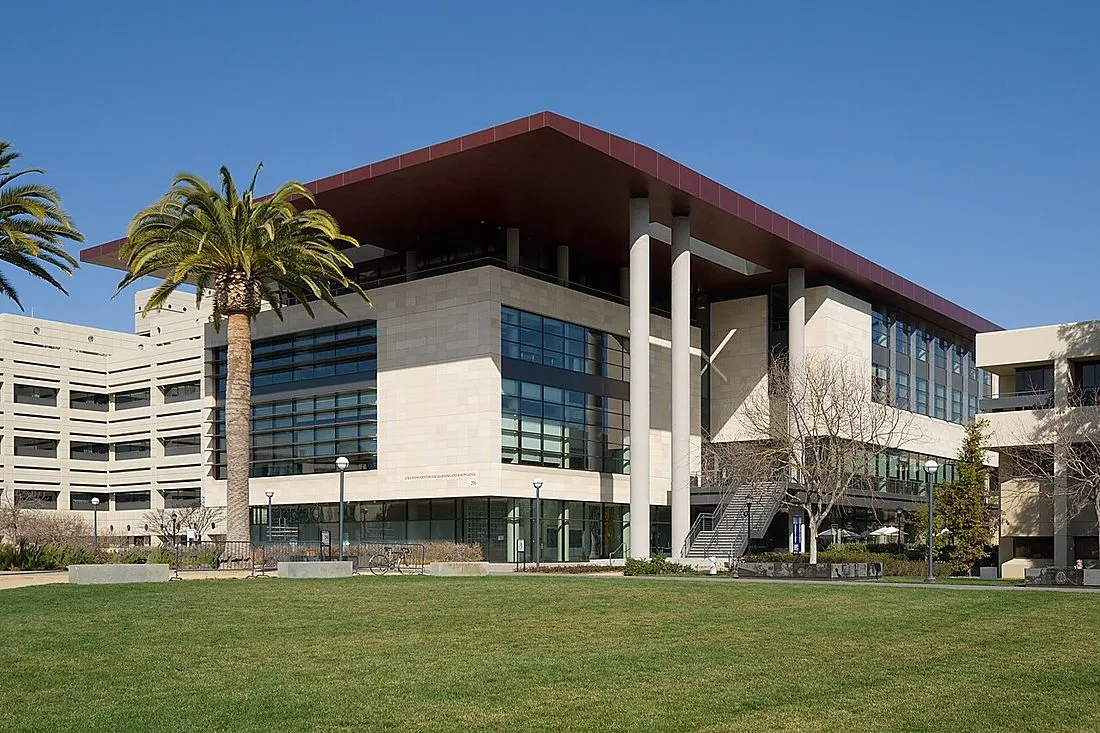
Stanford University School of Medicine
Pictured Stanford University School of Medicine · LPS.1 (Wikimedia Commons)

A Stanford Medicine study published September 18 in Nature Neuroscience found something odder. Using both mouse and human stem cells, the researchers traced two entirely separate populations of neural progenitor cells, one giving rise to the forebrain and midbrain, the other to the hindbrain, each with its own distinct chromatin landscape from remarkably early in development 125. The two lineages hold up as genuinely separate tracks, not one system that diverges late.

03/08 Good News

One strange bird sparked a conservation network now protecting 300,000 acres of Ecuador

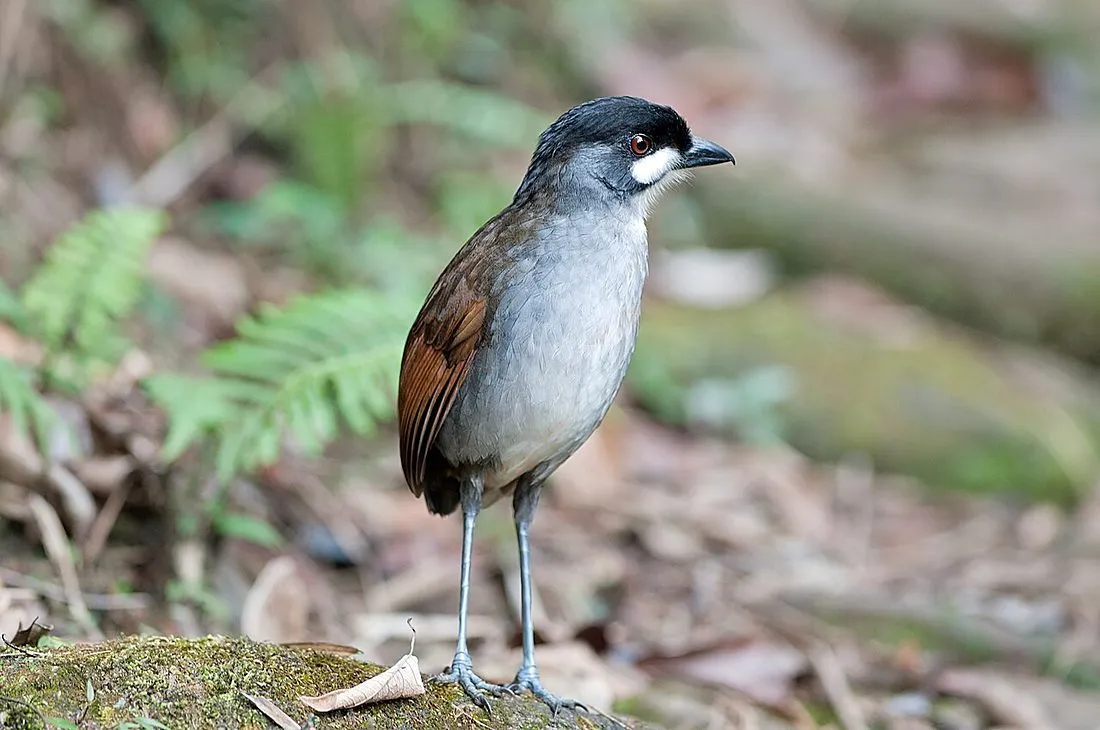
In the late 1990s, birdwatchers in a remote Ecuadorian forest heard a call nobody could place, then found a large grey, black, and brown bird standing on stilted legs like nothing in their field guides.

Jocotoco Antpitta
Pictured Jocotoco Antpitta · Wikimedia Commons / Jocotoco antpitta

Locals called it a jocotoco. Ornithologist Robert Ridgely named it Grallaria ridgelyi, the Jocotoco Antpitta, and immediately went hunting for funding to buy the land it lived on 246. He got it. That single discovery seeded what's now the Jocotoco Foundation, a network of 19 private reserves covering 123,000 acres, run alongside another 200,000 community-owned acres spanning the Andes, the Amazon, the Chocó, and the Galápagos. Across those reserves, researchers have recorded 1,350 bird species, better than one in eight of all bird species alive.

04/08 Natural Sci.

MIT taught a tiny flying robot to fly like an actual insect

MIT's insect-scale flying robots have always moved a little sadly compared to the bugs that inspired them: slow, simple flight paths, easily knocked off course. A new AI controller out of Kevin Chen's Soft and Micro Robotics Laboratory changed that.

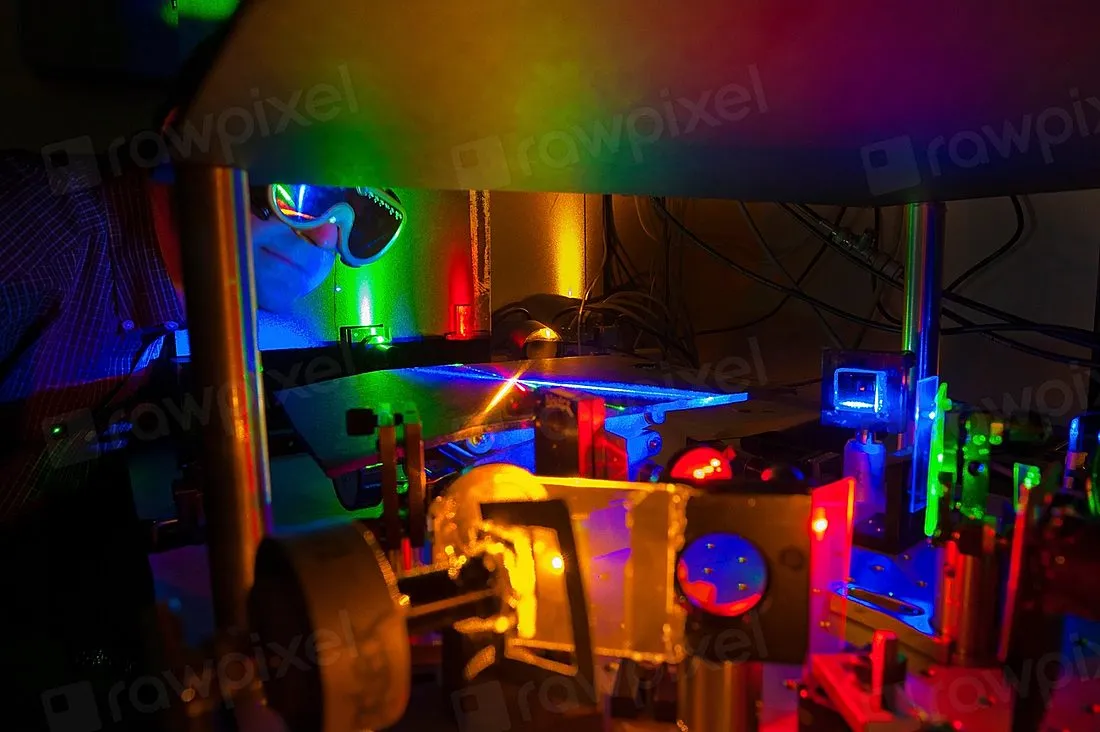
MIT taught a tiny flying robot to fly like an actual insect
Unknown (via rawpixel)

The two-part system boosted the robot's speed by about 450 percent and its acceleration by about 250 percent over the lab's previous best, and it's now agile enough to pull off ten consecutive somersaults in eleven seconds while wind tries to knock it off its path 7. The framework, published in Science Advances, borrows a tradeoff real insects make constantly: how much to compute against how fast to react.

05/08 Plant-Based

Cultivated meat took a step toward growing its own muscle structure, instead of being assembled by hand

The hardest part of a convincing cultivated steak was never really the cells, it was the architecture: real muscle weaves together several cell types, and current methods grow each one separately before bioprinting or stacking them by hand.

a laboratory researcher examining a petri dish
Pictured a laboratory researcher examining a petri dish · U.S. Department of Energy (via rawpixel)

A team at the European Molecular Biology Laboratory in Barcelona tried something closer to how an animal actually builds itself. Starting from bovine embryonic stem cells, which unlike adult stem cells can multiply indefinitely, they let the cells develop together in a serum-free culture and self-organize into tissue containing skeletal muscle, nerve, and blood vessel cells at once, no scaffold or bioprinting required 220. "One of the biggest challenges in cultivated meat is reproducing the complexity of real tissue," said researcher Marina Sanaki-Matsumiya. The work, published in Nature Communications, is an early proof of concept.

06/08 Good News

Students turned oyster shell waste into a coral reef with a 100 percent survival rate

Most artificial reefs are poured from concrete, which is smooth, and coral needs a rough surface to grip as it grows. A team of students at National Taiwan Normal University built theirs instead from ground oyster shells and leftover coral gravel, two waste streams that normally just get thrown away, processed into a paste and 3D printed into a textured base shaped after studying the ridged pattern of real brain coral 266.

a coral reef with fish
Pictured a coral reef with fish · Marco Assmann (via stocksnap)

In open-water trials with National Taiwan Ocean University, they attached 28 coral fragments to the printed structures. All 28 survived, and by the time testing wrapped, fish, hermit crabs, algae, and octopuses had already moved in.

07/08 Life Sciences

Scientists found a direct channel between your brain and your skull, and poor sleep slows it down

For decades, biology treated the brain as sealed off from the rest of the body by the blood-brain barrier. Recent work in mice and human tissue found tiny channels letting cerebrospinal fluid drain straight from the brain's protective layers into the marrow inside the skull, where immune cells live.

Scientists found a direct channel between your brain and your skull, and poor sleep slows it down
Unknown (via rawpixel)

A team at Zhejiang University wanted to watch it happen in living people, so they injected a contrast dye into the spinal fluid of 87 patients already scheduled for a spinal tap, then tracked it on MRI at 4.5, 15, and 39 hours afterward, measuring how much reached the marrow near the skull's major vein, the sides near the lateral fissure, and the base near the cisterna magna 112. The fluid moved slower in older patients, and slower still in those reporting poor sleep or early cognitive decline.

08/08 Natural Sci.

A machine-learning model found scent compounds that steer honeybees away from pesticides

Honeybees smell the world through more than 170 different receptors, which makes finding a scent that reliably repels them without harming them a needle in a haystack too big for trial and error.

a honeybee on a flower
Pictured a honeybee on a flower · National Park Service (via rawpixel)

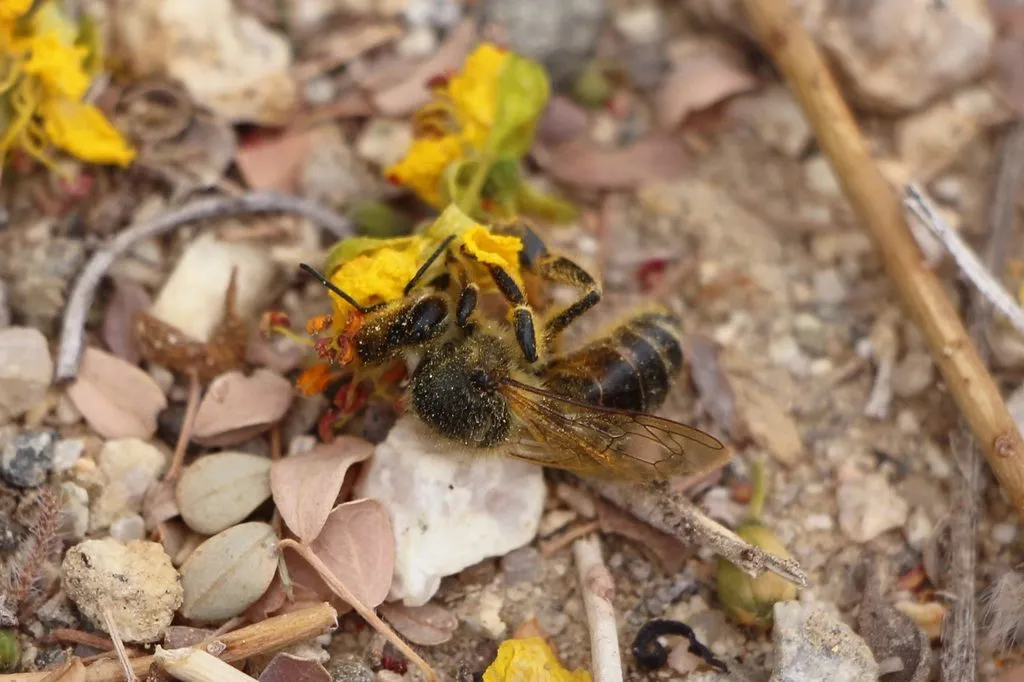
A team built a machine-learning model trained on published honeybee behavior data, used it to screen a chemical space of more than 50 million compounds, and surfaced over 130 repellent candidates 96. They validated those in the lab on honeybees and fruit flies, refined the model, then tested the top seven candidates on freely foraging honeybees out in an actual field. The field trial confirmed strong repellency, holding up well outside lab conditions.

Quick notes

Shorter discoveries from this morning, worth knowing but not a full story.

Exceptional Detection Rates of Bladder Cancer Recorded in Study of Simple, Yet State-of-the-Art Test A UK urine test called GALEAS Bladder correctly caught 71 of 77 confirmed bladder cancers, including every muscle-invasive case, using a sample that's often sitting in a lab fridge already. Lead nurse Andy Goffe says every patient asked so far has agreed to take part, since giving it up asks nothing extra of them 245. Good News Network
135,000 Shelter Pets Found Forever Homes in August Thanks to NBC's Annual Adopt-a-thon NBC's Clear the Shelters campaign moved 135,000 dogs, cats, and other animals out of cages and into homes this summer, and raised $480,000 for the more than 1,000 participating shelters. Over twelve years, the campaign has now found homes for 1.5 million pets 247. Good News Network
Prisoners Prove Unlikely Heroes to Monarch Butterflies Thanks to Wisconsin Correctional Program Twenty inmates at Redgranite Correctional Institute are raising monarch caterpillars in a purpose-built enclosure, tagging them for migration research before releasing them to fly thousands of miles to Mexico. The program started for inmates who couldn't join prison sports, and grew from 60 caterpillars last year to 100 this year 248. Good News Network
No Longer 'Untreatable': Alzheimer's Breakthroughs Are on the Horizon, Report Finds The World Alzheimer Report 2026 describes the disease shifting from something doctors could only watch happen to something they might interrupt, pointing to drugs like donanemab and lecanemab, plus a pipeline where more than a third of candidates were originally developed for other conditions entirely 250. Nice News
What We're Reading: Singapore Is Paying People to Read Singapore's government will pay citizens for time spent reading, and while the actual payout is small, about a dollar for 50 fifteen-minute sessions, behavioral scientists say the incentive structure itself, not the money, is what tends to make habits stick 251. Reasons to be Cheerful
12-year-old Rescues 114 Stuffed Animals, Repairs Them, and Gives Them to Children Affected by Home Fires Sadie Hutson, 12, rescues worn stuffed animals from thrift stores with her mom, washes and restuffs them by hand, then hands them to the American Red Cross for kids who've just lost their homes. "As long as you do it through the kindness of your heart, you can do it," she said 252. Sunny Skyz
This Centuries-Old Andhra Pradesh Stepwell Was Buried In Garbage Until One Man's Video Changed Everything A content creator posted one video of a garbage-choked temple stepwell, and within days more than 300 volunteers arrived with gloves and sacks to dig it out by hand, no government agency involved. The stone steps, buried for years, are visible again 256. The Better India
At 73, She Makes Soft, Washable Breast Prostheses for Mastectomy Survivors — Free of Cost Jayashree Ratan crochets soft cotton breast prostheses for women who can't afford silicone ones, after seeing many make do with handkerchiefs and cotton balls that caused rashes and infections. Her organization has given away 32,468, free every time, since 2018 260. The Better India
Not Shimla, Not Ooty — WHO Data Shows India's Cleanest Air Is in These 5 Towns Skip the famous hill stations: WHO's global air-quality database puts India's lowest particulate readings in Lunglei, Mizoram and Tura, Meghalaya, both at just 6 micrograms per cubic meter, small forested towns nobody mentions when the conversation turns to air pollution 264. The Better India
New nanoscale electrode design could unlock lighter, longer-range EV batteries South Korean researchers etched microscopic, evenly spaced tubes into copper foil using chip-manufacturing techniques, giving lithium a place to settle evenly instead of clumping into battery-killing dendrites, and quadrupled the usable surface area in the process 198. Interesting Engineering
Blind Artist Creates Ganesha & Shiva Idols by Touch Anjali lost her sight at eight years old and kept sculpting anyway, feeling every curve of the clay deities she shapes with her fingers instead of her eyes. "If a normal person can do anything, so can I," she told herself 257. The Better India
Maryland's Natural Beauty Showcased in State Calendar Photo Contest: See the Winning Images Photographer Kyle Smith won Maryland's state contest with a shot of a curious squirrel sniffing its way right up behind a nocturnal whip-poor-will, a species most people never see awake, let alone this close to something furry 249. Nice News
Every Work Trip Added a Plant: This Kerala Engineer Now Grows 500+ Medicinal Plants on 4 Acres Ezekiel Poulose turned a hobby of collecting saplings on work trips into a four-acre farm holding over 500 medicinal plants, some rare enough that he calls himself a collector of herbs, preserving species and their traditional uses one cutting at a time 254. The Better India

Our process. Your trust.

Every discovery above traces back to an article we read in full. This is the whole corpus behind this morning, and what it was made of.

  • 45 Sources scanned
  • 286 Articles read
  • 8 Fields covered
  • 8 Discoveries

The sources that carried this morning

  1. 1 PLOS One 20 articles
  2. 2 Psychology Today: The Latest 20 articles
  3. 3 Nature 17 articles
  4. 4 Ars Technica - All content 15 articles
  5. 5 Latest from Live Science 14 articles
  6. 6 The Better India : Latest Posts 13 articles
  7. 7 Latest Science News -- ScienceDaily 12 articles
  8. 8 STAT 11 articles
How an edition is made

Everything we read today

Natural Sciences 83 articles
PLOS One
Life Sciences & Medicine 19 articles
Psychology & Behavioral Science 33 articles
Social Sciences 29 articles
Technology & Innovation 51 articles
Plant-Based & Vegan 28 articles
Solutions & Good News 24 articles
Human Stories & Ideas 19 articles
The long view · not today’s news, the story behind it

Today’s discoveries didn’t come from nowhere. Here’s the older, ongoing story they belong to, a moment from this day in history, and a question to test what stuck.

Where the story stands

On this day in science

1846 Neptune is found by mathematics Guided by Urbain Le Verrier's calculations, the astronomer Johann Galle in Berlin turned his telescope to a quiet patch of sky and found the planet Neptune within an hour, almost exactly where the math said it would be. It was the first planet discovered by prediction rather than chance. The find showed how well Newton's laws described the heavens. More from the Almanac →

Before you go: today’s quiz

The daily quiz

How many deaths did measles vaccination avert worldwide between 2000 and 2024?

Reveal the answer

Nearly 59 million

The WHO reports that measles vaccination averted nearly 59 million deaths between 2000 and 2024, more than any other vaccine over that span.

See the Lifesaver →

Previous editions

Every morning we have published, newest first. Nothing expires.

View the full archive

Get this every morning.

Liked today’s? Tomorrow’s reaches your inbox before breakfast.

  • One email each morning, never more
  • The day’s real discoveries across 8 fields
  • One calm read with your coffee

The full letter, every morning, free for good.

Same free letter, plus the reason it stays that way: no ads, no investors, no agenda but the good news itself.

A single gift of any amount. No account, never a recurring charge.