The daily brief · August 21, 2026

Loneliness and belonging share one brain circuit, drawn out by drawing together

Today's science keeps landing on the same truth from different directions: connection between people, generations, and even species leaves a physical trace, and researchers are getting better at watching it happen in real time.

  • 6 Discoveries
  • 261 Articles read
  • 46 Sources
  • 9 Min read

Today’s discoveries

Everything this morning found, in the order we would read it.

6 stories
  1. 01 Natural Sci. The brain syncs up between grandparents and grandkids, and it changes as the bond grows Researchers at a six-session creative drawing program wired up 31 older-younger adult pairs and 30 same-age pairs with brain-scanning caps and watched what happened while they drew… Source: PLOS Biology 1 min read
  2. 02 Natural Sci. A vaccine made from your own cancer just cleared its final hurdle Moderna announced on August 19 that in a final-stage trial, people who'd had surgery for severe melanoma stayed cancer-free longer when they got a personalized mRNA vaccine alongside… Source: New Scientist 1 min read
  3. 03 Natural Sci. A 3.5-billion-year-old microbial mat just got a firm birthday, for the first time Geologist Trisrota Chaudhuri and colleagues found a carbon-rich layer sandwiched inside ancient striped chert in India's Singhbhum Craton, one of Earth's oldest surviving pieces of… Source: ScienceAlert 1 min read
  4. 04 Natural Sci. A century-old melting mystery, solved, could triple fusion energy output Twenty years ago, Lawrence Livermore scientists found something strange: diamond gets denser when it melts under extreme pressure, meaning it would sink in liquid carbon rather than… Source: ScienceDaily 1 min read
  5. 05 Natural Sci. The largest psychedelic brain study yet found order inside the chaos Monash University researchers gave psilocybin to 62 healthy adults with no prior psychedelic experience, then scanned their brains with fMRI and EEG before and after, while they rested,… Source: ScienceAlert 1 min read
  6. 06 Good News Sacred forests without fences have protected Indian ecosystems for centuries Across India, thousands of forest patches have survived intact for centuries not because of government protection but because communities treat them as sacred: Devarakadu in Karnataka,… Source: The Better India 1 min read

The feel-good story of the day

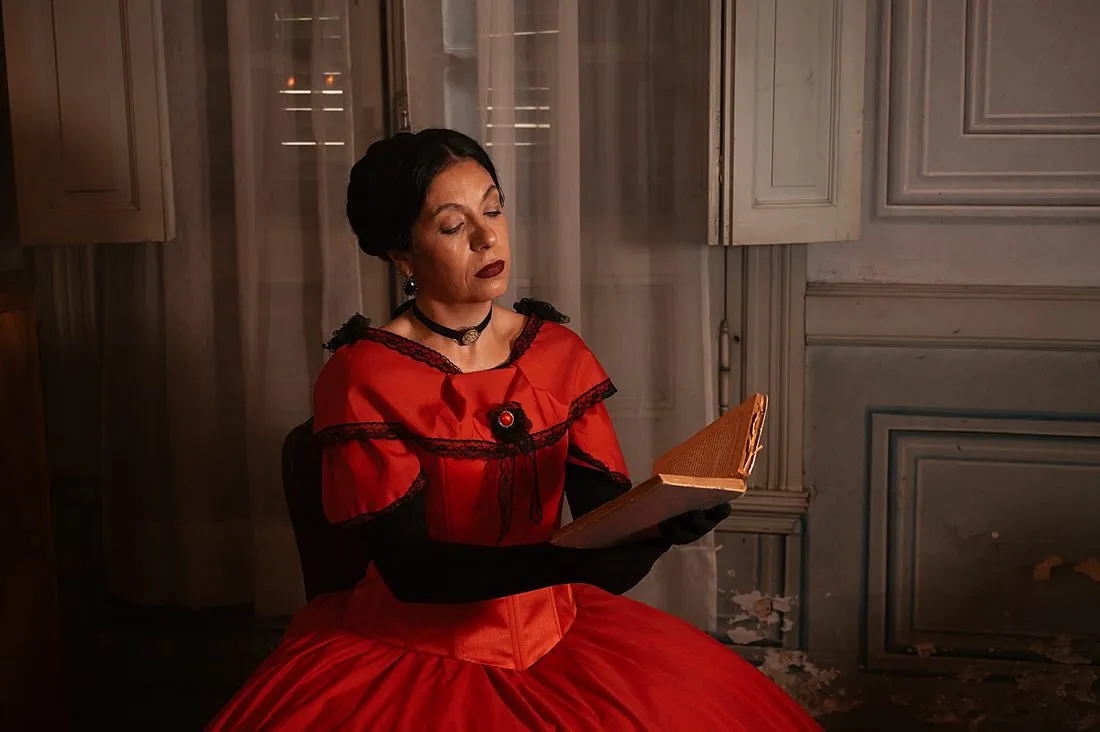
a Victorian-era female detective in period dress Patricia Bozan (via Pexels)
Pictured a Victorian-era female detective in period dress

The widow who talked her way into becoming America's first female detective, then saved a president

In 1856, a 23-year-old widow named Kate Warne walked into Allan Pinkerton's Chicago detective agency and asked for a job the agency had never given a woman before. Her pitch was unusual: being underestimated was an advantage. As a woman, society assumed she was harmless, which meant she could go places male detectives couldn't and win the trust of people who'd never confide in a man. Pinkerton hired her on the spot.

Within two years she proved her case. Posing as a Southern belle to befriend the wife of an embezzlement suspect, she gathered the evidence needed to recover most of a stolen $50,000 fortune. Pinkerton was so impressed he built an entire Female Detective Bureau and put Warne in charge of it.

Her biggest moment came in February 1861. Warne got word of a plot to assassinate president-elect Abraham Lincoln during his stop in Baltimore, and she worked her way into the confidence of the conspirators' wives and sisters under a false name, learning exactly when and where the attack would happen. She then rode with Lincoln's train herself, posing as the devoted caregiver of her "invalid brother," to see him safely through the city that had planned to kill him.

Today’s complete edition

The discoveries, in full

Read the evidence, what it changes, and the reporting behind each of today’s 6 discoveries.

01/06 Natural Sci.

The brain syncs up between grandparents and grandkids, and it changes as the bond grows

Researchers at a six-session creative drawing program wired up 31 older-younger adult pairs and 30 same-age pairs with brain-scanning caps and watched what happened while they drew together, week after week 33.
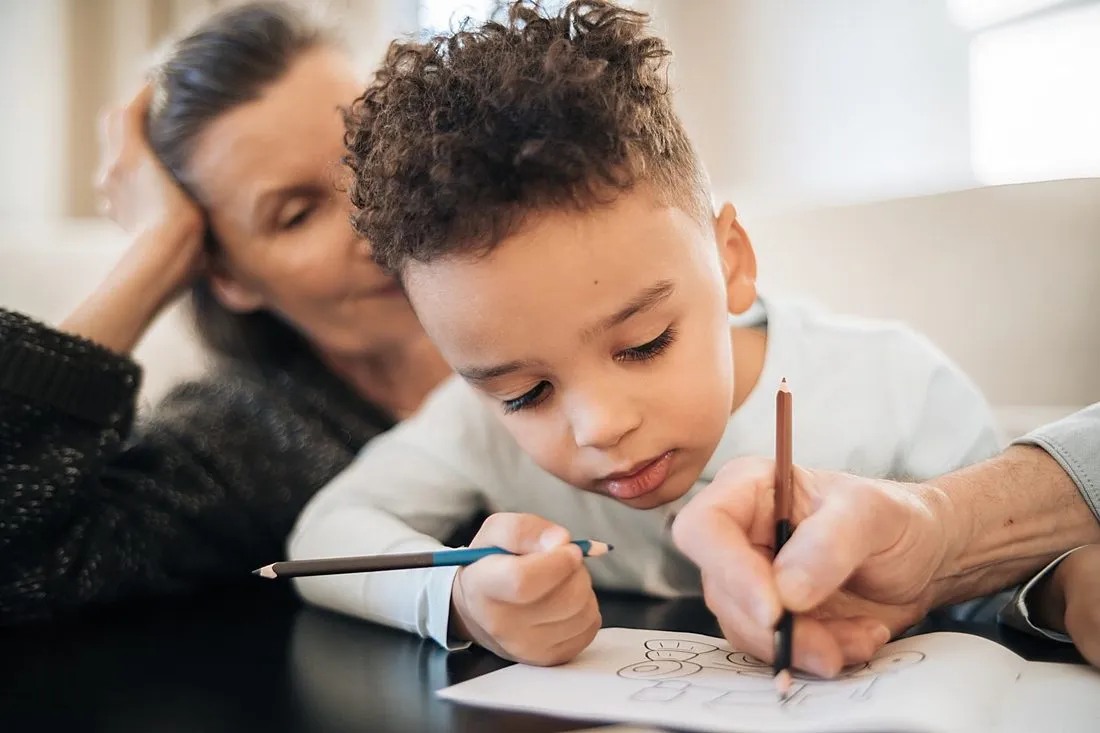
an older adult and a young person drawing together at a table
Pictured an older adult and a young person drawing together at a table · Mikhail Nilov (via Pexels)

In both groups, brain activity between partners synced up more while they drew together than while they drew alone, a phenomenon called interpersonal neural synchrony. But the two groups diverged over time: synchrony between generations actually dropped across sessions, while it climbed between same-age pairs. The regions that lit up together predicted something concrete, too. Synchrony in one area tracked with how lonely people felt; synchrony in another tracked with how close they felt to their partner.

02/06 Natural Sci. Good News

A vaccine made from your own cancer just cleared its final hurdle

Moderna announced on August 19 that in a final-stage trial, people who'd had surgery for severe melanoma stayed cancer-free longer when they got a personalized mRNA vaccine alongside standard immunotherapy, compared to immunotherapy alone 28.

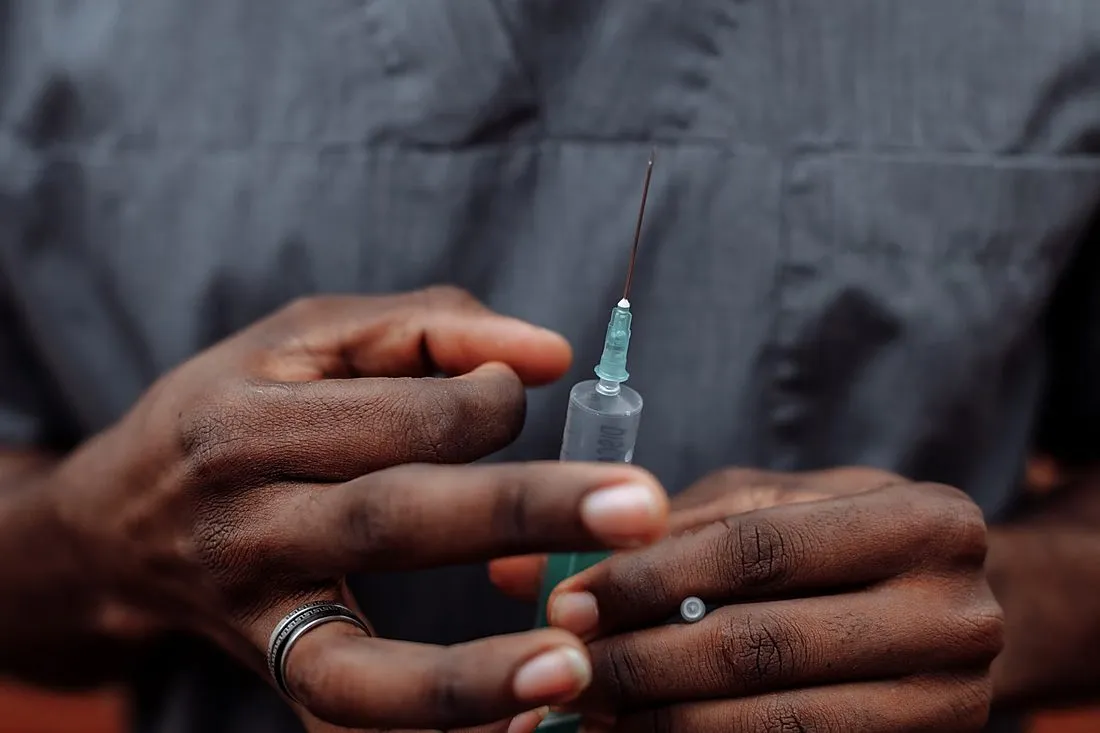
a nurse administering an injection in a clinic room
Pictured a nurse administering an injection in a clinic room · Thirdman (via Pexels)

The vaccine, called intismeran autogene, is built from each patient's own tumor: a biopsy is sequenced, compared against healthy cells, and up to 34 mutated proteins unique to that person's cancer get coded into mRNA and injected, essentially handing the immune system a wanted poster it wrote itself 28. Moderna CEO Stéphane Bancel called it "a pivotal moment," and Oxford's Dr. Lennard Lee called it a "landmark moment for cancer vaccines" 218. Trials are already underway for lung, kidney, and bladder cancers, and BioNTech is chasing the same approach.

What each field noticed (2)
Positive News

What went right this week

Positive News frames it as part of a broader week of medical wins, cancer specialists calling it a genuine turning point rather than incremental progress, still unpublished and unreviewed in full, but cautiously believed 218.

Read the story
03/06 Natural Sci.

A 3.5-billion-year-old microbial mat just got a firm birthday, for the first time

Geologist Trisrota Chaudhuri and colleagues found a carbon-rich layer sandwiched inside ancient striped chert in India's Singhbhum Craton, one of Earth's oldest surviving pieces of crust, and did something that's almost never possible with material this old: they dated it directly, rather than just dating the rock around it 73.

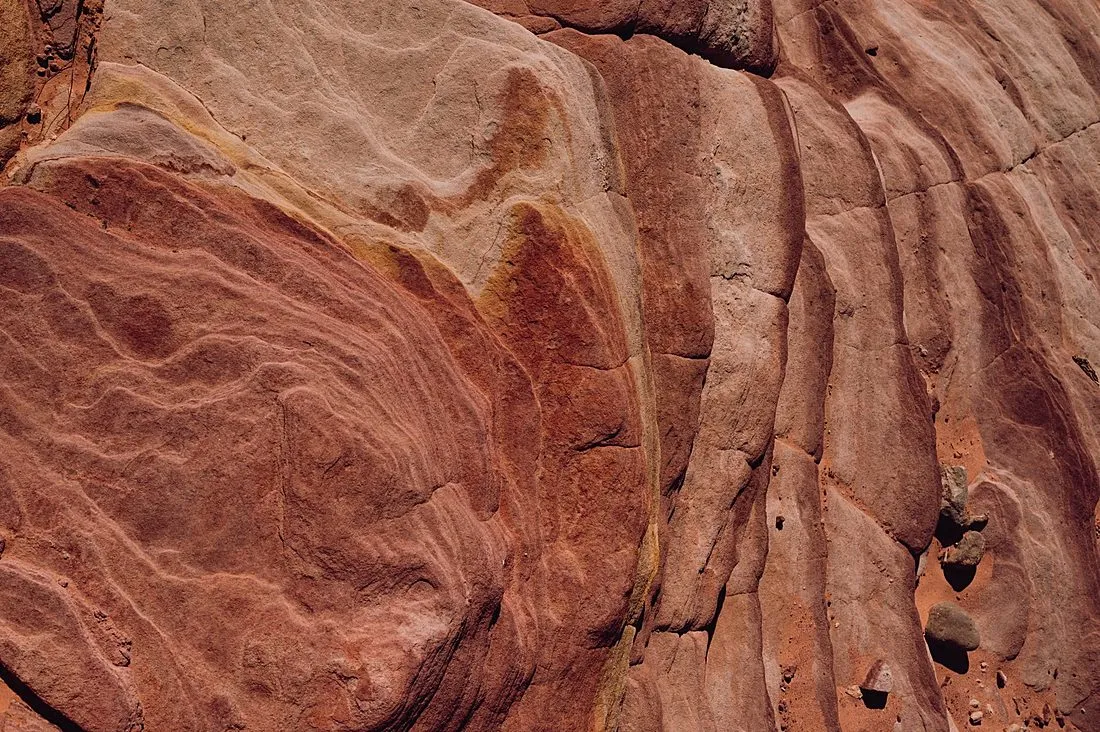
an ancient striped rock formation, chert outcrop
Pictured an ancient striped rock formation, chert outcrop · Alfo Medeiros (via Pexels)

That worked because the same layer happened to contain zircon crystals, which can be radiometrically dated, sitting right alongside what appears to be a fossilized microbial mat. "Finding both well-preserved biological material and datable zircons in the same rock is extremely rare," Chaudhuri told ScienceAlert. Raman spectroscopy on the carbon's structure helped confirm it hadn't been baked past recognition by 3.5 billion years of heat and pressure.

04/06 Natural Sci.

A century-old melting mystery, solved, could triple fusion energy output

Twenty years ago, Lawrence Livermore scientists found something strange: diamond gets denser when it melts under extreme pressure, meaning it would sink in liquid carbon rather than float, the opposite of how ice behaves in water.

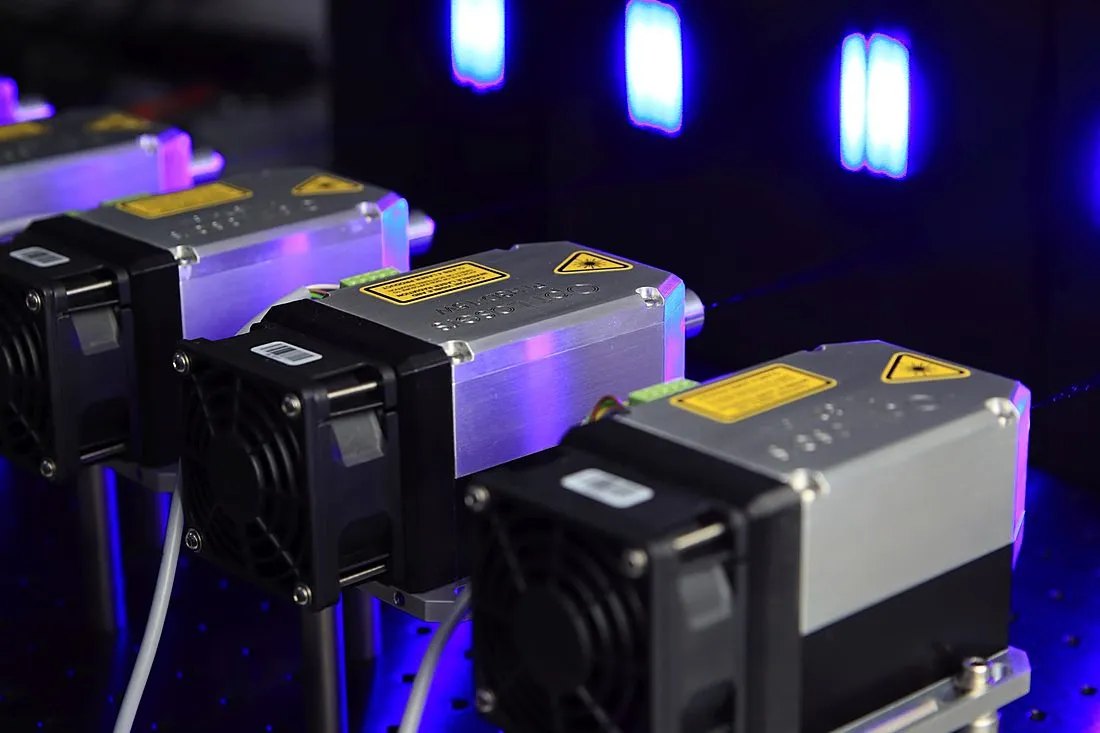
a physicist working at a high-pressure laser laboratory
Pictured a physicist working at a high-pressure laser laboratory · Opt Lasers from Poland (via Pexels)

The catch was that their measured melting temperatures were off from theoretical predictions by about 20%, a gap nobody could close. Now LLNL's Marius Millot and colleagues shock-compressed diamond samples to pressures higher than the center of Neptune and temperatures hotter than the sun's surface, and still managed to measure atomic structure, density, and reflectivity in the process 6. The new numbers finally match quantum-mechanical simulations.

05/06 Natural Sci.

The largest psychedelic brain study yet found order inside the chaos

Monash University researchers gave psilocybin to 62 healthy adults with no prior psychedelic experience, then scanned their brains with fMRI and EEG before and after, while they rested, meditated, listened to music, or watched clouds drift by on a screen, over a five-year study 76.

a brain imaging research lab with fMRI equipment
Pictured a brain imaging research lab with fMRI equipment · RDNE Stock project (via Pexels)

The prevailing view has been that psilocybin just scrambles the brain's normal network organization into disorder. Instead, lead author Devon Stoliker found that as networks lost their usual sharp boundaries, they reorganized into new patterns that tracked what people were actually experiencing in the moment. That reorganization was strongest in people who reported the most positive trips and the strongest sense of dissolving into the world around them.

06/06 Good News

Sacred forests without fences have protected Indian ecosystems for centuries

Across India, thousands of forest patches have survived intact for centuries not because of government protection but because communities treat them as sacred: Devarakadu in Karnataka, Kavu in Kerala, Oran in Rajasthan, Sarna in Jharkhand, and more, each with its own name and its own unwritten rules about which trees can't be cut and which animals can't be hunted 228.

a dense old-growth forest grove in rural India
Pictured a dense old-growth forest grove in rural India · Kavin Narain (via Pexels)

The CPR Environmental Education Centre has documented 13,270 of these groves so far, though researchers suspect the real number runs far higher since many exist only through oral tradition, not government maps. In dry regions, these groves double as informal water catchments and grazing reserves for the communities that protect them.

Quick notes

Shorter discoveries from this morning, worth knowing but not a full story.

Maternal RSV vaccine cuts newborn ICU admissions in half In the UK, infant ICU admissions for RSV dropped from 131 to 63 in a single winter after a maternal vaccination program rolled out, real babies who didn't end up on ventilators, though four in ten pregnant women still aren't getting the shot 232. The Optimist Daily
Experimental Drug Generates Immune Response Against Pancreatic Cancer in People at High Risk Eighteen of 20 high-risk participants in a Johns Hopkins trial developed a lasting immune response against a mutation behind most pancreatic cancers, and after 16.5 months, none had developed the disease 214. Good News Network
Archaeologists Triple the Scale of an Ancient Amazonian Civilization We Know Almost Nothing About A laser-radar survey over the southwestern Amazon found 396 previously unknown earthworks, suggesting the region may hold up to 30,000 geometric structures built by a lost civilization archaeologists are just now calling the Aquiry 215. Good News Network
Woman Gives $1 Million in 'Life-Changing' Bonuses to Teachers in Her School District Maja Kristin learned her wealthy county's teachers were the lowest-paid in the region and quietly handed 100 of them checks for $9,161.70 each. "It's life-changing," one teacher said 216. Good News Network
Man Rescued Alive After Being Trapped in Underwater Cave for 15 Days Without Food or Light Erasto Crisanto Valdez survived 15 days in total darkness in a Mexican cenote by drinking rainwater and breathing from an air pocket, rescued after an operation spanning land, river, and air 217. Good News Network
Plant-Based Alternatives Now Up to 30% Cheaper Than Meat & Dairy in Dutch Supermarkets Across nine major Dutch retailers, vegan chicken and burgers now beat their animal versions by €4.55 and €4.38 per kilogram, and the savings come almost entirely from supermarkets' own store brands 196. Green Queen
Oregon To Transition Its Primate Research Center Towards Human-Based Research Oregon Health & Sciences University voted to start winding down primate breeding and experiments at its research center after 25,000 Oregonians pushed lawmakers and the board to act 202. Plant Based News
Woman Checks on Loud Noises, Finds Elderly Woman With No Family and Becomes the Granddaughter She Needed Heidi Widmer's noisy upstairs neighbor turned out to be an 85-year-old with Parkinson's and no nearby family; Widmer started bringing her meals and taking out her trash, and strangers online have since raised over $60,000 for her care 220. Sunny Skyz
Transforming Britain's Old Coalfields Into Clean Energy Sources Gateshead, England pumps geothermally warmed water up from 150 meters down in old coal mines to heat 350 homes, saving an estimated 72,000 metric tons of CO2 over 40 years, a coal town's grandson literally going back down the same mine for a cleaner purpose 219. Reasons to be Cheerful
New figures suggest England is on course to eliminate hepatitis C England has already hit the World Health Organization's 2030 target six years early, with 100,000 people treated for the liver-damaging virus over the past decade 218. Positive News
In 1856, she became America's first female super sleuth and thwarted an attempt on Lincoln's life Kate Warne talked Allan Pinkerton into hiring the agency's first female detective by arguing her invisibility to Victorian society was an asset, then used it in 1861 to uncover and foil an assassination plot against Abraham Lincoln in Baltimore 234. Upworthy
In 1923, a lost dog miraculously walked from Indiana to his doorstep in Oregon A collie named Bobbie got separated from his family at an Indiana gas station and turned up six months later at their home in Oregon, roughly 2,800 miles away, having followed the scent trail of their road trip the whole way. Upworthy
Toddler's pure awe at seeing 'mountains' is a sweet, raspy-voiced reminder for us all A toddler's breathless "WHOA" at his first mountain view went viral for good reason: researchers have found that awe specifically lowers inflammation and increases feelings of connection, not just a nice moment but a measurable one 237. Upworthy
Toronto BMC photo competition reveals nature's fragile beauty This year's BMC Ecology and Evolution photo winners include giant cuttlefish battling for mates off South Australia and sea turtle hatchlings being escorted to the water by Indian villagers, though the cuttlefish's usual 100,000-strong breeding gathering didn't show up in full this year 191. New Atlas

Our process. Your trust.

Every discovery above traces back to an article we read in full. This is the whole corpus behind this morning, and what it was made of.

  • 46 Sources scanned
  • 261 Articles read
  • 8 Fields covered
  • 6 Discoveries

The sources that carried this morning

  1. 1 PLOS One 20 articles
  2. 2 Psychology Today: The Latest 20 articles
  3. 3 Phys.org 16 articles
  4. 4 The Conversation Articles 12 articles
  5. 5 The Better India : Latest Posts 11 articles
  6. 6 Interesting Engineering 10 articles
  7. 7 Upworthy 10 articles
  8. 8 Nature 9 articles
How an edition is made

Everything we read today

Natural Sciences 84 articles
Knowable Magazine
PLOS One
Life Sciences & Medicine 15 articles
Psychology & Behavioral Science 32 articles
Social Sciences 24 articles
Works in Progress RSS Feed
Technology & Innovation 39 articles
Plant-Based & Vegan 18 articles
Solutions & Good News 31 articles
Human Stories & Ideas 18 articles
The long view · not today’s news, the story behind it

Today’s discoveries didn’t come from nowhere. Here’s the older, ongoing story they belong to, a moment from this day in history, and a question to test what stuck.

The story so far

On this day in science

1888 The first practical adding machine is patented William Seward Burroughs received a patent for a dependable adding and listing machine that returned the same answer every time, sparing clerks hours of tedious arithmetic. His company grew into a giant of business machines and, later, computing. More from the Almanac →

Before you go: today’s quiz

The daily quiz

In a drug's clinical trials, which phase is the large, controlled study, often thousands of people, that confirms a drug works before approval?

Reveal the answer

Phase 3

Phase 1 checks safety in a few dozen people and phase 2 checks whether a drug does anything useful. Phase 3 is the big, controlled test that produces the evidence regulators use to approve it.

Read the explainer →

Previous editions

Every morning we have published, newest first. Nothing expires.

View the full archive

Get this every morning.

Liked today’s? Wake up to tomorrow’s, in one short letter.

  • One email each morning, never more
  • The day’s real discoveries across 8 fields
  • One calm read with your coffee

The full letter, every morning, free for good.

Same free letter, plus the reason it stays that way: no ads, no investors, no agenda but the good news itself.

A single gift of any amount. No account, never a recurring charge.