

The daily brief · August 18, 2026

A real narcolepsy fix lands, and navigating for a living guards the brain

Today's discoveries share a quiet through-line: sustained, close attention protects us, whether it's a hippocampus tracking city streets for decades, a health worker walking toward a sick child, or a species finally left alone long enough to recover.

  • 8 Discoveries
  • 261 Articles read
  • 42 Sources
  • 11 Min read

Today’s discoveries

Everything this morning found, in the order we would read it.

8 stories
  1. 01 Life Sciences A first-of-its-kind drug finally treats narcolepsy at its cause Tyler Chapman, a 19-year-old at the University of Tennessee, used to sleep 16 hours a day and collapse mid-laugh from cataplexy, fully conscious the whole time. Source: Nature 1 min read
  2. 02 Psychology Why taxi and ambulance drivers rarely die of Alzheimer's Researchers combed through nearly 9 million US death certificates from 2020 to 2022, covering 443 occupations, and found taxi and ambulance drivers had the lowest risk of dying from… Source: PsyPost 1 min read
  3. 03 Natural Sci. Hubble finds the Milky Way's oldest known meal New Hubble data show our galaxy swallowed a dwarf galaxy about 11.8 billion years ago, just 2 billion years after the Big Bang, pushing back the known history of the Milky Way's… Source: Phys.org 1 min read
  4. 04 Technology An AI gave Jamaica an extra day of hurricane warning When Hurricane Melissa hit Jamaica in 2025 as the strongest storm ever to make landfall there, Google DeepMind's WeatherNext model had already flagged its coming intensification. Source: SingularityHub 1 min read
  5. 05 Plant-Based The red wolf, once reduced to 14 animals, had four litters this year In 1980 the red wolf became the first species ever deliberately removed entirely from the wild to save it from extinction; of roughly 400 wild canids captured in Texas and Louisiana,… Source: One Green Planet 1 min read
  6. 06 Good News A Pacific reserve the size of Texas, run by the people who live there Rapa Nui, or Easter Island, now sits at the center of one of the largest marine protected areas on Earth, more than a quarter-million square miles of ocean. Source: Good News Network 1 min read
  7. 07 Human Stories The community health workers who reach sick children before it's too late In 2008, roughly one in seven children in Mali died before turning five, not because the medicine to save them didn't exist, but because it arrived too late. Source: Big Think 1 min read
  8. 08 Human Stories A 40,000-year-old bird, the size of a thumbnail Archaeologists at Germany's Hohle Fels Cave, part of the Swabian Jura's UNESCO World Heritage area, uncovered two mammoth-ivory carvings of birds, each smaller than a thumbnail and… Source: Nautilus 1 min read

The feel-good story of the day

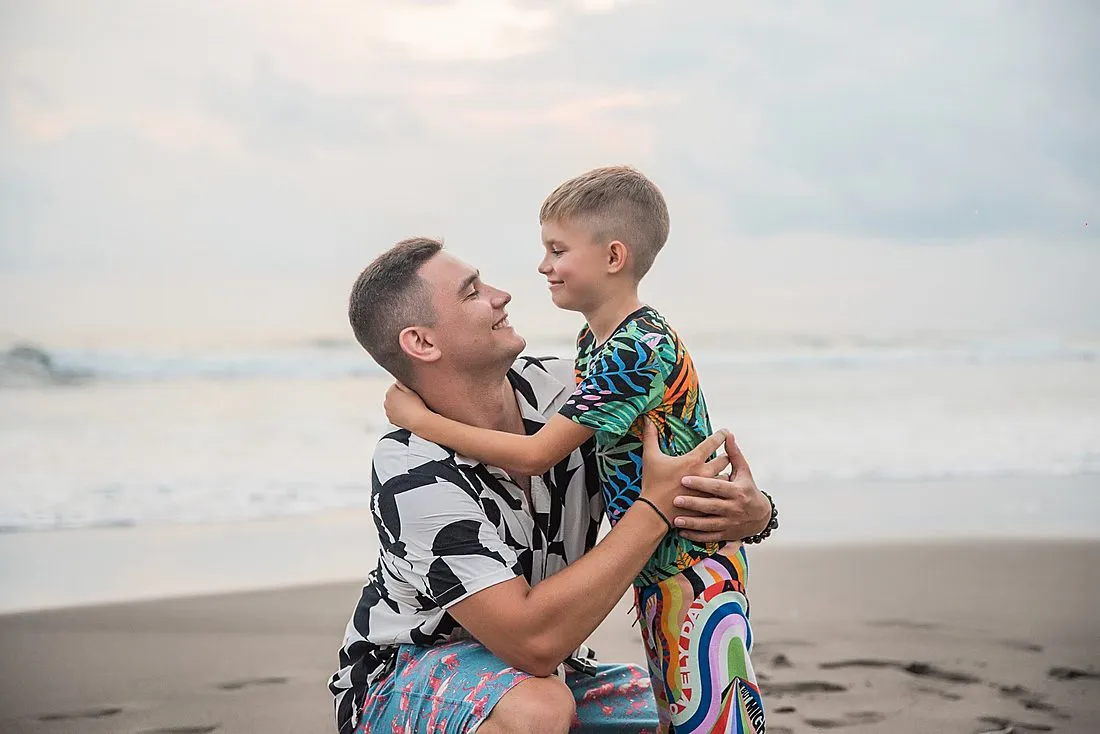
a father and adult son embracing Slava Kol (via Pexels)
Pictured a father and adult son embracing

For 19 years, he prayed with a rosary for a father he'd never met. This week, he put it around his neck.

Joshua Schneeloch grew up in a German Catholic orphanage, never adopted, watching other children get picked up by parents who came looking for them. Every day he prayed the same thing: that one day he'd meet his father. He didn't know where to start looking, and for most of his life, neither did anyone else.

Then his wife, Nicole Pavelka, gave him an Ancestry DNA kit. A genealogist found a handful of cousins, and eventually a name: Arthur Colbert, a US serviceman who'd been stationed in Kaiserslautern, Germany, in 1969 and 1970 and had no idea he'd left behind a son. Joshua called him without revealing who he was at first, just asking questions, until Arthur mentioned those exact years and that exact town. "I stopped talking," Joshua said, "because I just spoke with my father."

A DNA test confirmed it at 99.99 percent. When they finally met in person, Joshua walked toward his father and called it the longest walk of his life. He took the rosary he'd prayed on for 55 years and put it around his father's neck. Days later, in Jefferson, Texas, he walked into a room of more than 60 relatives meeting him for the first time, all of them, finally, his.

Today’s complete edition

The discoveries, in full

Read the evidence, what it changes, and the reporting behind each of today’s 8 discoveries.

01/08 Life Sciences

A first-of-its-kind drug finally treats narcolepsy at its cause

Tyler Chapman, a 19-year-old at the University of Tennessee, used to sleep 16 hours a day and collapse mid-laugh from cataplexy, fully conscious the whole time. He'd tried more than a dozen medications, mostly stimulants, often with severe psychological side effects.

a college student
Pictured a college student · Armin Rimoldi (via Pexels)

Earlier this year he volunteered for a Takeda Pharmaceuticals trial testing oveporexton, now approved as Orzeyful, the first drug in a new class called orexin agonists 23. Narcolepsy comes from a loss of orexin, the brain chemical that keeps people awake and stable; instead of just masking the daytime sleepiness, the new drug replaces what's missing. Chapman can now stay alert all day and sleep through the night. He and his mother are planning a trip to Everest base camp to celebrate.

02/08 Psychology

Why taxi and ambulance drivers rarely die of Alzheimer's

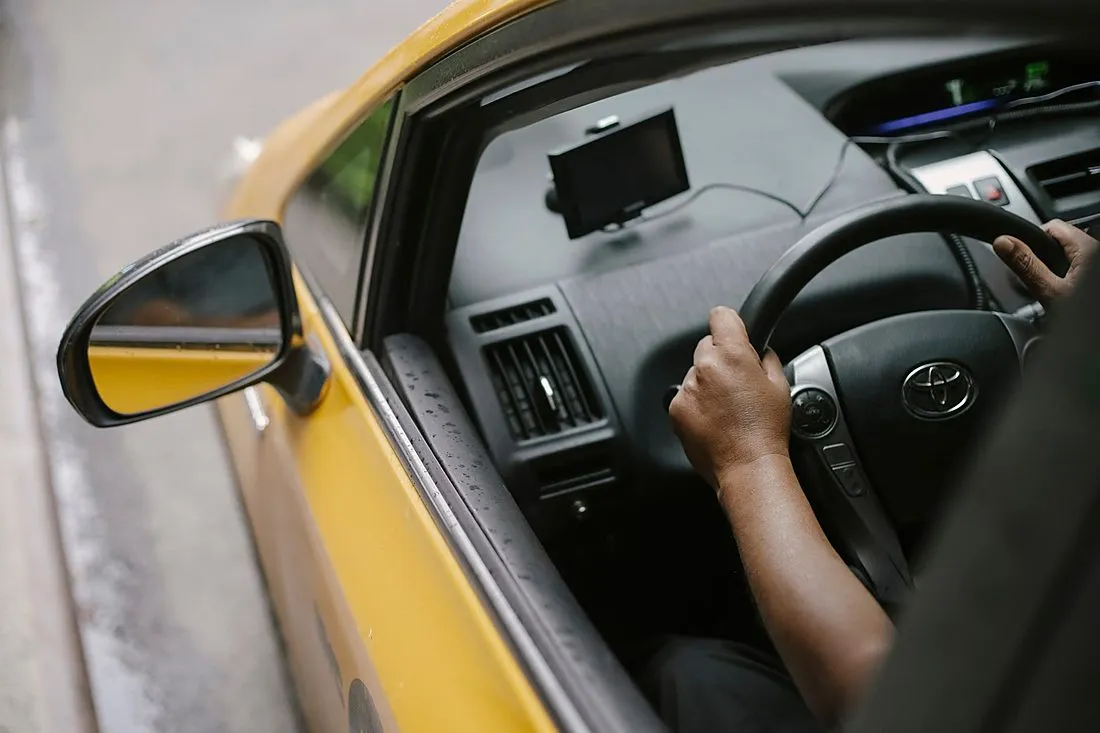
Researchers combed through nearly 9 million US death certificates from 2020 to 2022, covering 443 occupations, and found taxi and ambulance drivers had the lowest risk of dying from Alzheimer's disease of any job in the dataset 99.

a taxi driver
Pictured a taxi driver · Tim Samuel (via Pexels)

After adjusting for age, sex, race and education, about 1 in 100 died of Alzheimer's, compared with 1 in 60 people overall. The advantage didn't extend to bus drivers or airline pilots, whose routes are fixed. The researchers point to continuous, real-time navigation as the likely mechanism, the constant work of locating yourself, tracking a destination and updating a mental map. It echoes a landmark 2000 study of London cabbies, who spend three to four years memorizing 25,000 streets within six miles of Charing Cross and end up with measurably more gray matter in the posterior hippocampus.

03/08 Natural Sci.

Hubble finds the Milky Way's oldest known meal

New Hubble data show our galaxy swallowed a dwarf galaxy about 11.8 billion years ago, just 2 billion years after the Big Bang, pushing back the known history of the Milky Way's construction by 1.8 billion years 56.

the Milky Way galaxy at night
Pictured the Milky Way galaxy at night · Martin Mark (Wikimedia Commons)

Lead author Davide Massari and his team, working at the Astrophysics and Space Science Observatory of Bologna, nicknamed the consumed galaxy LKH. They pieced the story together by studying globular clusters, ancient balls of up to a few million stars that survive as leftovers from galaxies the Milky Way has absorbed over billions of years. Hubble's precision let the team measure the age and metal content of those clusters closely enough to date the merger. "We do not know how our house was built," Massari said. "In this paper we discover where the first significant batch of bricks came from."

04/08 Technology

An AI gave Jamaica an extra day of hurricane warning

When Hurricane Melissa hit Jamaica in 2025 as the strongest storm ever to make landfall there, Google DeepMind's WeatherNext model had already flagged its coming intensification.

a hurricane seen from space
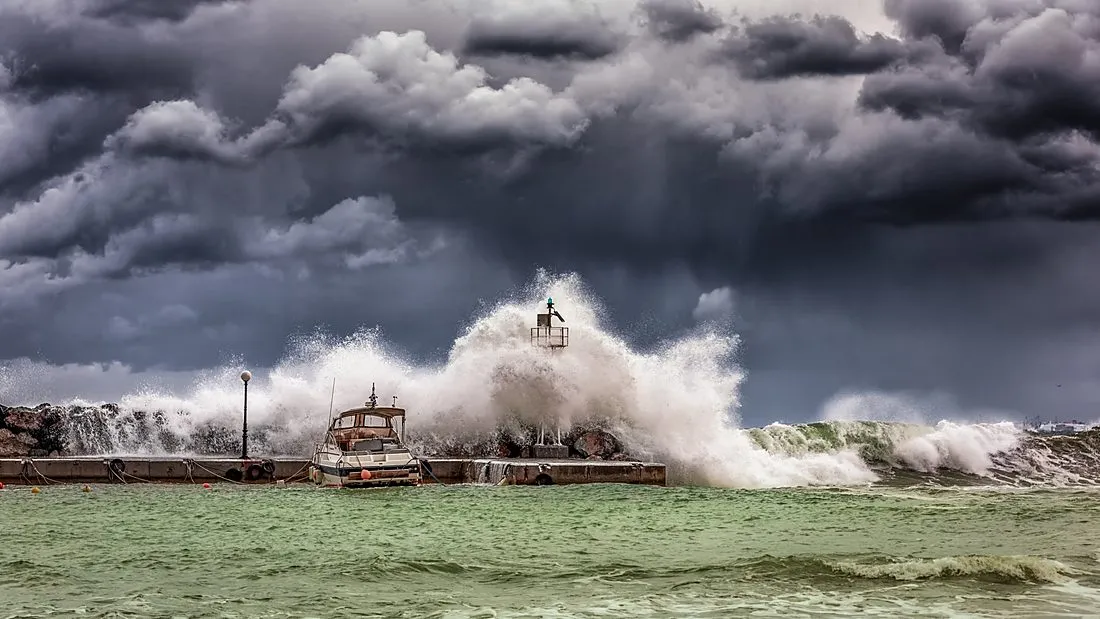
Pictured a hurricane seen from space · GEORGE DESIPRIS (via Pexels)

Working with the National Hurricane Center, the AI predicted Melissa's sudden jump to Category 5 with nearly 100 percent confidence three days ahead of landfall, the first time a storm that started with relatively mild winds was successfully forecast to reach that strength that early 185. Standard physics-based models top out at about two days of reliable warning for this kind of rapid intensification; WeatherNext stretched it to three. DeepMind's team called the jump "roughly a decade's worth of meteorological progress."

05/08 Plant-Based

The red wolf, once reduced to 14 animals, had four litters this year

In 1980 the red wolf became the first species ever deliberately removed entirely from the wild to save it from extinction; of roughly 400 wild canids captured in Texas and Louisiana, only 14 qualified as genetically pure red wolves.

a red wolf
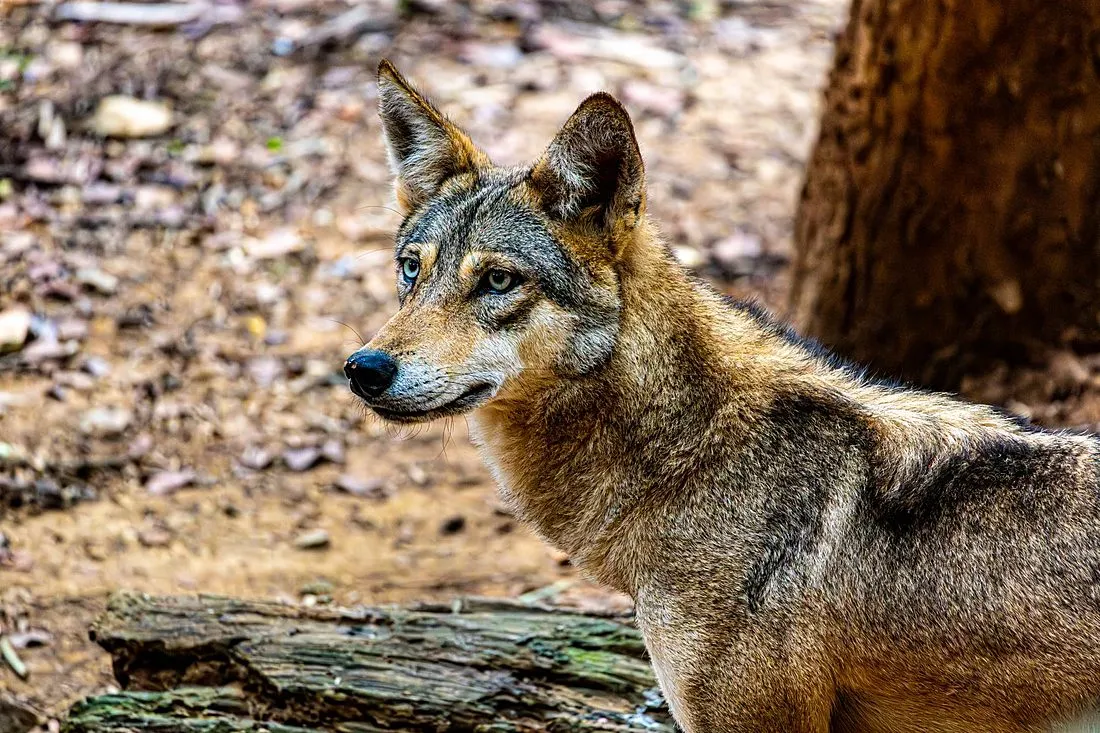
Pictured a red wolf · Regan Dsouza (via Pexels)

Every red wolf alive today descends from those 14 196. Four breeding pairs went back into North Carolina's Alligator River National Wildlife Refuge in 1987, the first carnivore ever returned from total wild extinction to its native range. The population climbed to around 120-130 animals by 2011 before gunshots, vehicle strikes and coyote hybridization collapsed it back down to fewer than 30. This year, four litters and 23 pups were born, with roughly 12 to 16 expected to survive their first months, three of them in the wild and one through a program that pays private landowners for hosting wolves on their land.

06/08 Good News

A Pacific reserve the size of Texas, run by the people who live there

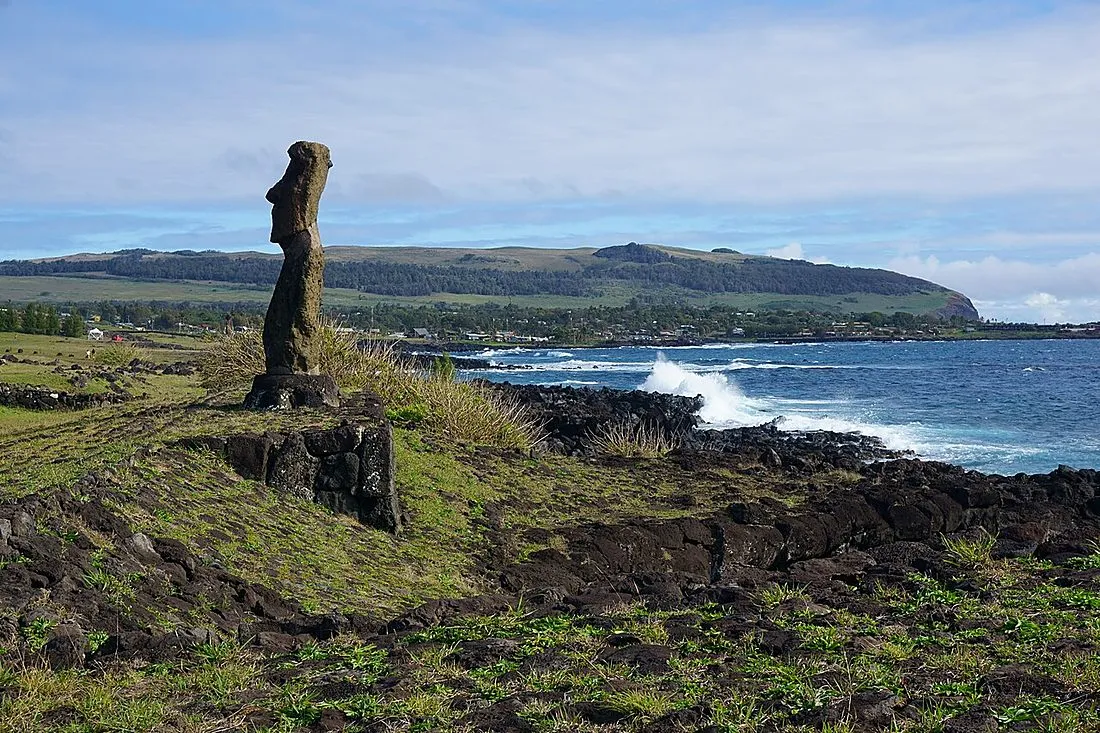
Rapa Nui, or Easter Island, now sits at the center of one of the largest marine protected areas on Earth, more than a quarter-million square miles of ocean 213. What sets it apart is who's in charge: a newly formed "sea council" gives the island's indigenous people six seats to five held by elected officials from Chile, a rare voting majority for a group this size managing waters this large.

Easter Island moai statues
Pictured Easter Island moai statues · Wikimedia Commons / Easter Island

The reserve, called Te Moana Tapu a Hotu Matu'a, is funded partly by the Packard Foundation and recently won a 2026 Blue Park Award for meeting rigorous conservation standards. Scientists suspect its waters may hold undocumented breeding grounds for blue, fin and humpback whales.

07/08 Human Stories

The community health workers who reach sick children before it's too late

In 2008, roughly one in seven children in Mali died before turning five, not because the medicine to save them didn't exist, but because it arrived too late 248. A community health worker in Bamako found a boy critically ill with malaria-related anemia; his father carried him five kilometers, on foot, into an ambulance, on foot again across a river, into another ambulance.

a community health worker walking with a medical bag
Pictured a community health worker walking with a medical bag · JackerKun (via Pexels)

At the clinic, physician Djoumé Diakité gave his own blood for the transfusion the boy needed, who then spent 10 days recovering, 10 days his father couldn't work. That case helped push Diakité and his colleagues at the nonprofit Muso to build "Rapid Care," a model that puts trained local women, already known and trusted in their own neighborhoods, at the front of the health system instead of the periphery of it, finding sick kids fast rather than waiting for families to make an impossible five-kilometer choice.

08/08 Human Stories

A 40,000-year-old bird, the size of a thumbnail

Archaeologists at Germany's Hohle Fels Cave, part of the Swabian Jura's UNESCO World Heritage area, uncovered two mammoth-ivory carvings of birds, each smaller than a thumbnail and roughly 40,000 years old 255.

a tiny carved ivory bird figurine
Pictured a tiny carved ivory bird figurine · Jorge Acre (via Pexels)

One shows a bird at rest, possibly brooding over eggs, with a clearly carved head, beak and eyes; the other has its wings partly spread, feather markings still visible. They date to when the first modern humans were arriving in the Upper Danube region during the last Ice Age. "The figurines demonstrate that the earliest artists were skilled ivory-carvers, who could depict delicate motifs in miniature form," said excavation director Nicholas Conard. Bird carvings from this period are rare, vastly outnumbered by mammoths, lions, bears and horses, and these two were found close enough together that the same hand may have made both.

Quick notes

Shorter discoveries from this morning, worth knowing but not a full story.

Morocco facts of the day, Morocco is not hopeless Morocco is now Africa's top-ranked industrial economy, home to the continent's first battery gigafactory, a single Casablanca plant expected to supply a third of Europe's current battery market 124. Marginal REVOLUTION
Ever After Foods Nets $2M & Snaps Up Cultivated Seafood Startup Fishway An Israeli cultivated-meat firm bought a Belgian cell-cultured seafood startup, combining lab-grown protein platforms with a first commercial target of premium pet food 186. Green Queen
Independent LCA Confirms Savor's Carbon-Derived Fats Cut Emissions By Up to 98% Third-party scientists verified that fats made from captured carbon and green hydrogen can replace butter, palm oil and cocoa butter with up to 98 percent less climate impact than the real thing 187. Green Queen
IEEE Presidents' Scholarship Honors Teen Innovators A sophomore named Lynn Bowlby Tang won $10,000 for a tongue-and-eye-tracking wheelchair interface she built to run on an ordinary laptop camera, because, in her words, "mobility conditions don't discriminate" 159. IEEE Spectrum
Cement Kilns Could Become Carbon Negative if Run on Clean Energy as Limestone Absorbs CO2 ETH Zurich researchers found that an electrically-run cement kiln paired with direct air capture could cancel out 78 percent of its own carbon emissions, turning one of industry's dirtiest processes into a partial climate fix 211. Good News Network
Company Aims for 'Moonshot' Replacement for Trees in Paper Products with Humble Desert Plant After testing 70 different substances, Kimberly-Clark found a desert succulent called hesperaloe that pulps like wood, meaning future toilet paper and tissues could stop requiring logged trees at all 212. Good News Network
Garbage Workers in Italy Help Woman Find Her Million Jackpot A woman in southern Italy accidentally threw away a winning million-euro lottery ticket; sanitation workers spent a full day searching an entire garbage truck and found it still in one piece 214. Good News Network
A Delhi Student Used AI to Build a Platform Where Indians Can Report Bribe Demands A college student built a site where anyone can anonymously report a bribe demand in under a minute, turning scattered, easy-to-dismiss stories into a searchable map of where corruption actually clusters 217. The Better India
Can Indian Cities Soak Up Rain Before They Flood? Here's How the 'Sponge City' Idea Works Cities from Chennai to Mumbai are experimenting with permeable pavement, rain gardens and restored wetlands designed to let rainwater soak into the ground instead of flooding streets and then vanishing before the next dry season 219. The Better India
For 27 Years, These Ecologists Guarded a Nilgiris Forest by Removing What Was Killing It A retired math professor and a handful of volunteers have spent nearly three decades pulling invasive trees out of a single 116-hectare shola forest in the Nilgiris, proving that sometimes conservation just means constant, patient weeding 222. The Better India
Born Blind, He Fought a High Court Battle for Engineering. Today, He's a Software Vice President Told at birth that he'd end up begging, Nagababu Jannu fought a rejection at an engineering application counter all the way to India's High Court and is now a vice president at a global tech firm 224. The Better India
These Goldfish Were Restaurant Decor. Then They Won Legal Rights. An Argentine court ruled that two goldfish kept in a sushi restaurant's display case were sentient beings, not objects, and moved them into a proper 2,500-liter tank in an aquatic specialist's home 201. VegNews.com
US teens are smoking and vaping less than their peers abroad Cigarette smoking among US teens has fallen to 1.4 percent, down from 36 percent in 1997, the lowest rate ever recorded since the survey began tracking it in 1999 136. The Conversation
Opinion: We proved bipartisan health care reform works in North Carolina. Let's bring it nationwide A Medicaid pilot that pays for healthy food, housing help and rides to the doctor saved $164 per enrolled person per month, built and sustained across a Democratic governor and a Republican legislature 91. STAT

Our process. Your trust.

Every discovery above traces back to an article we read in full. This is the whole corpus behind this morning, and what it was made of.

  • 42 Sources scanned
  • 261 Articles read
  • 8 Fields covered
  • 8 Discoveries

The sources that carried this morning

  1. 1 PLOS One 20 articles
  2. 2 Psychology Today: The Latest 20 articles
  3. 3 STAT 15 articles
  4. 4 Phys.org 14 articles
  5. 5 Ars Technica - All content 12 articles
  6. 6 The Better India : Latest Posts 11 articles
  7. 7 Latest Science News -- ScienceDaily 10 articles
  8. 8 Nature 10 articles
How an edition is made

Everything we read today

Natural Sciences 77 articles
PLOS One
Life Sciences & Medicine 17 articles
Psychology & Behavioral Science 29 articles
Social Sciences 16 articles
Technology & Innovation 46 articles
Plant-Based & Vegan 24 articles
Solutions & Good News 30 articles
Human Stories & Ideas 22 articles
The long view · not today’s news, the story behind it

Today’s discoveries didn’t come from nowhere. Here’s the older, ongoing story they belong to, a moment from this day in history, and a question to test what stuck.

The story so far

On this day in science

1868 Helium is discovered in the Sun During a total solar eclipse seen from India, astronomer Jules Janssen noticed a bright yellow line in the Sun's light that matched no known element. It was helium, the first element ever found in space before it was found on Earth. More from the Almanac →

Before you go: today’s quiz

The daily quiz

The 1987 Montreal Protocol got nations to phase out chemicals that were harming what?

Reveal the answer

The ozone layer

The 1987 Montreal Protocol phased out the chemicals destroying Earth's protective ozone layer. It is often called the most successful environmental treaty ever, and the ozone hole is now healing.

See the day →

Previous editions

Every morning we have published, newest first. Nothing expires.

View the full archive

Get this every morning.

Liked today’s? Wake up to tomorrow’s, in one short letter.

  • One email each morning, never more
  • The day’s real discoveries across 8 fields
  • One calm read with your coffee

The full letter, every morning, free for good.

Same free letter, plus the reason it stays that way: no ads, no investors, no agenda but the good news itself.

A single gift of any amount. No account, never a recurring charge.