




The daily brief · August 25, 2026

A ghostly star stream maps dark matter, and sleep finds its sweet spot

Today's discoveries all reward paying closer attention, to a faint trail of stars, the length of a night's sleep, or the three seconds before you react to a crisis.

  • 7 Discoveries
  • 197 Articles read
  • 43 Sources
  • 10 Min read

Today’s discoveries

Everything this morning found, in the order we would read it.

7 stories
  1. 01 Natural Sci. A faint stream of stars just gave astronomers a new way to weigh the invisible universe An international team including Northwestern astrophysicist Tjitske Starkenburg has identified the first stellar stream of its kind ever spotted outside the Milky Way, a faint ribbon of… Source: ScienceDaily 1 min read
  2. 02 Natural Sci. Scientists mapped sleep's sweet spot, and it's not "more is always better" Columbia University researchers built 23 separate biological "aging clocks," one for the brain, one for the heart, one for the lungs, and so on, using blood-based machine learning models… Source: ScienceDaily 1 min read
  3. 03 Technology A fabric that's purple, cool, and doesn't need a single watt to work Researchers at Zhengzhou University and Australia's Adelaide University solved a problem that's dogged passive cooling fabric for years: purple pigment usually requires absorbing green… Source: Interesting Engineering 1 min read
  4. 04 Plant-Based Brazil just made force-feeding animals for foie gras illegal President Luiz Inácio Lula da Silva signed Bill 90/2020 into law on July 23, making Brazil the newest country to ban both the production and sale of foie gras, along with any food made… Source: Mercy For Animals 1 min read
  5. 05 Good News The world just hit 3 terawatts of solar power, years ahead of schedule The world's first terawatt of solar capacity took nearly 68 years to build. Source: The Optimist Daily 1 min read
  6. 06 Psychology Feeling awkward might actually mean you care the most Psychologist Rowland Miller's research found that people who cringe easily aren't less socially skilled than anyone else; they simply care more intensely about doing the right thing and… Source: Psychology Today 1 min read
  7. 07 Good News An engineer built a toilet for astronauts, then realized a billion people on Earth needed it more Diana Yousef was working on spaceborne sanitation at NASA when she realized the engineering problem was identical on Earth: how do you dispose of human waste without water to flush it… Source: Good News Network 1 min read

The feel-good story of the day

a man smiling at a hospital, kidney donor Bruce Mars (via stocksnap)
Pictured a man smiling at a hospital, kidney donor

A Kidney for a Stranger He'll Never Meet

About ten years ago, actor Jesse Eisenberg decided he wanted to give one of his kidneys to a stranger. He contacted an organization to ask how. Nobody ever wrote back, and the idea sat unfinished for a decade until he mentioned it to a friend who works in medicine, who pointed him toward NYU Langone Health. He started the workup the next day and, almost by accident, announced the whole thing on the Today Show while talking about his blood donation habit: "I'm actually donating my kidney in six weeks. I really am." He went through with it on December 30th.

What he gave is called a non-directed donation: his kidney went to whoever matched best on the transplant list, and he'll never learn who that was. It's a small act with outsized reach, since a single stranger's kidney can start a chain, freeing up a family member elsewhere to donate to someone they couldn't otherwise match. NYU Langone's waiting list runs past 107,000 people, nearly 95,000 of them waiting specifically for a kidney, and roughly 13 people on that list die every day.

"When I heard about kidney donations, my first thought was, why is there not a line down the block of the hospital?" Eisenberg has said. Months out from surgery, he reported no lifestyle changes and no regrets, just one ordinary body doing a little more than it had to for someone it will never meet.

Today’s complete edition

The discoveries, in full

Read the evidence, what it changes, and the reporting behind each of today’s 7 discoveries.

01/07 Natural Sci.

A faint stream of stars just gave astronomers a new way to weigh the invisible universe

An international team including Northwestern astrophysicist Tjitske Starkenburg has identified the first stellar stream of its kind ever spotted outside the Milky Way, a faint ribbon of stars slowly peeling off a distant galaxy's globular cluster over billions of years 9.
a night sky full of stars over a mountain observatory
Pictured a night sky full of stars over a mountain observatory · Unknown (via rawpixel)

Because those shed stars keep traveling along nearly the same orbit, an orbit shaped entirely by their host galaxy's gravity, the team could work backward from the stream's shape to estimate how much invisible dark matter surrounds that galaxy and how it's distributed. Astronomers had predicted these streams should exist around other galaxies for decades; they're simply too faint to have been caught before now. The findings, co-led by researchers at the University of Copenhagen and the Technical University of Denmark, were published August 12 in Nature.

02/07 Natural Sci.

Scientists mapped sleep's sweet spot, and it's not "more is always better"

Columbia University researchers built 23 separate biological "aging clocks," one for the brain, one for the heart, one for the lungs, and so on, using blood-based machine learning models trained on nearly half a million UK Biobank participants 4.

Scientists mapped sleep's sweet spot, and it's not "more is always better"
Unknown (via rawpixel)

Across almost every organ, the lowest aging scores showed up in people sleeping between roughly 6.4 and 7.8 hours a day. Both shorter and longer sleep were linked to faster aging and to a broad range of diseases affecting the brain, heart, lungs, metabolism, and gut. Study leader Junhao Wen, who has described himself as a light sleeper, says the goal now is finding lifestyle factors that can actually be changed in time to matter.

03/07 Technology

A fabric that's purple, cool, and doesn't need a single watt to work

Researchers at Zhengzhou University and Australia's Adelaide University solved a problem that's dogged passive cooling fabric for years: purple pigment usually requires absorbing green light, one of the sun's strongest bands, which normally means more heat, not less 139.

a person wearing purple clothing outdoors in sunlight
Pictured a person wearing purple clothing outdoors in sunlight · Kreighbaum (Wikimedia Commons)

Their fix was microscopic fibers built from a purple metal-organic framework and zinc oxide nanoparticles, and in outdoor testing the resulting textile still reflected 87.6 percent of incoming sunlight, staying up to 11.2 degrees Fahrenheit cooler than ordinary dyed purple cotton. Skin covered by the fabric ran up to 14.4 degrees cooler than bare skin in direct sun, beating even plain white cotton. "We have traditionally had to make a choice between cooling performance and appearance," said co-author Jun Ma. "Our research shows that we can have both."

04/07 Plant-Based

Brazil just made force-feeding animals for foie gras illegal

President Luiz Inácio Lula da Silva signed Bill 90/2020 into law on July 23, making Brazil the newest country to ban both the production and sale of foie gras, along with any food made by forcing an animal to eat beyond its natural limits 151.

a goose on a farm
Pictured a goose on a farm · Bernard Spragg (via stocksnap)

The law followed more than a million messages from supporters flooding lawmakers between March and April alone, then another 17,000 emails urging Lula to sign once the bill reached his desk. Foie gras production typically means pumping large volumes of food directly into a duck or goose's digestive system through a tube until its liver swells to as much as ten times its normal size. The ban takes effect 180 days after publication.

05/07 Good News

The world just hit 3 terawatts of solar power, years ahead of schedule

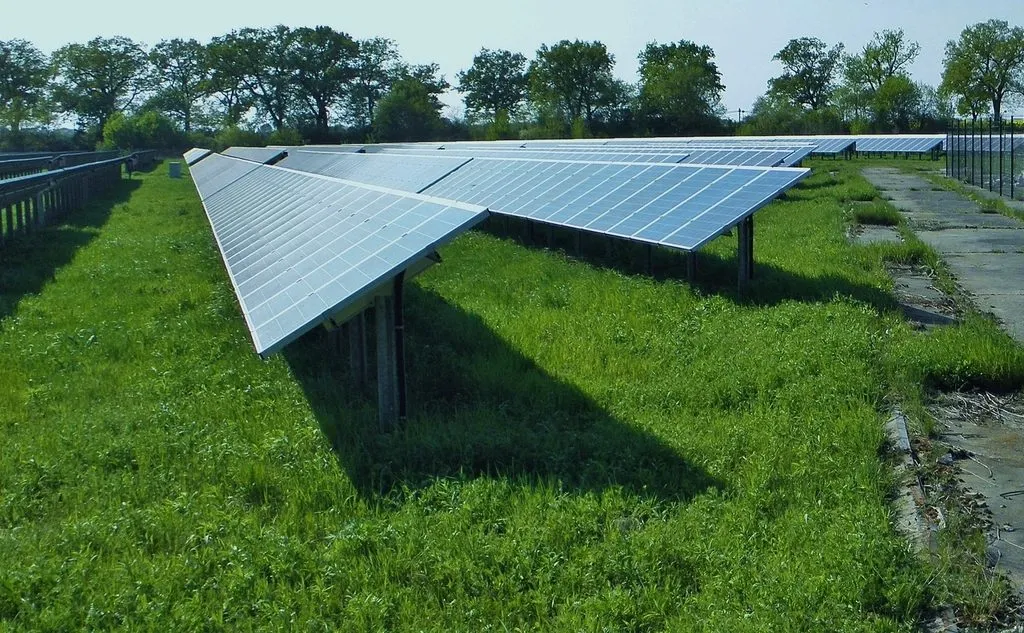
The world's first terawatt of solar capacity took nearly 68 years to build. The second took about two years.

solar panels in a field
Pictured solar panels in a field · Unknown (via rawpixel)

The third took just 19 months, and the world crossed the 3-terawatt mark in early 2026 174. In 2025 alone, 664 gigawatts of new solar went up worldwide, 12 percent more than the year before, and in the first quarter of 2026, solar and battery storage together made up 91 percent of all new grid capacity added in the United States. Globally, wind and solar combined generated 22 percent of the world's electricity in April 2026, edging past natural gas's 20 percent for the first time, according to energy research group Ember.

06/07 Psychology

Feeling awkward might actually mean you care the most

Psychologist Rowland Miller's research found that people who cringe easily aren't less socially skilled than anyone else; they simply care more intensely about doing the right thing and dread disapproval more sharply 88.

a young woman looking embarrassed at a party
Pictured a young woman looking embarrassed at a party · nationalgalleryofart (via rawpixel)

Miller drew a clean line between two things people often confuse: shyness, which tracks with low social confidence, and embarrassability, which tracks with how closely someone monitors unwritten social rules. Separately, researcher David Moscovitch found that socially anxious people systematically overestimate the fallout from small blunders, a trip on the stairs, a joke met with silence, expecting harsher judgment and longer memories than actually follow, even when they're just imagining someone else making the mistake.

07/07 Good News

An engineer built a toilet for astronauts, then realized a billion people on Earth needed it more

Diana Yousef was working on spaceborne sanitation at NASA when she realized the engineering problem was identical on Earth: how do you dispose of human waste without water to flush it away, a challenge shared by roughly a billion people worldwide who live beyond the reach of sewage systems 165.

Today Got Better

Her invention, the iThrone, rapidly evaporates 95 percent of the water content in urine and waste, and it's now installed in about 20,000 households across Uganda, Panama, and the United States. Yousef, who holds degrees from Cornell, Columbia, and Harvard, just won this year's Global Citizen Waislitz Award, which comes with $100,000 to help her startup, change:WATER, scale distribution.

Quick notes

Shorter discoveries from this morning, worth knowing but not a full story.

Good News in History, August 25 110 years ago today, Woodrow Wilson signed the National Park Service into being; it now protects 433 units and more than 85 million acres across all 50 states, run by roughly 20,000 people in wide-brimmed hats 162. Good News Network
Plant-Based Athlete Venus Williams To Return To US Open At 46, Venus Williams just earned a wildcard into the US Open singles draw, 15 years into the plant-based diet she says eased her autoimmune disease and kept a serve once clocked at 113 mph 153. Plant Based News
'I ran 300 km across Spain fuelled by plants' Ultrarunner Laura Briggs crossed 300 km of northern Spain solo, no flights allowed, all vegan, scavenging leftover bread crusts and roadside oranges through food deserts to average 40 km a day for a week 161. Vegan Food & Living
Babies Born Under Sugar Rationing Grew Into Adults with Lower Cancer Risk People who happened to be babies during a real-world period of sugar rationing grew up with lower cancer rates and slower biological aging decades later, evidence that a toddler's diet can echo for a lifetime 193. Nautilus
New Species of Groundsnake Named After Guns N' Roses Guitarist and Noted Herpephile Slash Field Museum herpetologist Sara Ruane named a newly discovered groundsnake Lielaphis slashi after Slash, whose old magazine interview about childhood snake-hunting shaped her own career path 194. Nautilus
110-pound python named Jodie Foster is the first snake to receive human cancer treatment When a reticulated python's jaw tumor came back after surgery, Chester Zoo vets and University of Liverpool cancer specialists tried electrochemotherapy, a human treatment never before used on a snake, and it worked 177. Upworthy
From 61 Malnourished Girls to 20: How an IAS Officer Used AI to Monitor School Meals An Indian officer put an AI camera on school lunch trays in Gadchiroli to catch missing menu items and watery dal; eight months later, the number of malnourished girls at the school had dropped from 61 to 20 172. The Better India
She Travelled 25 KM to Thank This IPS Officer After years of complaints went nowhere, a video of a disabled woman's dry tap reached police officer Shraddha Narendra Pandey, who got the water flowing; the woman later traveled 25 km with her daughter just to hug her 171. The Better India
He Tested Farming With Mushrooms in a Bengaluru Flat. Today, He Runs a 10-Acre Farm Chethan Shetty grew mushrooms on a rented apartment's gas stove to test whether farming could work before quitting his corporate job; his family farm now has 650 rambutan trees and earned roughly $18,000 last year 168. The Better India
Claude will now watermark all content generated using its tools Anthropic is adding an invisible statistical watermark to everything Claude writes and signed metadata to images it touches, rolling it out worldwide even though the rule that prompted it only applies in the EU 143. New Atlas
The true definition of a 'good friend' depends entirely on when you were born Older generations tend to measure friendship by showing up in person; younger ones measure it by respecting boundaries and not demanding an instant reply. Naming that gap out loud, researchers say, is the fastest way to close it 176. Upworthy
Plant-Based Wellness Pioneer Organic Traditions Bags $10.5M to Plug North America's Fibre Gap A Canadian family wellness brand raised $10.5 million to expand its fiber-packed supplements, aimed at a real gap: 95 percent of Americans don't eat enough dietary fiber 149. Green Queen
'I Pause for 3 Seconds': How One Morning Changed This Mom's Approach to Parenting After her son ran to her bleeding and scared, podcaster Gayathri Prakash noticed her mind go quiet and useful instead of panicking. She now credits those three seconds, taken before reacting, with helping her children feel safe 167. The Better India
Chinese Man Takes Paralyzed Wife on Epic Road Trip: 'Die On the Road, Not in Hospital' After diabetes left his wife partially paralyzed, Liu Peijin outfitted a camper van with a kitchen and medical supplies and set out to see China anyway. A decade and 31 provinces later, he says she's "100 times" more spirited 164. Good News Network

Our process. Your trust.

Every discovery above traces back to an article we read in full. This is the whole corpus behind this morning, and what it was made of.

  • 43 Sources scanned
  • 197 Articles read
  • 8 Fields covered
  • 7 Discoveries

The sources that carried this morning

  1. 1 PLOS One 20 articles
  2. 2 Psychology Today: The Latest 20 articles
  3. 3 Phys.org 13 articles
  4. 4 Latest Science News -- ScienceDaily 11 articles
  5. 5 Ars Technica - All content 10 articles
  6. 6 Interesting Engineering 10 articles
  7. 7 Upworthy 8 articles
  8. 8 PsyPost Psychology News 7 articles
How an edition is made

Everything we read today

Natural Sciences 62 articles
PLOS One
Life Sciences & Medicine 6 articles
Psychology & Behavioral Science 28 articles
Social Sciences 14 articles
Technology & Innovation 38 articles
Plant-Based & Vegan 13 articles
Solutions & Good News 22 articles
Human Stories & Ideas 14 articles
The long view · not today’s news, the story behind it

Today’s discoveries didn’t come from nowhere. Here’s the older, ongoing story they belong to, a moment from this day in history, and a question to test what stuck.

The story so far

On this day in science

1989 Voyager 2 reaches Neptune Voyager 2 swept past Neptune, the most distant of the giant planets, sending home the first close pictures of its deep blue clouds and racing storms. It was the final planet on a twelve-year tour of the outer solar system. More from the Almanac →

Before you go: today’s quiz

The daily quiz

What is a “preprint”?

Reveal the answer

A study shared before independent experts have reviewed it

A preprint is posted before peer review, the step where independent experts vet the work, so it deserves extra caution until that review has happened.

Read the explainer →

Previous editions

Every morning we have published, newest first. Nothing expires.

View the full archive

Get this every morning.

Liked today’s? Wake up to tomorrow’s, in one short letter.

  • One email each morning, never more
  • The day’s real discoveries across 8 fields
  • One calm read with your coffee

The full letter, every morning, free for good.

Same free letter, plus the reason it stays that way: no ads, no investors, no agenda but the good news itself.

A single gift of any amount. No account, never a recurring charge.